Christmas in Málaga: Lights, Weather and What's Open
Christmas in Málaga brings mild days, free light shows on Calle Larios and the cathedral, outdoor lunches and a season that runs to Three Kings on 6 January.
On this page
Christmas in Málaga looks nothing like the snowy postcard version of the season. The city celebrates outdoors: pedestrian streets strung with lights, free evening shows against church walls, and restaurant terraces full at lunchtime because the weather allows it. Anyone who wants a Christmas market as the centerpiece is likely to be underwhelmed; anyone who wants daylight, seafood and a city that stays awake after dark will find the formula works.
Weather in December and Early January
December is a mild, mostly dry month by European standards. Days typically reach around 17°C (63°F) and mornings drop to about 11°C (52°F), with rain on roughly five days across the month. Conditions are close enough to November that the shift is gradual rather than dramatic, so plan for one warm layer and one waterproof rather than full winter kit.
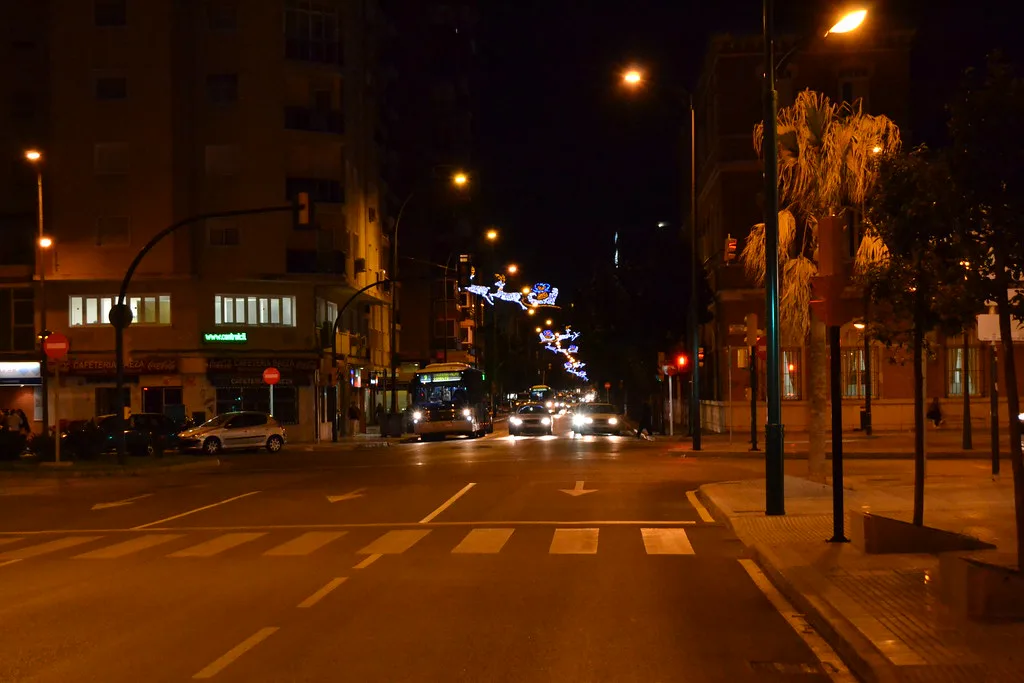
Daylight is the real limitation. At the start of December the sun rises around 8:20 and sets near 17:48, giving about nine and a half hours of light; by the end of the month sunrise slips to about 8:38 with sunset just before 18:00. That leaves long, dark evenings, which is why the light shows matter so much here. For a fuller month-by-month picture across the season, see the guide to Málaga in winter.
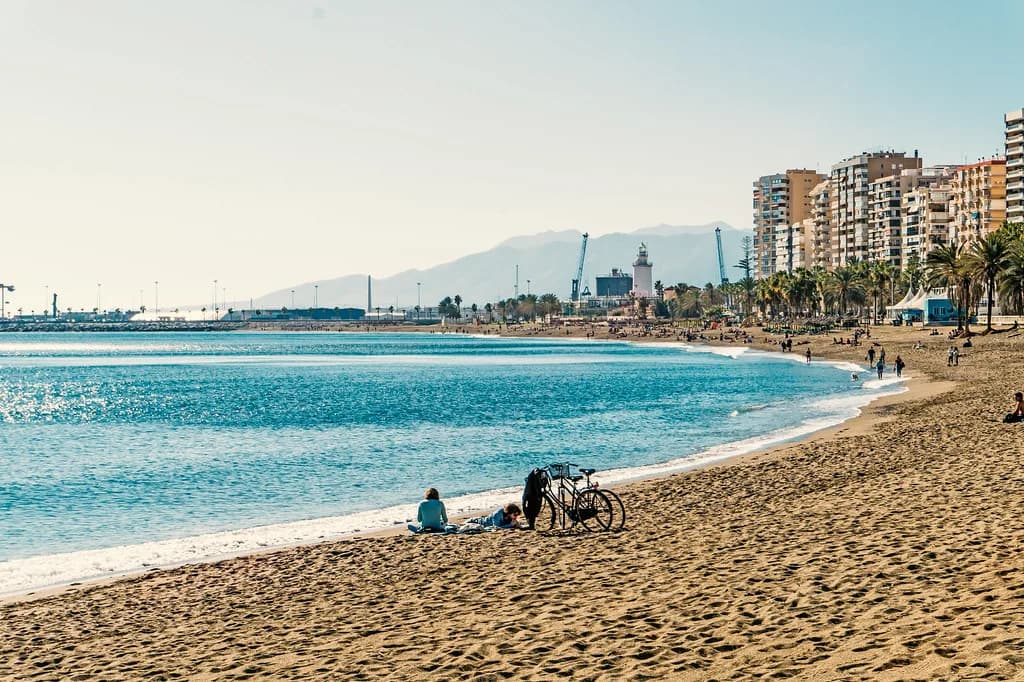
The sea sits between roughly 15°C and 17.6°C (59–64°F) in December, cold enough that swimming is a personal decision rather than a normal activity. Plenty of visitors still walk the shoreline in the sun, and beachfront chiringuitos serve lunch outdoors when the afternoon is bright. If the water matters to you, look at Málaga in December for the coastal picture before committing.
Christmas Eve, Christmas Day and New Year
Christmas itself is a quiet, family-centered holiday in Spain, and the big public spectacles cluster around it rather than on the day. Málaga's December program is dense with light shows, belenes and outdoor eating, but Christmas Day and New Year's Day are the two dates to plan around rather than assume.
The season runs to Epiphany rather than stopping on 1 January. Three Kings, on 6 January, is the traditional finale, with the parade held the evening before on 5 January; the city's Christmas lights stay up until that date and are then taken down. Plan your trip to end on or after 6 January only if you want to catch the parade and the last of the illuminations.
New Year's Eve in Málaga centers on the Plaza de la Constitución, with a big party and the traditional twelve grapes at midnight. Expect a party atmosphere with concerts and a packed square rather than a ticketed event, and arrive early if you want space. The rest of the old town stays lively late into the night on 31 December.
The Calle Larios Light Show and the Cathedral Video Mapping
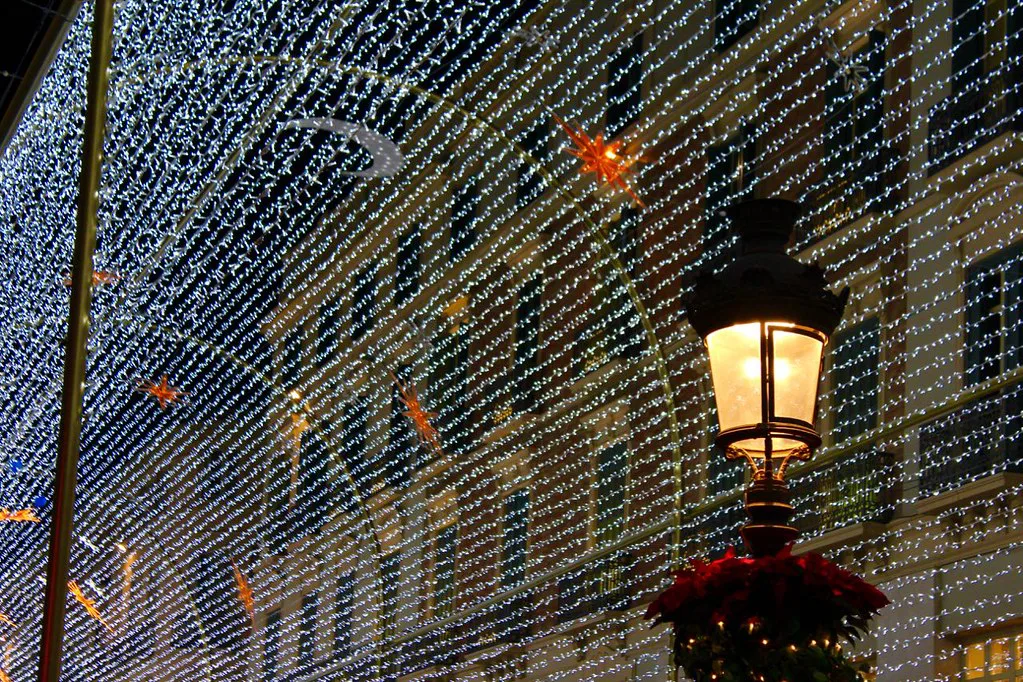
Calle Larios is the headline act. The city spends heavily on the display, and in a recent season the show ran daily at 18:30, 20:30 and 22:00, with the lights dancing to recorded Christmas music for a few minutes each time. It is free to watch and takes place in the open street, with the biggest crowds on weekend evenings and around the switch-on. To see the boulevard without the crush, aim for a weekday show and claim a spot along the middle of the street rather than at its edges.
The second spectacle is projected onto the south face of Málaga Cathedral, using laser and video mapping with music and, in recent years, a themed story told across the facade. Shows have run several times each evening over roughly a month around Christmas, lasting under ten minutes, and are viewed from the street outside. The timings are usually staggered so you can watch one and walk to the other, but the schedule is set fresh each year by the city and the cathedral.
Both shows are short, free and outdoors, which makes them easy to combine with dinner rather than a whole evening's plan. Treat them as a reason to be in the center after dark, not as a ticketed attraction to build a day around. If a specific showtime matters to your evening, the cathedral and Calle Larios timings are worth confirming on the day.
Paid Light Trails Outside the Center
Two ticketed light trails take the spectacle beyond the old town. La Concepción Botanical Garden, on the northern edge of the city, hosts an illuminated route through the grounds each season, generally from late November to 6 January, roughly 18:30 to 22:30. It is a timed-entry walk of an hour or more with steps in places, and recent adult tickets were around fifteen euros. Book online in advance if you want a specific slot; weekend parking is limited, so public transport is the better bet.
The other is a Festival of Lanterns in Parque del Oeste, west of the center, where hundreds of large Chinese-style lanterns are arranged around a lake with music and short acrobatics shows on a small stage. Recent tickets started around fifteen euros on weekdays and twenty at weekends, and the festival has run into February, longer than the city's other light displays. It is flat, pushchair-friendly and easy to reach by Metro to La Luz-La Paz followed by a short walk.
Nativity Scenes Around the City
Belenes, the Spanish nativity scenes, are the quiet heart of a Málaga Christmas. Set up in churches, museums and public buildings across the city, they go far beyond the stable: expect street scenes, markets and house interiors populated with hundreds of figures. The city hall publishes a map of the displays, so you can wander between them on foot rather than treating any single one as the destination.
Some venues are free to peek into, including the courtyard displays at the Town Hall and the Carmen Thyssen Museum, while others sit inside paid museums you may already want to visit. The cathedral's own belén is among the best known and can draw a queue at peak times. Pairing a couple of scenes with a museum visit makes a good rainy-afternoon plan.
Christmas Markets in Brief
Markets exist, but they are a supporting act rather than the main event. The largest sits along Paseo del Parque with dozens of stalls, and there are further stalls at Muelle Uno and around the port, all running through December until 6 January. Expect gifts, crafts and nativity figures rather than the glühwein-and-bratwurst formula of central Europe; if you want markets as the reason for the trip, another city will serve you better.
What Else Is On: Food Fairs and New Year Celebrations
A gastronomic fair under the Sabor a Málaga banner occupies Paseo del Parque for several days in early December, with producers from across the province selling cheese, charcuterie, wine, honey and olive oil. In a recent edition it ran from 4 to 9 December, opening from 10am to 9pm. Dates shift each year, so check the fair's own listings before you build a day around it.
Beyond that, the season's public events are mostly concentrated in the evenings: the light shows, the lantern trail, and the New Year's Eve gathering in Plaza de la Constitución. If you want a broader regional comparison of how Spain marks the season, the guide to Christmas in Spain sets out the shared traditions, from the Three Kings to the twelve grapes. For a different take on Christmas week, with its own light displays and island traditions, Christmas in Mallorca offers a useful counterpoint to Málaga's programme.
Food and Drink at Christmas
Málaga's Christmas eating happens largely outdoors at lunchtime, when terraces fill with groups taking long meals in the sun. Seafood is central, and the city's sweet repertoire is worth seeking out: turrón, the almond nougat, is a local specialty, alongside mantecados, polvorones and borrachuelos. Casa Mira, with branches on Calle Larios and near the cathedral, is the long-established name for turrón and sells a turrón-flavored ice cream year-round.
Two dates anchor the calendar. Roscón de Reyes, a cream-filled ring cake, appears for Epiphany on 6 January. Roast chestnut stalls also appear on the streets over the season, sold in paper cones and eaten on the move. For a low-key lunch, the covered Atarazanas Market is good for seeing what is in season and for foodie souvenirs such as sealed packets of jamón.
Things to Do Between the Festivities
The city's museums carry the daytime load. The Carmen Thyssen, the Picasso Museum and the glass and crystal museum all sit within easy walking distance of the center and make sensible choices when the weather turns. Pair one with a nativity scene in the same building or a nearby church, and you have a compact half-day that works whatever the sky does.
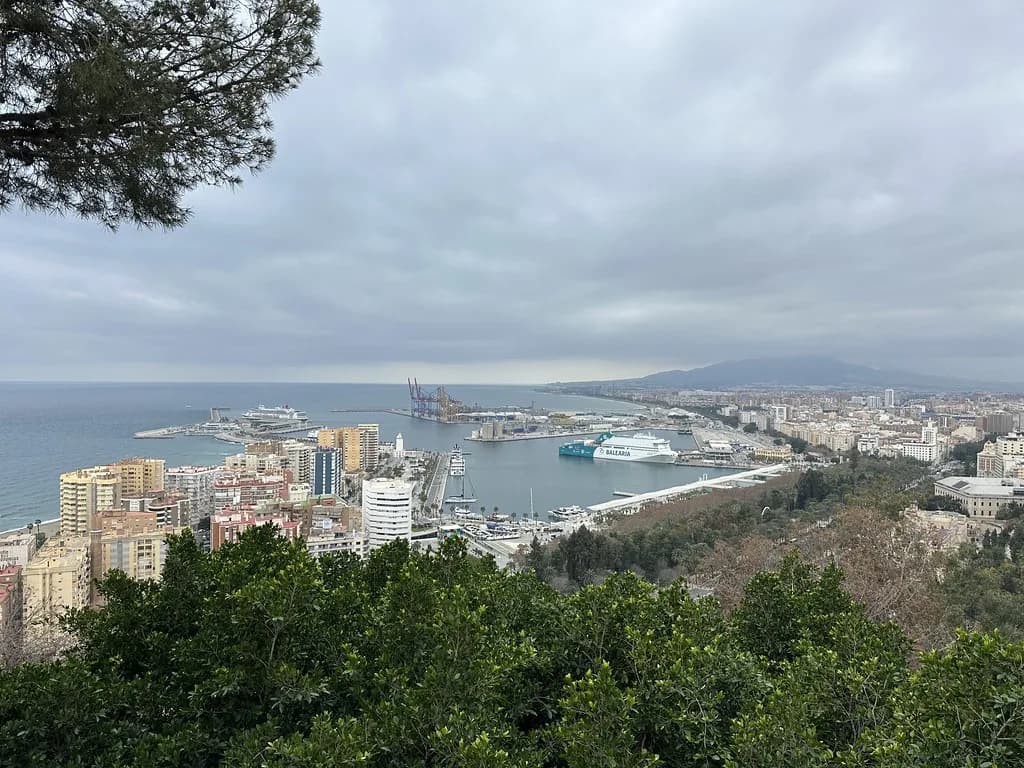
Outdoors, the best winter activity is simply walking. The old town's pedestrian streets, the palm-lined Paseo del Parque and the port promenade at Muelle Uno all reward a slow afternoon, and the beachfront is pleasant for a stroll even when the water is too cold for swimming. Beach lunches at chiringuitos are a genuine local habit on bright days rather than a tourist gimmick.
Day Trips That Work in Winter
Málaga's position on the Costa del Sol makes short trips easy. Ronda, with its gorge and whitewashed streets, works well in cooler months when walking is comfortable, and the surrounding white villages are manageable by car. Marbella and the coastal towns have their own Christmas programs, including light displays and parades, which are worth checking against your dates if you plan to stay outside the city.
Inland, Granada and the Alhambra need a booked slot in advance and a full day, and the Sierra Nevada mountains sit within reach for those who want cold and altitude without making it the focus of the trip. Closer to the city, the Botanical Garden doubles as a daytime outing as well as a light trail venue. If your trip stretches past the holidays, Málaga in February covers the quieter weeks once the decorations are down and Carnival approaches.
Who Christmas in Málaga Suits
It suits travelers who want mild air, outdoor lunches, free evening entertainment and a city that stays lively after dark. It is a good choice for couples and families with older children who value daylight walks and museums over snow, and for anyone who wants Christmas without the cold. Budget-wise, December is cheaper than summer and the city is busier at weekends and over the main holidays than in the quiet weeks around them.
It does not suit everyone. If you picture a Christmas market as the centerpiece, deep snow, or long evenings full of daylight, look elsewhere. The short days mean sightseeing needs to be concentrated in the mornings, and rain on a handful of days can wash out plans unless you keep a museum or a covered market in reserve.
When the Lights Come Down and the Season Ends
Calle Larios and the city's decorations stay in place until 6 January, so a trip into the first week of the new year still catches the full display. After Epiphany, the city empties out of its festive mood quickly and the light shows stop. The weeks that follow are quiet and cheaper, and the city returns to its ordinary winter rhythm.
Plan Your Visit
Build your Málaga Christmas around the evenings. Use daylight for museums, the Atarazanas Market and long walks along the port, then head to Calle Larios or the cathedral square after dark for the shows, which cost nothing and take minutes. Book the paid light trails online in advance if you want a specific slot, and lean on public transport for La Concepción, where parking is tight at weekends.
Keep one day flexible for rain and one evening free for a long dinner, and check the city's own Christmas program before you go if a specific showtime or parade is the reason for your trip. Christmas in Málaga rewards a traveler who treats it as a mild-weather city break with a festive overlay, not a winter wonderland.
Explore more Málaga winter guides
Frequently Asked Questions
Is Málaga warm at Christmas?
It is mild rather than warm. December days typically sit around 17°C (63°F), with mornings near 11°C (52°F) and rain on roughly five days across the month. Expect lunches outside in the sun and a jacket after dark.
Is Christmas a good time to visit Málaga?
Yes, if you want mild weather, free light shows, outdoor eating and a lively city. It is less suited to travelers who want a German-style Christmas market, snow, or long daylight hours.
What happens in Málaga on Christmas Day?
Christmas Day is a quiet family holiday. The city's big public light shows run on the days around it rather than on the day itself, so plan a relaxed lunch and a walk rather than a full sightseeing program.
When do the Málaga Christmas lights go on and come down?
The switch-on typically happens in late November, and the decorations remain until 6 January, when the Three Kings mark the end of the season. The city publishes the exact switch-on date each year.
Do I need tickets for the light shows?
The Calle Larios show and the cathedral projection are free and held in the street. The Botanical Garden trail and the Festival of Lanterns are ticketed, and their schedules and prices are published by each operator.
How many hours of daylight are there at Christmas?
Roughly nine to nine and a half hours around the end of December. Sunrise comes late, around 8:30, and sunset shortly before 18:00, so daytime sightseeing has to be planned with the short afternoon in mind.
Sources
Winter travel notes
Optional updates when we add or revise winter guides.
You might also like
Continue reading
More guides you'll find useful