Christmas in Mallorca: What Christmas Week Is Really Like
Christmas in Mallorca is mild, quiet and built around Nativity scenes and family meals, with Palma's lights in December and the Three Kings in January.
On this page
Late December in Mallorca is mild, bright in the middle of the day and remarkably uncrowded. The summer resorts have emptied, Palma keeps its restaurants and museums running, and the festive season belongs to local families rather than to visitors. It suits travelers who want short, gentle days outdoors, long lunches and a Christmas that feels Spanish rather than international.
The one thing to understand before booking is that the season stretches well past 25 December. Christmas Day 2026 falls on a Friday and New Year's Day 2027 on another Friday, but the gift-giving climax comes later, when the Three Kings arrive on Epiphany, Wednesday 6 January 2027. Plan the trip around that rhythm and you get two celebrations instead of one; plan only for Christmas week and you may find the island at its quietest.
Weather in December
December is cool rather than cold by northern European standards, with sunny middles of the day and chilly evenings. Operators on the island describe average daytime temperatures around 16°C (roughly 61°F), midday peaks near 20°C (68°F) and nights of about 5–8°C (41–46°F), with sunrise near 08:00 and sunset around 17:30. Treat those as typical conditions rather than a forecast, and confirm the figures for your own dates on AEMET, Spain's state meteorological agency.
Rain is a real feature of the month, and it rarely announces itself far in advance, so build at least one indoor day into any week. The upside is light: December mornings are bright often enough for a coastal walk, a village wander or a terrace coffee, and the low sun makes the Tramuntana ridges look sharper than they do in summer. If you want a drier, warmer version of the same trip, look at Mallorca in March instead.
How the Season Changes
The main tourist season winds down roughly a month before Christmas, according to local operators, and the coastal resorts of Alcúdia, Pollença and the east coast go quiet. Seasonal hotels, beach clubs and many seafront restaurants close or cut their hours, and public transport thins out away from Palma. What stays open is the working island: the capital, the market towns and the villages, where life carries on through the holidays.
That makes your base the key decision rather than your itinerary. Staying in Palma gives you restaurants, museums and the Christmas lights within walking distance; staying in a coastal resort in late December means driving for dinner. Anyone who wants beach weather and a full resort scene should wait until spring, when the island reopens properly.
Palma at Christmas
Palma is where the festive season is most visible. The Christmas illuminations spread across the centre, with the main displays around Plaça Cort, Jaume III and Plaça de la Reina, and the city's nativity scenes sit alongside them, including the large one in front of the town hall at Plaça Cort. Walking the Passeig del Born and the old lanes between them is the simplest way to see it all in an evening.
The city's Christmas fair spreads through the centre rather than sitting on one square. Stalls cluster around Plaça Major, La Rambla, Via Roma, Plaça d'Espanya and Plaça de la Porta Pintada, selling food, tree decorations, religious figurines, ceramics, leather and jewellery; Plaça Major concentrates nativity scenes, trees and toys, while Plaça d'Espanya fills with fairground rides for children. The fair is usually open daily from 10:00 to 21:00, with live music, theatre and guided tours in the programme, so it works as an evening stop after a day in the Serra de Tramuntana.
Nativity Scenes and the Christmas Eve Rhythm
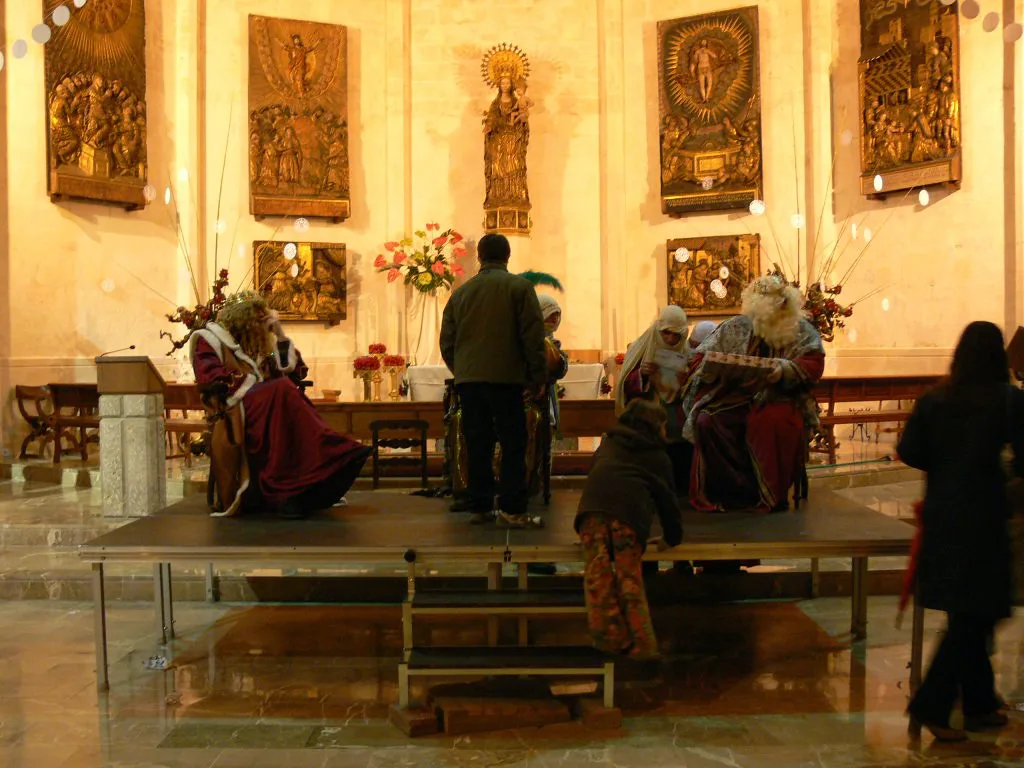
Nativity scenes, known locally as betlems, are the heart of a Mallorcan Christmas, and a route between them is one of the best things to do in the days before Christmas. They appear in churches, shop windows and public buildings across Palma and the villages, with the main public scene at Plaça Cort. Combine a morning of nativity-spotting with Christmas shopping in the small boutiques around the centre and a stop for churros and chocolate.
Christmas Eve is the family evening in Spain, with the main meal late and church services around midnight, and Christmas Day itself is quieter than in northern Europe. Many restaurants close or serve fixed festive menus, so decide where you will eat well ahead, and expect shops to shut on 25 December. The upside for visitors is a genuinely peaceful Christmas Day: a walk on an empty promenade or an hour in the old town costs nothing and feels nothing like high season.
Sóller and the Tramuntana in Winter
The citrus valley of Sóller is a strong winter day out, reached from Palma through the tunnel or by the historic train, with terraced groves of orange and lemon trees framed by the Tramuntana. Can Prunera, the modernist museum in the town, holds original works by artists including Picasso and Juli Ramis alongside art nouveau interiors, and the gardens make a quiet contrast to the busy centre. Sóller remains an orange town at heart, and winter is when the valley is at its greenest.
The port below town is the place to see the seasonal shift: a summer marina and beach frontage reduced to a handful of open cafés and a lot of empty quayside. That emptiness is the appeal if you want landscape and walking rather than swimming, and the sea will be cold well into spring. Travelers who need warm water and a full promenade of restaurants should choose another month.
Castles and Walking Days
Inland and on the east coast there are castles that reward a winter walk. Capdepera has one of the largest fortresses on the island, overlooking the sea between Mallorca and Menorca, and it now houses a museum that fills a morning for all ages. Alaró's tenth-century castle above the village is free to visit, roughly an hour's walk from the parking area at es Verger, and the village has a craft brewery with a taproom for afterwards.
Some of these outings need a car, because buses away from Palma are less frequent in winter. Rent one for two or three days rather than the whole week, and keep the mountain days flexible so you can pick the clearer one; the Serra de Tramuntana road is spectacular but slow, and wet leaves and low cloud make it slower. Snow on the highest peaks is possible but rare, and it never lasts long at village level.
Wine Country Around Binissalem
Binissalem and Santa Maria del Camí sit at the centre of the island's wine trade, home to the Binissalem denomination of origin and to producers such as Macià Batle, founded in 1856, and Bodegas José L Ferrer, established in 1931. The island has been in a wine renaissance since the 1980s, with small boutique bodegas making quality wines from indigenous grapes including Callet, Manto Negro and Prensal. A winter tasting is a good use of a wet afternoon, and the villages are an easy drive or train ride from Palma.
The big wine fairs happen outside the Christmas season, at the Vermar harvest fiestas in Binissalem in September and at the Pollensa wine fair in May, so December tastings are of the quieter, book-ahead kind. Bodegas often want advance notice for visits in low season, and some close over the holidays entirely. If wine is the reason for your trip, spring or early autumn gives you far more choice.
The Quiet Days Between Christmas and New Year
The week between Christmas Day and New Year's Eve is when Mallorca is at its quietest, and it is the moment to plan the things that do not need crowds. Museums in Palma, long lunches, the nativity scenes and the Christmas fair are all still running, and the roads to the villages and the mountains are close to empty. Expect a handful of restaurants to close for staff holidays and a few to reopen only for New Year.
Use these days for the landscapes you would avoid in summer: the Tramuntana passes, the hill villages and the empty coastal roads. The short daylight means starting early, with sunset around 17:30 in December, so plan one main outing each day rather than three. Travelers who want constant activity may find this week too slow; those who want true off-season calm will find it ideal.
New Year's Eve and New Year's Day
New Year's Eve in Palma is a city night, with dinners in the centre and celebrations into the small hours, and New Year's Day 2027 falls on a Friday, giving you a long weekend either side. Book dinner well in advance, because the restaurants that stay open fill quickly for one of the busiest nights of the winter. For a wider look at what happens across Spain on 31 December, see the New Year's Eve in Mallorca guide.
New Year's Day itself is quiet, with many shops and restaurants closed and the island recovering. Plan a gentle walk, a late breakfast and an evening meal where you have a reservation, and keep the day after free rather than booking an early flight home. If you are staying into January, the coast is at its emptiest and Palma returns to normal working life within a few days.
Epiphany and the Three Kings
Epiphany on 6 January is the real gift-giving day in Mallorca, and the Three Kings are the main event of the island's Christmas, with the 2027 celebration falling on a Wednesday. Parades and family gatherings mark the day across Spain, and many Mallorcans now celebrate Christmas Day as well, so you get two festive high points in one season. If you can only pick one week, the days around Epiphany often feel more authentically local than Christmas itself.
For a sense of how another Andalusian city handles the same transition from Christmas lights to the Kings, Christmas in Málaga shows the pattern: a city-centre light display in December, then the processions of 5 and 6 January. The trade-off is that Epiphany week is winter proper, with short days and a real chance of rain, so pack for wet walks and plan indoor alternatives in Palma.
Who a Mallorca Christmas Suits
This is a good trip for couples, families with older children and anyone who values space over spectacle. You get mild daytime weather, empty roads, excellent food and a Christmas that feels local rather than staged, with Palma providing the lights and the fair and the villages providing the traditions. It is a poor fit for anyone who wants beach weather, guaranteed sunshine or a resort scene in full swing.
Accept three trade-offs and the plan works: short days, real rain risk and closures in the resorts and in some restaurants over the holidays. In exchange you get low-season rates at hotels that stay open, tables at places that are booked out in summer, and a landscape you can hear yourself think in. If warmth matters more than atmosphere, wait for late spring.
Plan Your Visit
Choose your dates by deciding which celebration matters more: the lights, nativity scenes and family Christmas Eve of late December, or the Three Kings and the island's real gift-giving day on 6 January 2027. Base yourself in Palma for the first and keep a car for two or three days if you want Sóller, the castles and the wine villages.
Book Christmas Eve and New Year's Eve dinners early, keep one flexible day for rain and check museum and bodega hours with the venue directly before you travel. For the wider picture of the island between November and March, the Mallorca in winter guide covers the rest of the season.
Explore more Mallorca winter guides
Frequently Asked Questions
What is the temperature in Mallorca at Christmas?
Expect typical December daytime highs of around 16°C (61°F), with midday peaks near 20°C (68°F) and nights of about 5–8°C (41–46°F). These are long-term averages, not a forecast, so check AEMET for the actual outlook in the week before you travel.
Is Mallorca a good place to spend Christmas?
Yes, if you want a mild, quiet Christmas rooted in Nativity scenes and family meals rather than a resort holiday. Palma has the lights, the fair and the restaurants, while the coastal resorts are largely closed and the villages keep their own traditions. It suits travelers who value calm and walking over beach weather.
What is open in Mallorca on Christmas Day?
Christmas Day is quiet, with many shops and restaurants closed or serving fixed festive menus. Palma's museums and the Christmas programme keep parts of the centre active, but you should reserve your meal in advance and plan the day around a walk rather than shopping. Confirm arrangements directly with your restaurant.
When are the Three Kings celebrated in Mallorca?
The Three Kings are celebrated on Epiphany, 6 January, which is the main gift-giving day in Spain and Mallorca. In 2027 that falls on a Wednesday, so the days around it make a rewarding alternative to Christmas week.
Is Palma worth visiting in December?
Palma is the strongest base in December, with the main Christmas illuminations around Plaça Cort, Jaume III and Plaça de la Reina, the Christmas fair across the centre and the city's museums and restaurants open. Days are short, with sunset around 17:30, so plan one main outing per day.
What is the coldest month in Palma?
January is typically the coldest month in Palma, cooler than December and often wetter. If you want the festive atmosphere without the deepest chill, late December or the days around Epiphany are the better compromise.
Can you swim in Mallorca in December?
The sea is cold in December, and while some visitors take a quick dip, it is not swimming weather for most people. Treat the coast as a place for walking and views, and save swimming for late spring onwards.
Sources
Winter travel notes
Optional updates when we add or revise winter guides.
You might also like
Continue reading
More guides you'll find useful