Does It Snow in Mallorca? What to Expect in Winter
Snow in Mallorca is rare and short-lived, mostly dusting the Serra de Tramuntana peaks. Here is when it falls, how cold it gets and what winter is really like.
On this page
Mallorca in winter is a green, windy, frequently sunny island where the sea stays visually spectacular and the mountains occasionally turn white. Snow is the exception, not the season, and the distinction that matters is between the high Serra de Tramuntana and everywhere else. If you are deciding whether to visit, the honest answer is that you should come for the quiet trails, the food and the light, and treat a snowy peak as a bonus.
A cold front can deliver sudden drama. On 21 November 2025, a waterspout formed off Sa Foradada between Sóller and Deià, hail fell, gusts reached 70 to 90 km/h and snow levels dropped to roughly 700 to 800 metres, with light snow and hail in Sóller, Bunyola and Escorca.
Days later, on 22 January 2026, snow dusted the Serra de Tramuntana peaks despite forecasts that had not called for it. Those two episodes show the pattern: short, unpredictable, elevation-dependent events rather than a reliable snowy season.
Does it snow in Mallorca? The short answer
Yes, but almost always on high ground. Snow in Mallorca means the Serra de Tramuntana, the ridge running along the northwest coast, plus the highest inland summits such as Puig Major. In Palma, the Bay of Palma resorts and the southern and eastern coasts, snow is a genuine rarity and rarely settles.
The more common winter weather in a cold snap is hail, squally rain and strong wind rather than settled snow. That matters for planning: a forecast of low snow levels usually means slush and hail on the passes, not a ski day or a guaranteed white landscape.
For wider Spanish context, snow in Mallorca is the Mediterranean, low-altitude end of the spectrum: Spain's reliable snow country lies in the Pyrenees, the Sistema Central and the high Sierra Nevada, not on a Balearic island. Treat any Mallorcan snowfall as news, not as itinerary material.
Where snow falls: the Serra de Tramuntana and the higher inland peaks
The Tramuntana is where a white morning is plausible. The villages on its flanks, including Sóller, Deià, Bunyola and Escorca, sit close enough to the ridge to see snow above them and occasionally receive a light dusting themselves. Above roughly 700 to 800 metres, snow becomes noticeably more likely during a cold outbreak.
The highest summits, Puig Major and its neighbours, are the surest places to see snow lying, and they are also the least accessible in winter weather: military land and mountain roads limit how close you can get. Coastal viewpoints such as Sa Foradada and the Deià coast let you look up at the ridge from sea level, which is the practical way to see a snowy Tramuntana without driving into it.
If seeing snow is a priority, base yourself on the northwest side rather than in Palma. The road through the Coll de Sóller and the mountain villages gives you the quickest access to the snow line, and you can retreat to the coast the same day if the weather turns.
How often snow settles, and why it rarely lasts
Settled snow at low altitude is uncommon and brief in Mallorca. The island's Mediterranean sea moderates temperatures, so snow that falls near the coast usually melts within hours, and even the peaks rarely hold a cover for long. Deep, lasting snowpack on the Tramuntana is not something to count on.
The reason is simple: the freezing level has to drop far enough for snow to reach the villages, and the same cold northerly winds that make it happen also bring the strong gusts and hail described in November 2025. Once the wind eases and the sun returns, the island typically warms quickly, with temperatures climbing back toward mild afternoons.
Read any forecast for snow line height rather than for the word snow. OpenSnow's Mallorca forecast point, which sits at low elevation, is useful for tracking snow levels and precipitation timing, but a low-elevation point will rarely record accumulation even when the peaks are white.
Snow by month: November through March
November is the month when the first wintry blast often arrives, and it can be abrupt. The 21 November 2025 episode brought the season's first snow to the Tramuntana, hail to lower ground and daytime temperatures that struggled to reach 10°C, well below what is typical for the time of year.
December and January are the months most likely to produce a dusting on the peaks, and both bring the island's shortest days and coolest nights. January 2026 delivered exactly that kind of surprise, with snow on the Tramuntana summits on 22 January even though forecasts had not predicted it.
February is the coolest stretch of the winter and the month when the Tramuntana is most likely to look properly alpine for a day or two, with Carnival falling on 9 February 2027 and Ash Wednesday on 10 February 2027. March brings lengthening days, warmer afternoons and a rapid decline in any snow chance, and the clocks go forward on 28 March 2027.
What winter weather actually feels like: temperatures, wind and rain
Mallorca's winter is mild by northern European standards but not warm. Coastal days are often pleasant in the sun and chilly in the shade, while the Tramuntana villages are distinctly colder, and frost is possible in sheltered inland valleys on clear, calm nights after a cold front.
Wind is the defining feature of a cold spell. The November 2025 front produced gusts of 70 to 90 km/h, choppy seas and a yellow warning for strong winds, brief hail showers and isolated thunderstorms. A calm, sunny January day and a squally one feel like different islands, so build slack into any mountain plan.
Rain arrives in wetter spells rather than as constant drizzle, and a single front can pass through in a day, with settled, brighter weather returning behind it. Check a mountain forecast for freezing level and wind before committing to a ridge walk, and keep a lower-altitude alternative ready.
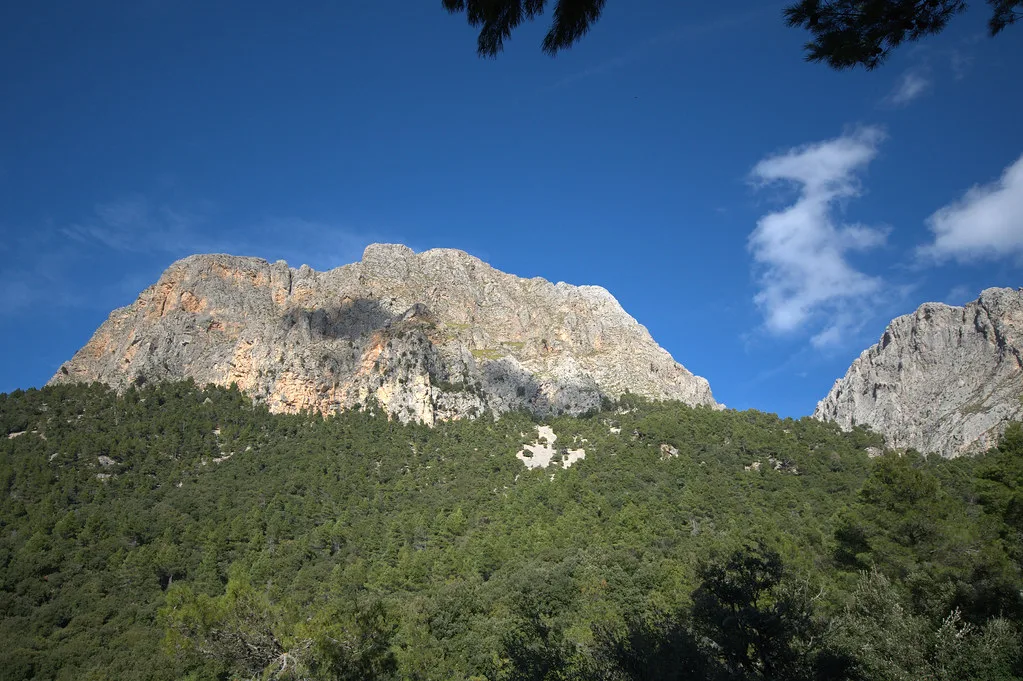
The Tramuntana in winter: what a snowy morning looks like
A snowy morning on the Tramuntana is usually a morning of sharp light: white ridgelines above dark green pine, cloud pouring over the passes and the coast road busy with people looking up. The snow line often sits visibly partway up the slope, with rain or hail falling on the villages below and snow above them.
The practical viewing strategy is to stay low and look up. Sa Foradada, the Deià coast and the Sóller valley give you a front-row view of the ridge without needing winter tyres or a confident mountain driver. If the snow reaches village level, expect the Coll de Sóller and higher lanes to be the first places affected, and plan to turn back rather than push on.
The villages themselves are quiet in winter and rewarding in their own right: stone lanes, citrus groves, olive terraces and long lunches. A day that starts with a snow-dusted ridge and ends with a fire and a slow meal in Sóller or Deià is the realistic version of the Mallorcan snow experience.
Cold-weather things to do when the mountains are white
When the peaks are white, the sensible plan is a low-altitude day with mountain views. Walk the coastal paths around Deià and Valldemossa where the gradients are gentle, stop at a mirador to photograph the ridge, and keep the driving short. Save the high passes for a clear, calm day.
Palma works well as a cold-day base: the cathedral, the old town, the Arab Baths and the museums give you hours indoors, and the city's food scene is at its most comfortable when you are not competing with summer crowds. Book table times rather than relying on walk-ins at the most popular places, and confirm opening hours with the venue directly.
Christmas is a modest, local affair rather than a large market destination, with lights and nativity scenes in Palma around Plaça Cort and village celebrations across the island. If you want the festive version of the island, plan around Christmas itself and expect shorter opening hours on the public holidays.
Sea temperature and the coastal winter
The sea is cold in winter, cold enough that swimming is a short, deliberate plunge rather than a beach day. Coastal walking, however, is excellent: the light is low and clear, the paths are empty and the views across to the Tramuntana are at their sharpest after a front has passed through.
Beach clubs and seasonal waterfront venues cut back or close outside the high season, while year-round cafes and port restaurants keep going. Rather than planning around a specific beach, pick a stretch of coast for a walk and check with the venue before relying on it for lunch; the coastal winter is about scenery and movement, not sunbathing.
Day trips that make sense in a cold snap
In cold, windy weather, keep day trips short and low. Palma to Valldemossa or Deià is a manageable drive with mountain views from the road, and Sóller is reachable by the vintage train, which runs on its own winter timetable. Check ferry and departure details with the ferry company before you build a day around them.
For a bigger contrast, the southern and eastern coasts are usually drier and calmer than the northwest in a northerly outbreak, making them a good fallback when the Tramuntana is under cloud. Inland towns such as Pollença, Alcúdia and the villages of the interior offer markets, monasteries and long lunches that do not depend on the weather.
Crowds, prices and short days: the winter trade-offs
Winter is low season, and the trade-off is straightforward: far fewer visitors, easier tables and cheaper rooms, but shorter days, some seasonal closures and a real chance of rain or wind disrupting a mountain plan. Daylight is the constraint that catches people out, with sunset early enough that a mountain walk needs to start in the morning.
Prices are lower than in summer across the board, but rates vary by dates, so compare actual quotes instead of expecting a blanket season-long discount. Carnival week around 9 February 2027 and the Christmas and New Year period bring local demand, while late January and early March tend to be the quietest, cheapest and least predictable weeks.
Who a winter Mallorca trip suits, and who should wait
Winter suits walkers, cyclists, food-focused travelers and anyone who wants Palma without the summer crush. It also suits people who enjoy dramatic weather and do not need a beach: the island's appeal in January and February is the mountains, the light and the sense of having it largely to yourself.
It does not suit anyone whose main reason for coming is warm sea, guaranteed sun or reliable snow. If you want to swim, sunbathe and eat outside every evening, wait until late spring; if you want a snow holiday, look at the Pyrenees instead. New Year's Eve in Mallorca is a lively, local celebration in Palma, but it is not a substitute for a winter-sports trip.
Plan Your Winter Visit
Treat snow in Mallorca as weather, not as an attraction. The island's winter offer is the Tramuntana on foot, Palma's old town and food, and quiet coastal roads with mountain views, and a snowy morning simply raises the stakes. Build flexibility into your days and keep a low-altitude plan ready for the windy ones.
Watch the freezing level and the wind rather than the word snow in the forecast, base yourself within reach of the northwest coast if the mountains matter to you, and confirm transport and venue details before you commit. February gives you the best odds of a white ridge and the quietest version of the island.
Explore more Mallorca winter guides
Frequently Asked Questions
Does it snow in Mallorca?
Yes, but almost always on high ground. Snow falls on the Serra de Tramuntana peaks and the highest inland summits, while Palma and the coastal resorts rarely see settling snow. A cold front can bring hail, strong wind and a dusting above roughly 700 to 800 metres within a single day.
When was the last time it snowed in Mallorca?
Snow was reported on the Tramuntana peaks on 22 January 2026, and the season's first snow in the mountains came on 21 November 2025 during a cold front that also produced hail and a waterspout off Sa Foradada. These are individual weather events, not a reliable annual pattern.
How cold does it get in Majorca in winter?
Coastal winter days are mild in the sun and chilly in the shade, and the Tramuntana villages are distinctly colder. During the November 2025 cold snap, daytime temperatures in parts of the island struggled to reach 10°C, well below the seasonal norm, and frost is possible in sheltered inland valleys on clear, calm nights.
Can you sunbathe in Majorca in December?
Realistically, no. The sea is cold, the days are short and the sun is low, so December is a walking, city and mountain month rather than a beach month. Sheltered terraces can be pleasant at midday, but plan on layers and a backup indoor option.
Where in Mallorca is snow most likely?
The Serra de Tramuntana, especially above roughly 700 to 800 metres and around the villages of Sóller, Deià, Bunyola and Escorca. The highest summits, including Puig Major, hold snow longest but are the hardest to reach in winter conditions, so viewing the ridge from the coast is the practical option.
Is it worth visiting Mallorca in winter?
Yes, if you want quiet trails, low-season prices, excellent food and mountain scenery without summer crowds. It is not worth it if you need warm sea, guaranteed sunshine or reliable snow. Late January and early March are the quietest weeks, while Carnival in February is the liveliest.
Sources
Winter travel notes
Optional updates when we add or revise winter guides.
You might also like
Continue reading
More guides you'll find useful