Does It Snow in Spain? Where and When It Snows in Winter
Snow in Spain is a mountain story, not a nationwide one. See which regions get snow from December to April and what cities like Madrid and Barcelona see.
On this page
Spain in winter is two holidays in one country. The Mediterranean coast and the southern cities stay mild enough for long lunches outdoors, while the mountains inland and in the north turn white and stay that way for months. Knowing which of those two Spains you are booking is the whole question behind whether your trip will be snowy.
This guide is for travelers weighing a snow-focused week in the sierras against a city break where snow is a rare bonus. It sorts Spain by climate zone, gives typical December temperature ranges for each region, and names the ranges where snow reliably settles, so you can match the destination to the trip you actually want.
How Spain's Winter Climates Work
Spain has one of Europe's most varied climates, and snow follows that variety rather than any national rule. The Mediterranean coast, the semiarid southeast around Almería, Murcia and Alicante, the continental interior around Madrid, and the oceanic strip from the Pyrenees to Asturias each behave differently between November and March.
The practical consequence is simple: the wetter, higher and more northern a place is, the better its chances of snow. The oceanic north sees abundant rain and a far greater likelihood of snowfall, while the dry southeast rarely sees any. Altitude matters just as much, which is why a mountain village an hour from a warm coast can be buried while the coast itself stays green.
When Snow Falls in Spain
Snowfall in Spain generally runs from December to the beginning of April, and January is typically the coldest and snowiest month. February and March often bring the deepest accumulations in the southern ranges, which is why late-winter trips are the safer bet for guaranteed snow underfoot.
Treat those months as typical conditions, not a forecast: a given January can be bare at mid-altitude and a given March can deliver a heavy dump. If snow is the point of the trip, aim for high ground and build flexibility into your dates rather than fixing everything on one week in early December.
December Weather by Region
December is a useful month to compare regions because the differences are already sharp. Rough Guides gives approximate ranges of 10°C to 13°C (50°F to 55°F) by day in Madrid with lows of 2°C to 5°C (35°F to 40°F), 16°C to 18°C (60°F to 65°F) highs in Seville and Granada, and 10°C to 13°C (50°F to 55°F) highs with 4°C to 7°C (40°F to 45°F) lows in Bilbao and the Basque Country.
Read those figures as regional approximations rather than national averages, and notice what they mean for snow. Madrid sits cold enough at night for a dusting but usually dry; the Andalusian cities are too mild in town for snow but sit within reach of the Sierra Nevada; the wet Basque coast feeds the Pyrenean snowpack rather than collecting snow itself.
Where Snow Settles: Sierra Nevada and the Andalusian Peaks
Sierra Nevada, about 50 minutes from Granada, is the flagship of Spanish snow, home to Mulhacén, mainland Spain's highest peak at 3,479 meters (11,414 feet). The range combines resort infrastructure on the slopes with whitewashed Alpujarra villages such as Pampaneira and Soportújar below, so a snow day and a village day can share one itinerary.
The resort's pistes run roughly between 2,100 and 3,300 meters, with snowmaking covering a substantial share of the terrain and a season that stretches from December into April. That altitude is what makes southern Spain's snow dependable even in a poor snow year elsewhere.
Closer to Málaga, the Sierra de las Nieves takes its name from the snow that caps its peaks in winter, and it makes a realistic day out from the Costa del Sol without any resort crowds. The coastal city itself stays mild, so you can pair a morning in the mountains with an evening at sea level.
Where Snow Settles: the Pyrenees
The Pyrenees carry the country's most consistent snowpack, fed by Atlantic weather arriving from the north. In Aragón, the Comarca del Sobrarbe combines medieval villages like Aínsa with Ordesa y Monte Perdido National Park, where snowy forest paths replace the summer hiking crowds.
In Catalonia, the Valle de Arán holds Baqueira Beret, the largest Pyrenean domain with more than 160 kilometers of slopes and reliable snow thanks to its elevation and northern exposure. Even travelers who never clip into skis use the valley as a base for snowshoeing and quiet mountain roads.
Where Snow Settles: Central and Northern Mountains
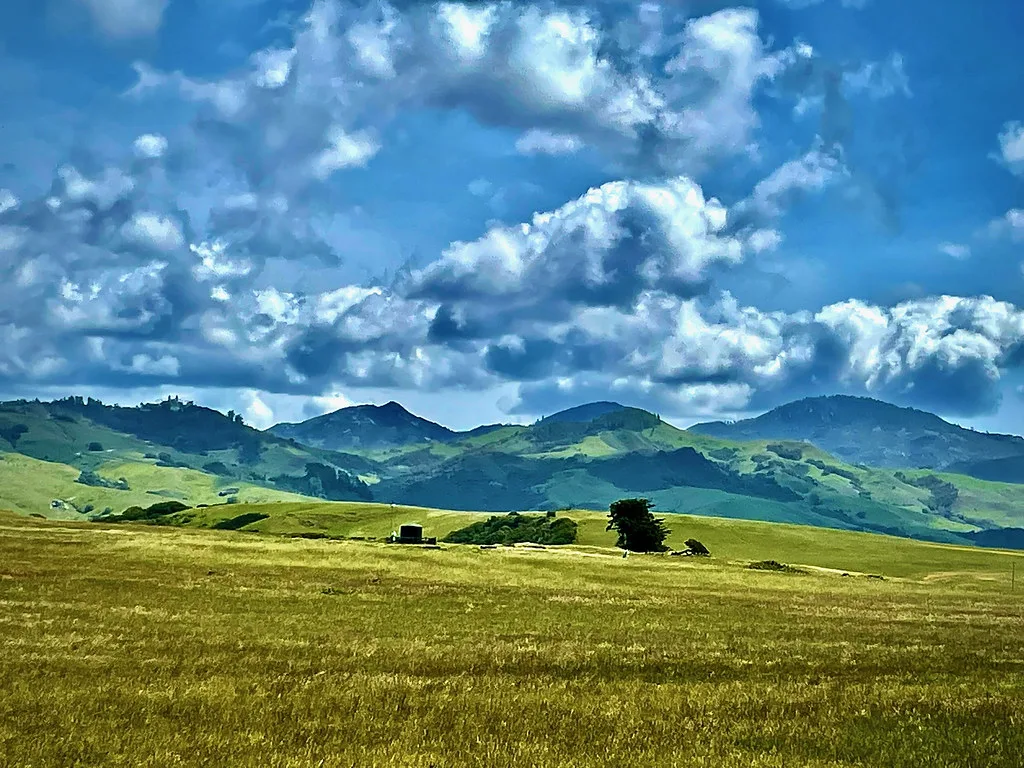
The Cordillera Central puts snow within easy reach of the capital. Rascafría, roughly an hour and twenty minutes from Madrid, offers hiking trails, the Cascada del Purgatorio waterfall and the small Valdesquí ski area, while the Sierra de Gredos rises to around 2,300 meters about two hours from the city with no resort at all, just quiet peaks.
In the north, Somiedo Natural Park in Asturias, in the Cantabrian Mountains, is known for its glacial lakes ringed by high peaks and holds snow from roughly December to March. Valdezcaray in La Rioja is a smaller, quieter alternative to Sierra Nevada, open through the winter months for skiing and snowboarding, with pintxos and wine in the valley below.
Does It Snow in Madrid?
Snow in Madrid is rare but not impossible: the city is dry and cold in winter, and heavy snow has happened in exceptional years. Do not book a Madrid winter trip expecting a white city. Book it for museums, cold sunny walks and the near certainty that you can reach snow in the sierras by car.
That combination is Madrid's real winter advantage. You can spend a morning at the Prado or the Royal Palace and still see snow on the same trip by heading to Rascafría or the Sierra de Gredos, provided road conditions allow and you check forecasts before setting out.
Does It Snow in Barcelona and Catalonia?
Barcelona itself rarely sees snow, though it can fall in late December or January in occasional cold snaps. The city's winter is better sold on mild daylight, thinner crowds at the Sagrada Família and the Santa Llúcia market than on any hope of flakes.
For actual snow, Catalonia's answer is the Pyrenees. The Valle de Arán and Baqueira Beret deliver reliable winter conditions a few hours from the city, which makes a split Barcelona-and-mountains itinerary genuinely practical.
Valencia, Málaga, Seville and the Canary Islands
Valencia and the Costa del Sol stay mild through winter, and snow on the coast is uncommon to the point of being a non-event. Inland from Valencia, higher towns such as Morella can see snow, and the Sierra de las Nieves above Málaga holds it on the peaks, but the cities themselves are warm-weather winter destinations. For a closer look at the snow question on that stretch of coast, see does it snow in Mallorca.
Seville follows the same pattern: cool-to-mild days, no realistic snow, and short travel times to the Sierra Nevada if you want a contrast. The Canary Islands are milder still, and the one place to see snow there is the high ground of El Teide National Park on Tenerife.
If your priority is sunshine in December rather than snow, the islands and the eastern coast are the right choice, with typical December highs in the low twenties Celsius and far more reliable outdoor weather than the interior.
Snow Without a Ski Holiday
You do not need to ski to make snow part of a Spanish winter. Snowshoe walks in Somiedo and Sobrarbe, the Alpujarra villages below the Sierra Nevada, and scenic drives into the Cordillera Central all work for travelers who want landscapes rather than lift queues.
In the cities, winter pushes the pleasure indoors: Arabic baths and spas, long museum afternoons, and food-led evenings in Seville and San Sebastián suit the short daylight hours. That is the case for a city-first trip with one mountain day added, rather than a full snow week.
February brings Carnival before Ash Wednesday, so mountain bases near towns with processions can combine snow with local festivities. Reserve any snow-dependent activity directly with the lift company or ski resort running it, since conditions, road access and lift operations change with the weather.
Snow or Mild Cities: Choosing Your Trip
A snow-focused Spain trip means altitude, shorter days in valley towns, and a real risk that a given week is mild and wet rather than white. It suits travelers who can move dates, enjoy mountain driving or accept a resort base, and do not mind cold hands and early sunsets.
A mild-city trip means Madrid, Barcelona, Seville or Valencia with reliable sightseeing, cheaper low-season rates outside the Christmas and New Year period, and snow only as an optional day trip. It suits first-time visitors, families with small children and anyone who wants culture over landscapes.
March is the compromise month: the sierras usually still hold snow, the cities warm up, and Holy Week falls on 21 to 28 March 2027, bringing processions that make Seville and Málaga busier and more expensive. Book those dates early if they appeal.
Who a Snowy Spain Winter Suits
Choose a snow trip if you want mountain scenery, are comfortable with winter driving or resort transfers, and treat snowfall as a bonus rather than a guarantee. Choose a city trip if your group includes people who dislike cold, if you have fixed dates in December, or if you mainly want food, art and architecture.
Christmas week is the pivot point: the cities fill with markets and holiday crowds while the mountains fill with skiers, so neither is quiet. Outside those dates, December is low season almost everywhere, which is the strongest argument for traveling early in the month.
Getting Around Snow Country
Snow country in Spain is car country, and mountain roads can require chains or winter tires after a storm, so check road conditions with the traffic authority before setting out. Many sierra villages are reached by infrequent buses, and resort access is easiest by organized transfer or your own vehicle.
Trains connect Madrid, Barcelona, Granada and the northern cities efficiently, so a realistic winter itinerary pairs a rail-based city stay with one short mountain excursion rather than touring several ranges. Build a spare day into the plan for weather delays, especially in the Pyrenees.
Plan Your Snow Decision
Spain does get snow, but it is a mountain event from December into early April, concentrated in Sierra Nevada, the Pyrenees and the ranges near Madrid. Decide first whether you want a white landscape or a mild city, then pick the region, and treat January and February in the high sierras as your best odds.
Once the region is settled, the rest follows: book mountain bases early for holiday weeks, keep city days flexible for weather, and confirm lift and road status with the lift company or traffic authority as your dates approach.
Explore more Spain winter guides
Frequently Asked Questions
Does it snow in Spain?
Yes, but mainly in the mountains. Snowfall generally runs from December to the beginning of April, with January typically the coldest and snowiest month, and it settles most reliably in the Sierra Nevada, the Pyrenees and the ranges near Madrid. Coastal cities see little or none.
What months does it snow in Spain?
Snow is most likely between December and early April. January is usually the coldest month with the best chance of snowfall, and February and March often bring the deepest cover in the southern sierras.
Does it snow in Madrid?
Rarely in the city itself, which is dry and cold in winter. Snow is realistic within a couple of hours, in the Sierra de Gredos and around Rascafría and Valdesquí, making Madrid a good base for a city break with one snow day.
Does it snow in Barcelona?
Snow in Barcelona is rare, though it can fall in late December or January in cold snaps. For dependable snow, head to the Pyrenees, where the Valle de Arán and Baqueira Beret hold winter conditions.
Does it snow in Valencia, Málaga or Seville?
Not realistically in the cities, which stay mild through winter. Snow can appear on high ground nearby, such as the Sierra de las Nieves above Málaga or inland hills behind Valencia, but plan those cities as warm-weather winter breaks.
Can you see snow in the Canary Islands?
Only on high ground. El Teide National Park on Tenerife can hold snow in winter, while the coasts and lower islands stay mild enough for hiking and outdoor days.
Where is the best place to see snow in Spain?
Sierra Nevada near Granada for reliable snow and easy access to the Alpujarra villages, the Pyrenees for the deepest snowpack and largest terrain, and the Sierra de Gredos or Rascafría for snow close to Madrid.
Is January the snowiest month in Spain?
January is typically the coldest and snowiest month, but conditions vary year to year. Late February and March often deliver deeper cover in the southern ranges, so flexible dates help if snow is essential to your trip.
Sources
Winter travel notes
Optional updates when we add or revise winter guides.
You might also like
Continue reading
More guides you'll find useful