New Year's Eve in Spain: Which City Suits You?
New Year's Eve in Spain means 12 grapes at midnight, family dinners first and packed city squares. See which city suits your night and what to expect.
On this page
New Year's Eve in Spain, known as Nochevieja, is not a night that starts early. Most households sit down to a long family dinner first, then move out to a square or a party closer to midnight, which means the celebration peaks late and the streets fill in stages. If you are visiting, plan your evening around a midnight focal point rather than an early bar crawl, and expect the biggest crowds in the final hour before the chimes.
The country is a good fit for travelers who want a shared public ritual rather than a formal gala: a crowd, a clock, a box of grapes and a glass of cava. It suits people comfortable with standing in a packed plaza in cold weather and making their own plans at short notice. Spain in winter is quieter than summer, so cities are walkable and museums are open, but New Year's Eve itself is the one night when everything converges on a few central squares.
Why Spain's New Year's Eve Starts Late and Stays Family-First
The Spanish pattern is dinner with family until late evening, then a move to a city square or a private party. Don Quijote describes this rhythm directly: an elaborate family meal comes first, and only afterwards do people head out to the plazas. That matters for planning, because restaurants and bars may be full of family groups early and the public spaces empty until close to midnight.
For a visitor, the practical consequence is to eat early and well, then claim a spot in your chosen square before the crowd thickens. Some public events are informal and free, so bring your grapes and cava with you rather than relying on buying them at the venue. The night runs late: after midnight, younger crowds move on to clubs and bars that often require tickets bought in advance, so decide in advance whether you want a public plaza or a paid venue.
The 12 Grapes: How Las Uvas de la Suerte Works
At midnight, the tradition is to eat one grape for each of the twelve chimes, with each grape standing for a month of the coming year. Don Quijote traces the custom to 1909, when grape growers in Alicante had a surplus and the habit spread. The practical difficulty is speed: twelve grapes in about twelve seconds means biting and storing rather than chewing calmly, and seasoned locals pick small, seedless fruit.
Buy your grapes and a bottle of cava ahead of the evening. One first-hand account of Puerta del Sol notes that grape boxes in central Madrid were heavily depleted by early evening, while cava was still being restocked. Cava is the Spanish sparkling wine usually poured after the chimes, and it is typically cheaper than champagne because it is made domestically. Supermarkets and department-store food halls are the reliable stop; buy in the afternoon, not at ten at night.
Madrid: Puerta del Sol and the Televised Countdown
Madrid's Puerta del Sol is the country's best-known countdown, broadcast nationwide since 1962 from the clock on the Real Casa de Correos. The mechanism is old and manually operated: the golden ball is released shortly before midnight, and the chimes follow in quick succession. Crowds arrive hours early, picnic on the square and wait standing, so wear warm layers and treat it as an endurance event rather than a quick stop.
The atmosphere is convivial and orderly but very dense, and the square is a prime spot for pickpockets, so keep phones and wallets zipped away. ResaInn recommends Puerta del Sol for people who want to experience the televised moment in person once, and notes that the surrounding night continues for hours. If standing in a packed plaza for four hours sounds punishing, Madrid's bars and private parties offer an alternative, but many sell out well before the date.
For the rest of a Madrid winter trip, the Prado, the Retiro and the covered markets give you warm, indoor options on short December days, and Puerta del Sol sits within walking distance of most central sights. The wider Spain in winter guide covers how the season changes the country's cities, coast and mountains if you are building a longer itinerary around the night itself.
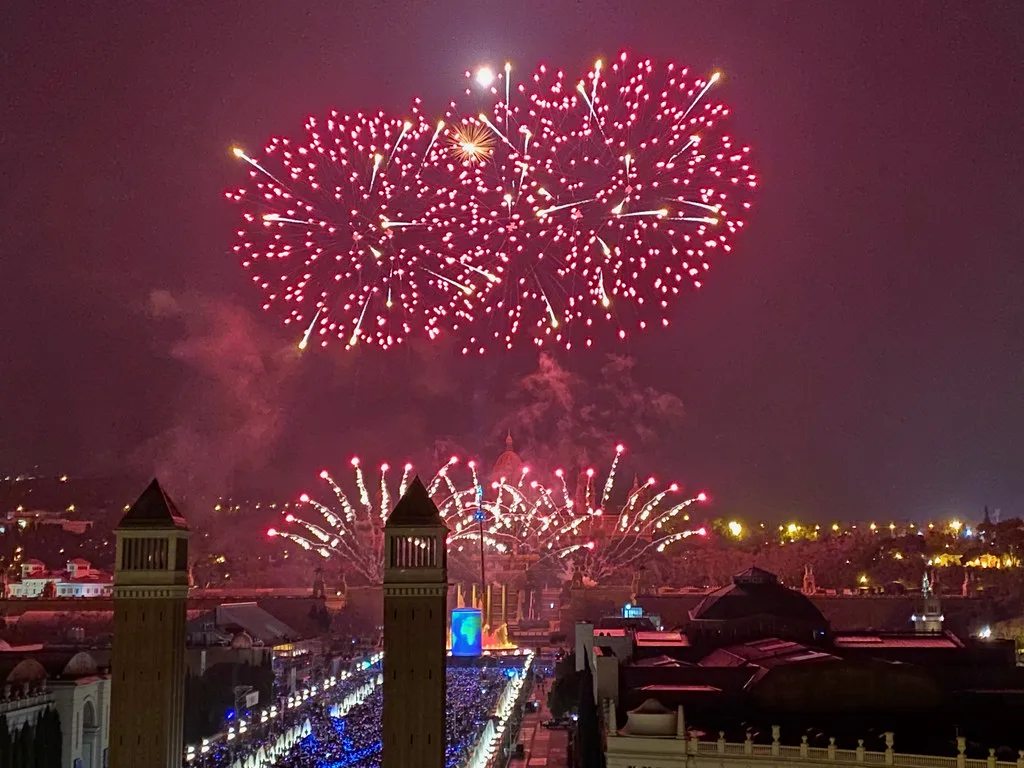
Barcelona: Montjuïc Fountain Show and Ticketed Parties
Barcelona's public focus on New Year's Eve is the Montjuïc fountain, where a free show with fireworks has drawn crowds and fireworks have featured in past celebrations. ResaInn points out that you should bring your own twelve grapes, since the event is free and informal. The trade-off is that the fountain is a short walk from the metro and the surrounding streets empty slowly afterwards, so plan your route back before midnight.
Beyond the fountain, Barcelona's New Year's Eve leans on private parties and club nights with advance tickets, which sell out in the final weeks of December. That makes the city a good pick if you want a choice between a free outdoor moment and a paid indoor party, and a less good pick if you dislike choosing between the two at the last minute. Daytime in late December is short, so use the mornings for the Gothic Quarter or a museum before the evening begins.
Valencia: Plaza del Ayuntamiento as the Midnight Focal Point
Valencia gathers around the Plaza del Ayuntamiento, where the city's celebration has run into the early hours and the square becomes the clear center of gravity for the night. ResaInn describes the Valencian atmosphere as something to experience in person rather than watch on screen. The city is compact enough to walk between the plaza and the old town, which makes it easier to retreat indoors if the weather turns.
Valencia pairs the night with food better than most Spanish cities: the rice dishes and market culture give you a reason to book a long lunch before the evening. Late December days here are mild by northern European standards but not warm, so a coat still matters for the hours outside. If you are extending the trip, the weeks before the night belong to Christmas in Spain, when lights and family meals dominate the calendar.
Bilbao: Grapes on the Paseo del Arenal and Pintxos in the Casco Viejo
Bilbao has its own version of the midnight ritual: crowds eat the grapes on the Paseo del Arenal, a local tradition ResaInn dates to the 1920s. The Casco Viejo and the area around the Teatro Arriaga fill with pintxos and wine earlier in the evening, giving you a natural sequence of food, then square, then chimes. It is a compact, walkable night that suits people who want a local feel rather than a televised spectacle.
Club and disco tickets in Bilbao go early, so ResaInn warns that venues fill up if you leave booking to the last days. The city's northern climate means rain is a real possibility in late December, and much of the night happens outdoors, so a waterproof layer is more useful here than a formal outfit. Bilbao also works as a base for day trips along the Basque coast, though winter timetables on regional transport are thinner than in summer.
Granada: Plaza del Carmen Bells, Lights and Flamenco
Granada's Plaza del Carmen is the gathering point, where the bells ring in the new year alongside fireworks, live music and Christmas lights on the surrounding buildings. ResaInn also flags flamenco shows as a way to spend the earlier part of the evening, which suits anyone who wants a seated, ticketed start before the public countdown. The square itself is small, so the crowd feels dense quickly.
Granada sits at altitude below the Sierra Nevada, so late December nights are cold and the surrounding mountains can carry snow. That combination gives you a winter city break with a dramatic backdrop and easy access to the Alhambra in the days around the holiday, provided you book palace tickets well ahead. If snow is a draw, the does it snow in Spain guide explains where winter snow actually falls.
Weather and Daylight in Late December
Late December across Spain means short days and cold nights inland, with milder conditions on the Mediterranean and southern coasts. Daylight is at its shortest around the solstice, so expect dark by late afternoon and plan outdoor sightseeing for the middle of the day. The national weather service, AEMET, publishes climate averages by city if you want to compare typical December temperatures before choosing a destination. Treat any figures you see as long-term norms rather than a forecast for this year.
Rain is the variable that most affects the night itself: Bilbao and the northern coast are wetter in winter, while Madrid, Valencia and Granada are drier but colder after dark. Barcelona and Valencia rarely see snow at city level, but Granada can, and the mountains behind it certainly do. Spain in December sets out the seasonal pattern city by city if you are deciding where to spend the days before the holiday.
What Closes and What Stays Open Over the Holiday
New Year's Eve is not a public holiday in the way New Year's Day is, but many shops close early or shut entirely on the evening of 31 December, and restaurants run special menus that must be booked. Museums and monuments generally follow weekend or holiday hours, and some close on 1 January. The safest approach is to confirm directly with the venue or operator you plan to visit, since published hours vary by institution and change year to year.
Christmas markets wind down before the new year, so if you want that side of the season, arrive in the week before Christmas rather than after. Otherwise, the holiday period is a good time for indoor sights: the Prado and Reina Sofía in Madrid, the City of Arts and Sciences in Valencia, and the Alhambra in Granada. Carry cash for small bars, since some family-run places close over the holiday week.
Getting Around and Between Cities
Spain's high-speed rail network links Madrid with Barcelona, Valencia, Seville and Málaga, and it is the most reliable way to move between cities over the holiday, when roads around major cities are busy and parking is scarce. Book seats early: the days around 31 December are among the busiest of the year. Metro and bus services in Madrid and Barcelona run on reduced holiday timetables, so check the Renfe and city transport websites for the night of 31 December before you rely on public transport.
If your plans extend south, the Costa del Sol stays mild in winter and has its own celebrations; New Year's Eve in Málaga covers the Andalusian coast's version of the night. For island options, New Year's Eve in Mallorca sets out how Palma and the resorts handle the holiday, when much of the coastal infrastructure is quiet. Weighing a mainland plaza against an island night, the comparison of New Year's Eve in Mallorca is worth reading before you book.
After Midnight: Churros, Chocolate and How Late the Night Runs
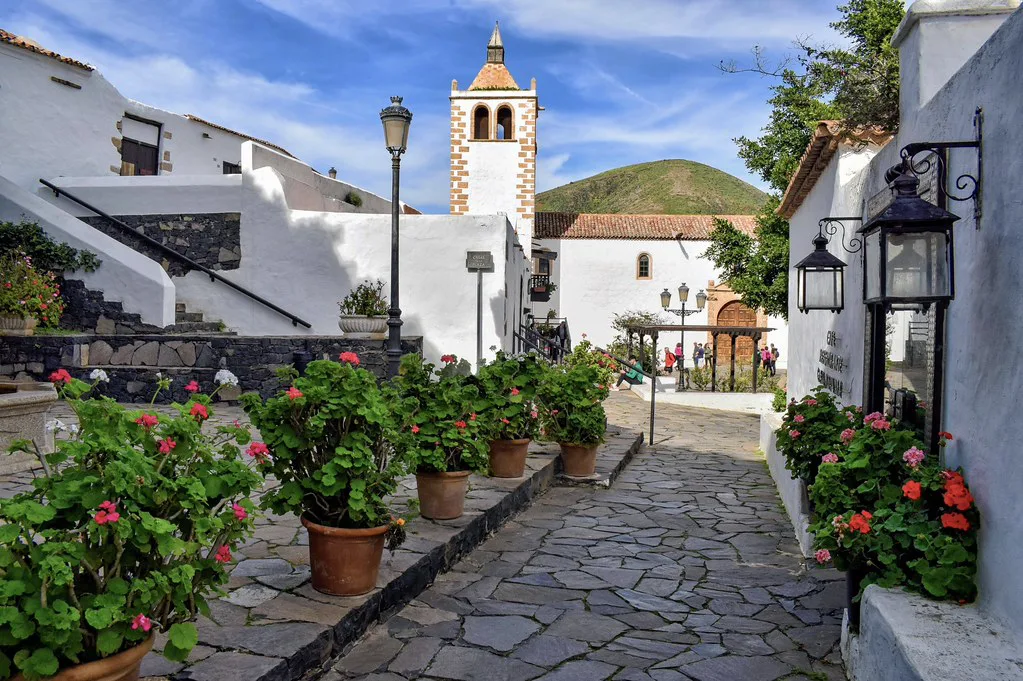
The morning ritual after the chimes is churros with thick hot chocolate, eaten in a café or a churrería before heading home to sleep. ResaInn recommends it as the way to start the year, and it is the most reliable way to find somewhere open in the small hours. The night itself runs late: younger crowds move to clubs, and central squares empty only gradually after the fireworks and the popping of cava bottles.
Expect taxis to be scarce and surge-priced around midnight, and metro services in the largest cities to run limited or extended holiday schedules. Choose accommodation within walking distance of your chosen square if you can, since the walk home is often faster than waiting for a cab. Keep an eye on your belongings in the crush and agree a meeting point with your group before the crowd thickens.
New Year's Day in Spain: A Slow, Quiet Holiday
New Year's Day 2027 falls on a Friday, which turns the holiday into a long weekend and keeps much of the country at home on 1 January. Expect many shops, restaurants and museums to open late or stay closed, and streets to be quiet until the afternoon. Book any restaurant you rely on for that day in advance, and treat it as a day for a slow walk rather than a full sightseeing schedule.
The Christmas season continues past New Year: Epiphany on 6 January 2027, a Wednesday, brings the Three Kings parades and another family meal, and in some regions it is the main gift-giving day. If you are staying into January, that date is worth planning around, but the days in between are among the calmest of the Spanish winter.
Choosing Your City: Crowds, Weather, Tickets and Short-Notice Plans
Madrid is the choice for the televised national moment and the biggest crowd; Barcelona for a free fountain show plus ticketed parties; Valencia for a compact plaza and good food; Bilbao for a local riverside tradition with pintxos; and Granada for a small square with mountain cold and flamenco. Decide which of those experiences you actually want, because they are not interchangeable, and the wrong one will leave you standing in the cold waiting for something that does not happen.
Last-minute plans are possible in every city, but the free public squares are the only realistic option once private parties sell out. Book your train or flight first, then accommodation near the square, then the evening itself. If you are still choosing between Spain and another country, compare the shape of the night and the cost of getting there rather than the size of the fireworks.
Plan Your Visit
The night itself rewards planning more than most: choose one square for midnight, buy grapes and cava in the afternoon, eat dinner early and dress for hours outdoors. Do not try to move between two celebrations after 11pm, and do not count on public transport running normally in the small hours. New Year's Day 2027 is a Friday, so build in a slow start and book anything you need for that day ahead.
Anyone who wants a shared, public, slightly chaotic countdown will find Spain hard to beat, especially Madrid and Valencia. Travelers who prefer a seated dinner and a quiet midnight should look at a hotel or restaurant event instead of a plaza, and families with young children may find New Year's Day and the Epiphany parades on 6 January 2027 a gentler way to enjoy the season.
Explore more Spain winter guides
Frequently Asked Questions
Which city in Spain is best for New Year's Eve?
It depends on the night you want. Madrid's Puerta del Sol gives you the televised countdown and the biggest crowd, Barcelona offers a free fountain show plus ticketed parties, Valencia centers on the Plaza del Ayuntamiento, Bilbao has its riverside grape tradition on the Paseo del Arenal, and Granada gathers in the smaller Plaza del Carmen. Pick the experience rather than the city name.
What is New Year's Eve called in Spanish?
It is called Nochevieja, literally the old night. The evening usually begins with a long family dinner before people move to a square or a party closer to midnight.
What are the 12 grapes in Spain?
The tradition, called Las Uvas de la Suerte, is to eat one grape for each of the twelve chimes at midnight, with each grape standing for a month of the coming year. The custom is usually traced to 1909, when grape growers in Alicante had a surplus and the habit spread.
Is Barcelona good for New Year's Eve?
Yes, if you want a choice between a free outdoor moment and a paid indoor party. The Montjuïc fountain has hosted a free show with fireworks in past years, while clubs and private parties require advance tickets. Bring your own grapes to the free event.
What happens on New Year's Day in Spain?
It is a quiet national holiday. Many shops, restaurants and museums open late or stay closed, and streets fill only in the afternoon. The day after the chimes is traditionally marked with churros and thick hot chocolate.
Do I need tickets for New Year's Eve in Spain?
Public squares and free events such as the Montjuïc fountain do not require tickets. Clubs, private parties and restaurant dinners often do, and they can sell out before the date. Where a venue sells tickets, the venue publishes the rules for its own event.
Sources
Winter travel notes
Optional updates when we add or revise winter guides.
You might also like
Continue reading
More guides you'll find useful