Zürich in Winter: What November to March Is Really Like
Zürich in winter brings short, cold days, quiet streets and mountain views on clear afternoons. See what each month feels like and what stays open.
On this page
Zürich in winter is a small, walkable city under short daylight, where the lake sits grey and still and the old town's church towers show up sharp against the sky on clear mornings. It suits museum-goers, chocolate lovers and travelers who want Alpine views without committing to a ski week. The season runs from November to March, and each month feels noticeably different.
Weather in November
November is the softest entry into winter, with typical highs around 9°C (47°F) and lows near 3°C (38°F). It is a month of low cloud and damp afternoons rather than deep cold, and the last bright foliage usually disappears early on. Long-term averages for the season put daytime temperatures between roughly 4°C and 11°C (39–51°F) depending on the month.
Crowds are thin in November once the autumn trade fairs end, and hotel rooms are easier to find than in December or over New Year. The trade-off is that the city's outdoor pleasures — the lake promenades, the Lindenhof viewpoint, the terrace cafés — are best enjoyed in short bursts between showers.
Weather in December
December averages a high of about 5°C (41°F) and a low near 0°C (33°F), and it is one of the two months when Zürich most often sees snow. Snow in the city tends to be light and short-lived rather than a lasting cover, so plan for slush and wet pavements as much as for white roofs.
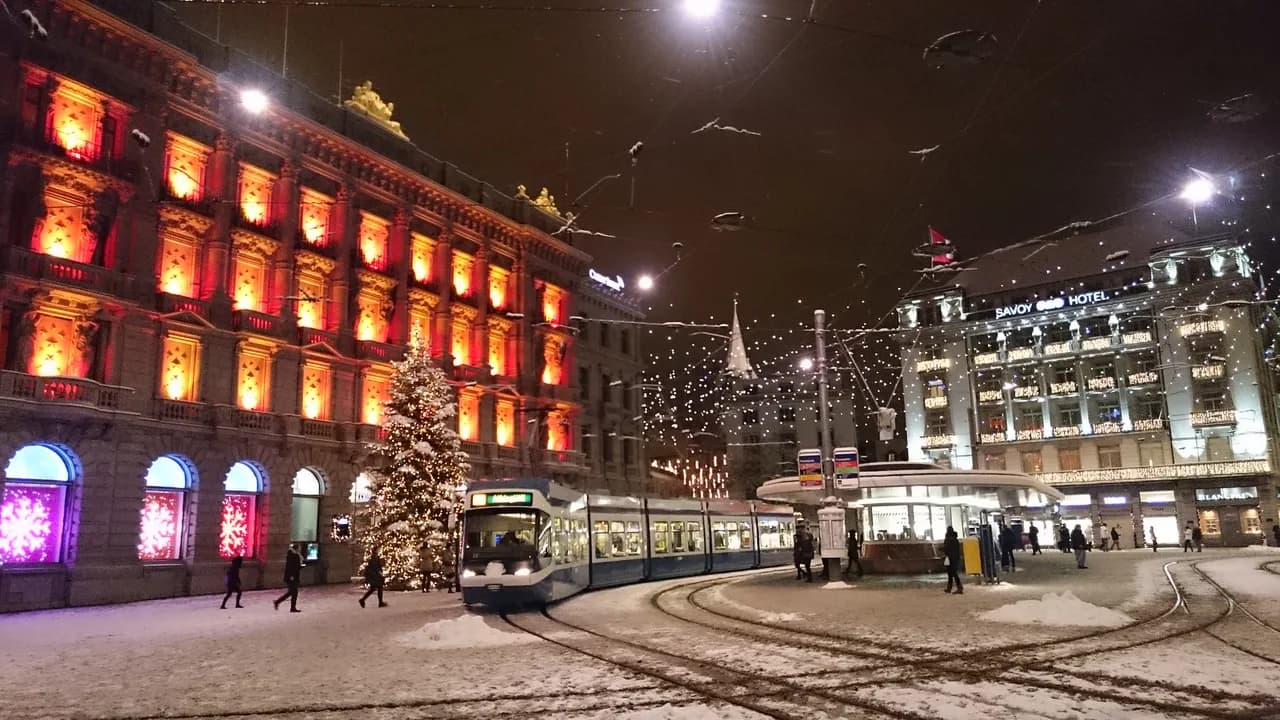
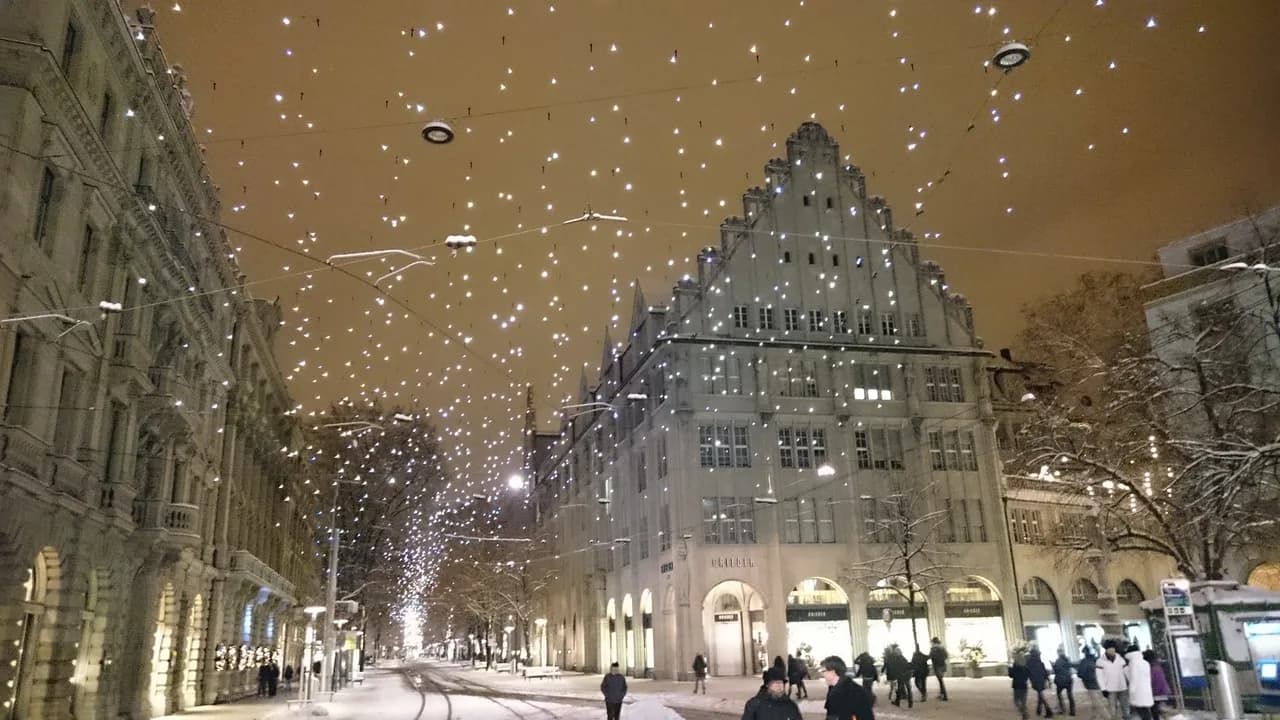
Daylight is at its shortest around the solstice, which pushes most sightseeing indoors by mid-afternoon and makes the city's Christmas lights and shop windows matter more than usual. Evenings are long and social: cafés fill up early, and the smell of hot chocolate and mulled wine follows you down the lanes of the Niederdorf.
Weather in January
January is the coldest month, with typical highs of 4°C (39°F) and lows of about -1°C (31°F). It is also the month when the city sees the most snow and ice, though the total number of snow days across the whole year is roughly twenty, so a heavy week is never guaranteed.
Once the holidays end, Zürich becomes one of the quieter cities in Western Europe. Hotel rates fall, restaurants take walk-ins again, and the trams are calm. If your priorities are museums, food and a bit of winter atmosphere rather than outdoor sightseeing, January is the value month of the season.
Weather in February
February lifts slightly to highs of around 6°C (43°F) with lows near 0°C (32°F). It is a month of mixed signals: crisp, blue-sky mornings alternate with fog that can sit over the lake for days. For city sightseeing it is manageable; for mountain excursions, it depends entirely on the cloud line.
Carnival Tuesday falls on 9 February 2027, with Ash Wednesday the following day, though Zürich's own carnival traditions are modest compared with Basel's. Hotel demand lifts around the ski half-term weeks, so book earlier if you want a specific neighborhood.
Weather in March
March is the pivot month, with average highs climbing to about 11°C (51°F) and lows near 3°C (37°F). Afternoons on the lakefront become genuinely pleasant, café terraces reopen, and the light lasts noticeably longer. It is the easiest month of the season for a first-time visitor who wants cold but not punishing.
Clocks go forward on 28 March 2027, and Easter Sunday falls on the same date, so the last week of the month brings Holy Week travel demand across Switzerland. Book trains and rooms for that window well before you would for an ordinary March weekend.
Snow, Fog and Daylight
Snow in Zürich is possible from December to February and rare outside those months; what you get on the ground is usually gone within a day or two. Reliable snow sits higher up, above Engelberg and Grindelwald, which is where the mountain excursions go. Fog is the more common winter hazard in the city, often thickest over the lake in the morning.
Short days shape how you plan. In the depths of December, daylight fades by late afternoon, so a museum or a thermal bath is a sensible second half of the day rather than an afterthought. Carry a plan for the indoor hours and the season works in your favor.
What Slows Down in Winter
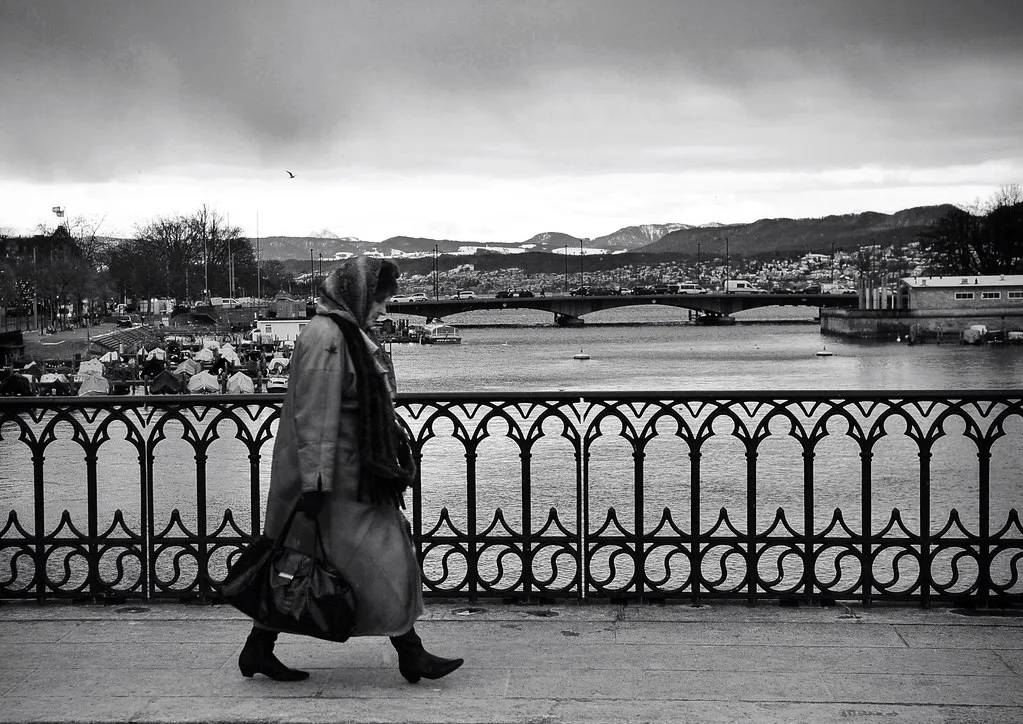
Zürich does not shut down for winter, but some seasonal operations thin out. Lake boats and some excursion services run reduced winter timetables, and outdoor ice rinks and Christmas installations appear and disappear on their own schedule. The Zürich tourism office publishes what is on and when, and it is worth a look before you build an itinerary around any one attraction.
Mountain transport is the bigger variable. Cable cars and cog railways to the high viewpoints can be affected by wind and cloud, and a summit that is clear at nine in the morning can be socked in by noon. Build flexibility into the week so the clearest forecast day goes to the mountains.
What Runs Year-Round
The Swiss National Museum, next to the main station, stays open through the season and covers Swiss cultural history from archaeology to the present in a building that mixes medieval and modern wings. Nearby, the FIFA Museum devotes three floors to football history and memorabilia, including the World Cup trophy.
The Grossmünster, the Romanesque church where the Swiss-German Reformation began, and the Fraumünster with its Chagall windows are open to visitors and make good cold-day stops. For a warmer hour, the Lindt Home of Chocolate in Kilchberg, a short ride south of the city, runs tours and tastings around a towering chocolate fountain in its entrance hall.
The Thermalbad & Spa Zürich, set in the vaults of a former brewery, offers a Roman-Irish bathing ritual and a rooftop pool with city views. It is the kind of place that turns a wet afternoon into the highlight of a short trip, and it stays busy precisely because locals use it in winter too.
Things to Do When It Rains or Snows
Zürich rewards a slow indoor day. Coffee culture here is serious, with small roasters and espresso bars scattered through the old town and the university quarter, and a long hot chocolate at a traditional confectioner is a legitimate way to spend an hour. Fondue and raclette are winter staples on many menus, not tourist novelties.
The old town itself works in bad weather. The lanes around Augustinergasse are lined with painted façades, and the Lindenhof gives you a high, sheltered view over the Limmat and the church towers. Walking the arcaded shopping streets along Bahnhofstrasse keeps you out of the worst of it.
For a guided option, city tours run with heated buses and short lake cruises, which suits anyone who wants an overview without spending hours outdoors. Ice skating at the Dolder rink, one of Europe's largest open-air rinks, is a fixture of the season when conditions allow.
Christmas Markets and Advent Lights
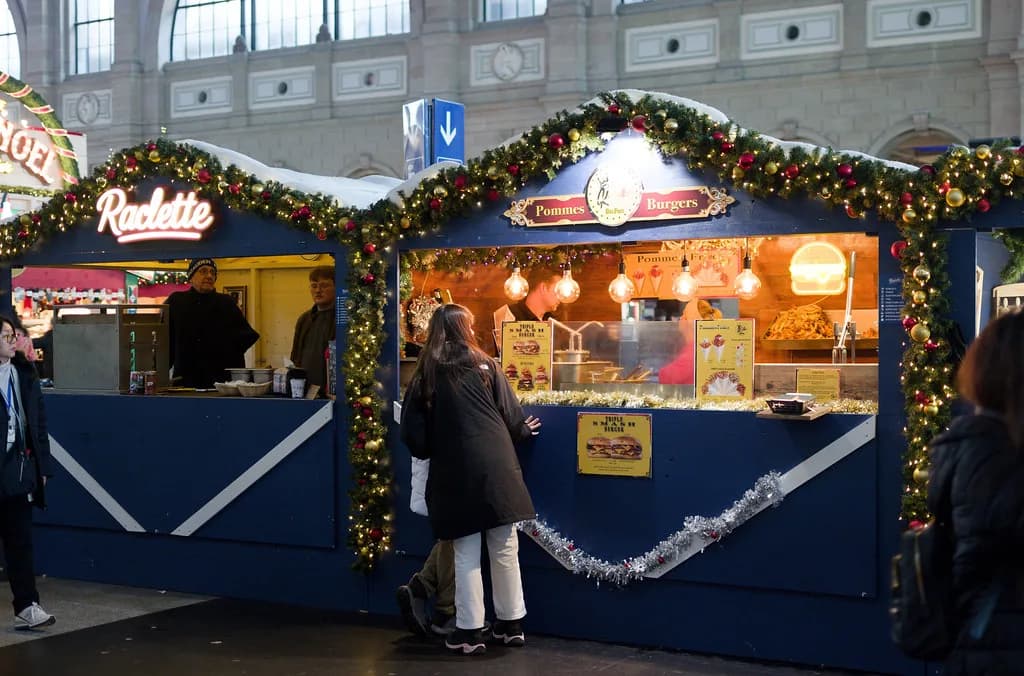
Advent is when Zürich is at its most decorated. The Wienachtsdorf market on Sechseläutenplatz by the opera house is the largest, the Christkindlimarkt fills the main station hall around a crystal-decorated tree, and the Niederdorf's Dörfli is the oldest and most atmospheric of the central markets.
Christmas Eve, Christmas Day and New Year's Eve
Christmas Day 2026 falls on a Friday, with New Year's Day 2027 the following Friday, so the week between is unusually quiet in offices and busy in restaurants and bars. Many locals treat Christmas Eve as the family evening, and restaurants book up early for the holiday period.
New Year's Eve in Zürich centers on the city center, where crowds gather by the Grossmünster and along the lake, and fireworks light the sky at midnight. If you want a table or a party ticket, arrange it in advance; the bars and lakefront party tents fill quickly.
Epiphany on Wednesday 6 January 2027 is a public holiday in much of Switzerland, though Zürich's own observance is low-key. Expect some businesses to run reduced holiday hours that day, and plan museum visits around the holiday timetable.
Day Trips That Work in Winter
Mount Titlis, reached via Lucerne and Engelberg, runs its rotating cable car to a glacier world of ice caves and panorama terraces, and it is a full-day outing from Zürich. Jungfraujoch, the highest railway station in Europe, is longer still, with several changes and a high-altitude chill that can hit -15°C even on a fine day. Both are spectacular and both are weather-dependent.
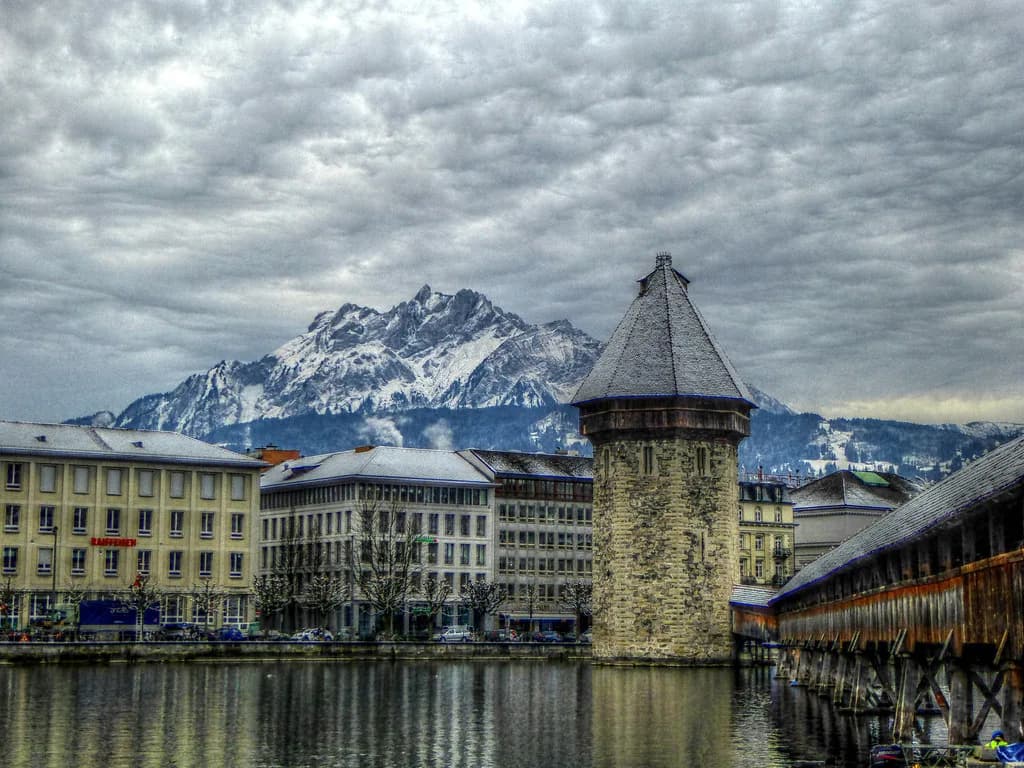
Lucerne is the easiest winter day trip, under an hour by SBB rail, with a compact old town, painted façades and the lakefront to walk. Mount Pilatus, reached by bus to Kriens and then gondola, gives high-Alpine views with a shorter transfer than Titlis, though the summit can sit in cloud. If you are weighing it against staying in Zürich, our guide to Lucerne in winter covers what stays open through the season.
Further afield, Bern's old town is a UNESCO site whose six kilometers of arcades keep you sheltered on snowy days, and Zermatt, though a long haul from Zürich, gives the classic Matterhorn view from the Gornergrat. Both are better as overnight trips than as day returns in winter, when daylight is short.
Costs, Crowds and the Trade-Offs
Winter in Zürich splits neatly into three phases. December and the New Year week carry the Christmas-market crowds and the year's highest room demand; January and early February are the quietest and often the cheapest stretch after the holidays; March brings a moderate return as the weather improves.
The honest trade-off is daylight and damp. You will spend more of each day indoors than in summer, and you will pay Swiss prices for the privilege. What you get back is a city without summer tour groups, short queues at the major sights, and mountain scenery at its most dramatic.
Who Should Come in Winter and Who Should Wait
Winter suits travelers who like cities more than beaches: museum-goers, food travelers, photographers chasing clear alpine light, and anyone content with a short, cozy day that ends early. It also suits people who want to see the Alps without booking a ski holiday, since the high viewpoints and scenic railways run through the season.
Wait for late spring if your ideal trip is long lakeside walks, terrace lunches and boating on the lake, or if you are traveling with people who feel the cold. May and June deliver the city at its most outdoor-friendly, and the mountain lifts are more reliable.
Getting Around Zürich in Winter
Trams, buses and S-Bahn trains run year-round and handle snow and ice well, which makes a car unnecessary and often inconvenient in the center. Zürich Airport connects to the main station by frequent trains, and the Zürich Card bundles transport with museum entry for visitors planning several days of sightseeing.
For day trips, buy rail tickets through SBB and check connections the day before, since winter timetables are thinner than summer ones on mountain lines. Allow generous transfer time at Interlaken Ost and Lucerne if you are heading for the high peaks.
Plan Your Winter Trip
Zürich in winter is a city you visit for its interiors, its food and its quick access to the Alps, not for long days outdoors. Choose January for quiet and value, December for atmosphere, or March for the first mild afternoons.
Build your itinerary around one or two mountain days with a fallback in the city, and you will get the best the season offers without fighting the weather.
Explore more Zürich winter guides
Frequently Asked Questions
How cold is Zürich in January?
Typical January conditions run from highs of about 4°C (39°F) to lows near -1°C (31°F), making it the coldest month of the season. Snow and ice are most likely then, but cover in the city itself tends to be short-lived.
Does it snow in Zürich in winter?
Yes, though not reliably. Zürich records roughly twenty snow days across the whole year, with December and January the likeliest months, and city snow usually melts within a day or two. Deeper, lasting snow is up in the mountains.
Is Zürich worth visiting in winter?
It is, if you want museums, food, Christmas atmosphere and Alpine day trips without summer crowds. Travelers who want long outdoor days and lake swimming should come in late spring instead.
Are mountain day trips from Zürich possible in winter?
Titlis, Jungfraujoch and Pilatus all operate through the season, but all three are weather-dependent and involve long transfers. Pick the clearest forecast day and keep a city plan as a backup.
What is there to do in Zürich on a rainy winter day?
The Swiss National Museum, the FIFA Museum, the Lindt Home of Chocolate in Kilchberg and the Thermalbad & Spa are all indoor options. The old town's churches and covered shopping streets also work in wet weather.
Sources
Winter travel notes
Optional updates when we add or revise winter guides.
You might also like
Continue reading
More guides you'll find useful