Lucerne in Winter: Weather, Things to Do and What Stays Open
Lucerne in winter brings cold, short days and quiet lake boats, with the Musegg Wall, Jesuit Church and mountain excursions still in reach.
On this page
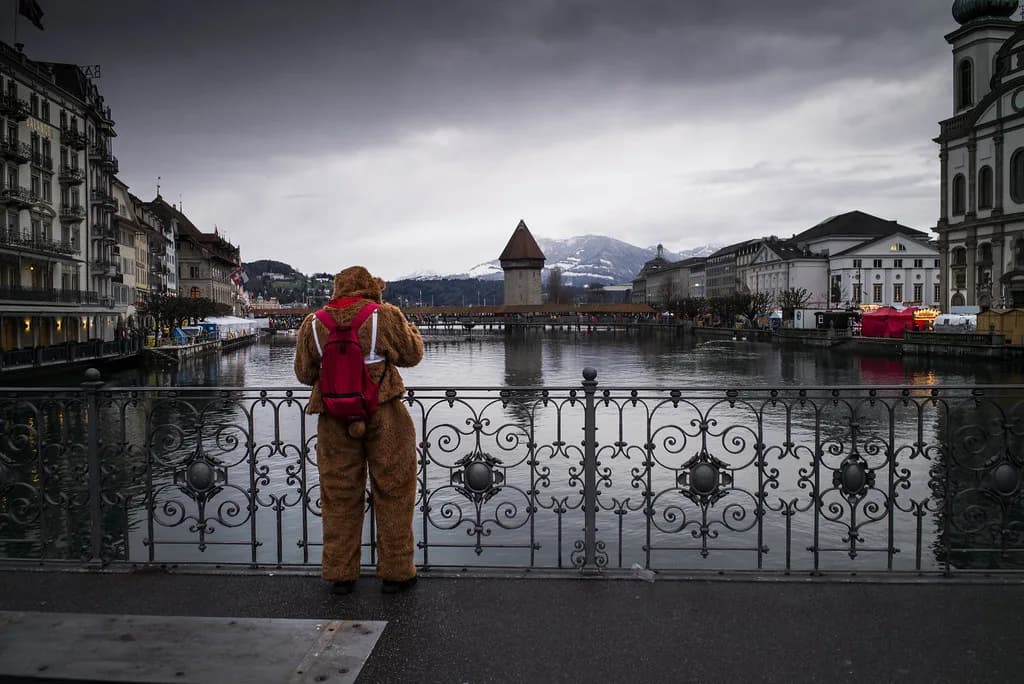
Winter narrows Lucerne to its essentials: a compact old town, two covered wooden bridges, a handful of strong museums and a lake that turns grey and still. The season suits travelers who want the architecture and the mountain backdrop without summer queues, and who accept that the usable day is short.
It suits slow travelers, museum-goers and anyone pairing the city with a clear-weather mountain outing. Families with small children and visitors who want boat-heavy itineraries should weigh the cold and the early dusk carefully before booking a midwinter week.
The month matters more here than in most European cities. December brings the decorative season and the busiest streets, January and February bring the sharpest cold with the fewest visitors, and March stretches the daylight while the mountains keep their snow.
What Winter in Lucerne Is Like
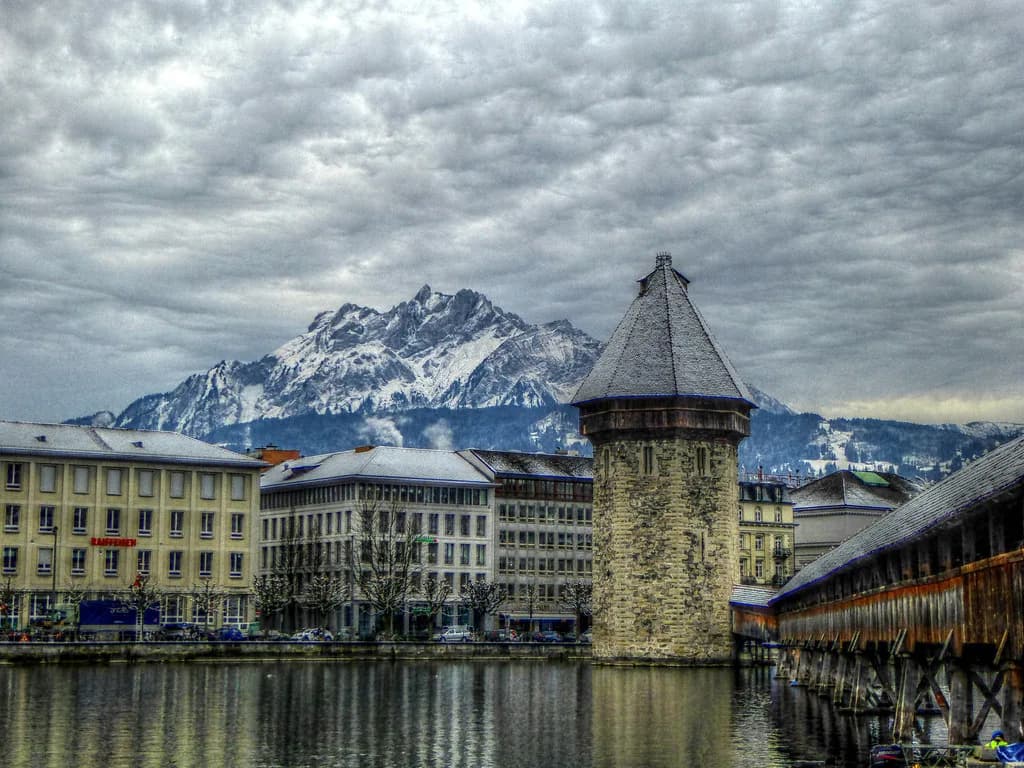
Lucerne sits at the western end of Lake Lucerne where the Reuss drains out of it, framed by the Pilatus massif to the south and the Rigi ridge to the east. That geography explains the winter feel: the water moderates temperatures slightly, but damp air off the lake makes cold days bite harder than the thermometer suggests.
Snow is common on the surrounding peaks from December, while the city itself often sees slush, frost and grey skies rather than a lasting cover. Plan on mountain snow and city damp, which are two different packing problems and two different arguments for a midday summit trip.
The old town, the bridges and the lakefront take about a day of unhurried walking, which leaves room for one mountain excursion and two or three museums in a two-night stay. Wind the pace back rather than adding another city, because darkness arrives in the middle of the afternoon.
Weather in December
December is genuinely cold, with typical daily highs around 3°C (37°F) and lows near -4°C (25°F). Expect a breeze off the lake, high humidity and cloud cover on many days, so a bright morning is worth acting on immediately.
Daylight is the real constraint. Around the winter solstice the sun rises after 8am and sets before 4:45pm, giving roughly eight and a half hours of usable light, and the last two of those are dim. Schedule outdoor sights and lakefront walks for the late morning and early afternoon.
Rain falls on a fair share of days but rarely as a downpour, more as steady drizzle mixed with wet snow at street level. The covered Chapel Bridge and Spreuerbrücke are the obvious answer on those days, and both are free to walk through.
Weather in January and February
January is the coldest month, with typical highs near 1°C (34°F) and lows around -6°C (22°F), so frost on the pavement and clear hard skies are common. February stays close to that range and Carnival falls in early February 2027, with Carnival Tuesday on 9 February and Ash Wednesday on 10 February.
These weeks are the quietest of the year for hotels and restaurants, which makes them the best value months for a city break. The trade-off is that mountain excursions depend on the weather window, and a cloudy spell can leave the summits in cloud while the city stays dry.
Keep at least one flexible day in the plan so you can move a mountain trip when a clear forecast appears. The Swiss tourism board's own winter excursion list for Lucerne, which includes the Musegg Wall, the Jesuit Church, boat trips and the Gotthard Panorama Express, is the most reliable place to see what is running.
Weather in November and March
November is the transition month: typical temperatures run a few degrees milder than midwinter but the weather turns frequently, and the light fades well before dinner. It is a good month for museums and churches and a poor one for committing to a summit on a fixed date.
March brings noticeably longer days, with sunset after 7pm once the clocks go forward on 28 March 2027, and the snow line usually sits high on the mountains rather than in town. That combination makes it the most forgiving winter month for walking and for a first visit.
Both shoulder months are cheaper and calmer than December but less reliably scenic. If atmosphere is the priority, go in December; if daylight and flexibility are, aim for March.
Daylight and Short Days
Treat the daylight window as your itinerary framework rather than a detail. In December and early January, a late breakfast can eat most of the brightest hours, so start with the outdoor stop and keep the museums for the afternoon.
Mornings are worth the effort for one reason: the view of the snow-covered Alps from the lakefront and the Musegg Wall is clearest before the haze builds. The wall is a free, open walk along the old ramparts above the town, and the towers give a perspective the street level never does.
Evenings are long and indoor-focused, which is where the Rosengart Collection, the Glacier Garden and the Bourbaki Panorama earn their place on a winter plan. Pair one of them with an early dinner rather than trying to fill the dark hours with another sight.
What Stays Open in Winter
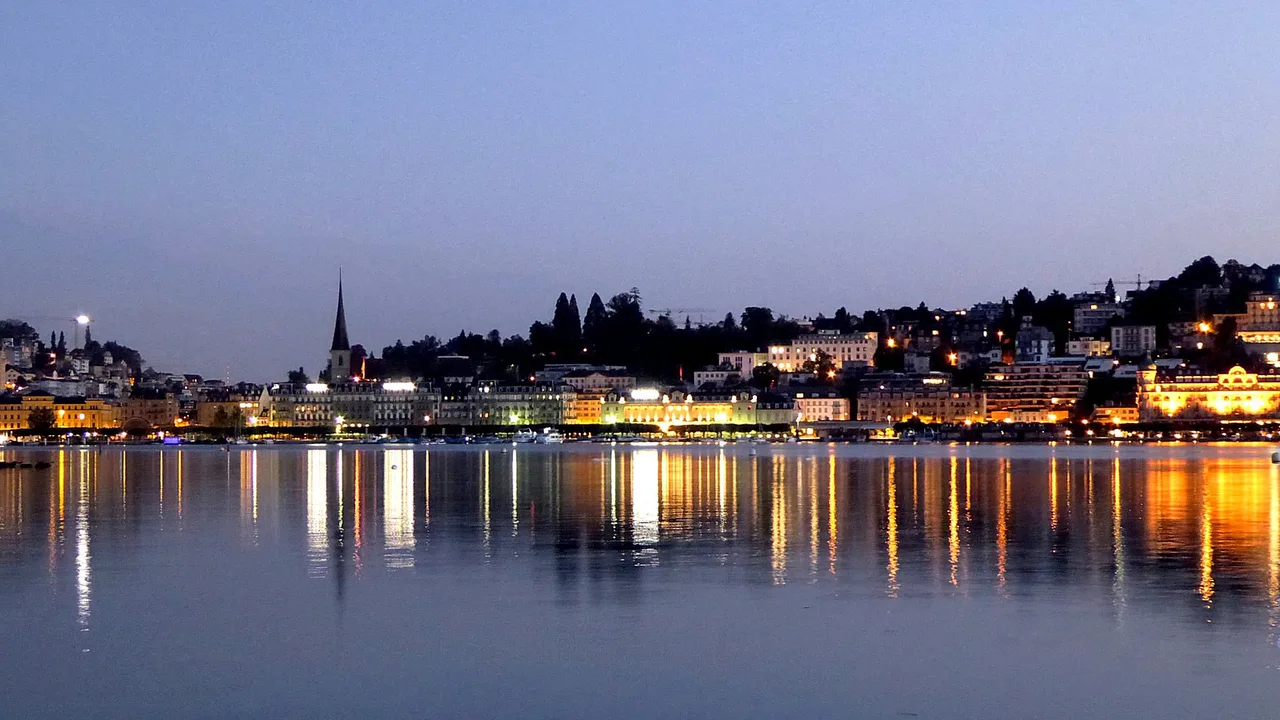
The core of Lucerne stays accessible through the season: the Chapel Bridge and Water Tower, the Spreuerbrücke, the old town squares, the Hofkirche and the Jesuit Church are the constants. The Swiss tourism office describes the city as a compact combination of city, lake and mountains, which holds especially true when the boats thin out.
Indoor sights carry the season: the Rosengart Collection for Picasso and modern art, the Glacier Garden with its mirror maze, and the Bourbaki Panorama's vast circular painting. The Culture and Congress Centre near the lakefront is a useful wet-day stop for concerts, exhibitions and a meal under one roof.
Mountain transport and boat timetables shift with the season, and winter services are more limited than summer ones. Read the lift company or boat operator's published winter timetable before you build a day around a cable car or a steamer, and the Swiss winter excursion listing is a good starting point for what is running.
Mountains and Lake Excursions
Mount Pilatus and Mount Rigi are the two classic outings from the city, and both are winter experiences rather than summer ones — snow on the ridges, cloud inversions above the city, and far fewer people. Access in winter typically means cable cars or the mountain railways rather than the full summer circuit, so check which sections are running before you go.
The Gotthard Panorama Express and the Globi-Express appear on the official winter excursion list for Lucerne, which also includes ship travel on the lake. Lake boats are atmospheric in winter, with views of the snow-lined shores, but the sailing schedule is much reduced compared with summer.
A realistic winter plan pairs one mountain day with one city day and treats the boat as an optional extra rather than the backbone of the trip. That way a cancelled sailing or a clouded summit does not unravel the whole visit.
Christmas and New Year in Lucerne
December in Lucerne is the most atmospheric stretch of the season, with Christmas markets in the old town, lights across the bridges and a busy but still manageable city centre. Christmas Day 2026 falls on a Friday and New Year's Day 2027 on a Friday, which shapes a long holiday weekend around both.
Expect Christmas Eve and New Year's Eve to bring their own schedules for churches, restaurants and shops, and expect fewer of everything on the holidays themselves. For finer detail on what happens across the Christmas weeks, the dedicated Christmas guide is worth reading before you fix dates.
New Year's Eve in Lucerne is a lakefront affair, with crowds gathering along the water. Epiphany on Wednesday 6 January 2027 marks the traditional end of the festive period, after which the city becomes noticeably quieter.
Things to Do on a Cold or Wet Day
Start with the museums: the Rosengart Collection is small enough for a morning, the Glacier Garden covers ice-age geology and a mirror maze, and the Bourbaki Panorama is a single extraordinary room. All three sit within a short walk of each other and of the Lion Monument.
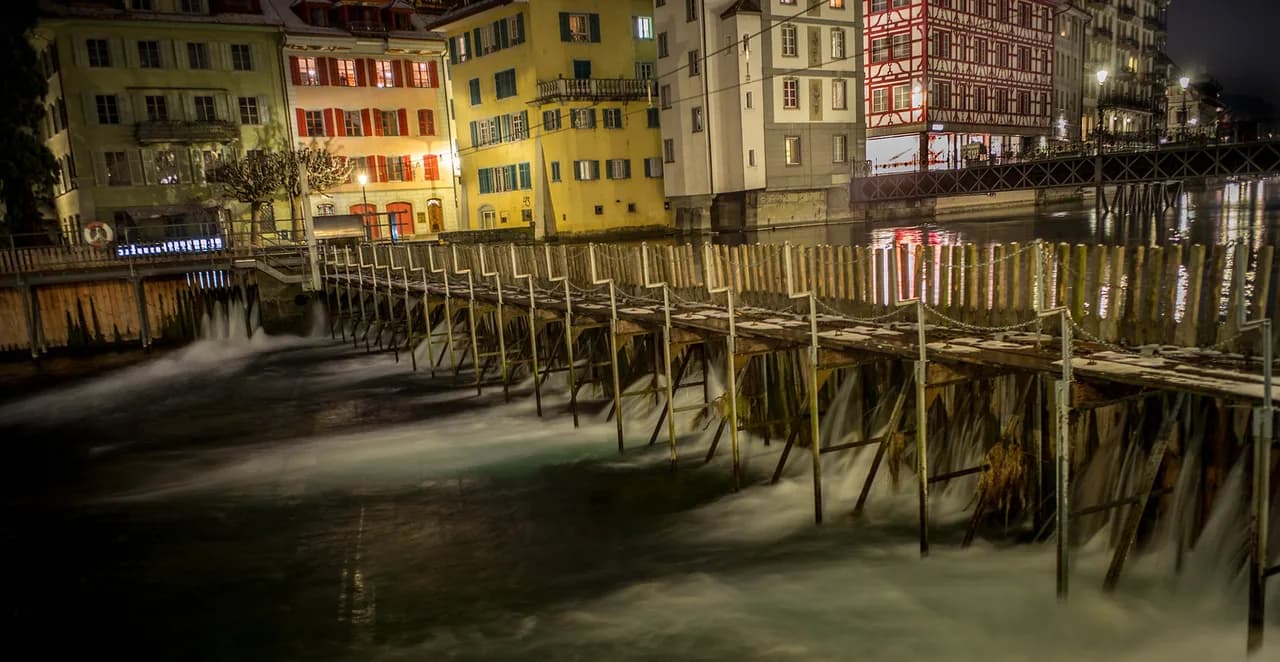
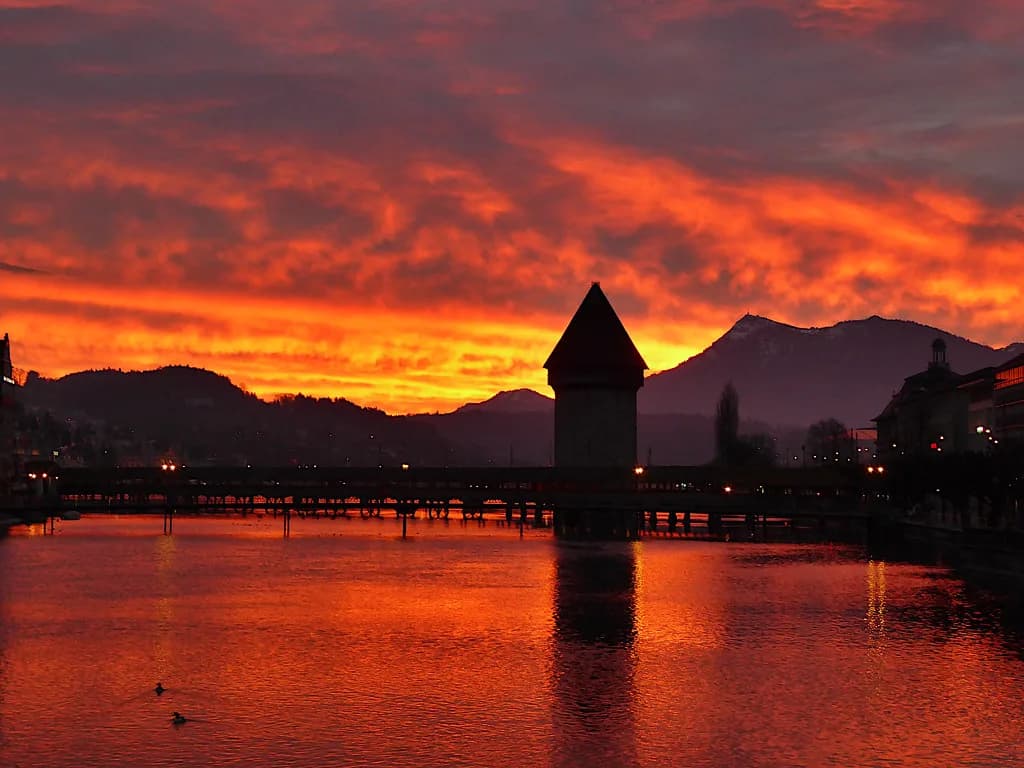
The two covered bridges are the best rainy-day walk in the city, and the Chapel Bridge's painted roof panels reward a slow pass. The Jesuit Church, the first large Baroque church in Switzerland, is free to enter and holds concerts, which makes it a natural evening stop.
For a longer winter plan mixing markets, museums and mountain days, the full list of things to do in Lucerne in winter helps you sequence them around the daylight.
Walks and Viewpoints in Winter
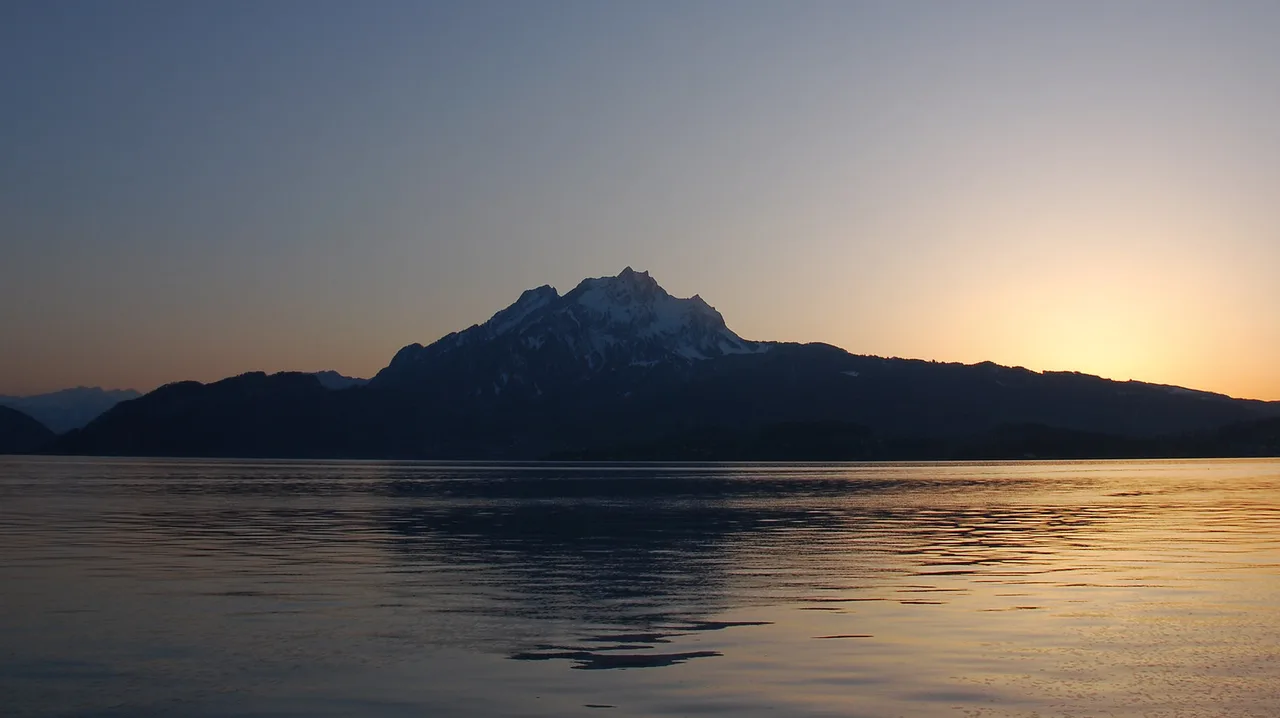
The Musegg Wall is the standout free walk: a stretch of medieval ramparts and nine towers above the old town, with the lake and the Alps laid out behind you. Some towers are open to climb, and the footing can be icy after a frost, so treat it as a careful walk rather than a scramble.
The lakefront promenade and the Reuss quays give the best low-effort views, especially in the morning when the water is still. The Lion Monument, carved into a rock face, is a five-minute stop rather than a destination, but it sits on the way to the Glacier Garden.
For a town-scale view without a mountain, the towers of the Hofkirche and the elevated paths near the wall are enough. Save the summit views for a day with a genuinely clear forecast.
Day Trips From Lucerne in Winter
Zürich is the easiest city day trip, roughly an hour by train, and works well in poor weather because most of its appeal is indoors. Its own winter season has a distinct character, so the Zürich in winter guide is a useful companion if you are splitting the trip.
Mount Rigi and Mount Pilatus are the mountain half-days to a full day each, and both give you snow, panorama and a warm summit restaurant without any technical gear. The Gotthard Panorama Express is the scenic rail option on the official winter excursion list if you would rather look at mountains than climb them.
Keep day trips short in December and January, because the return leg will be in darkness. A single well-chosen outing beats two rushed ones when sunset arrives before 5pm.
Crowds, Prices and the Trade-Offs
Winter in Lucerne is quiet by Swiss standards, with January and February the calmest and December the busiest thanks to the festive season. Hotel rates and restaurant availability follow that curve, so the cheapest and the most atmospheric weeks are not the same weeks.
The honest trade-offs are short days, damp cold, occasional fog that hides the mountains, and reduced boat and cable-car schedules. The compensation is a city you can walk in an afternoon, mountain scenery within reach and far fewer tour groups at the bridges and the Lion Monument.
Museum entry, mountain transport and boat fares vary by season and operator, so check current prices directly with the museum, lift company or boat operator when you book rather than relying on last season's figures.
Who Winter in Lucerne Suits
Come in winter if you want the old town and the mountain backdrop without the summer crowds, and if you are content to build days around a short daylight window. December suits atmosphere-seekers, January and February suit budget-conscious travelers who can stay flexible, and March suits walkers and first-timers.
Choose another season if long boat trips, high alpine hiking or a full schedule of outdoor sightseeing is the point of your trip. For a compact, cold and often beautiful city break, Lucerne in winter is one of central Switzerland's most rewarding bets.
Explore more Lucerne winter guides
Frequently Asked Questions
Is Lucerne cold in winter?
Yes. Typical December highs sit around 3°C (37°F) with lows near -4°C (25°F), and January is colder still, with highs near 1°C (34°F). Damp air off the lake makes it feel sharper than those numbers suggest, and frosty mornings are common.
How much daylight does Lucerne get in December?
Around the solstice, sunrise comes after 8am and sunset before 4:45pm, giving roughly eight and a half hours of light. It is best to plan outdoor sights for the late morning and keep museums for the afternoon.
Is Lucerne walkable in winter?
The old town, both covered bridges, the lakefront and the Lion Monument are all within easy walking distance of each other. The Musegg Wall walk sits above the town and needs care when paths are icy, but it is free and open to walk.
What is there to do in Lucerne in winter?
The Rosengart Collection, the Glacier Garden, the Bourbaki Panorama and the two covered bridges fill cold or wet days. On clear days, the Musegg Wall, the lakefront and a mountain excursion to Pilatus or Rigi are the main draws.
Do lake boats and mountain railways run in Lucerne in winter?
They do run, but on reduced winter schedules, and the Swiss tourism board's winter excursion list for Lucerne shows which services are operating. Check the operator's winter timetable before building a day around a boat or cable car.
Is it worth visiting Lucerne in December?
December is the most atmospheric month, with lights across the old town, Christmas markets and a festive mood around the bridges and lakefront. It is also the busiest winter month and the darkest, so book early and plan around the short days.
Who should skip Lucerne in winter?
Travelers whose main goal is long lake cruises, high alpine hiking or a packed outdoor schedule should come between late spring and early autumn. Winter rewards slower trips built around museums, short walks and one flexible mountain day.
Sources
Winter travel notes
Optional updates when we add or revise winter guides.
You might also like
Continue reading
More guides you'll find useful