Luxembourg in Winter: What to Do and What Stays Open
Luxembourg in winter means short, cold, often grey days, quiet castles and free nationwide transport. Here is what stays open and who the season suits.
On this page
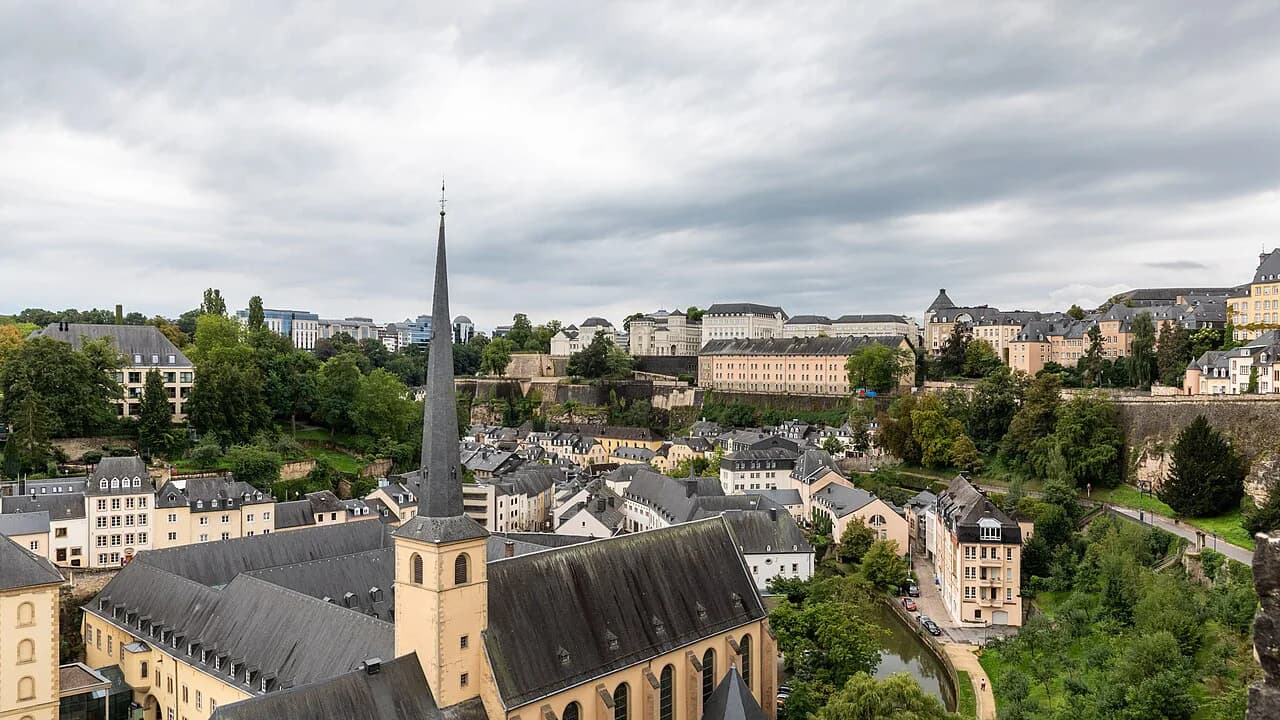
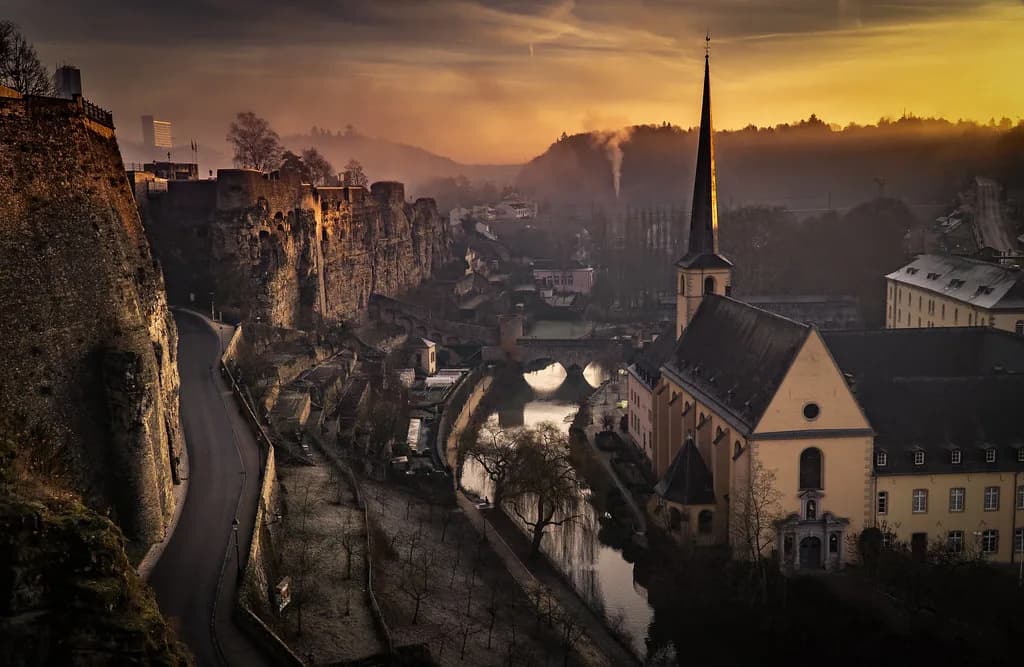
Winter turns Luxembourg into a compact, low-key destination: the Alzette valley below the old town, the ramparts above it and the castle towns of the north and east all stay in place while the crowds thin out. The country is small enough that a short break can cover a city, a fortress and a wine village, and the national transport network makes that unusually easy. It suits travelers who like museums, fortifications, cold-weather walks and food, and who accept that sunset arrives early.
What Luxembourg Is Like in Winter, and Who the Season Suits
Luxembourg sits between Belgium, Germany and France and packs a capital city, a forested eastern border region and a wine valley into a country you can cross by car in about an hour. In winter the mood is quiet rather than festive for months on end: a bright pre-Christmas stretch, a subdued January, then carnival color from February.
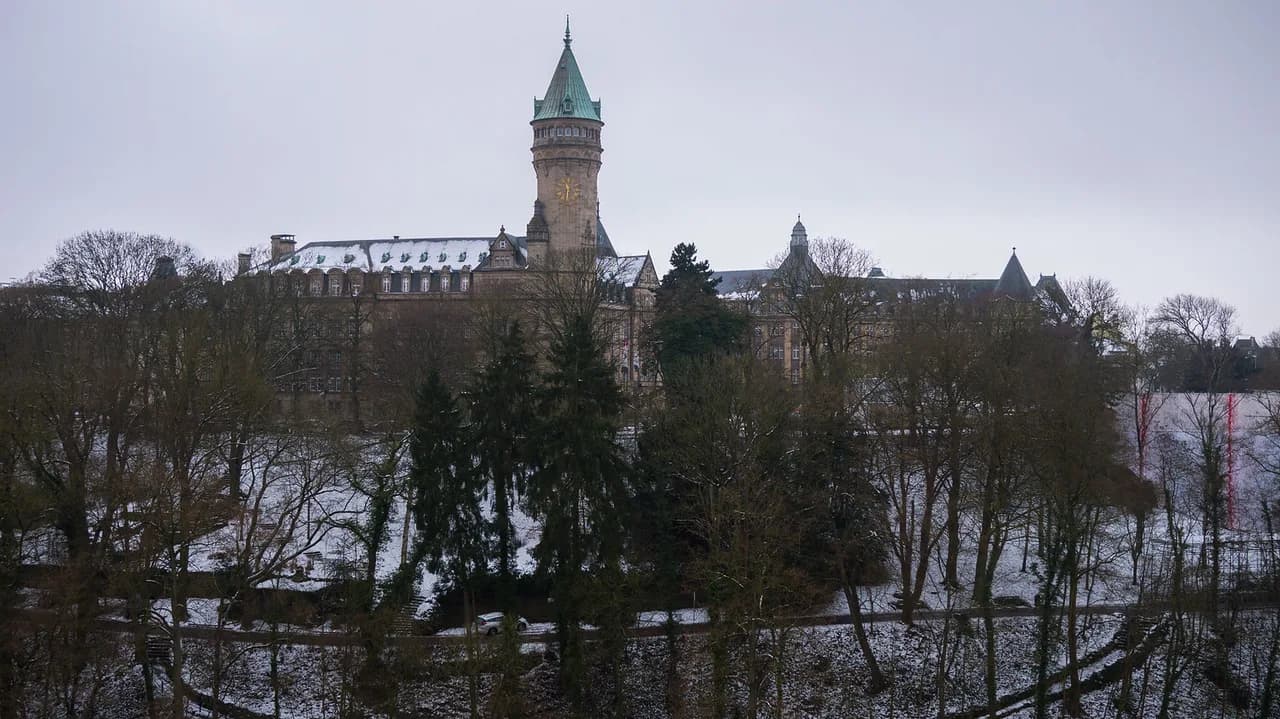
This is a season for travelers who prefer atmosphere to spectacle. You get fortress walls and stone lanes without summer tour groups, museums that make a rainy afternoon worthwhile, and a capital whose old quarters sit in a river valley reached by lift and footpath. You do not get long daylight hours, reliable snow in the capital or a beach-resort buzz.
Anyone wanting guaranteed sunshine, Alpine skiing or long evenings outdoors should look at another month or another country. Travelers who want a short, affordable city break with castles and good food attached, and who are happy to start sightseeing in the morning, will find winter a good fit. If you are weighing the same short-break decision elsewhere, our France winter guide covers the options just across the border, and Lille in winter is a comparable short city break reached by train.
Weather Month by Month
Luxembourg has a temperate climate with cold winters, and days are often grey with warm lights before Christmas. Treat any figures you read as long-term averages rather than a forecast for your dates, and expect the Ardennes hills of the north to run colder and hold snow longer than the capital.
November is the transition month: leaves are down, temperatures slide toward single digits and the first Christmas markets open in the second half of the month. December is the darkest month but also the most animated, with markets, lights and holiday events filling the squares of the capital and several towns. January empties out again, and it is the month when indoor sights and castle towns give you the calmest visit of the year.
February brings carnival processions and masked balls, which put color and noise back into the towns after the quiet of January, while March is unpredictable: some days hint at spring in the Moselle vineyards, others bring frost and grey skies back. If snow matters to you, check the regional picture before booking rather than counting on the capital. Weather and daylight also differ sharply between the city and the northern hills.
Daylight and Short Days
The practical challenge of a Luxembourg winter is not the cold but the light. Clocks go back on the last Sunday of October and do not go forward again until the last Sunday of March, so for five months the useful sightseeing window is roughly the middle of the day. Plan outdoor work, such as the Corniche walk or a castle exterior, for late morning through mid-afternoon, and keep an indoor sight in reserve for the dark end of the afternoon.
A workable rhythm is two outdoor stops and one indoor one per day. That could mean the Grund and the Bock Casemates before lunch, a museum or a café afterward, and an early dinner. Trying to fit a distant castle and a city walk into the same short day is where winter itineraries usually fall apart.
Because many attractions keep shorter winter hours, treat the published timetable as fixed rather than flexible. Buying a timed ticket in advance for the casemates is worth the small effort.
What Closes or Slows Down, and What Runs Year-Round
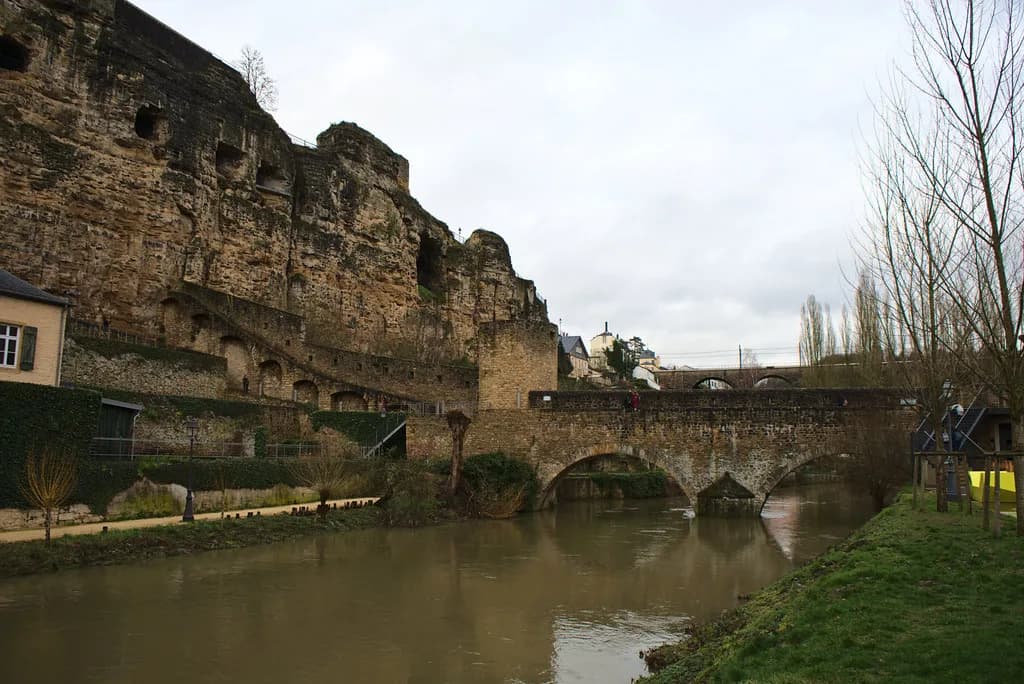
Winter trims the edges of a Luxembourg trip without shutting it down. Castle visits can be limited to guided tours, some gardens, terraces and open-air sites cut their hours, and a few attractions close for the season entirely. The Bock Casemates have been known to shut over the winter months, so it is worth confirming before you build a day around them. Major museums, the old-town walks and the Chocolate House in the capital keep working through the season.
The Grund neighborhood, the Wenzel circular walk and the Chemin de la Corniche viewpoint are public spaces, so they stay accessible whatever the month. On a wet day the casemates and the museums make better sense, while a clear, cold morning is the moment for the ramparts and the river-valley lanes.
Things to Do in Luxembourg City in Winter
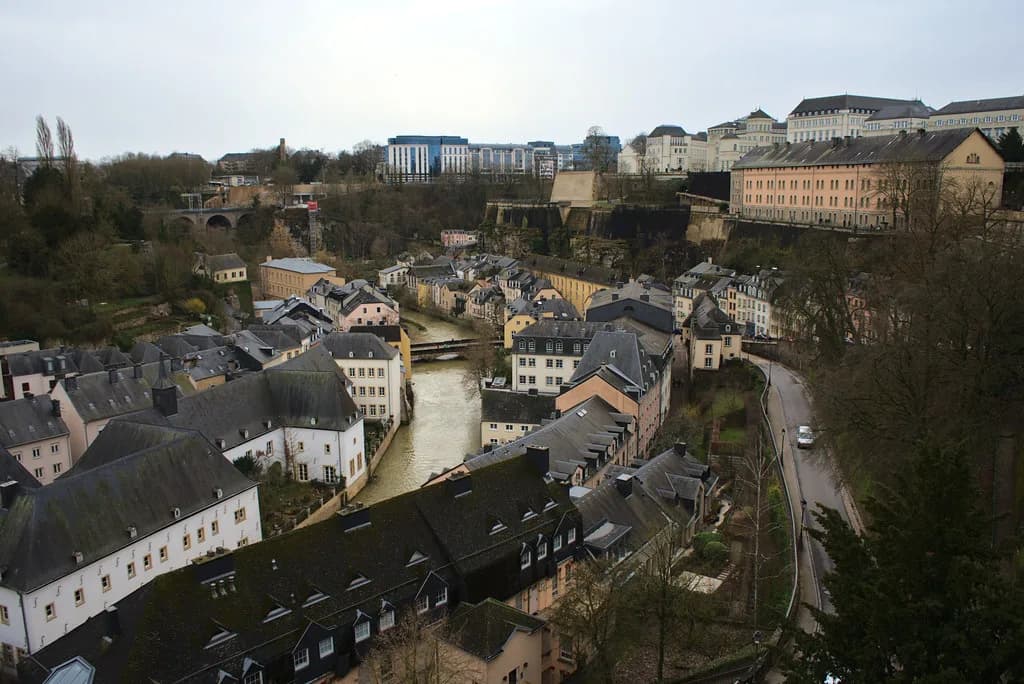
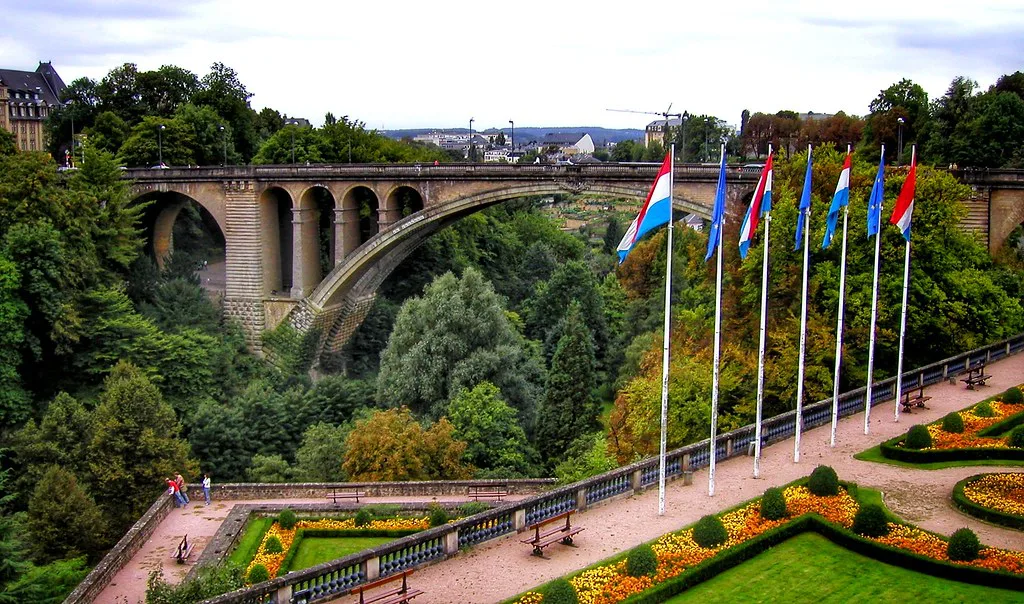
Start in the Oberstadt, the upper town around the Grand Ducal Palace, where the streets are compact and a café is never far away. The Chocolate House is the obvious warm-up stop, with chocolate spoons melted into hot milk and a crowd that builds at weekends. From there the Chemin de la Corniche, the fortified balcony above the Alzette, gives the classic view over the lower town and the Grund.
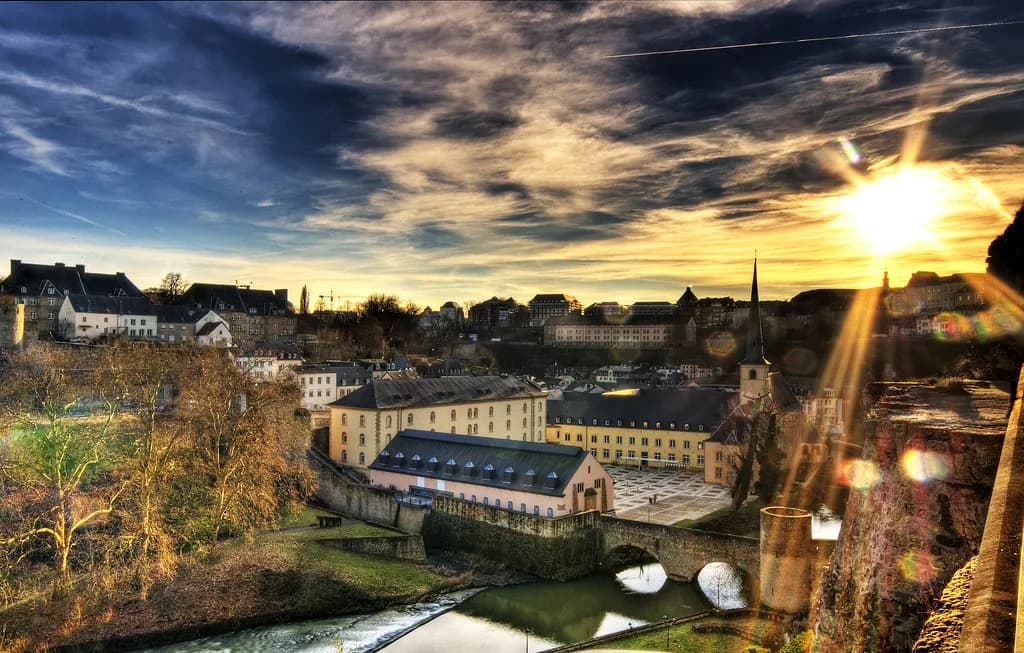
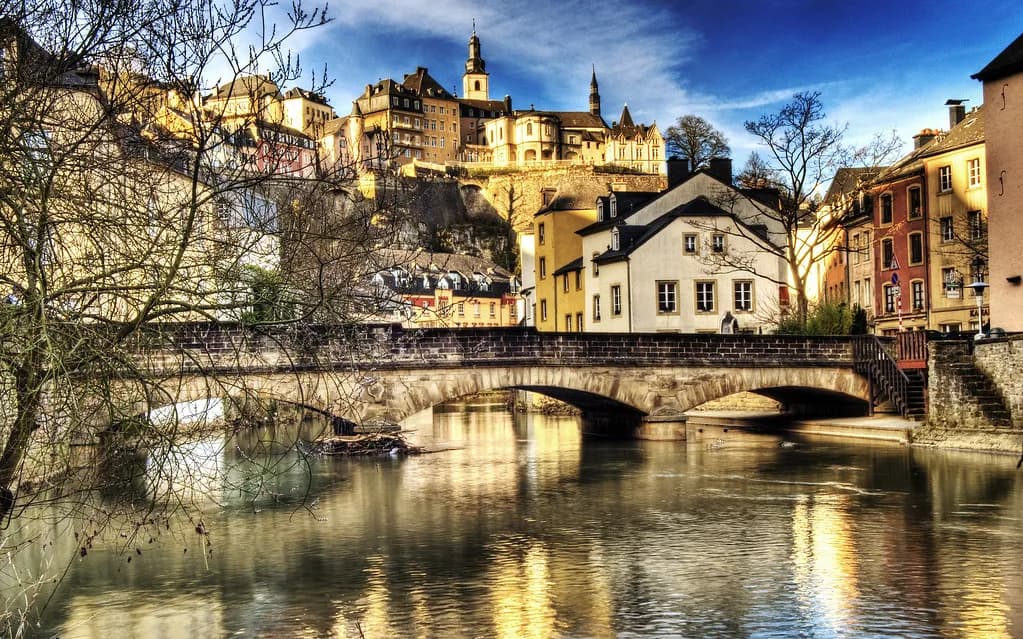
Descend to the Grund by the lift near the judiciary building or on foot, and walk the cobbled lanes along the Alzette. The Wenzel circular walk is signposted and takes in the old quarters and fortifications, and it works well in cold weather as long as you keep moving. Allow a couple of hours rather than a full afternoon.
For a wet or very cold stretch, the capital's museums carry the day. The Museum of Modern Art, Mudam, on the Kirchberg plateau is the strongest contemporary option, and the Museum of Natural History sits down in the Grund. The LuxembourgCard bundles entry to dozens of sites across the country and is worth pricing against your plans before you buy individual tickets.
Food is part of the plan rather than an afterthought. Kniddelen, pan-fried flour dumplings served with bacon and cream, is the dish to try, and the capital has both traditional addresses and a dense restaurant scene around the palace and the station quarter. On a cold evening a long lunch or early dinner is a better use of the dark hours than another outdoor stop.
Castles, Mullerthal and the Moselle
The country's strongest winter day trips are the castles. Vianden in the north is the largest Gothic castle in the region and reachable by train and bus, while Beaufort in the east offers guided tours. Both reward a clear, cold day, and both involve outdoor walking between car parks, villages and gates, so go early and keep the visit tight.
The Mullerthal, known as Little Switzerland, is the hiking answer: wooded ridges, rock crevices and well-marked trails around Berdorf. Winter hiking here means short days and slippery rock, so pick a shorter circular route rather than a full-day traverse, and check trail conditions after rain. The Moselle valley wine villages are the gentler alternative, with vineyard slopes and wineries such as Bernard Massard to visit.
Echternach in the east pairs an abbey with a market in the pre-Christmas weeks, and Clervaux in the north suits a quiet walk around the castle. Both are realistic on the train and bus network, which makes them easier winter options than a long drive on short daylight. Pick one per day rather than chaining several.
Christmas Markets and the Winterlights Festival
The capital's Winterlights season opens on 20 November 2026 and runs to 3 January 2027, with markets on Place d'Armes, Place de la Constitution, Place Guillaume II and Place de Paris as well as an ice rink in the Parc Municipal. Elsewhere in the country the Mondorf-les-Bains market runs from 27 November to 13 December 2026 and Schieren holds its Wantermaart on 27 and 28 November 2026.
Expect Luxembourgish specialties such as Gromperekichelcher potato fritters and Boxemännercher brioche figures rather than a market that runs all winter. If markets are the main reason for your trip, plan around the December weeks.
Carnival: Fuesent in February
The February counterpart to the Christmas markets is Fuesent, the Luxembourgish carnival. From early February the country turns out in costume for processions, masked balls and deep-fried treats, and the parades in Diekirch and Remich are the ones most people come for. Carnival Tuesday falls on 9 February 2027, with Ash Wednesday the day after, so the final weekend is the peak.
Book around it if you want to be in a parade town, and avoid it if you want the quiet version of Luxembourg. The atmosphere is loud and family-heavy, and it gives February a purpose that January lacks.
Getting Around in Winter
Public transport is free throughout the country, which changes the economics of a winter trip: you can base yourself in the capital and reach Echternach, Clervaux or Vianden by train and bus without buying a ticket. Use the national journey planner to check connections, since winter timetables are thinner than summer ones on rural routes.
Driving is the other sensible option: almost everywhere is under an hour from the capital, which makes a short daylight day trip realistic. Winter tires and a check of road conditions matter in the Ardennes, and snow can close high routes in the north. For city days, walk and use the lifts and buses between the upper and lower towns.
Day Trips That Work in Winter
Good winter day trips share three traits: an indoor core, a short transfer and a village small enough to walk in cold weather. Vianden, Echternach and Clervaux fit that pattern, and the Moselle villages work for a winery visit plus a short vineyard walk. Longer hikes into the Mullerthal are better saved for a bright, dry day.
Keep one flexible day in your plan for the weather you actually get. If it snows, take the castle-and-village option; if it rains, stay in the capital's museums. That single swap makes more difference in Luxembourg than a tightly booked itinerary.
Costs, Crowds and the Trade-Offs
Luxembourg in winter is quiet and generally cheaper than in summer, with the biggest exception being the December market weekends and the carnival peak in February. Free nationwide transport cuts the cost of day trips sharply, while museums, castles and restaurant meals are the main line items. Check the LuxembourgCard's current price and inclusions before you buy, and compare it against the few sites you will actually visit.
The real trade-offs are light and weather: short days, frequent grey skies and the risk of rain or slush underfoot. In exchange you get fortress towns and viewpoints almost to yourself, meals without queues and a country that is easy to cross. Travelers who need guaranteed sunshine or a packed events calendar will find January thin.
Who Should Pick Another Month
Skip winter if your idea of a European trip is long evenings on terraces, guaranteed snow or dramatic mountain scenery. Luxembourg has no alpine landscape and no beach season, and its winter is more about shelter and short walks than about spectacle. Travelers with small children, limited mobility or a tight schedule should also weigh the short daylight carefully.
Come in winter if you want a compact, affordable, low-crowd break built around fortifications, museums and food, and if you are happy to be out by mid-afternoon. If you can travel in late spring or early autumn instead, do: you get the same castles and vineyards with twice the daylight. For a first visit on a budget, the carnival weeks in February offer the best mix of atmosphere and value.
Plan Your Winter Trip
Build your Luxembourg winter around daylight and shelter: one outdoor sight in the morning, one indoor one after lunch, and a good meal in the evening. Use the free trains and buses for castle and abbey towns, and keep a flexible day for snow or rain.
Book the December market weeks and the February carnival early if those are your priority, and go in January if you want the quietest version of the country. Either way, check opening times for the casemates and the castles before you set out, since winter hours are shorter and change with the season.
Explore more Luxembourg winter guides
Frequently Asked Questions
Is Luxembourg worth visiting in winter?
Yes, if you want a compact trip built around fortifications, museums, castles and food without summer crowds. The season is cold, grey and short on daylight, so it suits travelers who start early and enjoy indoor sights. Anyone seeking guaranteed snow or long evenings outdoors should choose another destination or month.
What is the weather like in Luxembourg in winter?
Expect cold, often grey conditions from November to March, with the Ardennes hills in the north colder and more likely to hold snow than the capital. Treat any published figures as long-term averages rather than a forecast. Check a forecast for your dates shortly before you travel.
Are the Bock Casemates open in winter?
They have been closed over the winter months in past seasons, so do not build a day around them without confirming. The underground passages are a good wet-weather option when they are open, and tickets are timed, so buying ahead helps. Check the casemates' current opening times before you go.
Does it snow in Luxembourg in winter?
Snow is possible from December through February, most likely in the northern Ardennes and least likely in the capital, where rain and slush are more common. There is no reliable snow cover to plan around. Check the forecast in the days before your trip.
What happens in Luxembourg in February?
Fuesent, the Luxembourgish carnival, takes over from early February with processions and masked balls, and the parades in Diekirch and Remich are the best known. Carnival Tuesday falls on 9 February 2027. Expect busy weekends in parade towns and a livelier mood than January.
Do I need a car in Luxembourg in winter?
Not necessarily. Public transport is free nationwide, and trains and buses reach Echternach, Clervaux and Vianden, though rural timetables are thinner in winter. A car makes short daylight day trips easier and lets you reach smaller castle villages. Either way, check connections in a journey planner on the day.
When are the Christmas markets in Luxembourg?
Winterlights in Luxembourg City runs from 20 November 2026 to 3 January 2027, with markets on several squares and an ice rink in the Parc Municipal. Mondorf-les-Bains holds its market from 27 November to 13 December 2026, and Schieren's Wantermaart runs on 27 and 28 November 2026. Check the tourism board listing before you plan around specific dates.
Is Luxembourg expensive in winter?
Winter is generally cheaper and quieter than summer, with December market weekends and the February carnival as the busiest exceptions. Free nationwide public transport keeps day-trip costs down, and museums and castles are the main expenses. Check current admission prices and any discount card.
Sources
Winter travel notes
Optional updates when we add or revise winter guides.
You might also like
Continue reading
More guides you'll find useful