Christmas in Luxembourg: What the Season Is Really Like
Christmas in Luxembourg means a month of markets in the compact capital, small gifts on 6 December and a city that stays lit through New Year's.
On this page
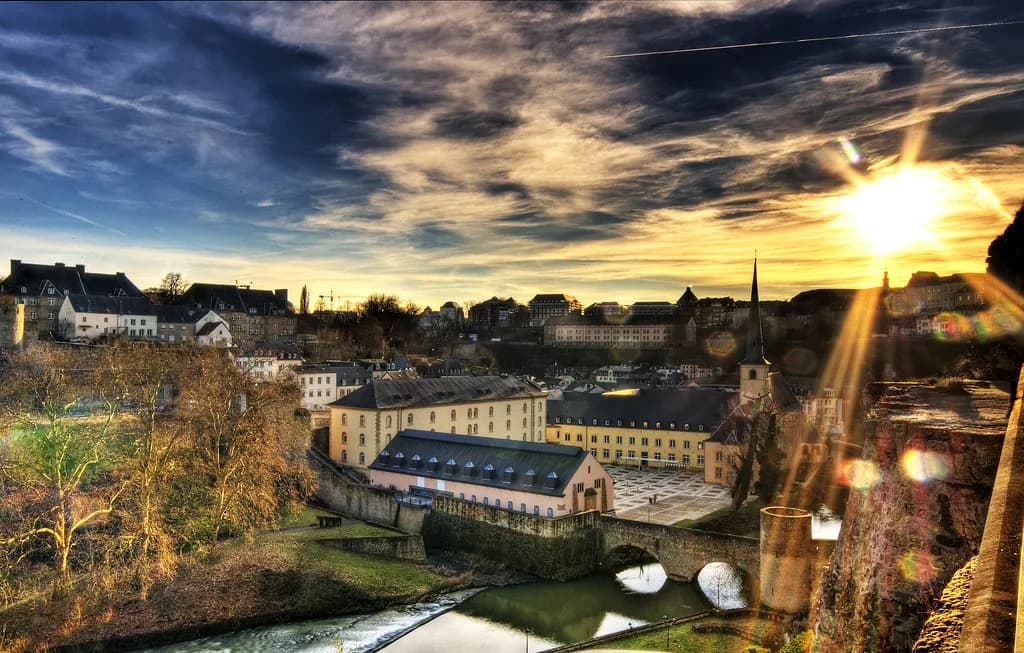
Christmas turns Luxembourg City into a compact, walkable stage: the UNESCO-listed old town, the fortifications and the market squares sit within a few minutes of each other, so you can cross the whole festive center on foot in an afternoon. That density is the appeal, and also the limit — the capital is small, so most visitors find two or three days of markets, museums and long lunches is enough.
The season suits travelers who want a European Christmas without a mega-city crush, who like cold-weather food and wine, and who are happy to fill short daylight hours with underground tunnels, modern art and a warm table. If you need beach weather, big-name sights on a grand scale, or a full week of new distractions every day, look elsewhere in December.
Weather in December
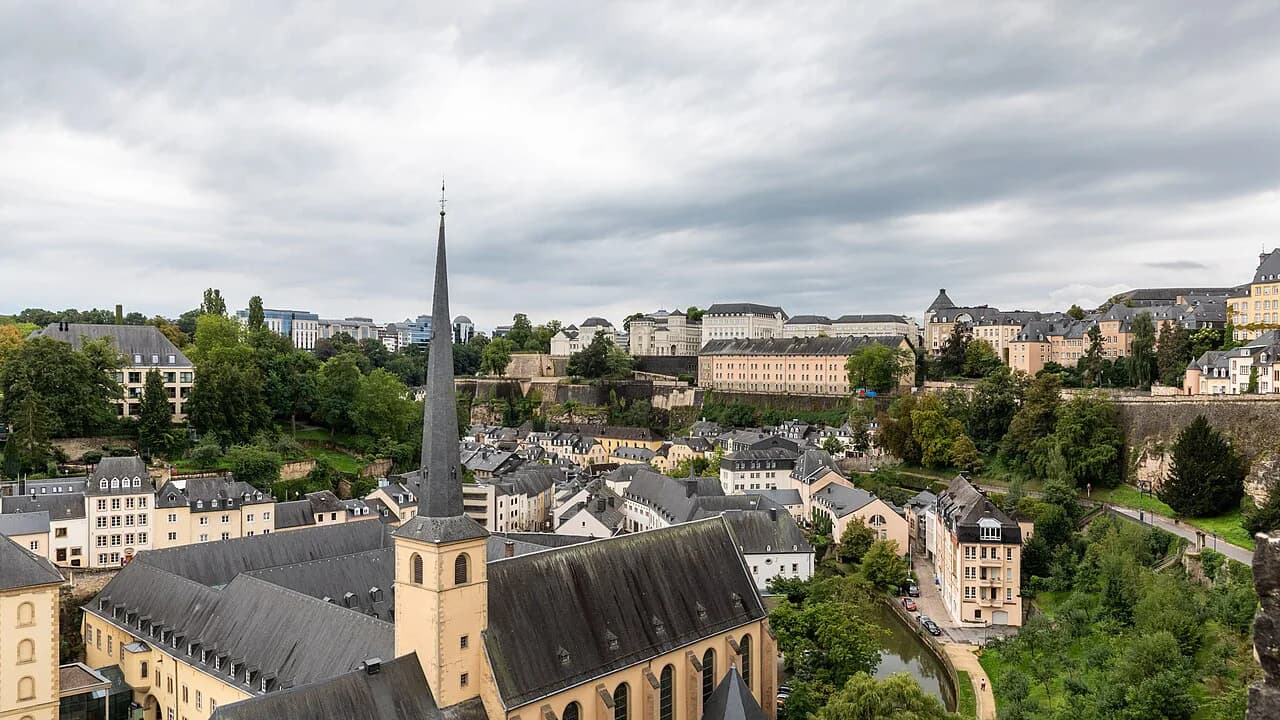
December here is properly cold, damp and dark, with a low grey ceiling over the Alzette valley more often than blue sky. Expect short days and frequent rain rather than reliable snow at city level, and plan outdoor time around the brightest hours rather than the whole afternoon. Because the capital sits on a plateau cut by deep gorges, wind funnels through the market aisles and across the Pétrusse Valley, which makes a sheltered square feel noticeably milder than an exposed park. Check a seasonal forecast for your dates before you commit to long outdoor stretches.
When the Christmas Season Runs
The city tourist office lists the Christmas markets for 20 November 2026 to 3 January 2027, so the season opens well before Advent and closes after New Year.
Opening hours follow a weekly rhythm rather than one fixed schedule: the tourist office lists most days from 11:00 to 21:00, with Fridays and Saturdays running to 22:00, and treats that as the pattern rather than a promise for every chalet. Individual stalls, food huts and children's areas can keep shorter hours, so build your day around the middle of the afternoon if you want everything open at once.
The Market Sites in the Capital
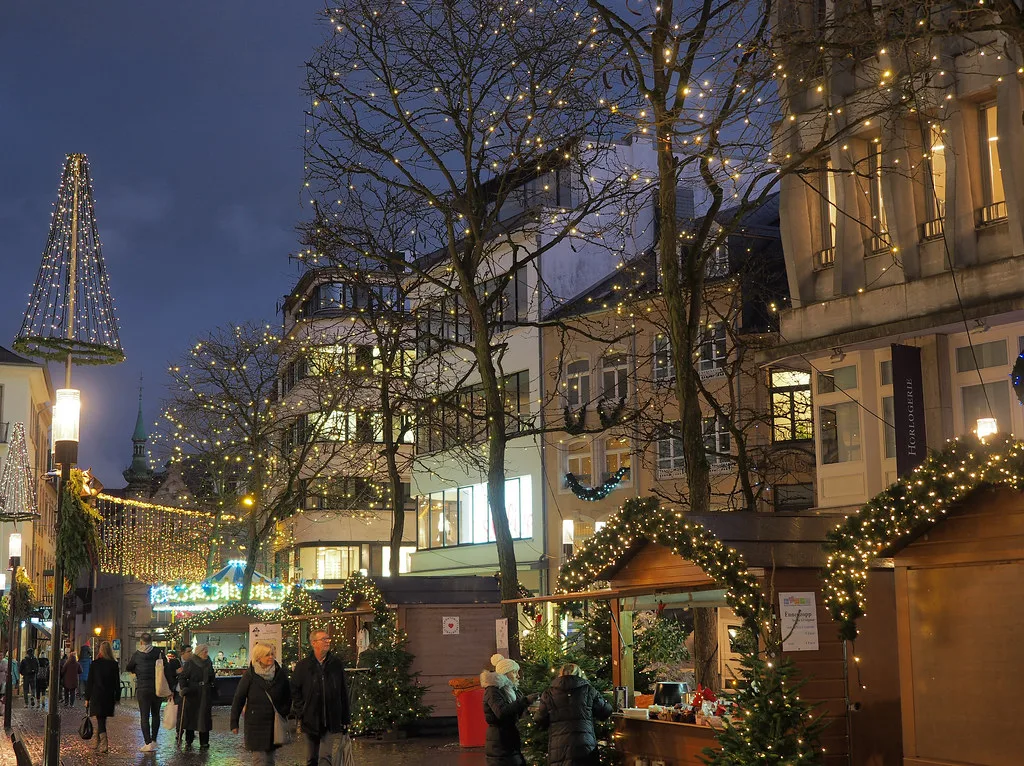
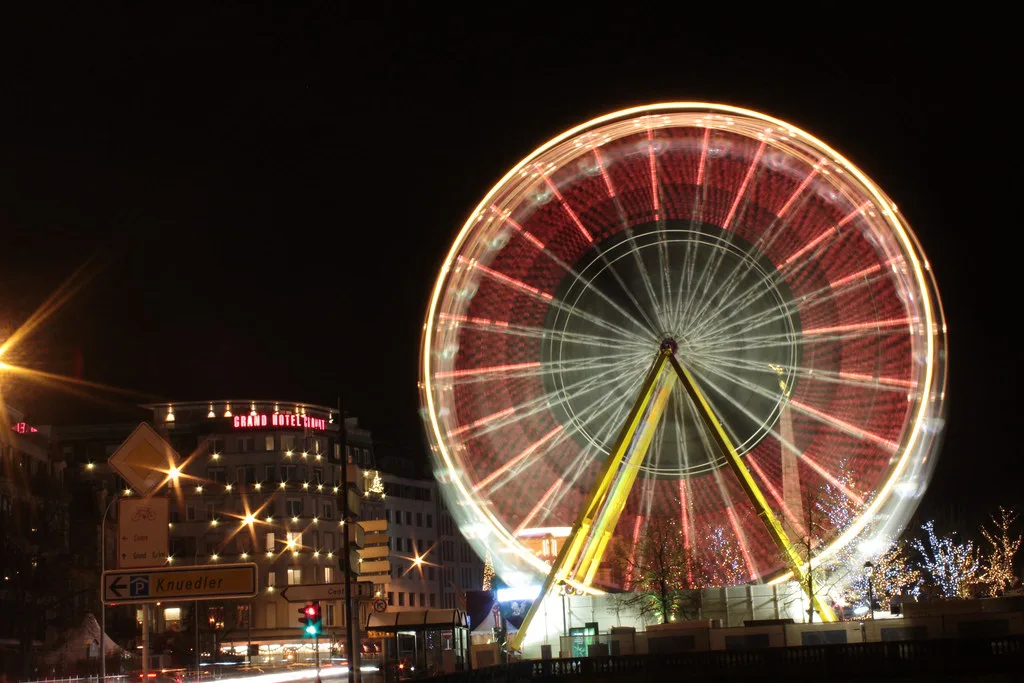
The markets are spread across named squares rather than one fairground. Place d'Armes, the classic setting with its carousel and nativity scene, sits closest to the main station quarter; Place de la Constitution adds a large pyramid, a Ferris wheel and an oyster bar; Parc Kinnekswiss turns into a family park with an ice rink and fire pits; Place Guillaume II hosts the Winterkids program of workshops and shows; and the smaller Niklosmaart is the quieter option.
Because the sites are minutes apart and public transport within the country is free, you can move between them without planning taxis or tickets; the tourist office page carries the confirmed dates and daily hours. The trade-off is repetition: gift stalls lean heavily toward scarves, mugs and mass-produced toys, so go for the food, the lights and the setting rather than for serious shopping.
Evenings are the peak. The lights come on as offices empty, the aisles between chalets fill, and seating at the food huts becomes scarce, so a late lunch or an early-afternoon visit gives you room to browse. If you specifically want the illuminated atmosphere, arrive before the after-work rush and eat early.
Christmas Eve and Christmas Day
Christmas Day 2026 falls on a Friday, and New Year's Day 2027 also falls on a Friday. Both sit inside the published market season, and the tourist office calendar lists the markets open from 11:00 on both days, so the holiday dates are not a dead zone in the city centre.
Treat 24 and 25 December as quieter, family-first days: some stalls and restaurants close or trim hours around them, and the atmosphere shifts from festival crowds to locals taking a slow walk. Book any sit-down meal ahead, carry cash for the huts that stay open, and keep the day loose rather than scheduling three squares back to back. The city stays decorated and lit well after the holiday itself, which makes the days between Christmas and New Year a good compromise for travelers who want atmosphere without the peak.
Local Christmas Traditions
Luxembourg's gift-giver arrives early. Children traditionally receive presents from the Christ Child, the Chrëschtkëndchen, on 6 December, and put their slippers outside the bedroom door to be filled overnight rather than hanging stockings. The date is fixed in the calendar, and Epiphany on 6 January 2027 falls on a Wednesday, after which the decorations come down and the season closes.
Food carries most of the tradition. Boxemännercher, glazed brioche baked in the shape of little men, appear in bakeries through December, and many households hang small treat-filled containers on the tree in place of a boxed advent calendar. In the second week of January the city marks Buergbrennen, a bonfire built from collected Christmas trees that closes the festive period far more decisively than New Year's Eve does — worth timing a trip around if you want the local ending rather than the tourist one.
What to Eat and Drink
Market food here is hearty and regional. Look for Gromperekichelcher, potato pancakes with shallot and garlic; Bouneschlupp, a green-bean soup; Judd mat Gaardebounen, smoked pork with broad beans; and raclette scraped from a wheel onto bread or potatoes. Sweet options run from Nutella crêpes to Quetschentaart, a plum tart, and Rieslingspaschteit, a flaky pastry filled with spiced minced meat.
To drink, vin chaud comes in fruit variations such as pear and orange, and Crémant de Luxembourg gives you a local sparkling alternative to champagne. Eierpunsch, a creamy spiced drink with egg yolk and white wine, suits the cold better than it sounds, while mead and honey spirits are stronger than most visitors expect — ask before you commit to a large cup. Mulled wine and mead go down easily in the cold, so alternate with water and eat something substantial.
Things to Do Beyond the Markets
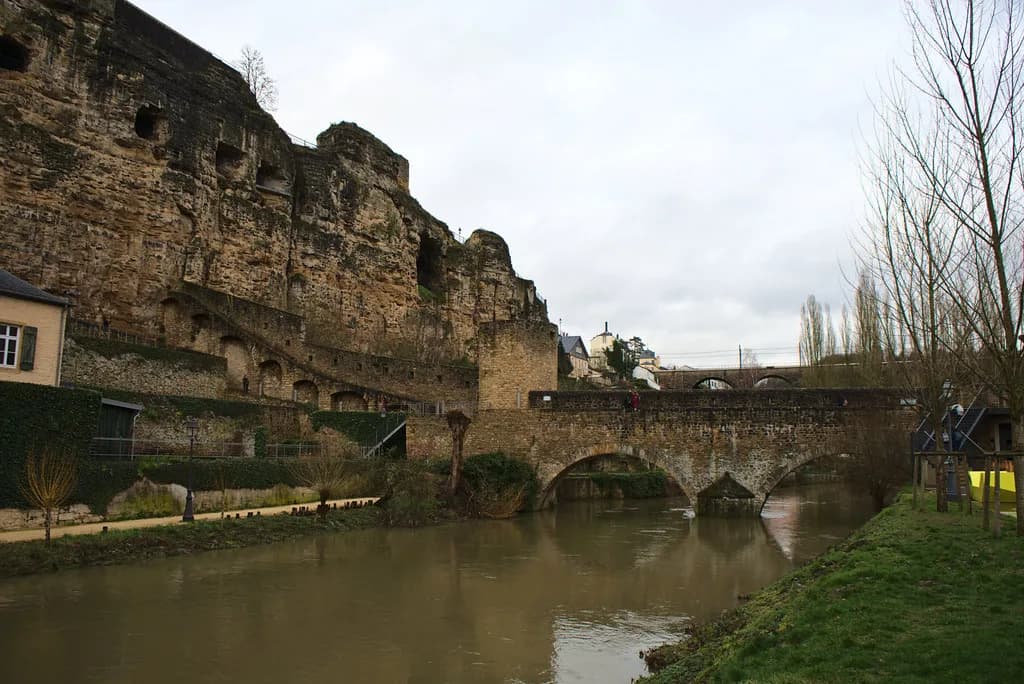
Short daylight makes indoor sights the backbone of a Christmas trip. Mudam, the Museum of Modern Art, sits a short walk from Place d'Armes and gives you a warm, dry couple of hours when the rain sets in. The Bock Casemates, the tunnel network carved into the rock above the Alzette, stay atmospheric in any weather and explain why the city earned its fortress reputation; check current winter hours with the Luxembourg City Tourist Office before you go.
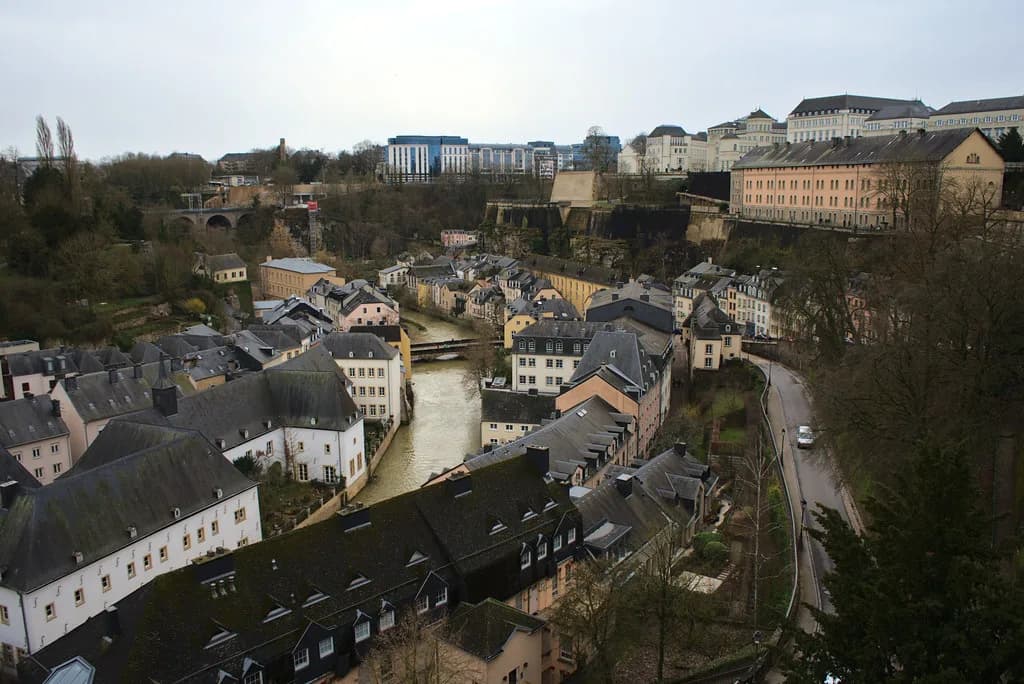
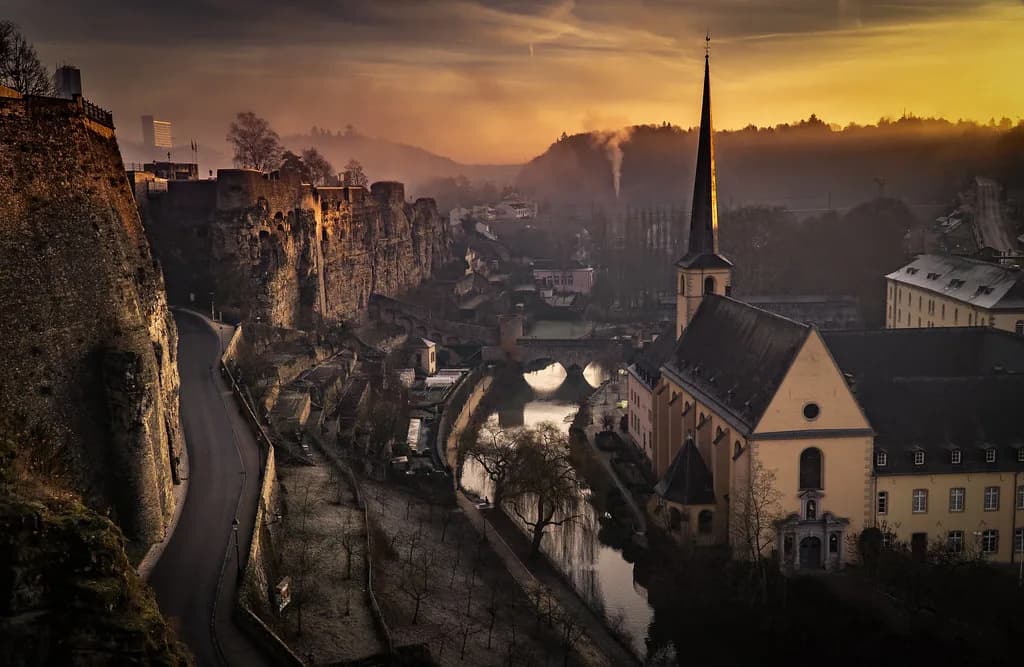
For views without a long walk, the Corniche balcony looks over the valley and the old town's stonework, and the free Pfaffenthal lift drops you down to the Grund, the lower town of riverside paths and small restaurants. Notre-Dame Cathedral and the Gëlle Fra monument on Place de la Constitution fill out a half day on foot. Daylight is short, so put the outdoor viewpoints before lunch and save the museums and tunnels for the afternoon.
New Year's Eve and the First Days of January
New Year's Eve in Luxembourg is a city-centre night rather than a beach-party one: bars, squares and restaurants carry the crowds, and the markets stay open through the holiday period until 3 January 2027. Expect the busiest evening of the season, higher demand for tables and a slow, quiet first week of January once the chalets come down.
The days after New Year's Day are the underrated window: decorations remain, stalls trade reduced hours, and the city returns to something like normal, which suits travelers who dislike crowds more than they mind a little less sparkle. If your dates land in that week, check which huts are still trading before you build an evening around them.
Day Trips by Train
Luxembourg is small enough that the rest of the country fits into day trips. The Moselle wine villages, the Mullerthal region's forest trails and the old town of Echternach are reachable by train and bus, and cross-border services run to Metz, Trier and Saarbrücken, whose Christmas markets make easy companions to the capital's. Winter timetables are thinner than summer ones, so pick one destination per day and confirm the return connection before you leave.
The trade-off is daylight: a day trip in late December leaves only a few usable hours at your destination, so favor nearer places and morning departures. Metz and Trier are the most practical for a short winter day because the journey is quick and the town centers are compact.
Getting Around
Public transport in Luxembourg is free, including trains, trams and buses, which removes the usual ticket decisions from a short winter break. The capital's core is walkable, but the free Pfaffenthal lift and the buses up to the station and Kirchberg save you hill climbs in the rain.
Bring cash in euros for the market chalets: card acceptance varies by stall, and ATMs are not always right beside the squares. Off-peak visits also mean shorter queues at the Casemates and Mudam, where a wet afternoon can otherwise put everyone in the same queue.
Crowds, Prices and the Trade-offs
The honest picture: Luxembourg City is compact and easy, but it is not a week-long Christmas destination for most travelers. Peak evenings and weekends bring real crowds to Place de la Constitution and Place d'Armes, weekend accommodation in the center costs more than midweek, and short daylight hours limit what you can do outdoors. Rain is more likely than snow, so a plan built entirely around squares and viewpoints can fall apart.
Come for two or three days, midweek if you can, and mix markets with museums, tunnels and long meals. Travelers who want guaranteed snow, ski culture or a huge city's worth of Christmas variety should choose another destination; those who want a manageable, cultured, food-led festive break with free transport will find the city fits neatly into a long weekend. If you want to compare a bigger, snowier version of the same festive decision, our Germany winter guide covers the larger markets and colder weather just over the border.
Plan Your Visit
Build your trip around the published season, 20 November 2026 to 3 January 2027, and decide early whether you want the full festive peak or the calmer days just after New Year. Book a table for Christmas Eve and Christmas Day, bring euros in cash for the stalls, and leave room in the plan for rain by pairing each outdoor hour with a museum or tunnel visit.
If you are still weighing dates, compare the deep cold of January with the brighter, quieter weeks of February and early March, when the markets are gone but the city is at its most local and the days are lengthening again.
Frequently Asked Questions
Is Luxembourg worth visiting for Christmas?
Yes, if you want a compact, walkable festive city rather than a mega-city spectacle. The capital's market squares, old town and fortifications sit within minutes of each other, and public transport across the country is free, so a two- or three-day trip covers the season comfortably. Travelers looking for guaranteed snow, ski culture or a week of constant novelty should pick a larger destination.
How long do the Luxembourg Christmas markets run?
The city tourist office lists the Christmas markets from 20 November 2026 to 3 January 2027. Opening hours follow a weekly pattern, with most days from 11:00 to 21:00 and Fridays and Saturdays until 22:00, though individual stalls can keep shorter hours.
Are the markets open on Christmas Day?
Christmas Day 2026 falls on a Friday and sits inside the published season, with the tourist office listing the markets open from 11:00 that day. Expect a quieter atmosphere than in mid-December, and some individual stalls and restaurants closing or trimming hours around 24 and 25 December, so check the day's listings or ask at the tourist office before building an evening around a specific hut.
What happens on 6 December in Luxembourg?
Children traditionally receive gifts from the Chrëschtkëndchen, the Christ Child, on 6 December, leaving their slippers outside the bedroom door to be filled overnight instead of hanging stockings. The date is fixed in the calendar and falls before the main Christmas markets reach their peak.
What should I eat and drink at the Luxembourg Christmas markets?
Start with Gromperekichelcher, the potato pancakes with shallot and garlic, then try Bouneschlupp green-bean soup or Judd mat Gaardebounen, smoked pork with broad beans. For something sweet, look for Boxemännercher brioche figures or Quetschentaart plum tart, and drink vin chaud, Crémant de Luxembourg or Eierpunsch — mead is stronger than it tastes.
Is public transport free in Luxembourg City?
Yes. Trains, trams and buses in Luxembourg are free, which makes moving between the capital's market squares and taking a day trip to Metz or Trier straightforward. Winter timetables are thinner than in summer, so confirm the last return connection before you set out.
When does the Christmas season end in Luxembourg?
The markets close on 3 January 2027, and in the second week of January the city holds Buergbrennen, a bonfire built from collected Christmas trees that marks the real end of the festive period. Epiphany on 6 January 2027 falls on a Wednesday, after which decorations typically come down.
How many days do you need in Luxembourg City at Christmas?
Two or three days is enough for most visitors. That covers the main market squares, Mudam, the Bock Casemates and the Corniche, plus a slower meal or two. Add a day if you want a train trip to Metz, Trier or the Moselle, and keep in mind that short daylight hours limit how much outdoor sightseeing fits into each day.
Sources
Winter travel notes
Optional updates when we add or revise winter guides.
You might also like
Continue reading
More guides you'll find useful