Things to Do in Lucerne in Winter: Your Trip Planner
What works in Lucerne in winter: covered bridges, Baroque churches, lake walks, Rigi and Pilatus, fondue, and the trade-offs of short, cold days.
On this page
Winter turns Lucerne into a smaller, quieter city. The lakefront empties, the old town lanes are walked at a slower pace, and the mountains across the water turn white. Typical December-to-February conditions hover around -2 to 7 °C (28–45 °F), cold enough for a proper coat but mild by Swiss alpine standards.
It suits travelers who want architecture, food and short scenic excursions rather than long hiking days, and who accept that daylight is limited and plans may need to bend around cloud. Anyone chasing guaranteed summit views or warm-weather lake swimming should look at late spring instead.
Weather in Winter: Temperatures and Daylight
Across December, January and February, expect typical highs near 7 °C (45 °F) and lows around -2 °C (28 °F), with snow-dusted rooftops in town and heavier snow on the peaks above. A four-day winter stay in Lucerne is usually planned around that range, cold enough for warm layers and short outdoor stretches. Treat these as long-term averages rather than a forecast for your dates.
Short days are the real constraint. Plan outdoor sights like the bridges and the city wall for the middle of the day, and keep an indoor church or museum in reserve for the late afternoon when light fades.
What Stays Open and What Scales Back
The city's core sights are year-round urban landmarks rather than seasonal attractions: the two covered wooden bridges, the Jesuit Church, the Hofkirche St. Leodegar and the Lion Monument do not depend on good weather. Mountain excursions such as Pilatus and Rigi are the parts of a Lucerne trip most sensitive to winter conditions, so build the city first and treat the peaks as a bonus.
Boats on Lake Lucerne connect the city with lakeside villages and the route to Vitznau for Mount Rigi, which makes a car-free winter day out possible. Before committing a day to any boat or mountain railway, check the day's operating plan with the Lake Lucerne boat company and the Rigi Bahnen, since winter timetables differ from summer.
Old Town Lanes and the Musegg Wall
The old town is small enough to cover on foot in an afternoon, with cobbled lanes, frescoed façades and small squares opening between the buildings. In winter the cafés along these lanes become the natural pause points, and the compact scale means you are never far from warmth.
The 14th-century Musegg Wall survives with its towers, and sections of the ramparts can be walked, with the Zytturm clock tower offering views over the rooftops toward the lake and mountains. Save the wall for a dry, clear hour; the reward is the panorama rather than the climb itself.
Chapel Bridge and Spreuer Bridge
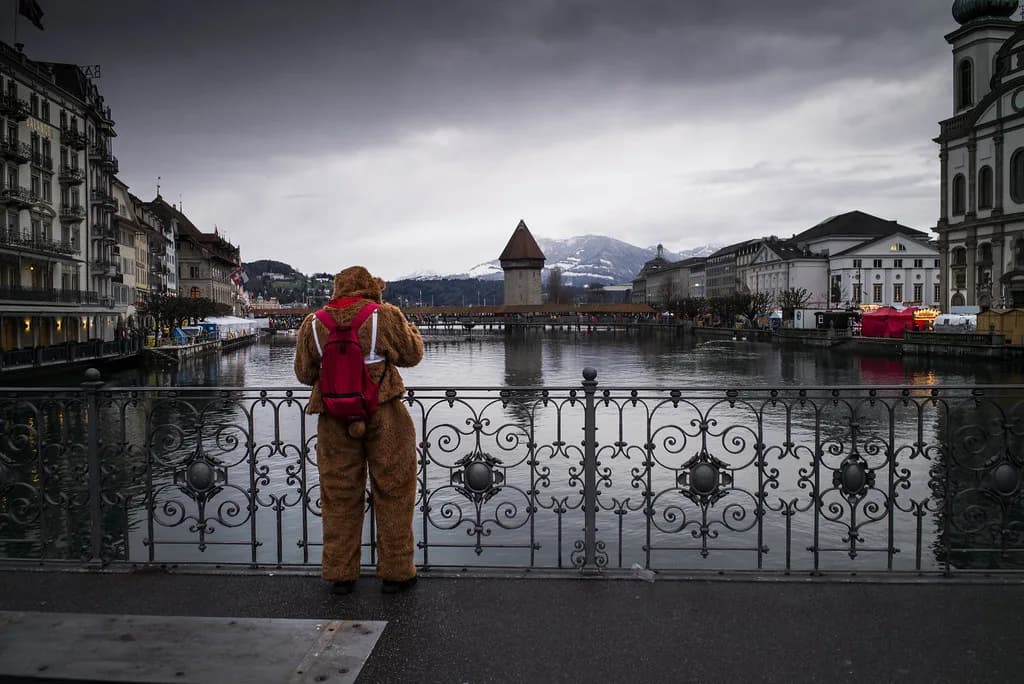
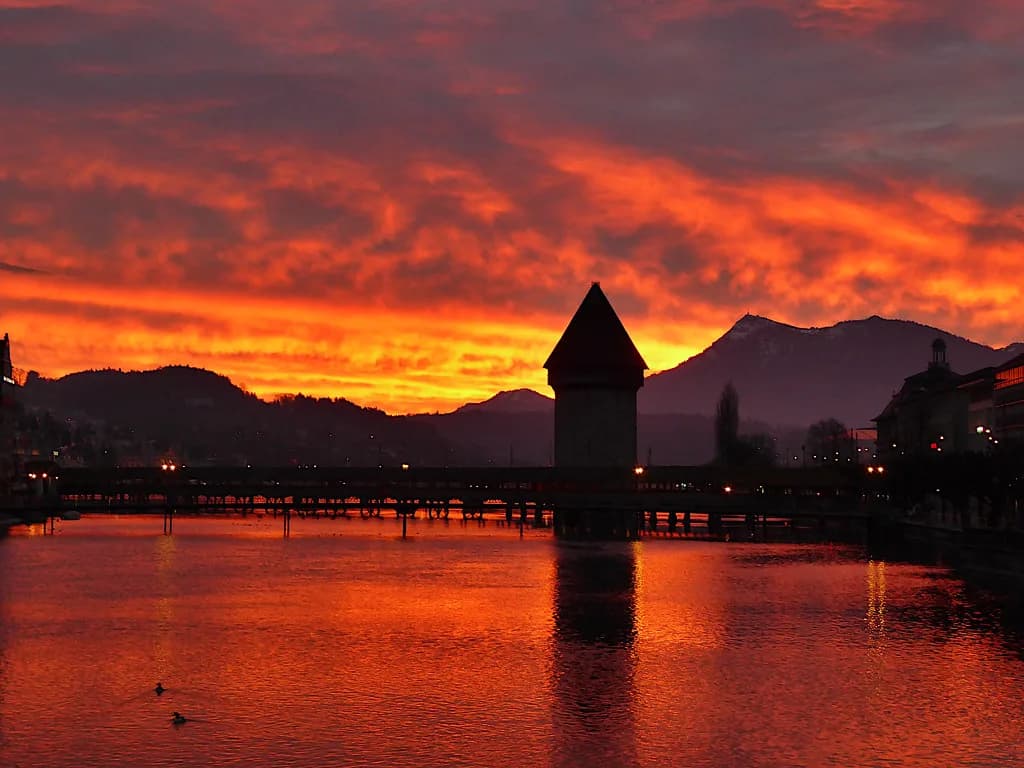
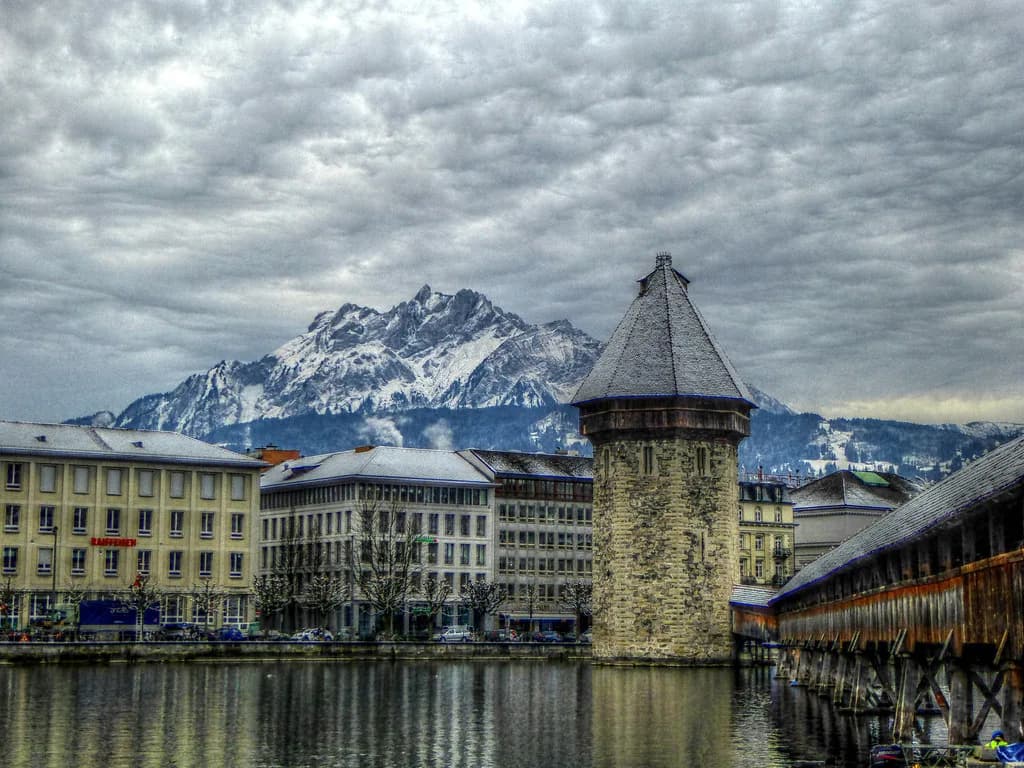
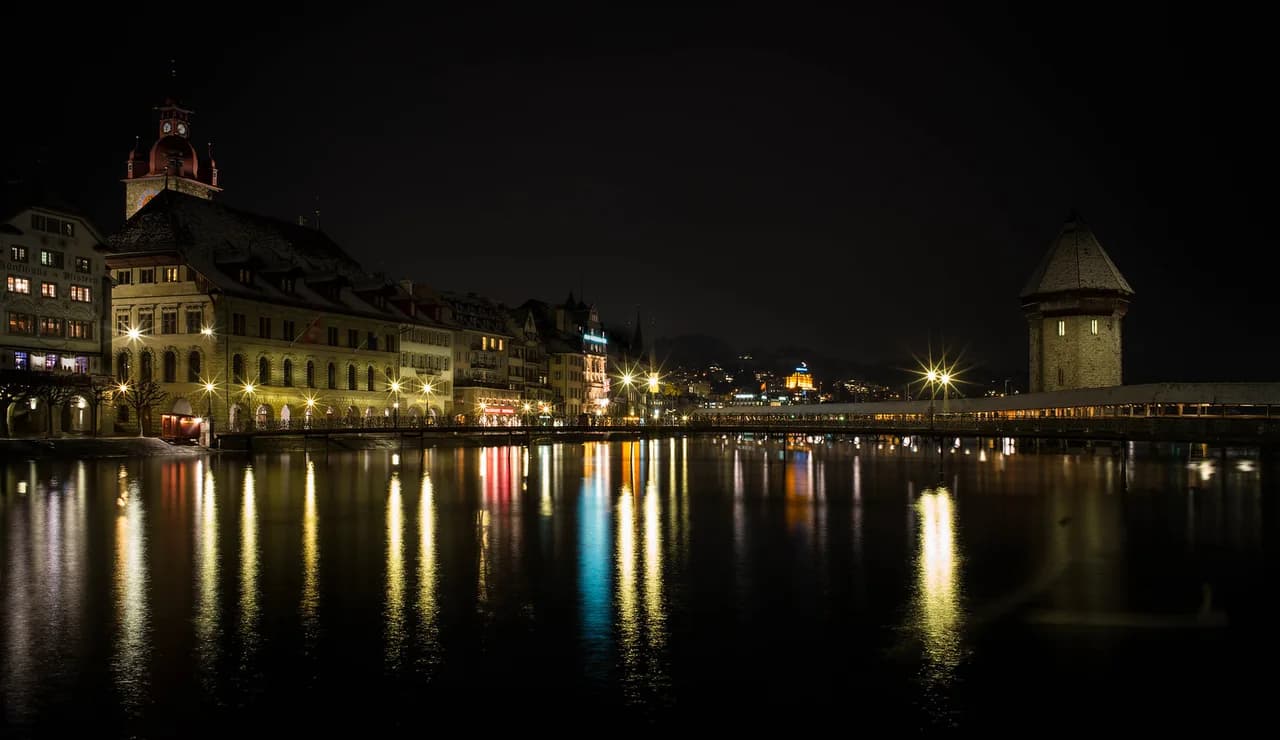
The Chapel Bridge is the city's signature sight, a covered wooden bridge crossing the Reuss diagonally with historic paintings inside and the Water Tower alongside. Because it is covered, it works in rain or snow, which makes it one of the most reliable winter stops in Lucerne.
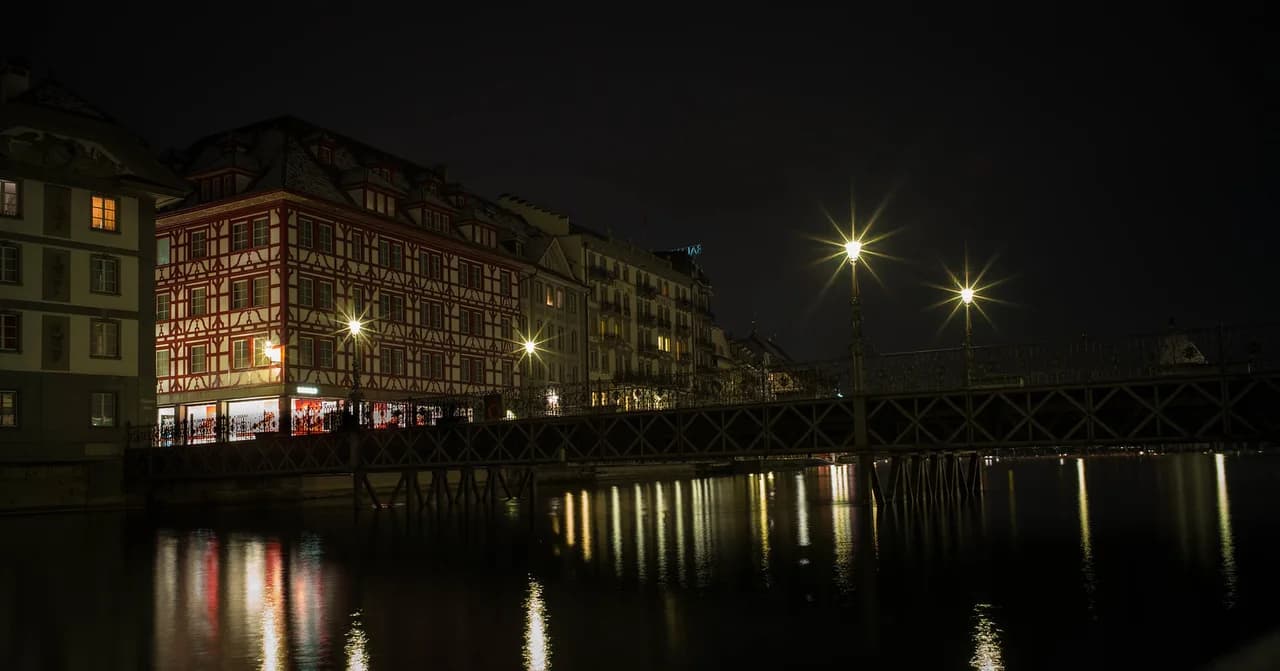
The smaller Spreuer Bridge, built in the same century, carries the darker Dance of Death paintings and draws fewer people. Walk both on the same loop: you get the famous view and the quieter one without spending long outside.
Jesuit Church and St. Leodegar
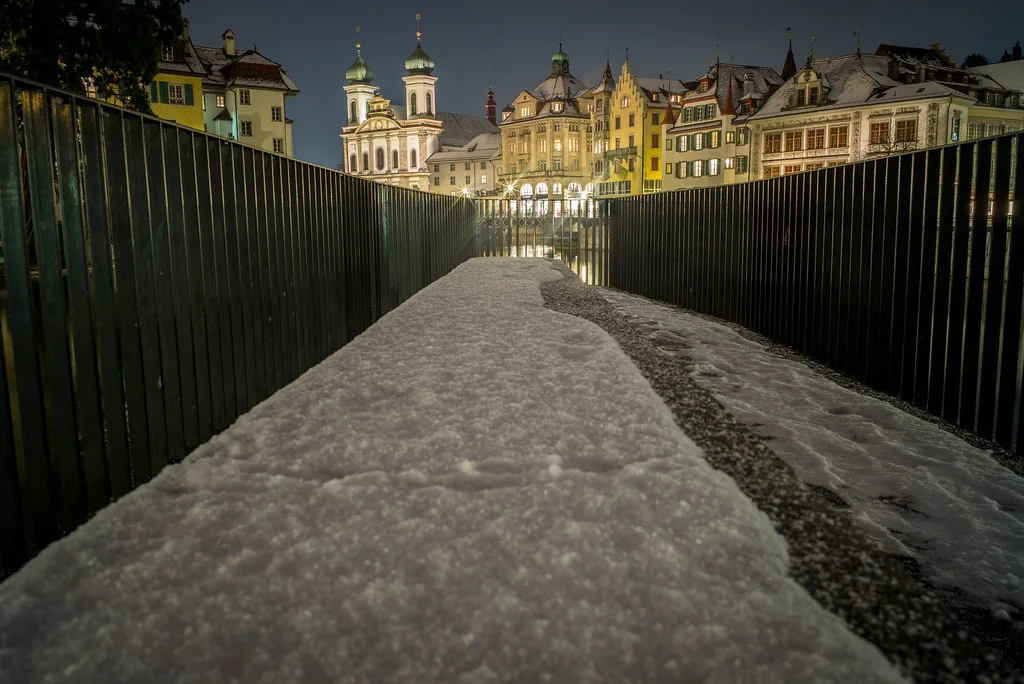
The Jesuit Church was the first large Baroque church built in Switzerland north of the Alps, with twin onion-domed towers on the river and an ornate stuccoed interior. It is free to step into and warm, which makes it a sensible mid-walk stop rather than a separate excursion.
The Hofkirche St. Leodegar, rebuilt in the 17th century on the foundations of an earlier basilica, has carved choir stalls and a quiet interior that rewards a slow look. Pair it with the nearby Lion Monument so one cold walk covers both.
The Lion Monument
Carved into a rock face above a small pond, the dying lion commemorates the Swiss Guards killed in 1792 during the French Revolution. It sits in a park a short walk from the old town, so it fits neatly into a city morning without a detour.
The monument is outdoors and always visible from the path, which means you can time it for a brighter moment and keep the visit short when the air is raw.
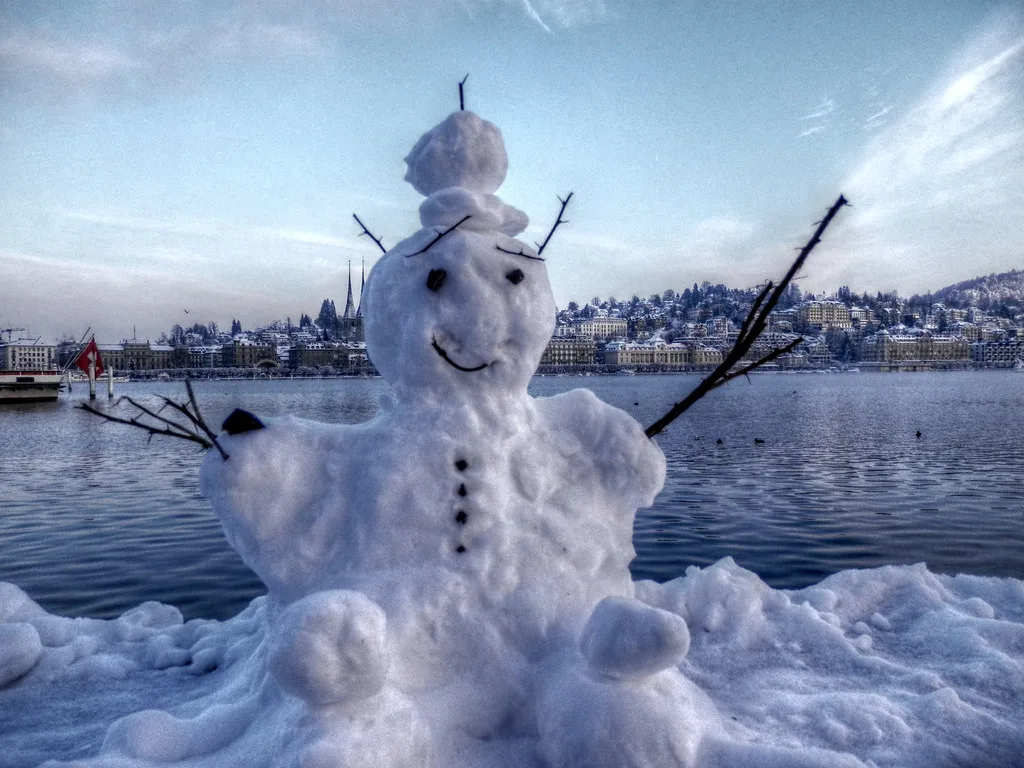
Lake Lucerne: Waterfront Walk and Boats to Vitznau
The easiest winter walk runs from the city center toward the Lido and back, following the shoreline with the Alps across the water. Benches line the route, so you can break the walk whenever the wind picks up.
Boats across the lake also work as transport rather than just sightseeing, linking the city with villages around the shore. A short crossing gives you open-water views of the town and mountains without committing to a full day outdoors.
Mount Rigi by Boat and Cogwheel Train
Rigi, often called the Queen of the Mountains, is reached by cogwheel train from Vitznau or Goldau, and the boat from Lucerne to Vitznau combines a lake crossing with the ascent. The summit delivers wide views over the lake and surrounding Alps, with mountain restaurants at the top for warming up.
Experienced winter visitors single out Rigi as a strong short-trip choice precisely because boat plus cogwheel train makes an elegant half-day out. Check the day's boat and rail connections with the Lake Lucerne boat company and the Rigi Bahnen before you set off, and hold the trip for a morning when the cloud sits high.
Mount Pilatus in Winter
Pilatus is the highest and most prominent peak near the city, and the cogwheel railway from Alpnachstad climbs gradients of up to 48 percent, the steepest in the world. That ride is a summer-season experience, so a winter visit means choosing a different route up and confirming what is running.
On a clear day the summit views stretch across central Switzerland, but cloud can swallow the top while the city stays bright. If your time is short, pick one mountain rather than both, and give Rigi the edge when you want a simple boat-and-train day.
Bürgenstock and the Lake Villages
Bürgenstock, reached by its own funicular or on foot, has an observation tower with a restaurant and panoramic views over the lake. It makes a good half-day when the weather is settled but you want scenery without a summit expedition.
Further around the shore, Rütli is a meadow on the lake associated with Switzerland's founding oath and reachable by boat or on foot, while Meggenhorn has 19th-century castle grounds that suit a stroll. Both are fair-weather add-ons rather than essential winter stops.
Warm-Up Stops: Fondue, Raclette and Chügelipastete
Cold evenings are the moment for cheese fondue or raclette, served with bread and pickles, and for rösti, the crisp shredded potato dish that turns up alongside sausages or eggs. These are the plates that make a winter evening in the old town feel earned.
For something specific to the city, look for Luzerner Chügelipastete, a puff pastry filled with creamy veal and mushroom ragout, and consider lake fish such as perch or trout. Bakeries supply the quicker option, including the kirsch-layered Zuger Kirschtorte found around the region.
Christmas Season in Lucerne
Through Advent the city takes on a festive mood, with markets and decorations around the old town and squares adding a reason to walk the lanes after dark. Treat the season as atmosphere rather than the main event, and keep the bridges, churches and lakefront at the center of your plan.
Day Trips from Lucerne in Winter
Zurich Airport is the closest major airport and sits just over an hour from Lucerne by direct train, which makes an arrival-day transfer straightforward. Trains also run from Bern, Basel and Geneva, so Lucerne works well as a base without a car.
Within the region, the lake villages, Vitznau and the Rigi foothills make the most realistic winter outings, since they combine a boat or train ride with a short walk. Driving around the lake is possible, but parking in the city center is limited, so rail and boat are simpler.
Trade-Offs: Crowds, Prices and Short Days
Winter in Lucerne is quiet compared with summer, which means easier wandering and shorter queues at the urban sights. The cost is limited daylight, unpredictable cloud on the mountains, and the chance that a boat or railway plan needs to shift to another day.
Swiss costs run high year-round, and restaurants in the old town are no exception, so budget for food as a significant line rather than an afterthought. Mountain excursions add transport costs on top, which is another argument for choosing one peak instead of two.
Who Should Pick Another Month
Come in winter if you want a compact city break built on architecture, food and a single scenic excursion, and you are comfortable with cold hands and early sunsets. Choose late spring or summer if summit views, long hikes and the Pilatus cogwheel railway are central to your trip, since the warm months restore the full range of outdoor options.
Plan Your Winter Visit
Build a Lucerne winter trip around what cannot be rained off: the covered bridges, the two Baroque churches, the Lion Monument and a slow lunch of fondue or Chügelipastete. Add one mountain day, ideally Rigi by boat and cogwheel train, and hold it loosely for the clearest morning of your stay.
Three or four nights gives you room for the city, a lake walk and a peak without rushing, and it leaves slack for a washed-out day. Book mountain plans around the weather rather than the calendar, and the short days stop feeling like a limitation.
Explore more Lucerne winter guides
Frequently Asked Questions
Is Lucerne cold in winter?
Yes. December to February typically brings highs near 7 °C (45 °F) and lows around -2 °C (28 °F), so expect frosty mornings and snow on the peaks above town. That is a long-term average, not a forecast, so a given week can be milder or sharper.
What can you do in Lucerne when it rains?
Head for the covered Chapel Bridge and Spreuer Bridge, whose painted interiors stay dry, then step into the Jesuit Church and the Hofkirche St. Leodegar for a warm pause. The old town lanes keep you close to cafés between stops, and a long lunch of fondue or Chügelipastete fills the wettest hours.
Can you go up Mount Pilatus or Rigi in winter?
Rigi is the safer bet, since the cogwheel train from Vitznau or Goldau pairs with a boat from Lucerne for a simple half-day out. The Pilatus cogwheel railway from Alpnachstad is a summer-season ride, so a winter ascent needs a different route; the winter timetable shows what is running.
How many days do you need in Lucerne in winter?
Three or four nights is enough for the old town, both covered bridges, the two big churches, a lakefront walk and one mountain excursion. The extra night gives you slack to move a peak day when cloud sits low over the summits.
Sources
Winter travel notes
Optional updates when we add or revise winter guides.
You might also like
Continue reading
More guides you'll find useful