Does It Snow in Malta? Snow, Hail and Winter Weather
Snow in Malta is rare, with no official snowfall recorded since 1962. Here is what winter really brings and how the season shapes a trip.
On this page
Malta in winter is a limestone island of short, bright days and sudden squalls, with the Mediterranean holding temperatures far above freezing. Snow is not part of the picture in any practical sense: it is a once-in-a-generation curiosity rather than a seasonal expectation. That makes the island a good bet for travelers who want mild air, empty sights and low prices, and a poor one for anyone hoping for a white winter.
What the island does deliver between November and March is wind, rain in short heavy bursts, and plenty of usable daylight for walking Valletta's streets or crossing to Gozo. Understanding the difference between genuine snowfall and the hail that occasionally whitens roads will tell you exactly what to expect from a winter trip here.
What Malta's winter weather is actually like
The island runs on a Mediterranean climate with mild, humid winters and a long warm season. Daytime highs in the coldest months sit around 15 °C (59 °F) and lows around 9–10 °C (48–50 °F), so frost on the coast is unusual and snow is essentially out of reach. What you notice more than the number is the damp: unheated stone buildings and sea air make 12 °C feel colder than the same reading in a dry city.
Rainfall is concentrated between October and March, arriving as short intense downpours rather than all-day drizzle, and January is the wettest month with roughly 90 mm. Sunshine drops to about five and a half hours a day in January and just over five in December, which still leaves decent afternoons for outdoor sightseeing if you plan around the showers.
Does it snow in Malta? The short answer
Valletta has not officially recorded snowfall since 31 January 1962, more than six decades ago. Records from the nineteenth and early twentieth centuries list a handful of falls, several of them light and none of them settling for long, which tells you how exceptional the conditions have to be. For a winter visit, treat snow as a historical footnote rather than a possibility to plan around.
That does not mean winter weather is dull. The island occasionally produces ice storms and heavy hail that briefly turn streets white, and those events generate the photos that make people ask the question in the first place.
The recorded snow history, from 1858 to 1962
Documented snowfall in Malta begins with January 1858, followed by light falls in March 1877 and February 1895 that left no accumulation. January 1905 brought brief flurries and March 1949 saw snow recorded in the island's interior, before the widely recognised event of 31 January 1962 closed the record.
A report of flakes on 31 December 2014 is debated and produced no accumulation, so it does not count as confirmed snowfall. If your trip coincides with a cold snap, hail or graupel is the realistic outcome on the ground.
Hail, not snow: why January hail looks like snow in Rabat and Baħrija
On the night of 16–17 January 2026, residents of Rabat and Baħrija woke to streets and cars under centimetres of ice after a powerful hailstorm. It looked like a northern European snow day, but it was frozen hail from a strong thunderstorm, not snow crystals settling. Civil Protection Malta warned drivers about the slippery roads, and the ice melted within a day or so.
Similar confusion arose in December 2008, when a hailstorm left parts of Valletta under thick ice, and in late December 2014, when soft hail briefly whitened streets. These events are rare but not unprecedented, and they explain why visitors sometimes arrive expecting snow after seeing viral photographs.
Why snowfall is so rare: the Mediterranean and mild winter lows
The sea surrounding the islands moderates air temperatures all winter, keeping coastal lows well above freezing even during cold outbreaks over Europe. Hail forms in strong thunderstorm updrafts and can pile up quickly, which is why it produces the white streets that snow almost never does. Snow needs cold air through a deep layer of the atmosphere, a combination Malta's position in the central Mediterranean rarely supplies.
The practical consequence for travelers is that you can leave the heavy winter gear at home and still expect windy, chilly evenings. Humidity does the rest, making a 10 °C (50 °F) evening feel raw, especially near the water in Valletta or Sliema.
Snow versus hail on Gozo and Comino
Gozo and Comino sit in the same weather system as the main island, so the same rules apply: hail is possible during winter thunderstorms, snow is not a realistic expectation. Comino is the smallest and most exposed of the three, with very limited winter services, so a windy day there is more about shelter than scenery. Gozo's hillier interior can feel a degree or two cooler and windier than the coast, but the difference is not enough to change what falls from the sky.
If a cold spell is forecast during your stay, the sensible plan is to watch conditions day by day and keep ferry crossings flexible rather than committing to an outer-island trip in advance.
Weather in January and February: temperatures, rain, sunshine and daylight
January and February are the coldest and windiest months, with average ranges of about 9–15 °C (48–59 °F) and an average low of 6–12 °C (43–54 °F) depending on location. Sea temperatures hover around 15–16 °C (59–61 °F), cold enough that most visitors skip swimming despite the clear water.
Rainfall is highest in January and eases in February, while sunshine climbs from about 5.5 hours a day in January to 6.4 in February. Daylight stays generous by northern European standards, with roughly ten hours between sunrise and sunset in midwinter, so a morning museum and an afternoon walk both fit comfortably.
February is also when Carnival arrives, with Carnival Tuesday falling on 9 February 2027 and Ash Wednesday the following day. Valletta's streets fill for the parades, so book the indoor sights around those dates rather than expecting quiet galleries.
Weather in November, December and March
November and December are not the coldest months but they are changeable, with temperatures dropping and occasional rain; November averages 14–20 °C (57–68 °F) and December 11–17 °C (52–62 °F). Sunshine falls from 6.5 hours a day in November to 5.2 in December, the shortest of the year.
March brings rising daytime temperatures of about 10–17 °C (50–62 °F) and more sun, though evenings stay cool. Holy Week falls in late March 2027, with Easter Sunday on 28 March, so the final days of the month are busier than the first ones.
December is the month most people associate with a festive visit, and Christmas in Malta is a quiet, family-centered affair with church services and processions rather than large-scale markets. If you are weighing dates, November is usually milder and cheaper than the deep winter weeks.
Does it snow in Malta in December, January or February?
No month is more likely than another in any useful sense: the official record shows no snowfall in Valletta since 1962, and the earlier falls were spread across January, February and March. December has produced soft hail and hail, most recently around the end of 2014, but no confirmed settling snow.
If snow is a priority for your winter trip, Malta is the wrong destination and you should look at Alpine or northern European cities instead. If mild air rather than snow is the appeal, Italy in winter offers a nearby contrast worth comparing before you book. If you want mild air, low prices and short queues, the same lack of snow works in your favor.
What winter weather means for sightseeing days
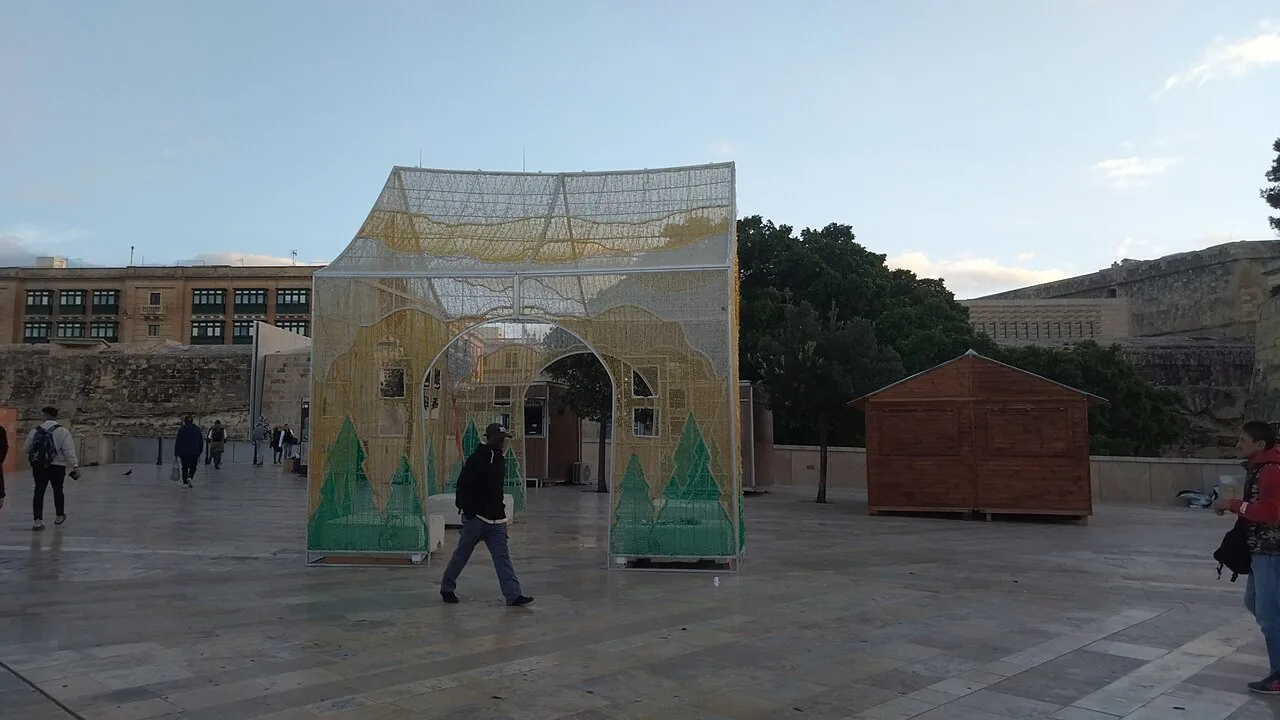
Rain in Malta tends to arrive hard and pass, so the workable strategy is to pair a long indoor stop with a shorter outdoor one. The Upper Barrakka Gardens and the war rooms and museums of Valletta make an easy half-day combination when showers are around.
Mdina's narrow lanes and the harbour forts of the Three Cities are at their best under low winter light with few other visitors, though exposed walls and bastions are unpleasant in strong wind. Check the day's conditions before committing to a long walk along the coast.
Rainy and windy days: what to do indoors in Valletta, Mdina and the Three Cities
The island's best wet-weather options are its archaeology and church interiors: the National Museum of Archaeology in Valletta, the Cathedral Museum in Mdina and the fortified streets of Birgu, which offer shelter between stops. Hypogeum visits are limited by timed entry and sell out well ahead, so book before you travel rather than on the day.
A wet day is also a good moment for a long lunch of rabbit stew or pastizzi, which costs little and eats up the worst of the weather. Build one indoor anchor into each day and keep the rest loose.
Who a Malta winter trip suits, and who should pick another month
Winter suits travelers who value quiet streets, mild daytime temperatures and lower prices over beach time, and who are happy to dodge showers between museums and cafés. It also suits anyone combining Malta with a longer European trip and wanting a warm-ish break in the middle.
It is a poor fit for swimmers, sun-seekers and anyone hoping for snow, since sea temperatures of 15–16 °C (59–61 °F) and highs near 15 °C (59 °F) rule out lazy beach days. Those travelers should aim for May, June, September or October instead.
Plan Your Winter Trip to Malta
Expect wind, short heavy showers, cool evenings and the occasional dramatic hailstorm, and plan each day around one indoor highlight plus one outdoor stretch. That approach handles the island's winter weather far better than any fixed itinerary.
If your dates include New Year's Eve, Valletta and St Julian's fill with celebrations, so book early and expect higher prices around that week. Otherwise, choose late November or March for the best balance of mild weather, daylight and space.
Explore more Malta winter guides
Frequently Asked Questions
Does it snow in Malta?
Officially recorded snowfall in Valletta last occurred on 31 January 1962, and earlier falls across the nineteenth and early twentieth centuries were mostly light. Snow is a historical rarity rather than something to expect on a winter visit.
When did it last snow in Malta?
The last widely recognised snowfall was on 31 January 1962, when a small amount settled in parts of the island. A reported sighting on 31 December 2014 did not accumulate and remains debated.
Did it snow in Malta in January 2026?
No. On the night of 16–17 January 2026 a severe hailstorm covered streets in Rabat and Baħrija with ice, which looked like snow but was hail from a thunderstorm. The ice melted within about a day.
Is Malta warm in winter?
It is mild rather than warm, with January and February daytime highs around 15 °C (59 °F) and lows near 9–10 °C (48 °F). Humidity and wind make it feel colder than the numbers suggest.
Is Malta rainy in November?
November brings about 76 mm of rain and 6.5 hours of sunshine a day on average, so expect changeable days with showers rather than constant rain. Downpours are usually short and intense.
Can you swim in Malta in winter?
Sea temperatures sit around 15–16 °C (59–61 °F) in January and February, which is too cold for most visitors. A few hardy swimmers go in, but the water is not the reason to visit in winter.
How much daylight is there in Malta in midwinter?
Midwinter offers roughly ten hours between sunrise and sunset, noticeably longer than most of northern Europe. That leaves time for a morning museum and an afternoon walk even in December and January.
Which month is best for avoiding crowds in Malta?
Late November and March are the sweet spots, with mild temperatures, fairly low rainfall and few visitors. Avoid the Carnival week in February and the Christmas to New Year period if quiet streets matter to you.
Sources
Winter travel notes
Optional updates when we add or revise winter guides.
You might also like
Continue reading
More guides you'll find useful