Gdańsk in November: Weather, Daylight and What's Open
Gdańsk in November brings 7°C highs, about 8.6 hours of daylight and quiet museums. See what stays open, which holidays fall and who should go.
On this page
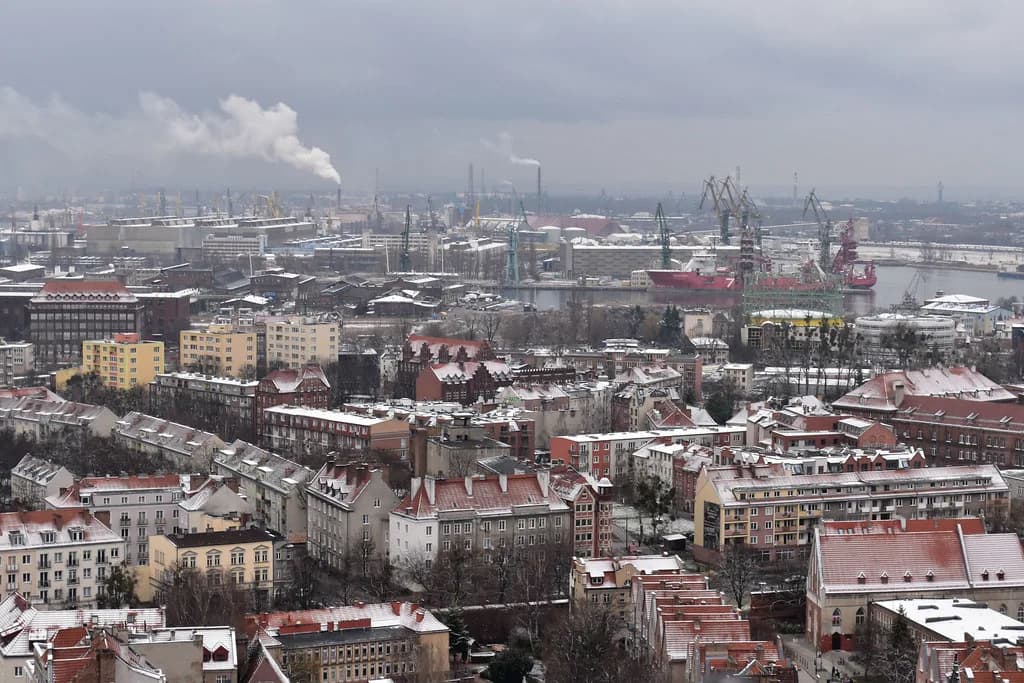
November settles Gdańsk into its damp Baltic mode: cold, breezy afternoons, a low grey sky and dusk arriving while the shops are still open. The Old Town stays fully walkable, but the day is short enough that a sensible plan pairs one long museum visit with a single outdoor loop. Travelers who want atmosphere over sunshine and easy entry to the big sights will find the month rewarding.
Expect typical daytime highs around 7°C (44°F) and lows near 3°C (37°F), with a noticeable wind off the water and a modest chance of rain on any given day. Long-term averages put sunrise near 7:11am and sunset near 3:47pm, roughly 8.6 hours of daylight, so the usable outdoor window is short.
Weather in November
The month's averages describe a cold, slightly windy city rather than a wet one: highs of about 7°C (44°F), lows of about 3°C (37°F), wind near 17 mph and humidity close to 90%. Cloud cover is high, so plan on flat light for photography and treat any bright hour as a bonus.
Daylight is the real constraint. With sunset around 3:47pm, the practical outdoor stretch runs from mid-morning to mid-afternoon, which is why an early museum slot followed by a walk works better than the reverse. Late November visitors report daytime highs of roughly 3–5°C and sunsets near 3:30pm, so the back half of the month feels noticeably darker.
Clocks went back on 25 October 2026, so November runs entirely on winter time and the light fades fast after lunch. None of these figures are a forecast: check a short-range local forecast for the week you travel, because a snow-bearing front or a clear high-pressure spell changes the feel of the city completely.
How November Changes the City
The headline change is volume. November is a markedly less popular month than the summer peak, which means walk-up entry at the major museums, tables without reservations and a Main Town you can photograph without waiting for a gap in the crowd.
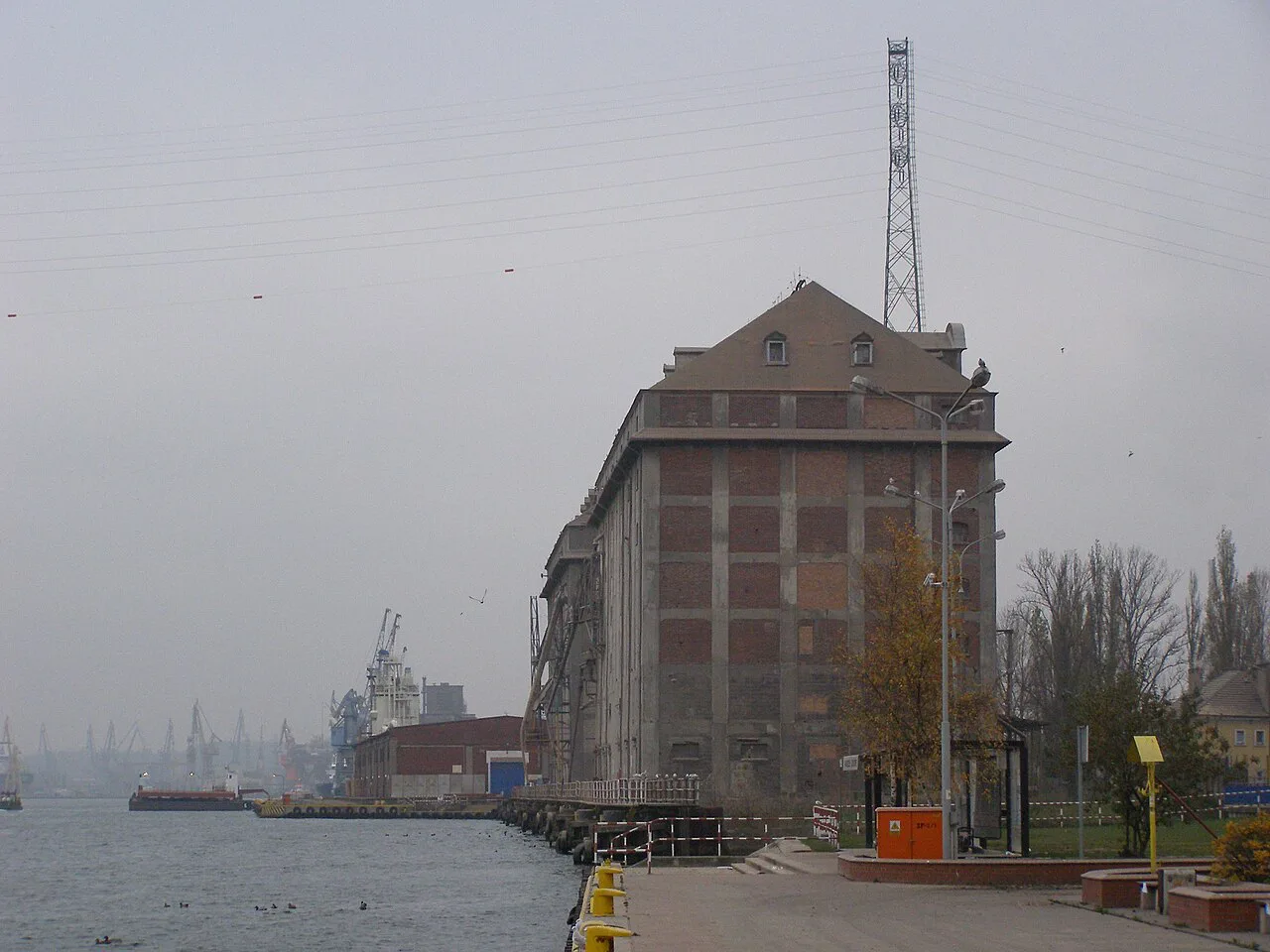
The heavyweight sights are the dependable core of a November day: the European Solidarity Centre in the shipyard district, the Museum of the Second World War near the Motława, and the Amber Museum housed in the old prison tower on the waterfront. Buildings stay open as indoor refuges from the cold, and the Maritime Museum's granary complex and the Crane give the riverside something to do on a drizzly afternoon. Some outdoor attractions, boat operations and seasonal venues trim their calendars this month, so decide which riverside or water-based plans are essential and drop the rest without regret.
All Saints' Day and Independence Day
Two fixed national holidays fall in November: All Saints' Day on 1 November, when Poles visit family graves and candlelit cemeteries glow after dark, and Independence Day on 11 November, marking Poland's return to statehood in 1918. Treat both as days when the city's rhythm shifts toward commemoration rather than sightseeing.
On 11 November, expect civic ceremonies, flags on public buildings and a more formal mood around the city's monuments, with Westerplatte carrying particular weight as the site where the war in Europe began. Visitor attractions can run reduced hours on public holidays and some businesses close, so use the day for the Old Town on foot and a long lunch rather than a museum marathon.
Check the official municipal and museum calendars for holiday-day arrangements before you fix your itinerary; the exact programme for a given 11 November comes from the organisers, not from a general calendar.
Rainy-Day Gdańsk
When the drizzle sets in, the museum belt does the work. The Museum of the Second World War can absorb half a day on its own, the European Solidarity Centre tells the story of the trade union movement through interactive exhibits, and the Amber Museum offers a compact, warm detour on Mariacka's amber street.
St. Mary's Church is the other reliable refuge, and its tower climb is a decision best made in the morning when the light is best. The 400 steps are narrow and steep, and climbers have reported paying a modest fee in cash, so carry small notes rather than relying on a card.
Build one wet-weather day into your plan instead of hoping to dodge the rain. If a clear morning appears, drop the museum and head straight out; if it does not, you lose nothing by moving a gallery visit forward a day, since November crowds make that swap painless.
The Old Town on Foot
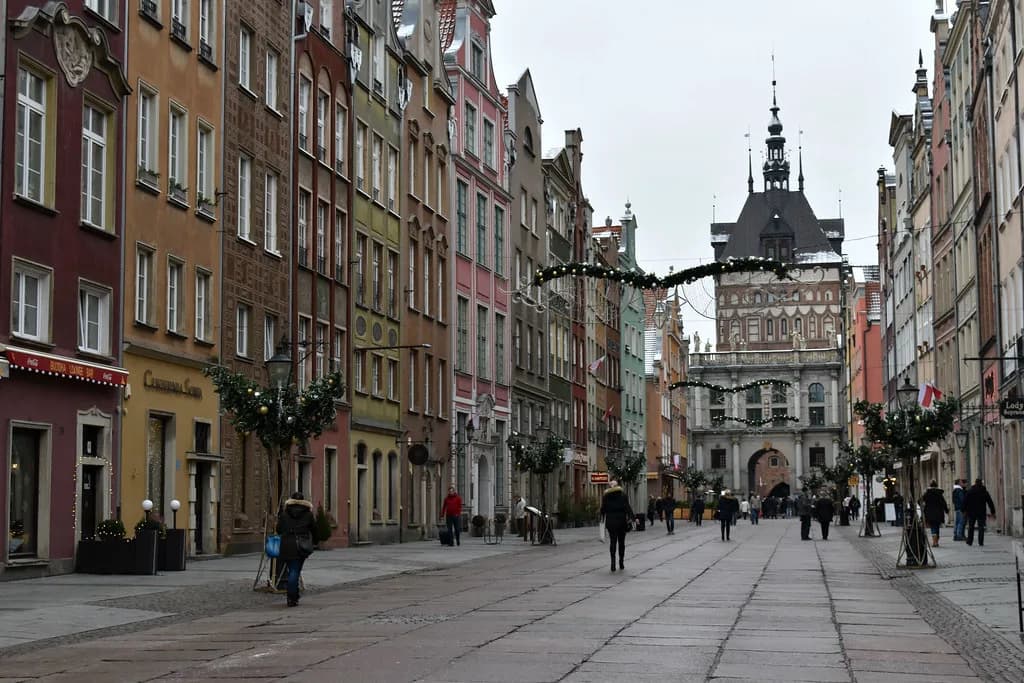
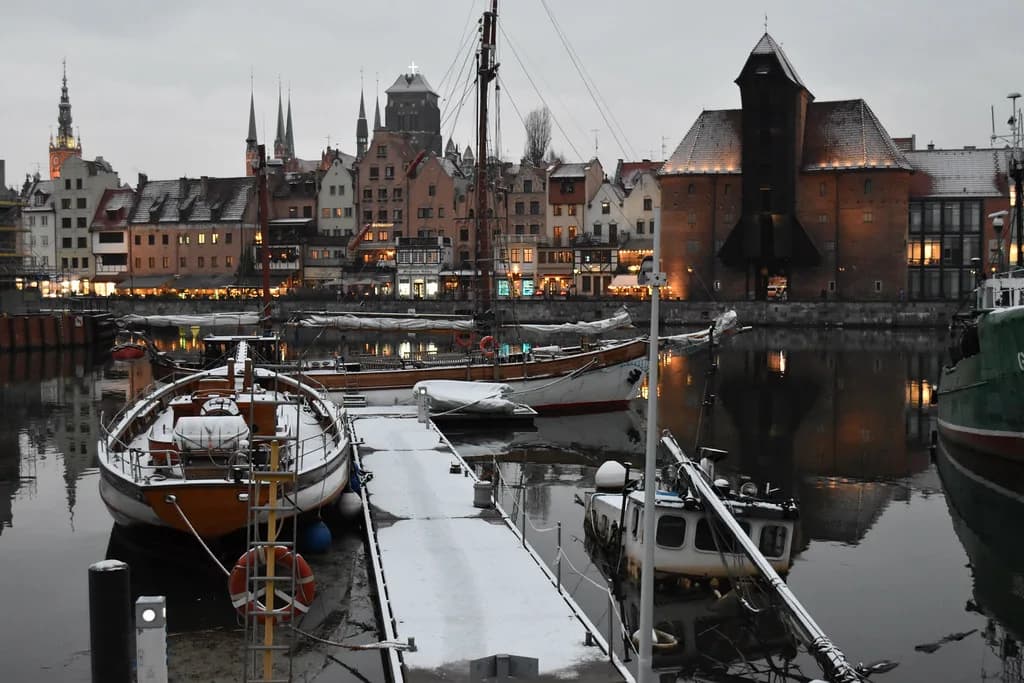
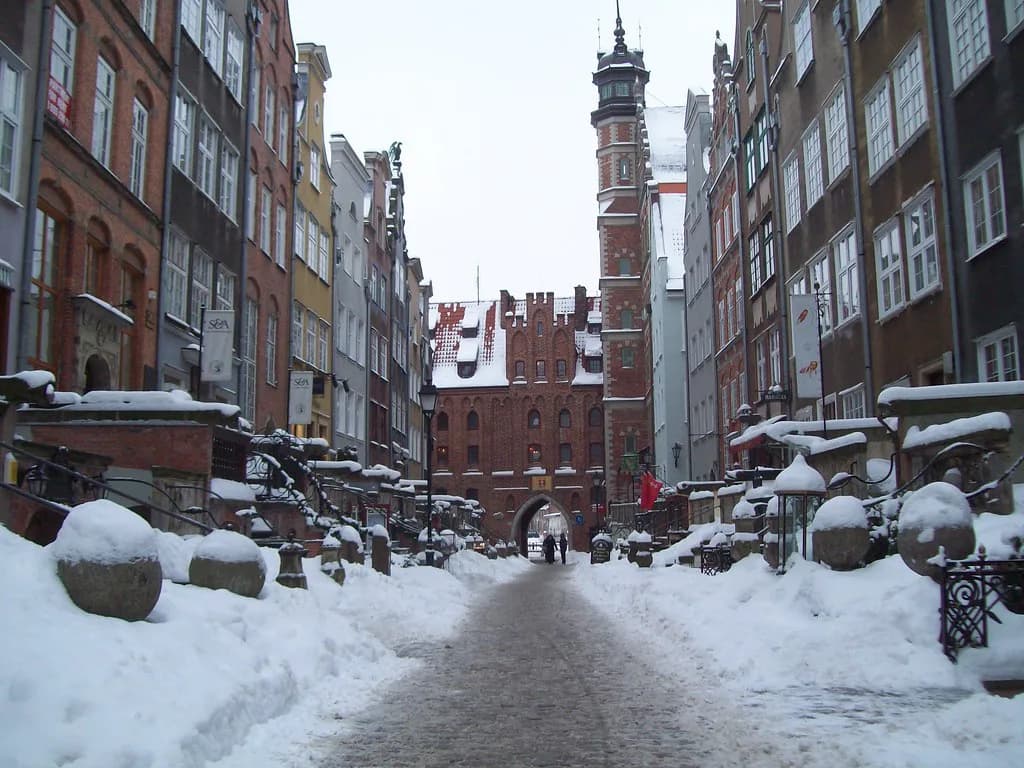
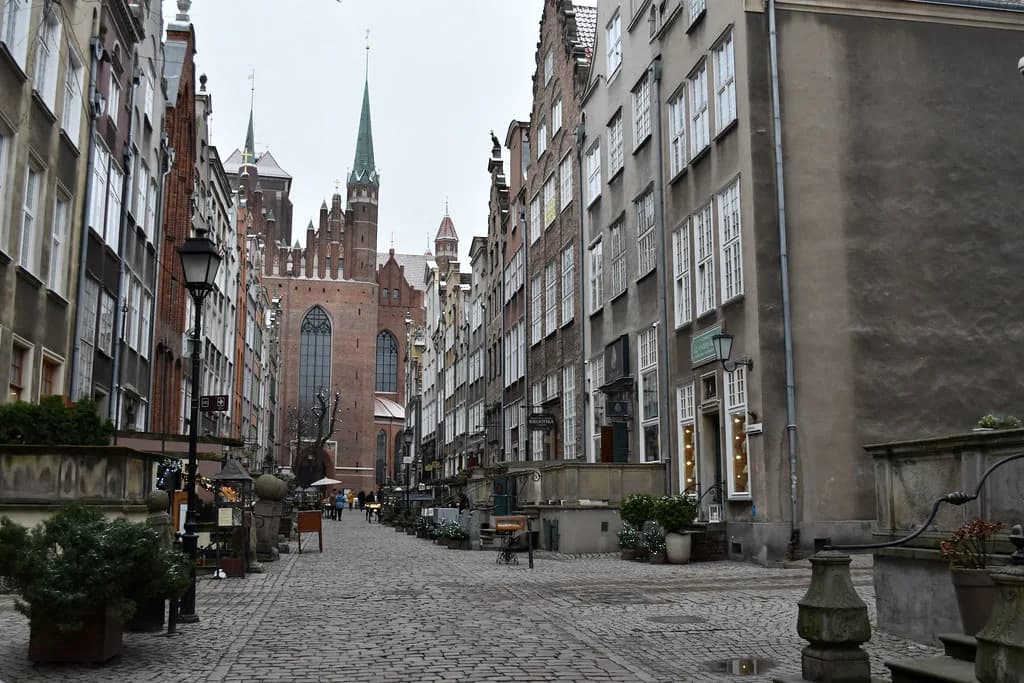
The classic loop starts at the Golden Gate on Długa, runs along Long Market past Neptune's Fountain and the town hall, then drops to the Motława embankment where the Crane leans over the water. Mariacka's terraced facades give the same walk a quieter second half.
Do this in the middle of the day, ideally before 3pm, while the facades still catch what light there is. The route is short enough to repeat in the late afternoon dusk, when shop windows and street lamps turn the Main Town into a different city.
Climbing St. Mary's Tower
The view from the basilica's viewing platform is the best-value panorama in the city: red roofs, the shipyard cranes and the flat Baltic plain beyond. November's low sun makes a clear morning the moment to go, since the platform offers no shelter and the light goes flat by early afternoon.
Climbers report around 400 steps of spiral stair and scaffold walkway, with narrow sections and queuing at the top when a group arrives. Take it slowly, and skip the climb entirely if the tower is in cloud, because the reward is the view and not the stairs.
Oliwa Cathedral and Park
North of the center, Oliwa Cathedral and its surrounding park make a calm half-day, and the cathedral's famous organ is the draw. November strips the park back to bare trees and quiet paths, which suits a slow walk rather than a sightseeing sprint.
Organ recitals run to their own schedule, so match your visit to a published concert time if hearing the instrument is the point of the trip. Otherwise, arrive for the interior, walk the park and take the train back before the light goes.
Westerplatte and the Coast
Westerplatte's monument and its wartime remains sit a short bus or taxi ride from the center and work well on a dry, cold morning when the wind off the water keeps casual visitors away. The scale of the place benefits from the emptiness that November supplies.
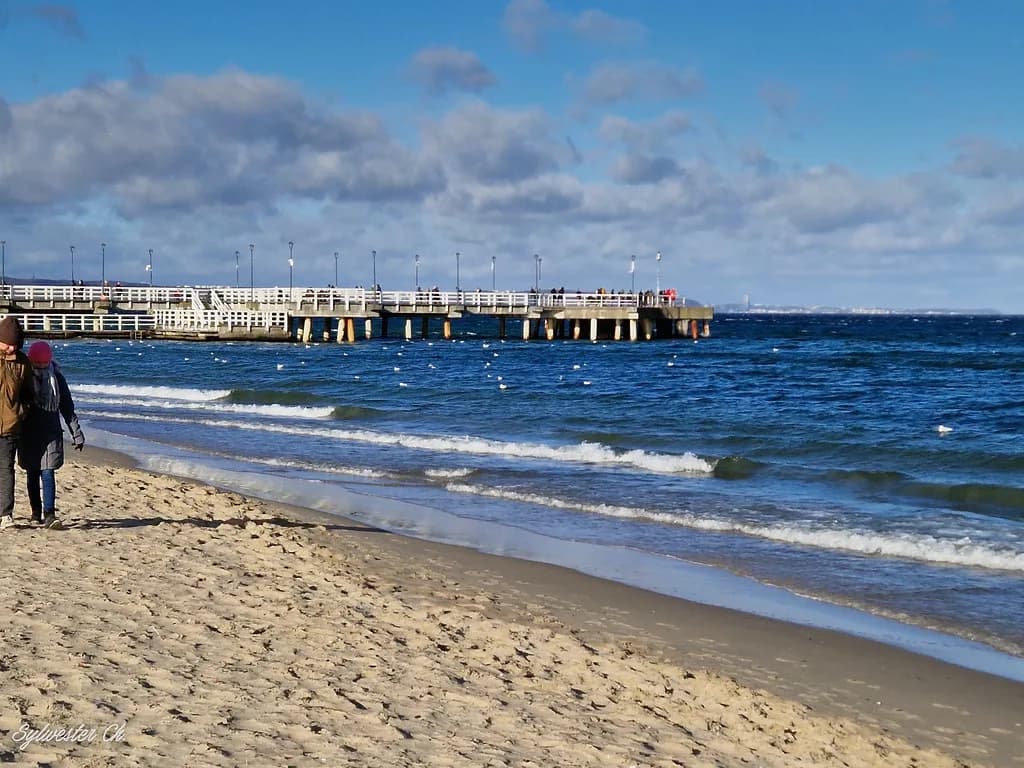
Sopot is the same idea in a gentler key: a direct train from Gdańsk Główny, a stroll along the pier and streets of colorful houses, and far fewer people than in summer. Swap the beach for the architecture, since sea temperatures are well past swimming and the wind makes the shore bracing rather than pleasant.
Day Trips That Work in November
Gdynia and Malbork both sit on frequent rail lines from Gdańsk Główny and fit a short-day plan if you leave in the morning. Malbork's castle is the more ambitious of the two and rewards a full half-day; Gdynia is easier to combine with a coastal walk.
Ferries, seasonal boats and open-air attractions begin to thin out in November, so check each operator's winter timetable before you commit to anything on the water. Rail is the safer backbone for a November day trip.
Food and Warmth
Cold afternoons belong to borscht, pierogi and a warm plate of bigos in one of the Old Town's traditional restaurants, and Polish cooking suits the month far better than it suits July. Many kitchens stay open year-round, with the crowd thinning rather than the menus.
Mulled wine and seasonal stalls start appearing in the Main Town as the month ends, and the Christmas lights along Długa and Tkacka are worth one evening of your stay rather than a plan of their own.
Who November Suits
If you want the Old Town at a walkable pace, museums you can enter without a queue, and you accept that the outdoor day ends by late afternoon, November delivers real value. It also suits travelers who like memorial sites and modern history more than beach time.
Skip it if you need long evenings, guaranteed dry weather or a packed festival calendar. December adds Christmas markets and traditions to the same cold and darkness; by February the city is still in winter's grip, and the comparison is worth weighing before you pick dates. If you are weighing this month against a similar Baltic city break, winter in Kaunas offers a comparable mix of short days and quiet museums.
Getting Around
Trams and buses cover the center, the station and the shipyard district, and the Main Town itself is small enough to walk. Gdańsk Główny, the main rail station, sits a short walk from the Old Town gate and connects Malbork, Sopot and Gdynia.
Buy tickets from the machines or the ZTM Gdańsk app rather than assuming a card tap works everywhere; check current fares and zone rules before you travel. Daylight ends early, so favor trams for anything beyond the Main Town after 4pm.
Crowds, Prices and Short Days
November is the quietest shoulder of the year in Gdańsk, and that usually means easier museum entry and less pressure on restaurants than the summer months; museum and attraction fees are set by each operator and listed on their own sites. The trade-off is the light and the wind, plus the risk of a wet day that pushes you indoors.
Plan around one anchor sight per day and let the weather decide the rest. That is also the honest answer to whether November is a good time: it is excellent for museums, walks and atmosphere, and poor for long evenings or anything that depends on the sea.
Plan a November Trip to Gdańsk
Book the museum days first, keep the outdoor hours for morning and early afternoon, and leave one day free in case the weather turns. The city rewards a slow, deliberate plan in November far more than a packed one.
Anyone considering a winter trip beyond the month can compare the broader seasons in Gdańsk in winter, where the same cold and early dusk shape the whole city.
Frequently Asked Questions
Is November a good time to visit Gdańsk?
Yes, if you want the Old Town and its museums without crowds. November is a markedly less popular month, so you can walk into the major sights, eat without reservations and see the Main Town at its atmospheric best in the cold. The cost is short daylight and a windy, damp feel.
What is the weather like in Gdańsk in November?
Typical conditions are cold and slightly windy, with average highs around 7°C (44°F), lows near 3°C (37°F) and humidity close to 90%. Late November runs colder, with daytime highs of roughly 3–5°C. Treat these as long-term averages and check a short-range forecast for your dates.
How many hours of daylight does Gdańsk get in November?
Long-term averages give roughly 8.6 hours of daylight, with sunrise near 7:11am and sunset near 3:47pm. By late November, sunset comes closer to 3:30pm, so plan your outdoor walks for the middle of the day.
What are good things to do in Gdańsk in November?
The European Solidarity Centre, the Museum of the Second World War, the Amber Museum and St. Mary's Church all work well indoors. On a clear morning, climb the St. Mary's tower for the city view. For a half-day out, take the train to Sopot or visit Oliwa Cathedral and Park.
Is three days in Gdańsk too much in November?
Three days is a good fit: one museum day, one Old Town and riverside day, and one day trip to Sopot, Oliwa or Westerplatte. The short daylight limits outdoor time, so a longer stay is better spent indoors than trying to see more sights.
What happens in Gdańsk on 1 and 11 November?
All Saints' Day on 1 November is marked by candlelit family graves, and Independence Day on 11 November brings civic ceremonies and flags around the city's monuments. Some venues keep reduced holiday hours, so review the official municipal and museum calendars before finalising plans.
Sources
Winter travel notes
Optional updates when we add or revise winter guides.
You might also like
Continue reading
More guides you'll find useful