Gdańsk in Winter: Weather and What Stays Open
Gdańsk in winter means Baltic wind, short grey days and a beautifully lit Old Town. See typical conditions, what slows down and what to do from November to March.
On this page
Between November and March, Gdańsk turns into a quieter, colder version of itself, where the Hanseatic facades and brick towers of the Main Town matter more than the waterfront promenades. Temperatures hover near freezing for much of the season, daylight shrinks to a handful of hours in December, and the wind coming in off the Baltic makes the cold feel sharper than the thermometer suggests. It is a season for people who like museums, old streets, hearty Polish food and early-evening lights rather than long outdoor days.
The winter splits neatly in two. December brings the Christmas market and illuminated streets, drawing the season's biggest crowds and higher accommodation demand, while January and February flatten out into a cold, quiet stretch with more snow and far more space on the pavements. Knowing which half you want is the single most useful decision to make before checking current prices and dates.
Weather Month by Month
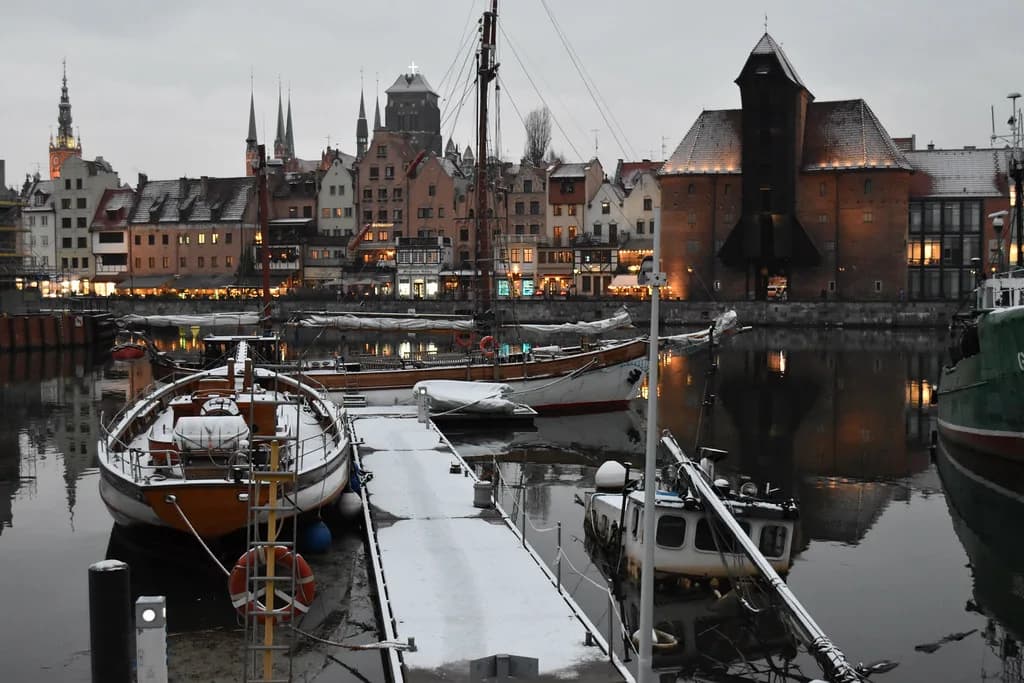
Expect typical winter conditions rather than extremes: travellers who visit in February describe temperatures usually around 0°C (32°F) and a mix of frost, rain and cloudy days more often than deep snow, with the Baltic wind as the thing that stings most. The cold is humid and wind-driven, so a grey day can feel considerably harsher near the water, the Motława River and the open squares than in the shelter of narrow side streets.
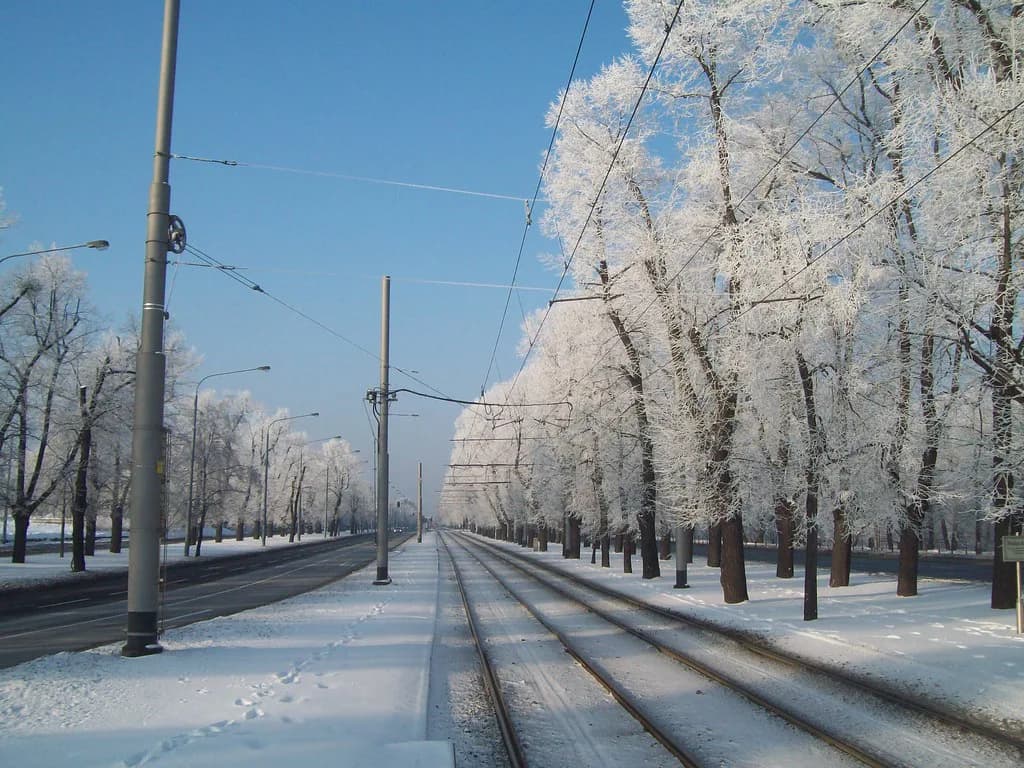
Snow does fall, and it can arrive as a proper snowstorm that closes in the view over the Baltic and sends everyone into the nearest shopping centre to thaw out. That pattern is typical of the season: brief bright, crisp spells alternate with wet, windy grey ones, and the difference between a good day and a miserable one is usually wind rather than temperature.
For planning purposes, treat the figures you see anywhere as long-term averages and check a national weather service in the week before you travel for the actual forecast. What you can rely on is the shape of the season: December mild-to-cold and damp, January and February the coldest stretch, March still cold but with noticeably longer days.
Daylight and Why Late Afternoon Wins
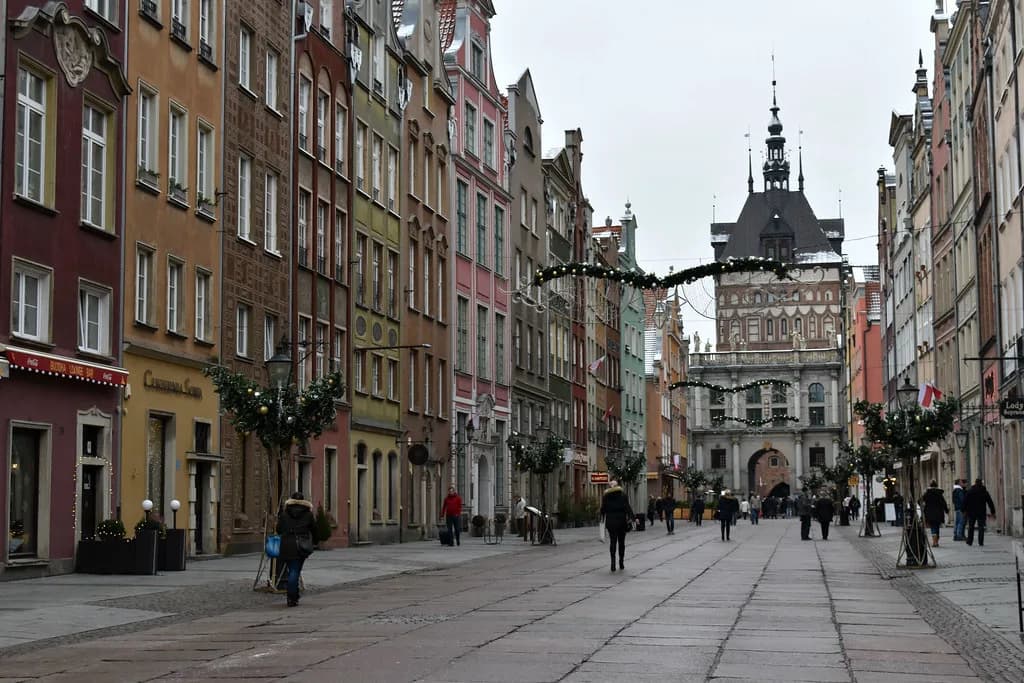
Gdańsk sits far enough north that December afternoons run out early, and by mid-afternoon the light is already going golden and then grey. That short window is not a drawback if you plan around it: save the walking for the middle of the day, then be on Długa Street and Długi Targ as the lights come on, when the Main Town looks its best.
By late March the clocks have gone forward on 28 March 2027 and the evenings stretch out again, which changes the whole rhythm of a visit. Until then, aim to be indoors in the late morning and outdoors in the early afternoon rather than the other way round.
December and Christmas
December is the season's peak, and the 2026 Christmas market on Targ Węglowy runs from 20 November to 23 December, with the wider decorations spreading along the Royal Route, Bogusławskiego Street, Tkacka Street and into the Forum Gdańsk courtyard. Stalls trade from midday into the evening, until 20:00 Sunday to Thursday and 21:00 on Fridays and Saturdays, and the whole city gets its trees and lights from 1 December.
The market is only part of the picture. What makes December work is the combination of the lit-up Royal Route, the indoor crafts hall in the Armoury and the general willingness of the old town to be wandered at night. Weekends in the final two weeks before Christmas are the busiest, and midweek visits are noticeably calmer. If you are weighing up the whole festive period, the case for Gdańsk in December is atmosphere first and shopping second.
Christmas itself is quiet. Christmas Day 2026 falls on a Friday and New Year's Day 2027 on a Friday, and the run between them is a slow, family-oriented stretch when many businesses cut back. Plan those days around restaurants, churches and long walks rather than shopping.
January and February
Once the market packs up, Gdańsk becomes a cold, cheap-feeling city with space to breathe. January is the month when the wind and the wet grey skies dominate, and the rewards are empty streets, easy tables in restaurants and museums you can actually see. Bring the expectation of short daylight and plan two indoor anchors per day rather than a full walking schedule.
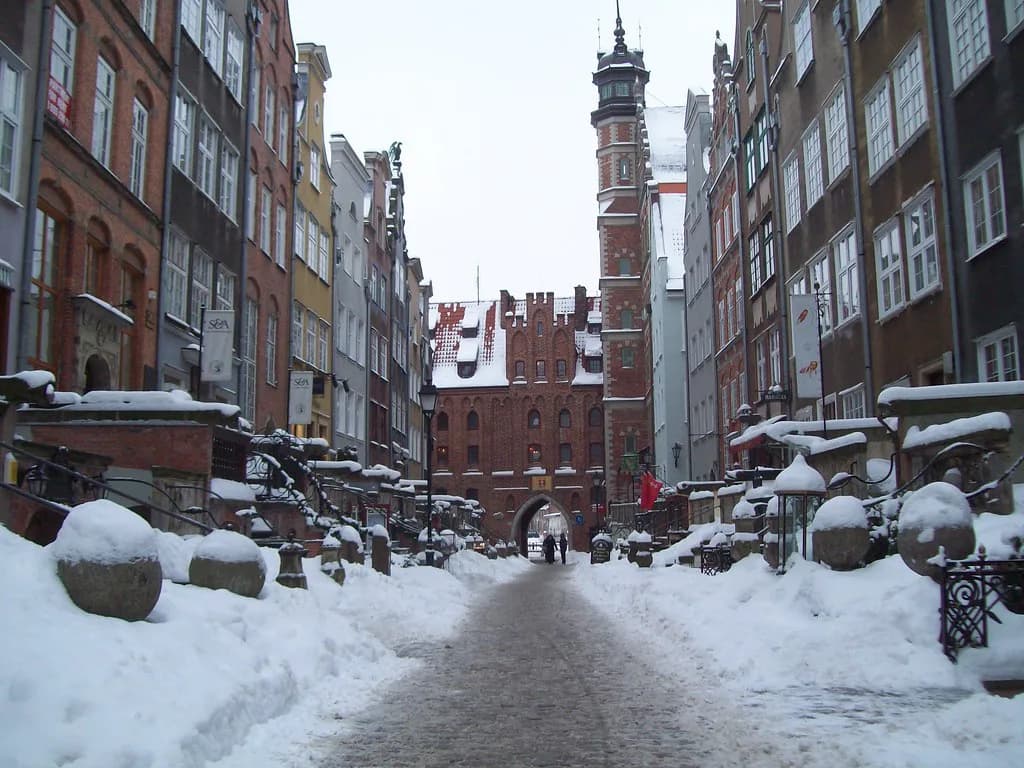
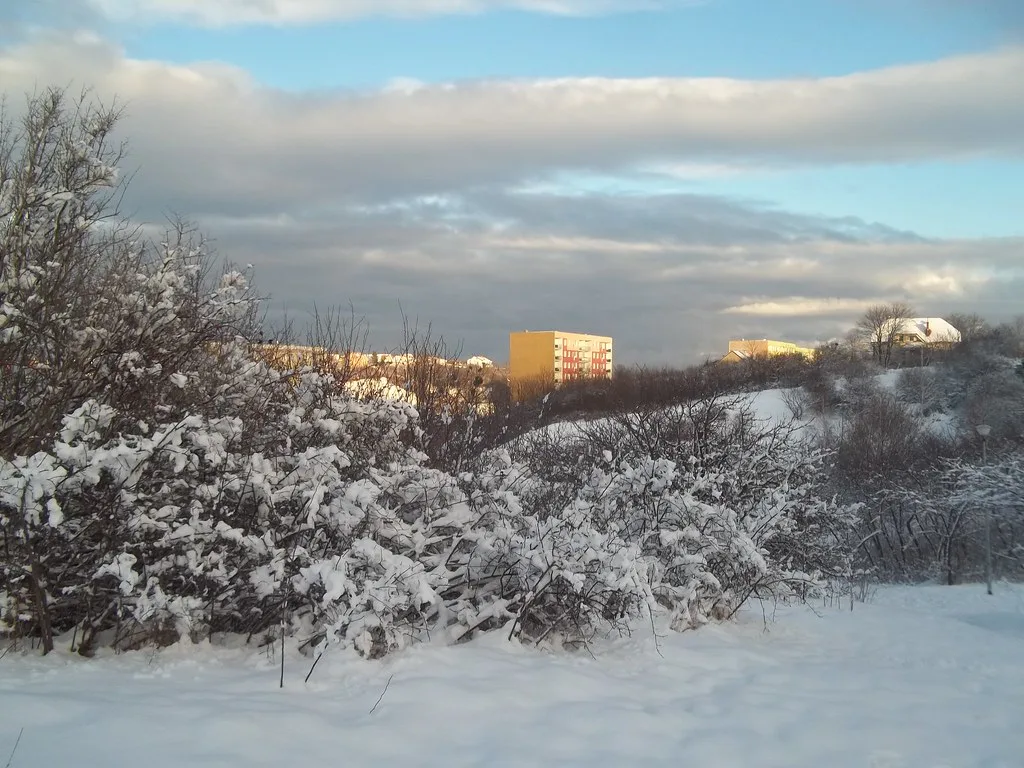
February keeps the cold but adds a bit more light, and visitors describe exactly the Baltic mix of frost, rain and cloud, occasionally broken by snow that transforms the brick gables. The month suits travellers who want the city to themselves and do not mind eating dinner while it is dark outside.
Epiphany on 6 January 2027, a Wednesday, is a public holiday in Poland, so expect a quieter day with reduced opening in some places. It marks the effective end of the festive season and the start of the flat winter stretch.
Things to Do in Winter
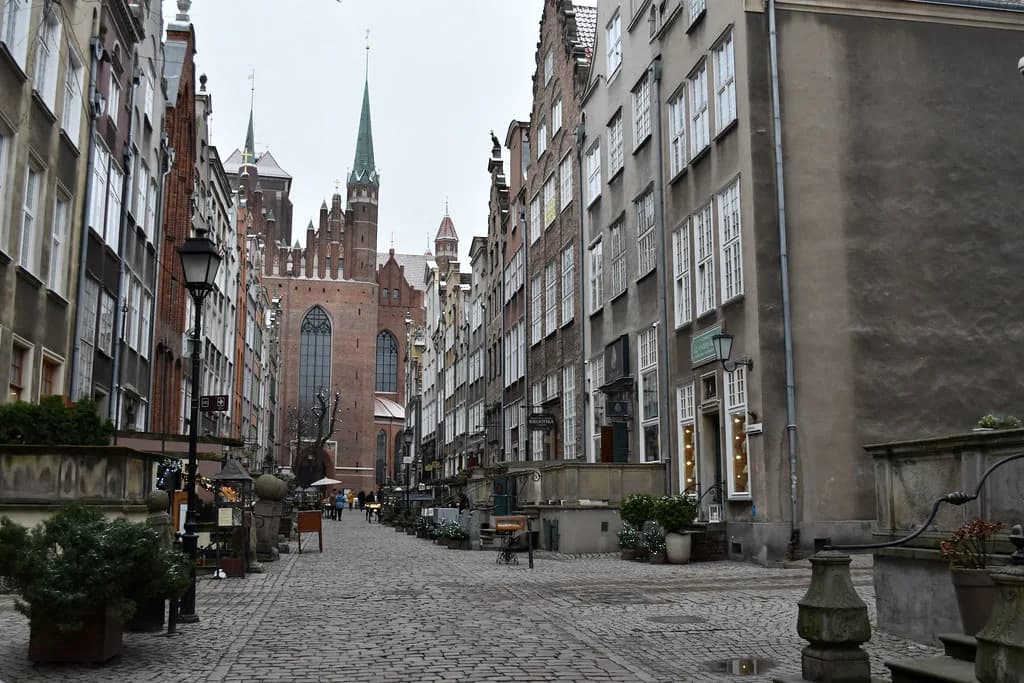
The Main Town is the reason to come, and winter is when you can look up at the gables and towers without a crowd in the way. Walk Długa Street and the surrounding lanes, follow the old walls and gates, and duck into the narrow side streets when the wind picks up on the open stretches by the water, where it is noticeably stronger.
Indoor sights carry the season. The Armoury hosts an arts and crafts hall during the market weeks, and the city's museums, churches and amber workshops fill the coldest hours. After a morning outside, a bowl of pierogi or a hot soup is part of the itinerary rather than an afterthought.
Drinking is part of the winter culture here: mulled wine and mulled beer at the market in December, and in the colder months a heated cherry liqueur in a warm bar does exactly what it promises after a day in the wind. Longer daylight hours and a wider choice of outdoor activities arrive later in the year, which is why the seasonal trade-off is real, but the indoor alternative is strong.
If you want organised activities rather than self-guided wandering, the city's winter options include boat tours, bike tours and guided walks that run through the colder months.
Gdynia and the Coast in Winter
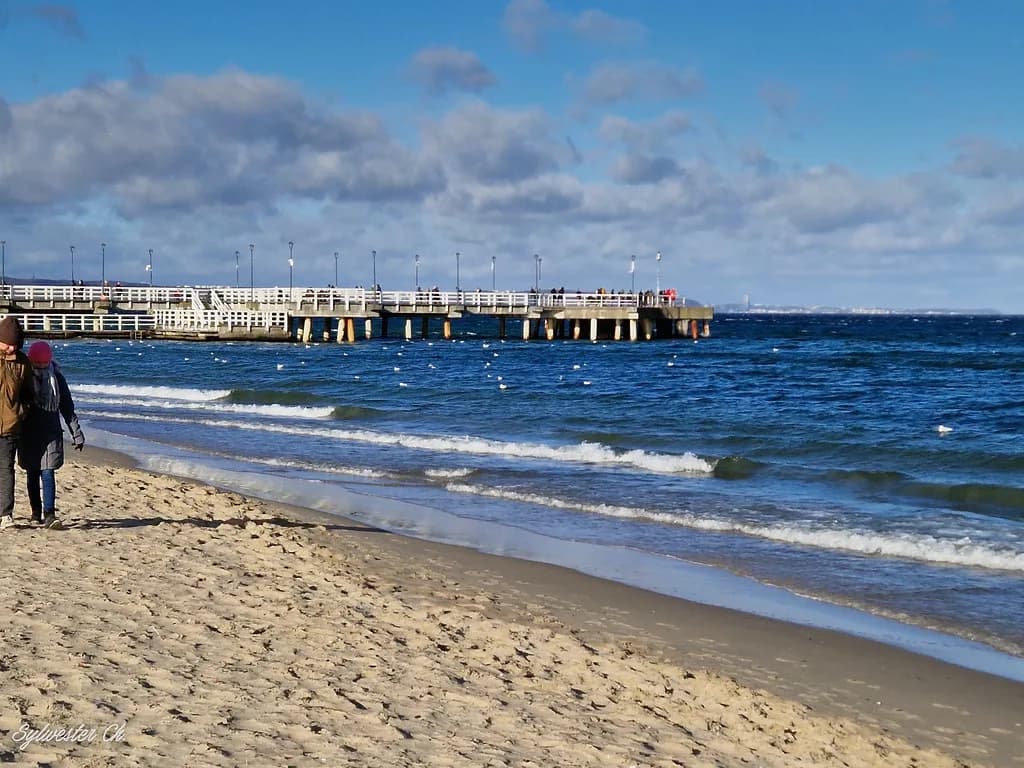
The Tricity rail line makes Gdynia an easy half-day from Gdańsk even in winter, and the reward is a bracing walk along the pier past the destroyer ORP Błyskawica and the full-rigged sailing ship Dar Pomorza, both preserved as museum ships. In February wind and light rain, the far end of the pier is a short visit rather than a long one, and the sea view closes down quickly in bad weather.
Treat the coast as a weather-dependent add-on. On a clear, cold day the sea air and the ships are worth the train ride; on a stormy one, stay in Gdańsk and save the pier for another trip.
Sunday Trading Rules
Poland restricts Sunday trading, and in practice most shops stay shut on Sundays apart from a small number of exceptions such as souvenir outlets. For a winter weekend this matters: arrive with what you need, and plan Sunday around museums, churches, restaurants and walking rather than shopping.
A Saturday-to-Monday break therefore works best with Saturday for the market or the shops and Sunday for the Main Town and a long lunch. If your trip falls over a public holiday such as Epiphany, apply the same logic and look up opening hours on the individual venue's page.
What Stays Open and What Slows Down
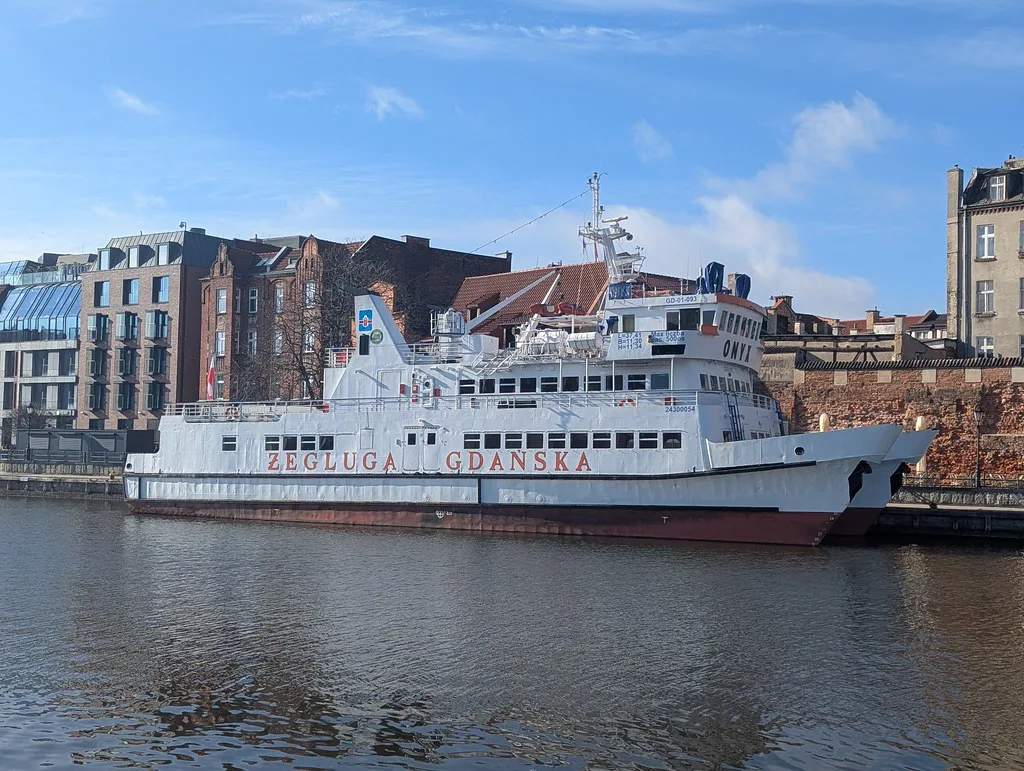
The city does not shut down for winter. Museums, churches, restaurants and public transport keep running, and the Old Town remains walkable throughout, which is why a winter city break here is perfectly viable. What changes is the pace: outdoor attractions and waterfront businesses are less appealing or less busy, and some seasonal stalls and terraces disappear with the market in late December.
The practical rule is to anchor each day on something indoor and confirmed, then add outdoor time when the weather allows. That way a stormy day costs you an hour, not the whole trip.
Day Trips That Work in Winter
Malbork Castle is the classic day trip from Gdańsk, and its scale makes it a serious half-day even in cold weather; confirm the castle's winter opening before you commit to a date. The Tricity rail line is the other reliable option, linking Gdańsk, Sopot and Gdynia in a single short hop and letting you retreat indoors whenever the weather turns.
Both trips depend on daylight, so start early and keep the afternoon flexible. In December that means accepting a shorter window and choosing one destination rather than two.
Crowds, Prices and the Trade-offs
December is the expensive, busy month: weekends before Christmas fill hotels in and around the Old Town and the market squares are packed. January and February reverse the equation, with quiet streets, easier tables and softer room rates, at the cost of grey skies, short days and the risk of a storm.
The honest trade-off is this: you are not coming for long outdoor days or a beach scene, you are coming for architecture, food, museums and atmosphere, and the season delivers those well. Anyone who needs sunshine and eight hours of daylight should look at late spring or summer instead.
Who Should Come in Winter and Who Should Not
Winter suits museum-and-food travellers, couples and small groups who like old cities in low light, and anyone who prefers a destination without crowds. The December version suits atmosphere hunters willing to pay for peak dates; the January and February version suits budget-conscious city-breakers who do not mind the cold.
It does not suit travellers who need warmth, long evenings outdoors or a coastal holiday, and families with small children may find the short daylight and wind frustrating. For those, the same city works far better in late spring, when the terraces reopen and the riverfront is pleasant again.
Plan Your Visit
Choose December if you want lights, the market and a lively old town, and accept the crowds and higher rates that come with it. Choose January or February if you want space, lower prices and the freedom to see the Main Town and its museums at your own pace, and build each day around one indoor anchor plus whatever the weather allows. If you are comparing quiet Baltic city breaks, our Kaunas winter guide covers the same January-to-February trade-off at another Hanseatic-feeling destination.
Book early for December weekends, plan Sunday around non-shopping activities, and keep the Gdynia pier and Malbork flexible so a storm costs you an afternoon rather than a day. Weather forecasts are worth checking in the final week, because in Gdańsk wind matters as much as temperature.
Explore more Gdańsk winter guides
Frequently Asked Questions
What is the weather like in Gdańsk in January?
January is the coldest, greyest stretch of the season, with wind off the Baltic making the air feel sharper than the thermometer suggests and a mix of frost, rain and cloud more common than deep snow. Daylight is short, so plan indoor anchors such as museums and churches in the morning and take any outdoor walking in the early afternoon.
Is Gdańsk worth visiting in winter?
Yes, if you want architecture, museums, Polish food and an uncrowded old town rather than long days outside. December adds the market and illuminated streets at peak prices; January and February bring quieter pavements, easier restaurant tables and shorter days. Anyone who needs warmth and long daylight should choose late spring instead.
How many days do you need in Gdańsk in winter?
Two full days cover the Main Town, its museums and a slow evening, and a third day gives you room for Gdynia by train or a day trip to Malbork Castle. In December, keep one day flexible for the market and its evening lights, since short afternoons limit how much outdoor walking fits into a single day.
What is open in Gdańsk during winter?
Museums, churches, restaurants, shops on most weekdays and public transport run through the winter, so a city break works without special planning. Sunday trading is restricted in Poland and most shops stay shut, so build that day around sights and food. Christmas market stalls trade from late November to 23 December in the 2026 edition.
Are there things to do in Gdańsk in winter besides the Christmas market?
Plenty. Walk Długa Street and the old lanes, visit the museums and amber workshops, warm up over pierogi or a heated cherry liqueur, and take the Tricity train to Gdynia to see the museum ships at the pier. Organised boat, bike and walking tours also run through the colder months.
Sources
Winter travel notes
Optional updates when we add or revise winter guides.
You might also like
Continue reading
More guides you'll find useful