Kaunas in Winter: Weather, Events and Things to Do (Nov–Mar)
Plan a winter trip to Kaunas with typical December temperatures and daylight, holiday dates, open-air walks and the museums that fill short, cold days.
On this page
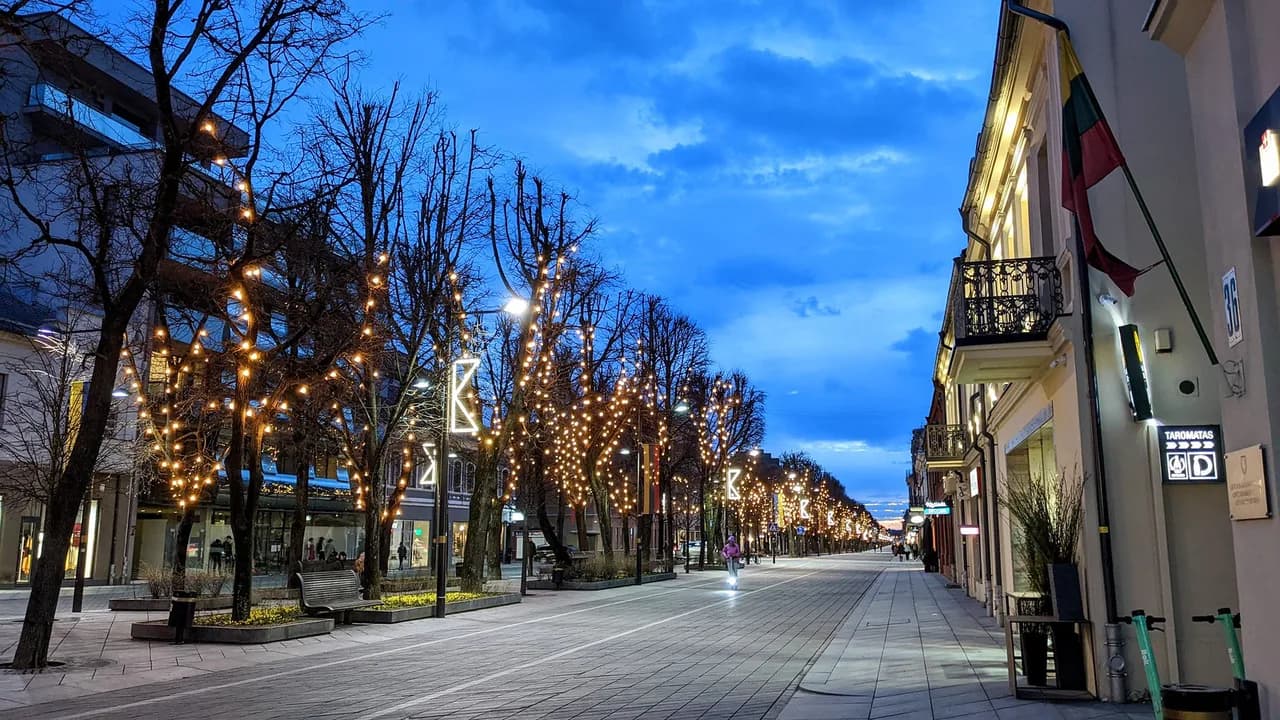
Kaunas in winter is a small, dense city that asks you to plan around light rather than distance. The Old Town, the castle grounds and the long pedestrian spine of Laisvės alėja sit within a walkable core, so a short day still covers real ground; for the festive version of that walk, the Old Town Kaunas decorations and market stalls are the December draw. What it demands is tolerance for cold and early dusk: December days run to roughly seven hours of daylight, with sunset near 15:58.
It suits travelers who like museums, cafés and architecture more than outdoor sport, and who accept that a January visit means grey skies and a heavy coat. It does not suit anyone who needs long daylight hours for sightseeing or who wants a coastal or mountain trip. If you want mild weather and late evenings, May is the better month; if you want atmosphere and low prices, winter rewards you. If you are weighing this trade-off against a Baltic port city instead, our Gdańsk winter guide covers the same decision.
Weather in December
December in Kaunas is properly cold, with average daytime highs near 0°C (32°F) and lows around -4°C (24°F). Conditions feel breezy, humidity runs high and cloud cover is frequent, so the cold bites more than the numbers suggest. Daylight averages about 7.3 hours, with sunrise near 8:39 and sunset near 15:58.
Treat those figures as typical rather than a forecast: a December week can bring slush, dry frost or a snow cover that changes the city's character entirely. Snow is not guaranteed, and published climate summaries give no dependable snow-depth average, so plan for wet pavements and icy patches as the default. Build your day around a warm indoor stop every two hours.
Weather in January and February
January and February are the coldest stretch of the Kaunas winter. Travelers consistently describe the season as cold, humid and windy, and that combination makes the city feel harsher than a dry cold of the same temperature. Budget for short outdoor blocks and longer stretches inside museums, churches and cafés.
February brings slightly longer days than December, which matters more than a degree or two of temperature. Late February is when Carnival falls in 2027, and the extra light makes evening walks along the pedestrian streets more comfortable. Keep expectations modest on snowfall: some winters deliver a white city, others deliver rain and thaw.
Weather in November and March
November is the transition month: cold, damp and often grey, with the first frosts arriving and daylight shrinking fast. It is cheaper and quieter than December, but the dark afternoons limit outdoor sightseeing to a few hours. Pack for rain and wind rather than deep snow.
March is the reverse: still cold, but noticeably brighter, and the clocks go forward on 28 March 2027, adding an evening hour right at the end of the month. Early March behaves much like February, while late March gives you longer afternoons for the riverside and the Old Town. If you want winter atmosphere without the deepest cold, mid-March is a sensible compromise.
Daylight and How to Shape a Winter Day
Short days are the single biggest planning constraint in Kaunas between November and February. With sunset near four in the afternoon in December, the practical outdoor window is roughly 10:00 to 15:00. Front-load the walking: the castle area, the confluence of the Nemunas and Neris, and the Old Town streets work best in the middle of the day, when low sun lights the facades.
Save the indoor hours for after dark. Museums and churches stay warm and lit while the streets empty, and the city's cafés fill in the late afternoon. A workable pattern is two outdoor hours, a long lunch, two museum hours, then an early dinner: you see more and spend less time shivering on a corner.
Christmas Eve and Christmas Day in Kaunas
Lithuanian Christmas centers on Christmas Eve, 24 December, which is the main family evening, with Christmas Day on 25 December and a second day on 26 December. In 2026, Christmas Day falls on a Friday, so the holiday stretch runs into a long weekend. Expect a quiet city on those days, with many restaurants and shops on reduced hours.
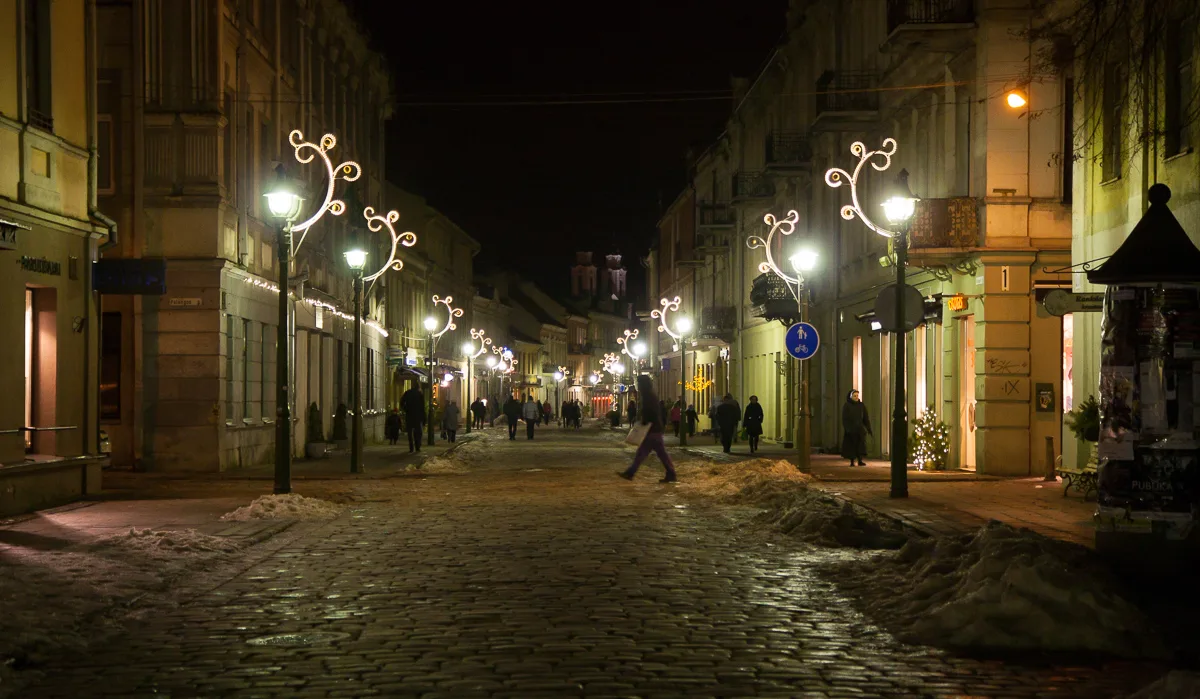
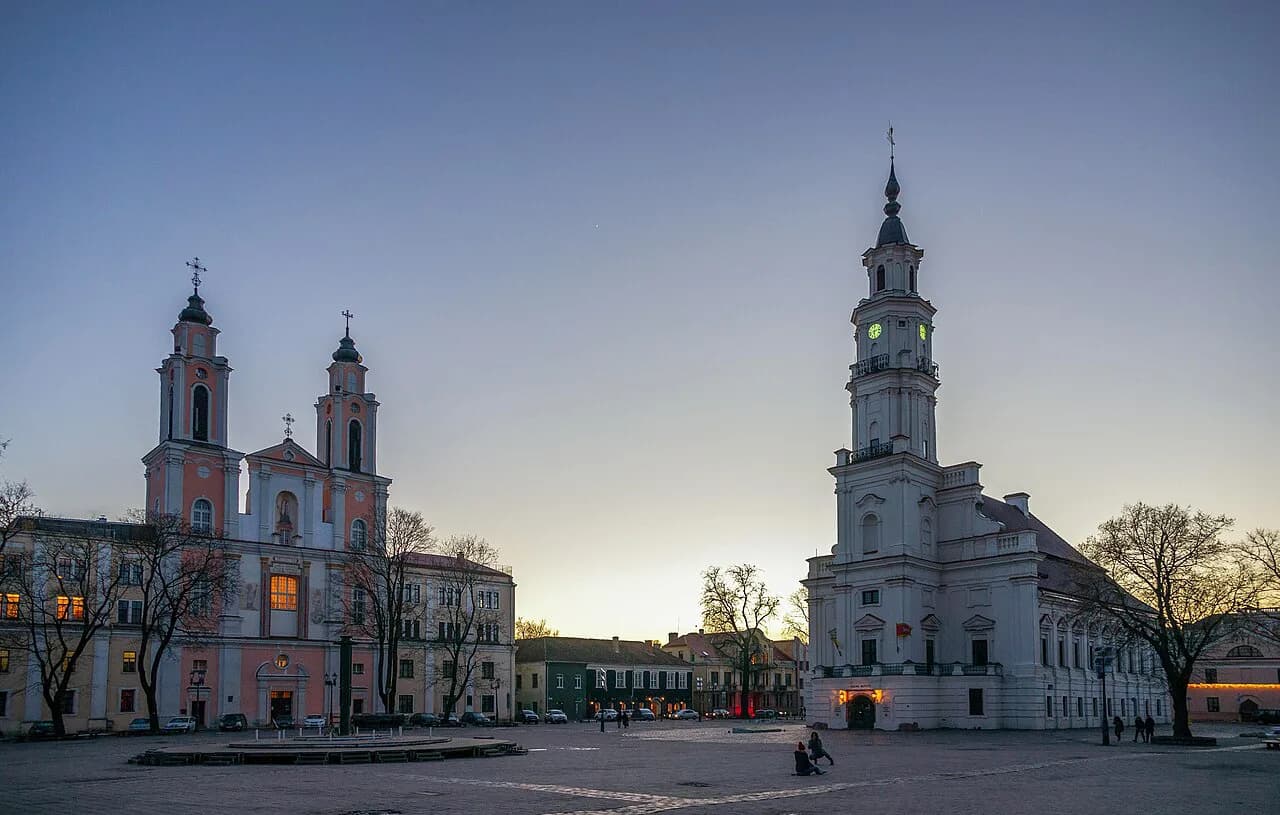
The Christmas market and festive lighting along the pedestrian streets give the December city its character, and the Old Town looks its best under lights and early dusk; the Christmas in Kaunas programme is the one to watch if a market evening is the point of your trip. Market dates and skating schedules change year to year, so confirm the current programme with the city's tourism office before you build an evening around it.
New Year's Eve and Epiphany
New Year's Eve on 31 December and New Year's Day on 1 January 2027, a Friday, are the pivot of the season. The city celebrates in the central squares and along Laisvės alėja, and the following day is quiet, with many businesses shut. Book dinner ahead if you want a table on the 31st, and expect taxis to be scarce late at night.
Epiphany, or Three Kings' Day, falls on Wednesday 6 January 2027. It is a public holiday in Lithuania, so treat it as a Sunday: some shops and museums keep holiday hours and everyday services slow down. The days around it are a good window for a calm visit, with the Christmas crowds gone and prices at their lowest.
What Is Open in Winter
Kaunas does not shut down for winter. The city's museums, churches and main streets operate through the season, and the Old Town remains walkable even in poor weather. The one reliable pattern is reduced hours around 24–26 December and 1 January, when public holidays thin out opening times. Check each venue's own schedule for the exact days you plan to visit.
Outdoor sights are easy to reach in the cold months: the castle exterior, the riverbanks and the pedestrian avenues are open to walk at any hour. What changes in winter is comfort, not access, which is why the indoor sight list matters so much between December and February.
Things to Do: Old Town, Kaunas Castle and the Confluence
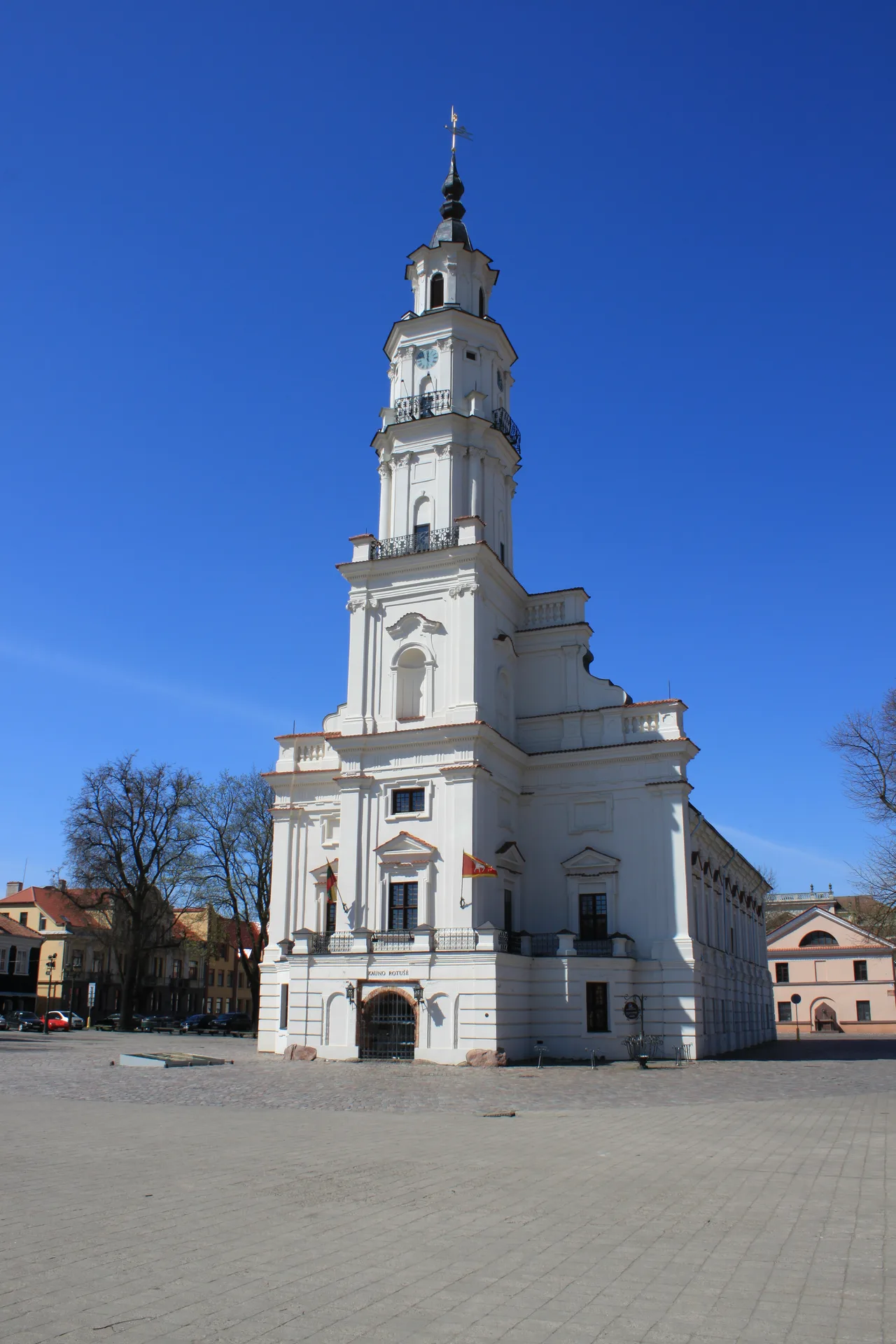
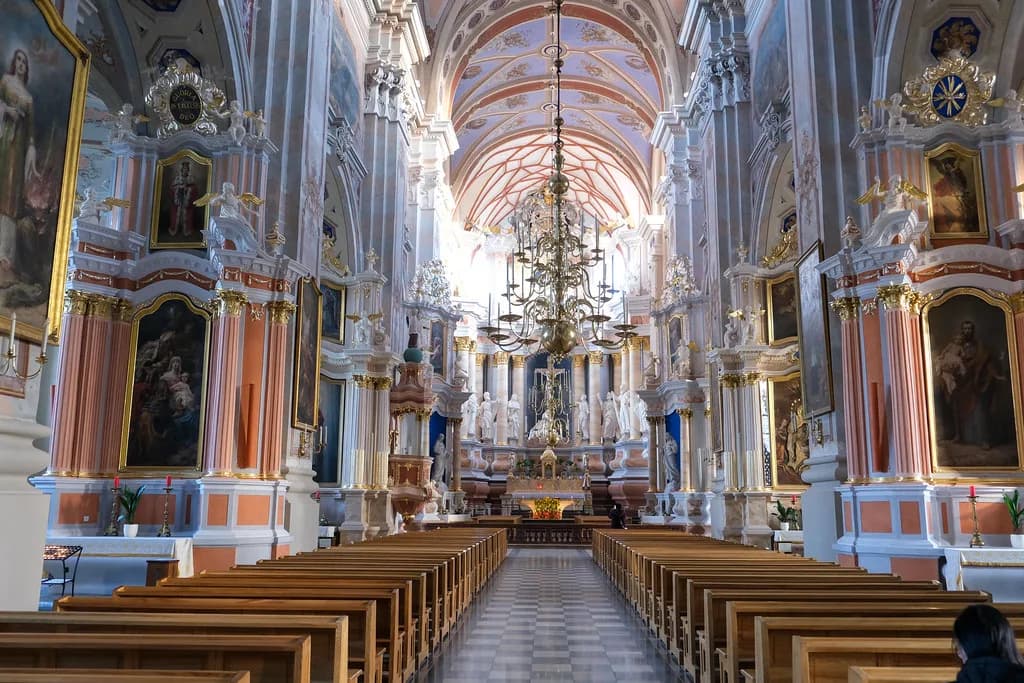
Start with the Old Town around the Town Hall square and the dense cluster of churches nearby, including the Cathedral-Basilica of St. Peter and St. Paul with its Gothic interior. The streets here are short, so you can duck between warm interiors without long exposed walks.
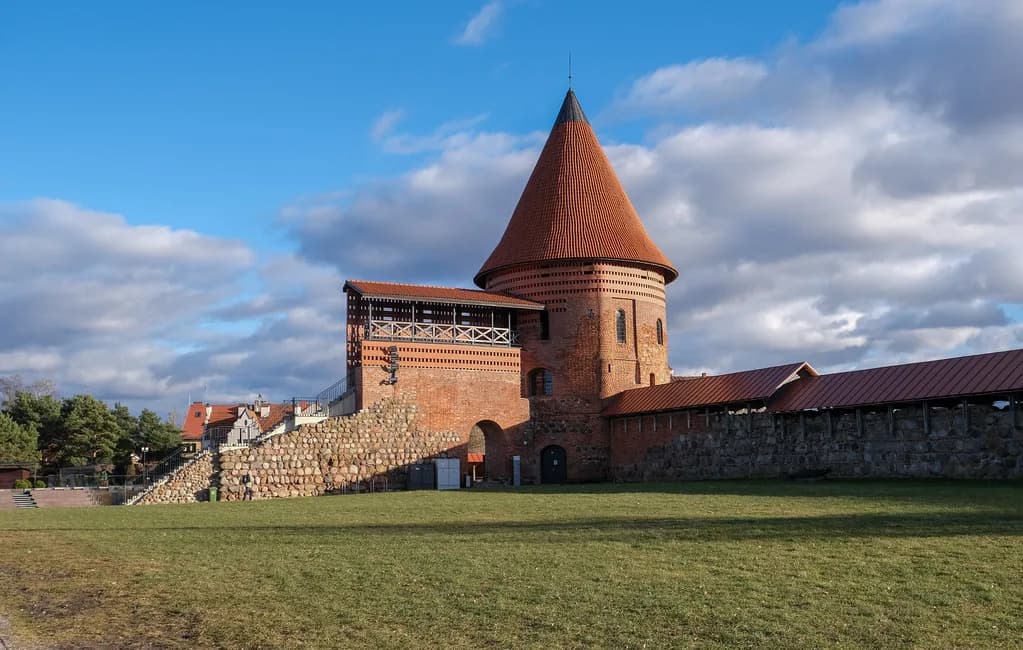
Kaunas Castle and the riverside give you the city's best short walk. The old town grew up where the Nemunas and Neris meet, and the confluence is striking in any season, especially when frost or low sun sharpens the view. The castle grounds are a good place for a quick outdoor hour before retreating indoors.
Things to Do: Museums for Cold, Wet Days
The museum stock is what makes a January trip work. The M.K. Čiurlionis Museum of Art holds the paintings and music of Lithuania's most distinctive artist, the Devils' Museum offers an eccentric collection of carvings, and the Vytautas the Great War Museum covers military history, including a 1930s aircraft. Plan two of these for a single day and you can fill the dark hours without rushing.
For a heavier half-day, the Ninth Fort Museum documents the Nazi occupation and the Holocaust in Kaunas, and it rewards an unhurried visit rather than a quick stop. Pair it with a warm café afterwards: the subject matter is demanding, and the site sits outside the historic core.
Laisvės alėja and the City's Café Culture
Laisvės alėja is the city's pedestrian spine, lined with shops, cafés and nineteenth-century buildings. In winter it is where locals actually spend their evenings, and the lit avenue is more atmospheric after dark than in summer. Use it as your route between the Old Town and the eastern districts rather than a separate sight.
Kaunas has a strong café habit, and winter is when it pays off. Lithuanian cooking is hearty, with potato dishes, dark bread and mushroom or pork mains, and the Christmas table adds poppy-seed pastries and similar sweets in December. Lunch is usually the better-value meal of the day; dinner menus cost more for broadly similar food.
Day Trips That Work in Winter: Pažaislis Monastery
Pažaislis Monastery, a Baroque complex with Lithuania's oldest church clocktower, sits east of the center and makes a manageable half-day outing. Winter is quiet there, which suits the setting, but the visit is largely outdoors and indoors in unheated spaces, so pick a dry, still day rather than a wet one.
Vilnius is reachable by train and makes a realistic day trip if you leave early and accept a short day in each city. In winter the trade-off is sharp: two hours of travel each way eats into brief daylight, so a Vilnius day works best in March, when the evenings stretch. Otherwise stay in Kaunas and go deeper.
Carnival in February
Carnival falls on 9 February, with Ash Wednesday on 10 February. In Lithuania the period is marked with costumes, masks and processions, and the city's cultural calendar builds around it in the days before. It is one of the best reasons to choose February over January: the city has an event to plan around, not just short days.
Costume parades, venues and times are published by the organisers closer to the date, so check the city's official channels once the programme appears. Book accommodation early for that week, since it draws domestic visitors as well as locals.
Getting Around Kaunas in Winter
Central Kaunas is compact enough to walk, and walking is usually faster than waiting for transport in the cold. The main sights cluster along Laisvės alėja, Vilniaus street and the Old Town, so a single day on foot covers most of the core. Wear boots with grip: pavements get icy, and the city's slopes and cobbles are unforgiving.
For longer hops, buses and trolleybuses cover the city, and taxis or ride-hailing apps are useful for the Ninth Fort and Pažaislis, which sit outside the walkable center. In snow or freezing rain, allow extra time: traffic slows and pavements become the real obstacle.
Arriving by air, Kaunas Airport sits north of the city and connects by bus and taxi. Vilnius Airport is a longer transfer by road or rail, which matters more in winter, when delays compound. Weigh the cheaper flight against the extra transfer time before booking.
Trade-offs: Crowds, Prices, Short Days and Closures
Winter is low season in Kaunas: accommodation and flights are cheaper than in summer, restaurants have space, and the main sights are uncrowded. The costs are real, though. Daylight is short, the weather is often raw, and some seasonal businesses and outdoor attractions run reduced hours or close.
December is the busiest winter month because of the holidays, and the days around New Year are the peak. January and early February are the quietest and cheapest, while March starts to pick up. If you want low prices without deep cold, late March is the best balance; if you want festive atmosphere, Kaunas in December is worth the crowds.
Who Should Go and Who Should Wait
Go in winter if you want a compact city, good museums, low prices and a genuine Central European winter mood, and if you are happy to spend half of each day indoors. Kaunas rewards curiosity about architecture, history and food more than it rewards checklist sightseeing.
Wait for spring or summer if you need long daylight hours, want to spend whole days outside, or are travelling with people who struggle in cold and grey weather. Anyone hoping for guaranteed snow should look elsewhere; Kaunas winters are cold but not reliably white.
Plan Your Visit
Build a Kaunas winter trip around short daylight and warm interiors: outdoor hours in the middle of the day, museums and cafés after dark, and a realistic plan for 24 December and 1 January, when the city slows down. Pick December for atmosphere, January for quiet and low prices, or late March for longer afternoons.
Before you book, check the dates that matter to your trip, above all the Christmas and New Year closures and the Carnival week in February 2027. Then choose your month by temperament, not by a forecast: the cold is dependable, the snow is not.
Explore more Kaunas winter guides
Frequently Asked Questions
How cold does it get in Kaunas in winter?
December averages close to freezing by day, with highs near 0°C (32°F) and lows around -4°C (24°F), and January and February are colder still. Wind and high humidity make it feel harsher than the thermometer suggests, so short outdoor blocks with warm indoor stops in between are the realistic way to plan a day.
Is Kaunas worth visiting in winter?
Yes, if you want a compact, low-season city with strong museums, a walkable Old Town and cheap accommodation. The trade-off is short daylight and raw weather, which pushes most of the day indoors. Anyone who needs long hours outside should come in May instead.
Does it snow in Kaunas in winter?
Some winters bring a lasting snow cover and others bring rain and thaw, so treat snow as a bonus rather than a plan. Build your itinerary around wet pavements and ice, and keep the riverside and castle walk flexible enough to move to a drier day.
Should I visit Vilnius or Kaunas in winter?
Kaunas is smaller, cheaper and easier to cover on foot in a short day, which suits a two- or three-night winter break. Vilnius has more museums and a bigger festive programme but takes longer to cross. If you want both, base in Kaunas and take the train to Vilnius on the brightest day of your trip.
Sources
Winter travel notes
Optional updates when we add or revise winter guides.
You might also like
Continue reading
More guides you'll find useful