Sorrento in March: Weather, What's Open and Whether to Go
Sorrento in March brings mild, showery days and a cold sea. See typical temperatures, rainfall, daylight and what a late-winter Amalfi Coast trip is like.
On this page
Sorrento in March is a town waking up. Days average around 11°C (52°F), the sea sits at its annual low, and the waterfront is quiet enough to walk without dodging anyone.
This is a shoulder-season month, which means real trade-offs: you get mild air, thin crowds and a slower pace, but you also get roughly two weeks of rain days and no reliable beach weather. If your idea of a Bay of Naples trip is swimming and long lunches on a terrace, March will disappoint; if it is churches, museums, viewpoints and good food at an unhurried rhythm, it fits well.
Weather in March
Typical March conditions in Sorrento run to an average high of 15°C (59°F) and an average low of 6°C (43°F), with a daily average of about 11°C (52°F). Those are long-term averages rather than a forecast, so treat them as the shape of the month: cool mornings and evenings, pleasant afternoons in sun, and a jacket within reach most days.
Rain is the defining feature of the month. March brings around 86 mm spread over roughly 14 rain days, which means a wet day is more likely than not across a week-long stay; plan at least one indoor anchor for every two outdoor days. Sunshine averages about eight hours a day and cloud cover sits near 46%, so even showery days usually give you usable bright spells rather than a solid grey wash.
Daylight stretches noticeably across the month, from about 11.2 hours on 1 March to about 12.4 hours on 31 March. European clocks go forward on 28 March 2027, which pushes sunset into the evening and makes late March evenings outdoors far more appealing than early March ones.
How March Changes Through the Month
Early and late March are not the same trip. The low rises by roughly 2°C and the high by roughly 3°C from the start of the month to the end, so a visit in the final week is meaningfully milder than one in the first.
Late March also brings Holy Week in 2027, since Easter Sunday falls on 28 March and the week runs from 21 March. Expect Italian school holidays and Easter travelers to tighten capacity in the final days of the month, particularly on the weekend itself.
If your dates are flexible and you want the best odds of dry walking weather, aim for the last ten days of March. If you want maximum quiet and don't mind cooler afternoons, the first week is the calmer choice.
Rain and Cloud: What a Showery Day Feels Like
A wet March day in Sorrento is usually not a washout. Moderate rain is the most common type, and the sky is fully overcast only about 17% of the time, so most rainy days include dry windows. Build your day around a two- or three-hour indoor block and keep the rest flexible.
Practical structure: mornings for the exposed stuff like the viewpoint at Piazza della Vittoria and the marina paths, afternoons for museums and churches, and a long lunch as the fallback when a shower settles in. Cliffside and coastal paths get slippery in rain, so save the more ambitious walks for a bright day.
The Sea and the Coast
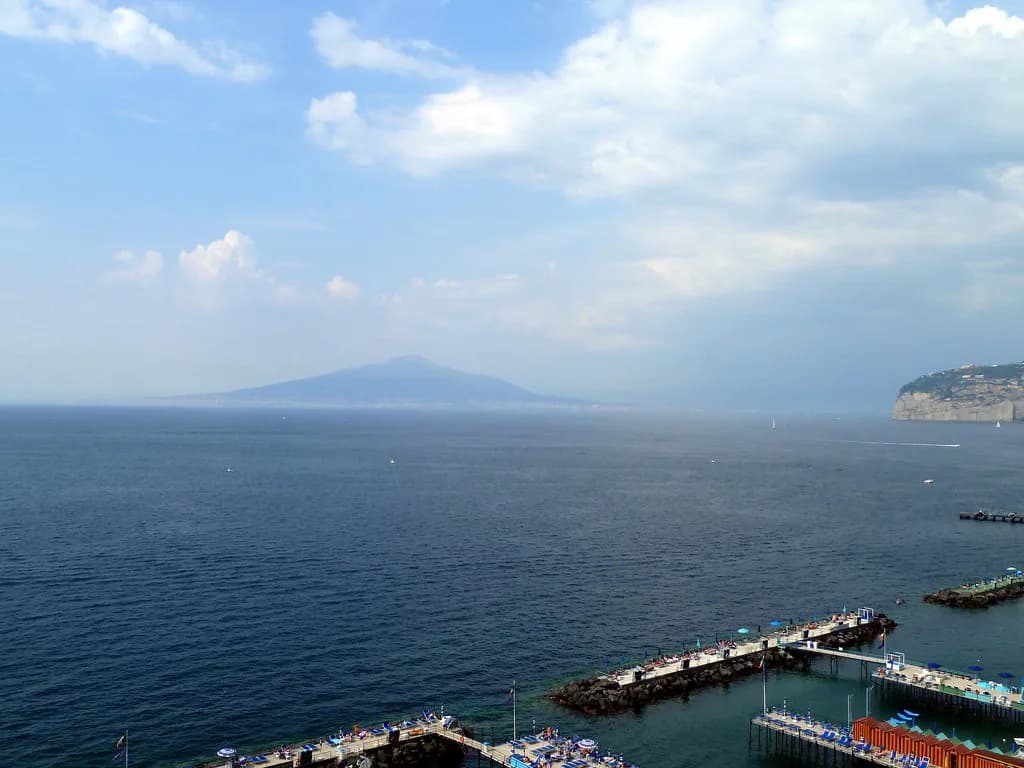
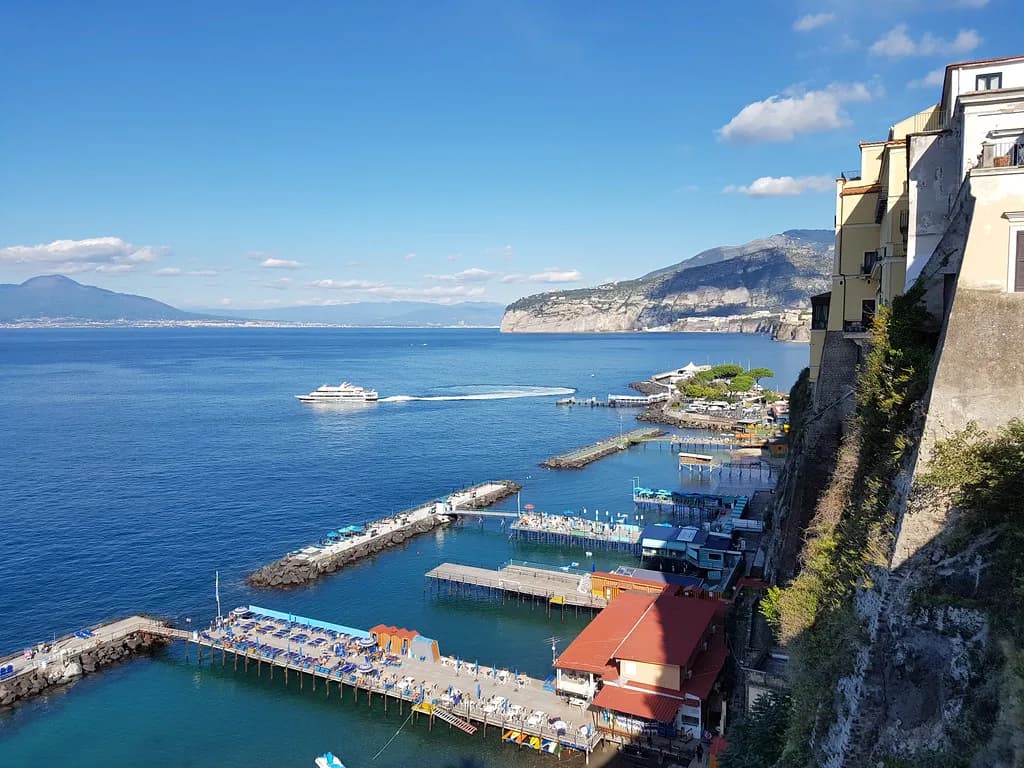
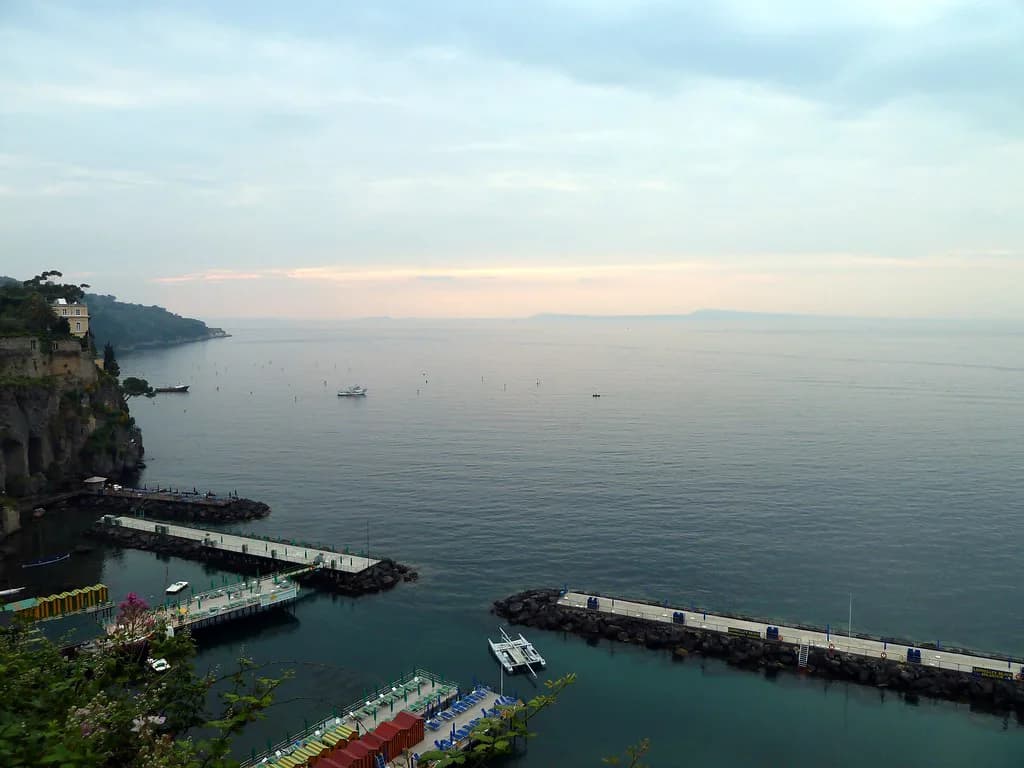
The sea temperature averages 14°C (57°F) in March, the same as February and the annual low. Swimming is out for most travelers, and beach clubs along the coast are not in season; the waterfront is for walking, photographing the Bay of Naples and watching the light change, not for lying out.
What the coast does offer in March is clarity. The air is clean after rain, the views across the bay to Vesuvius are sharp on bright days, and the terraces and belvederes are empty enough for unhurried stops.
What Is Open in March
Sorrento's core sights run year-round, which is what makes the month work. Piazza Tasso is the town's living room and a natural orientation point, ringed by the Chiesa del Carmine and Palazzo Correale, with bars and restaurants on its edges.
Museums give you the indoor backbone: the Correale di Terranova Museum, the Museum of Sacred Art, the Mario Maresca Naval Museum and the George Vallet Archaeological Museum are the names to know. Each museum publishes its own opening days, and smaller collections often trim their weekly schedule in low season, so a rainy day plan is safest built around the larger sites.
The wider rhythm is shoulder-season: some hotels and restaurants reopen through March ahead of the Easter push, others hold reduced hours until April. Book accommodation that has confirmed it is operating for your dates, and look for a direct booking line or recent guest reviews before committing.
Things to Do in Sorrento in March
Start with the two squares and the sea views. Piazza della Vittoria, built on the site of a Roman temple to Venus, gives you the bay panorama; from there, walk the lanes of the old center for churches, workshops and café stops.
Then layer in the museums on the wet days and the coastal walks on the dry ones. A late-March pattern that works well is outdoors in the morning, a long lunch, a museum in the mid-afternoon, and an evening passeggiata once the clocks have changed.
Food and Evenings
March is a good eating month in Sorrento. The restaurant scene is calmer than in spring, so walk-in tables are easier to find, and the cooking still leans on the Campanian staples of pasta, seafood, mozzarella and lemon.
Evenings before 28 March 2027 arrive early, so an aperitivo at dusk and dinner soon after is the natural rhythm. After the clock change, the light stretches and outdoor tables become viable again on mild nights.
Day Trips That Work in March
Pompeii is the standout March day trip: a large, exposed archaeological site that is far more bearable in 15°C than in July heat, though you will want a dry day and sturdy shoes. Naples is the other reliable option, with museums and covered arcades that absorb rain well.
Along the Amalfi Coast, villages such as Amalfi, Positano and Ravello are reachable but the season matters: ferries and seasonal buses run a thinner schedule before spring, and some coastal businesses stay shut. Look up the March timetable from the ferry companies serving the coast, such as those running from Sorrento's Marina Piccola, before committing to a boat-based plan, and treat the bus as the fallback.
The Sorrentine Peninsula's own villages and viewpoints are the lower-risk alternative when the coast is blustery. They keep you close to town and let you retreat quickly if the weather turns.

Crowds, Prices and Trade-offs
March is quiet by Sorrento standards. You will not queue long for the main sights, you can usually walk into restaurants, and accommodation is generally easier to secure than in April or May; rates are typically below high season, though you should compare actual dates rather than assume a fixed discount.
The trade-off is reliability. April brings warmer air and fewer rainy days, while March gives you a real chance of two or three wet days out of seven, a cold sea, and some businesses not yet open. Choose March for lower crowds and a more local feel, April for better odds of terrace weather.
Who Sorrento in March Suits
March suits travelers who prioritize walking, food, museums and views over swimming, and who would rather see a place without the summer crush. It also suits anyone combining Sorrento with Pompeii, Naples or a wider Italian itinerary, since the town works well as a base before the spring rush.
It does not suit sunbathers, swimmers, or travelers who need every restaurant and beach club open. If your trip hinges on the water, wait until later in spring, or shift the trip's center of gravity to sightseeing and inland day trips.
Plan Your Visit
Treat Sorrento in March as a cool, partly cloudy, occasionally wet month with plenty of usable daylight and a town that is easy to move through. Pack for rain and layers, keep a museum or two in reserve for each stretch of days, and put the coast and islands on the dry days.
The month rewards a flexible plan more than a fixed one. Book a base that is open, check museum opening days with the individual venues, and look up coastal ferry timetables before you head out; the rest is walking, eating and looking at the bay.
Explore more Sorrento winter guides
Frequently Asked Questions
Is March a good time to visit Sorrento?
Yes, if you want mild air, thin crowds and a slower pace rather than beach weather. Expect typical highs around 15°C and lows around 6°C, with roughly 14 rain days across the month. It suits sightseeing, museums and food; it does not suit swimming or sunbathing.
What is the weather like in Sorrento in March?
Long-term averages put the daily high near 15°C (59°F) and the low near 6°C (43°F), with about 86 mm of rain over roughly 14 days, around eight hours of sunshine a day and cloud cover near 46%. Daylight runs from about 11.2 hours at the start of the month to about 12.4 hours at the end.
Is the sea warm enough to swim in Sorrento in March?
No, for most travelers. The average sea temperature is 14°C (57°F), the annual low, the same as in February. The waterfront is better for walking and views than for swimming, and beach clubs are not in season.
How many days should you spend in Sorrento in March?
Three to four days covers the town comfortably with a rain day built in: the squares, the museums, the coastal viewpoints and one day trip. Add a day for Pompeii or Naples, and only add the Amalfi Coast if the timetable and weather cooperate.
What is there to do in Sorrento when it rains in March?
Head indoors to the Correale di Terranova Museum, the Museum of Sacred Art, the Mario Maresca Naval Museum or the George Vallet Archaeological Museum, and pair that with a long lunch. Confirm opening days with the individual museum, since smaller collections often reduce their weekly schedule in low season.
Is Sorrento crowded in March?
No. March is quiet by local standards, with short or no queues at the main sights and easy walk-in tables. The exception is late March around Holy Week in 2027, when Easter travelers and Italian school holidays tighten capacity.
Sources
Winter travel notes
Optional updates when we add or revise winter guides.
You might also like

Continue reading
More guides you'll find useful