Aix-en-Provence in March: Weather, Crowds and Things to Do
Aix-en-Provence in March brings mild days, quieter markets and open museums. See the weather, what is on and whether the month suits your trip.
On this page
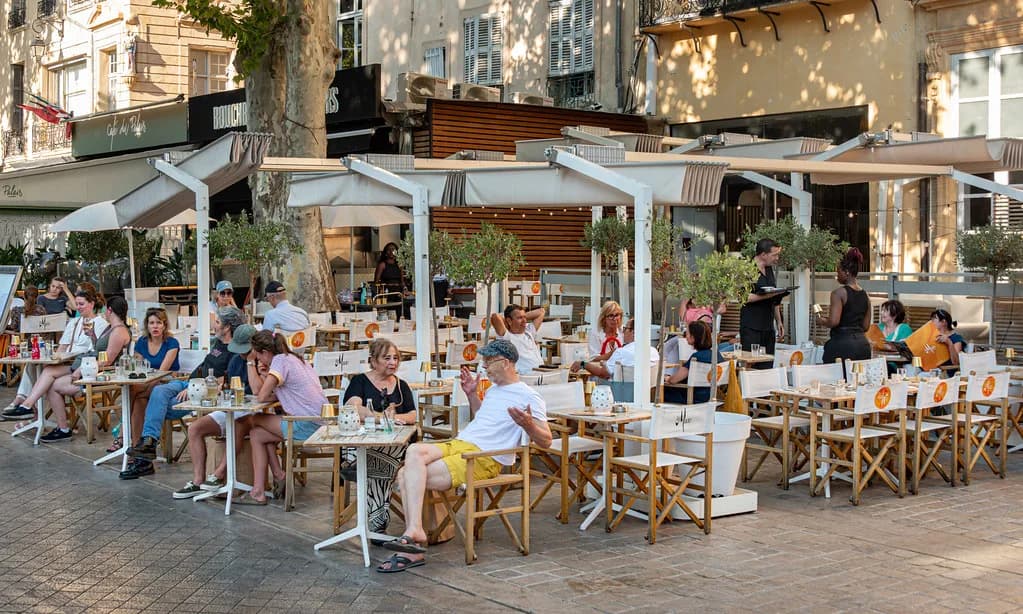
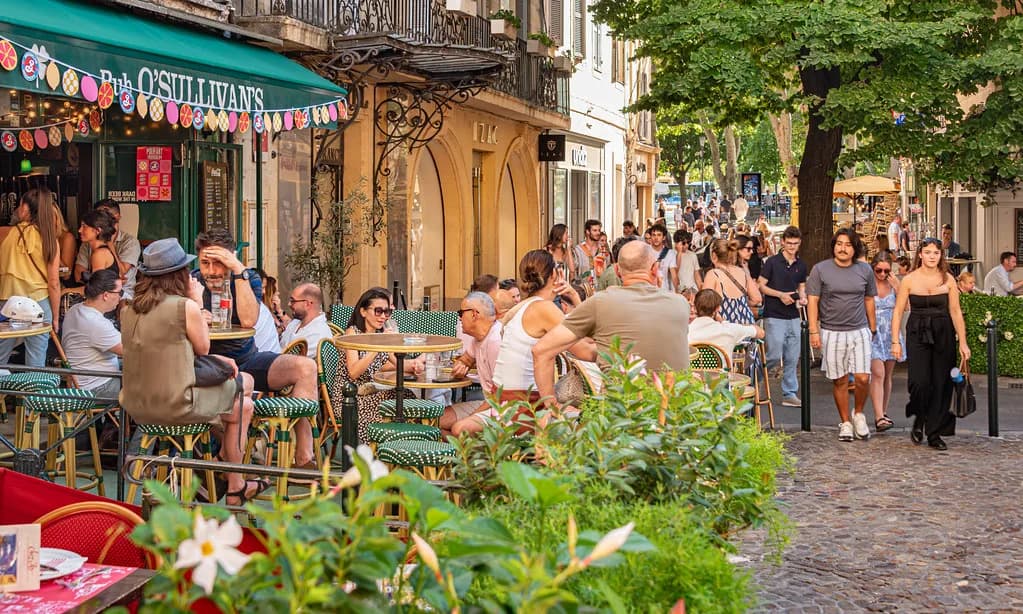
March in Aix-en-Provence is early spring in Provence, a month that mixes mild afternoons, raw mistral days and the first café terraces filling again after winter. The city keeps working through it: markets set up daily, museums stay open as wet-weather anchors, and day trips to the coast and the Luberon become pleasant rather than punishing. It suits travelers who want a walkable Provençal city with culture and food, and who accept that a couple of days will be grey and windy.
If your picture of Provence is lavender fields, long lunches outdoors and hot sunshine, March will not match it. If you would rather have the Cours Mirabeau and the old town half-empty, with room to yourself in front of the Cézanne paintings, the month rewards you. The trade-off is simple: fewer crowds in exchange for unsettled weather and short-to-medium daylight.
Weather in March
Long-term averages for France in March show a clear north-south split that matters when you choose a base. The south, which includes Provence and the Riviera, typically reaches about 15°C (59°F) by day with lows near 7°C (45°F), and gets more sunny days and fewer rainy ones than the north. Paris sits around 13°C (55°F) by day and 5°C (41°F) at night, while Lille in the north averages roughly 11°C (52°F) with lows around 3°C (37°F).
Treat those as typical conditions, not a forecast. March in France is genuinely changeable, with sunny and rainy days alternating, and the first days of the month can still feel wintry while the final ten days usually soften into something that feels like spring. Plan for one or two wet days in a short stay and you will enjoy the dry ones more.
Aix sits inland behind Marseille, so it feels the mistral more sharply than the coast and cools faster in the evening. The practical consequence is that a sunny lunchtime on a terrace may not last past four o'clock, and a day that starts bright can turn gusty by mid-afternoon. Build your outdoor time into the middle of the day and keep an indoor option for the afternoon.
Daylight and the Mistral
Clocks in Europe go forward on 28 March 2027, so evenings lengthen noticeably in the final days of the month. Before that, daylight is still modest and outdoor plans need to start earlier; after it, an aperitif on a terrace becomes realistic again. If evening light matters to you, aim for the last week of March rather than the first.
The mistral is a cold, dry wind that funnels down the Rhône valley and reshapes how a day in Aix works. On windy days, the sheltered old town streets and the covered markets are comfortable while exposed squares and hilltop viewpoints are not. Save the Sainte-Victoire panorama and any long walk for a calm day, and use gusty ones for museums and the cathedral.
What March Changes
Aix runs on markets all year, and that is the constant you can build mornings around: the city is known for daily markets scattered through the center, with times and locations listed by the Aix-en-Provence tourism office. In March these are working markets rather than showpieces, which means produce, cheese and flowers rather than souvenirs, and fewer visitors underfoot than in high summer.
The Christmas market, which normally opens in mid-November and closes at the end of December, is long gone by March, so do not plan around it. What replaces it is the ordinary city: shops, cafés and the museum program. That shift is also why March feels like a local month rather than an event month.
Museums are the reliable core of an unsettled March day. The Musée Granet, with its rooms devoted to Cézanne and the Aix school, and the Hôtel de Caumont art center in a historic townhouse are both natural wet-weather stops, and the Caumont courtyard café works indoors or out depending on the sky. Neither needs a whole day, so you can pair them with a market morning.
Hotel and restaurant pricing is at its softest outside holiday periods, and availability is rarely a problem, though Holy Week from 21 to 28 March 2027 and Easter Sunday on 28 March 2027 pull French and European visitors back into Provence. If your dates overlap that week, book the things you care about in advance.
Carnival and the End of Winter
Carnival Tuesday falls outside March in most years, and a March trip sits in Lent, after the winter festival season has closed, so do not expect Carnival parades as part of your itinerary. If Carnival is the reason for the trip, you need February, not March.
The one calendar pivot that genuinely belongs to a late-March visit is the clock change on 28 March 2027, which coincides with Easter Sunday that year. That combination makes the last weekend of the month the busiest and longest-daylight weekend of the season. Arriving in the middle of the month gives you quieter streets and shorter evenings; arriving at the end gives you light and holiday crowds.
Things to Do
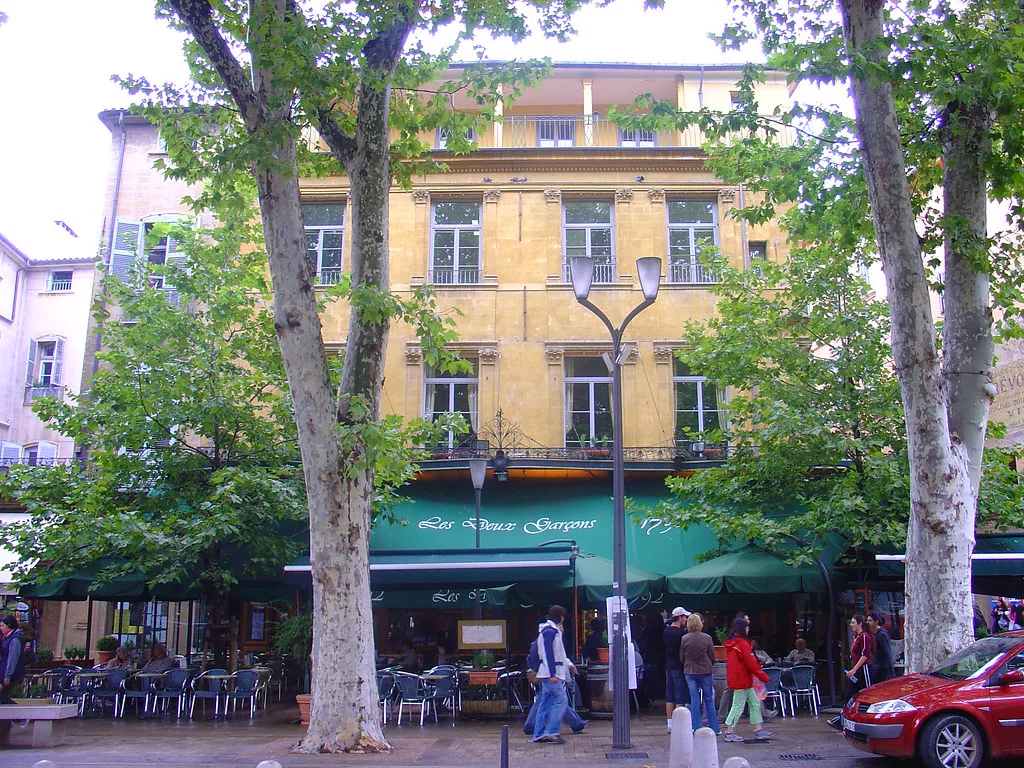
Start with the Cours Mirabeau, the plane-tree avenue that divides the old town from the Mazarin quarter and gives Aix its shape. In March you can walk it without jostling, stop at a café when the sun holds, and use it as a spine for wandering into the streets around the daily markets. The full picture of the city in the colder months, including how the terraces and fountains read in winter light, sits in the Aix-Provence overview.
Cathédrale Saint-Sauveur, the Hôtel de Ville and the old town's mixing of medieval, Renaissance and later architecture make a compact half-day walk. Add the Musée Granet for the Cézanne rooms and the Hôtel de Caumont for changing exhibitions, and you have a full day that ignores the weather entirely. These are indoor sights that reward unhurried time rather than a checklist.
Aix is a university city with a busy restaurant and bar scene, which keeps the center alive on cool evenings when resort towns go quiet. Eat Provençal here rather than dishes from elsewhere: market vegetables, olive oil, lamb and fish from the Marseille auctions. Book dinner rather than improvising on the windiest nights.

Markets in March
The daily markets are the best free thing to do in Aix in March, and they are spread across the center rather than concentrated in one square. Because the city is compact and walkable, with car-free streets and everything in the center within short walking distance, you can cover several in a morning without a plan. Go early, before the wind picks up and before stalls thin out.
Expect late-winter and early-spring produce rather than summer gluts: citrus, greens, artichokes and the first strawberries depending on how the season runs. The Aix markets are practical rather than picture-perfect, and smaller Provençal villages do the postcard version better, but the convenience of a market on your doorstep every day is hard to beat.
Cézanne's Aix
Cézanne is the reason Aix beats another Provençal base for a culture-led March trip, because his paintings, his studio and his motif are all here. The Musée Granet holds two rooms of his work and that of the Aix school, giving you the art before you go looking for the landscape. Check the museum's own site for the day's opening before you build a morning around it.
Cézanne's studio, left with his furniture and tools in place, is preserved as a working space rather than a museum set piece, and it is at its best on a clear, calm day when you can follow up with the Sainte-Victoire views outside the city. On a mistral day, save the mountain for another morning: the ridge is exposed and the wind makes the panorama a short stop rather than a walk.
Day Trips That Work in March
The Luberon hill villages are under an hour's drive from Aix, and Lourmarin, Bonnieux, Gordes and Roussillon make a realistic day out even with a late start. In March the villages are quiet, some seasonal businesses are still shuttered, and the light is soft rather than hazy. Having a car turns this from an awkward bus puzzle into an easy loop.
L'Isle-sur-la-Sorgue, about an hour away, is Provence's antique capital, and its dealers and markets reward a full morning of browsing. Sunday is the busiest day there and draws crowds even in shoulder season, so a weekday visit is calmer if your dates allow it. This is a trip that works in any weather because most of it happens indoors.
The coast is close enough for a day: Cassis and the Calanques, or La Ciotat, are straightforward drives from Aix and a change of scene when the city feels grey. March is not beach weather, and boat trips into the calanques depend on sea conditions, so check the boat operators' schedules on the morning rather than booking blind. Marseille, with its port, Notre-Dame de la Garde and MUCEM, is a stronger wet-day option.
The broader regional picture, including how the Riviera and Provence compare in early spring, is covered in the France in March guide. Use it to sanity-check whether your week should lean coastal or inland before you commit to a base.
Getting Around
Aix-en-Provence TGV station sits about 20 minutes outside the center, with shuttle buses linking it to town, and trains run direct from Paris, Lyon and beyond. Marseille Provence Airport is roughly half an hour's drive away, and Nice is under two hours by car. Arriving without a car is entirely workable for the city itself.
For day trips, decide honestly: the Luberon villages and L'Isle-sur-la-Sorgue are far easier with a car, and organized half-day tours from Aix fill the gap if you would rather not drive. Cassis and Marseille work by train or tour. If you are staying in the city and relying on markets, museums and the old town, skip the car and save the parking problem.
Crowds, Prices and Trade-offs
March in Aix is quiet by Provençal standards, which means no queue at the Musée Granet, space on the Cours Mirabeau and restaurant tables without a reservation. That is the strongest argument for the month, and it is why travelers who care about seeing rather than being seen choose it. The word for pricing in March is moderate: not the deep discounts of January, but well below summer rates.
The costs are real. Rain and wind can wipe out an outdoor day, daylight before 28 March 2027 is limited, and some rural restaurants and seasonal businesses in the Luberon and on the coast run reduced hours. If you need guaranteed sunshine, warm evenings and everything open, late April or autumn is the better choice.
Comparing neighboring months helps: November is colder and wetter while December brings the Christmas market and holiday closures, so March sits on the milder, easier side of the winter season.
Who March Suits
March suits travelers who want a real Provençal city rather than a resort, who are happy to swap a beach afternoon for a Cézanne room, and who can flex plans around wind and rain. It suits couples and solo travelers on a culture-and-food trip, and anyone using Aix as a base for the Luberon with a car. It also suits people who dislike crowds more than they dislike a grey sky.
It does not suit travelers chasing heat, pool time or lavender, or families who need every attraction open and every day outdoors. If those are your priorities, wait for late spring, or read up on the coast in March and consider splitting your time between Aix and the Riviera, where the sun is more reliable.
Plan Your Visit
Book the last ten days of March if you want the mildest weather and the longer evenings that arrive with the clock change on 28 March 2027, and book earlier in the month if you would rather have Aix to yourself. Either way, plan one indoor day and one outdoor day at a time, and let the wind decide which is which.
Keep the trip simple: a walkable base near the old town, a museum morning, a market morning, and one day trip by car or tour. That structure handles March's unpredictability better than a packed itinerary, and it leaves room to enjoy the terrace when the sun does come out.
Frequently Asked Questions
What is the weather like in Aix-en-Provence in March?
Mild but changeable. In the south of France, March typically brings daytime highs around 15°C (59°F) and lows near 7°C (45°F), with more sunshine and less rain than the north of the country. The first half can still feel wintry and the final ten days usually turn springlike, and the mistral can make a sunny day feel much colder.
Is March a good time to visit Aix-en-Provence?
For culture and food, yes. The city is quiet, the Musée Granet and Hôtel de Caumont are easy to visit, and the daily markets run as normal. If you want hot weather, long outdoor evenings or lavender, March is too early and too unsettled.
Is Aix-en-Provence crowded in March?
Generally no. March sits outside the summer peak, so the Cours Mirabeau, museums and restaurants are relaxed. The exception is the week running up to Easter Sunday on 28 March 2027, when French and European visitors return to Provence for the holidays.
Does it rain a lot in Aix-en-Provence in March?
March is showery rather than continuously wet, and the south of France sees more dry, sunny days than the north. Expect a mix of bright and wet days across a week, and treat any single rainy day as a museum or market day rather than a lost day.
What are the best things to do in Aix-en-Provence in March?
The Musée Granet for its Cézanne rooms, the Hôtel de Caumont for exhibitions, a walk through the old town and Cathédrale Saint-Sauveur, the daily markets, and the Cézanne studio followed by Sainte-Victoire views on a clear, calm day.
Can you do day trips from Aix-en-Provence in March?
Yes. The Luberon villages, L'Isle-sur-la-Sorgue and Cassis are each within about an hour, and Marseille works as a wet-day city trip. Rural businesses in the Luberon and on the coast may keep shorter hours outside the season, so check before you drive.
Do you need a car in Aix-en-Provence in March?
Not for the city, which is compact and walkable, and the TGV station connects by shuttle. For the Luberon and L'Isle-sur-la-Sorgue a car makes the day far easier, though organized half-day tours from Aix are a workable alternative.
Sources
Winter travel notes
Optional updates when we add or revise winter guides.
You might also like
Continue reading
More guides you'll find useful