Aix-en-Provence in Winter: Weather, Crowds and What's Open
Plan Aix-en-Provence in winter with typical cold, bright days, the mistral, open markets and museums, Christmas dates and honest quiet-season trade-offs.
On this page
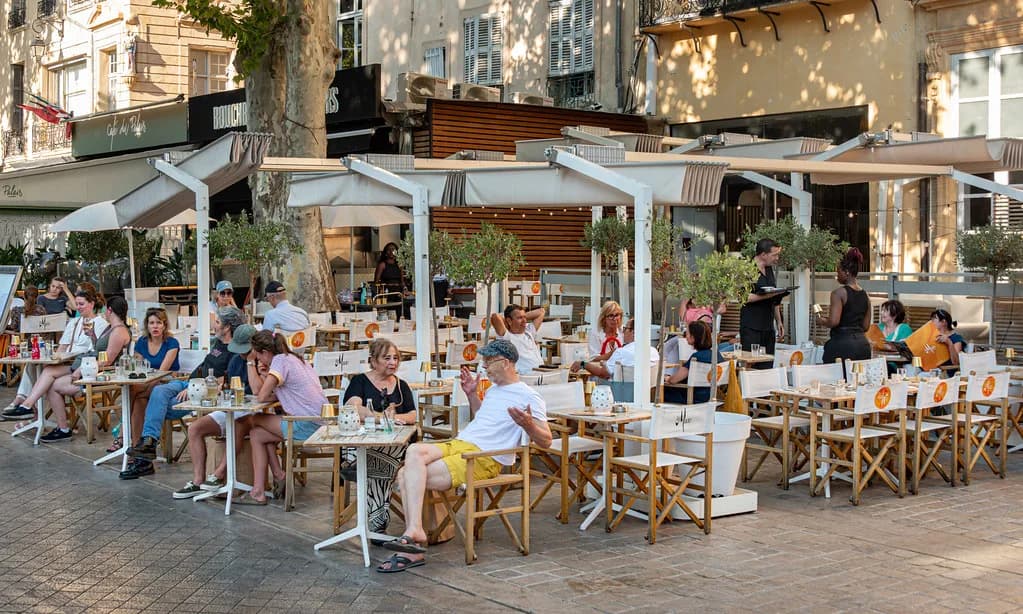
Winter turns Aix-en-Provence from a summer stopover into somewhere people actually live. The university keeps the cafés full, the squares host their usual markets, and the crowds that fill the Cours Mirabeau in July thin out to something you can walk through. What you get in exchange is a cold, often brilliantly clear Provençal city where a two-hour lunch makes more sense than a checklist.
The trade-off is real: short daylight hours, wind that cuts through a sunny afternoon, and a handful of sights on reduced winter rhythms. It suits travelers who want a real French provincial city with museums, food and markets rather than a resort, and who can build a day around the weather. Anyone who needs guaranteed warmth or a full slate of outdoor sightseeing should book May or September instead.
Weather in Winter
Provence keeps a reputation for mild, bright winters, and Aix benefits from that clearer, sunnier pattern compared with northern France. The regional climate is described as temperate even in the cold months, with the coast milder than the inland towns, and villages in the Vaucluse and upper Luberon noticeably cooler and more exposed. Rainy spells come and go rather than settling in; one December example cited for the region averaged around six rainy days for the month, which gives a sense of how much dry weather you can expect between systems.
What the thermometer says and what you feel are two different things in Aix. On a still, sunny afternoon a sweater and a light jacket are genuinely enough, but the moment the mistral picks up the same temperature feels raw and biting, especially in the shade of the narrow streets of Vieil Aix. Most travelers' practical rule is to plan outdoor time for the middle of the day and keep a hat, gloves and scarf within reach from November onward.
Treat any figures you read as typical seasonal conditions, not a forecast, and check a live forecast for the days you will be walking Mont Sainte-Victoire or the Alpilles, where conditions can be harsher than in the city center. Averages for the region rarely capture the wind chill, which is the single most important variable in how a January day in Aix actually feels.
Weather Month by Month
Aix-en-Provence in November is the transition month: still mild enough for long walks, increasingly cold after sunset, and the point when the city begins hanging its festive lights. Expect changeable weather and pack layers you can shed at midday, because the sun still has real strength on a clear afternoon. The Provençal Christmas season opens before the month ends, which makes late November a quietly good compromise between autumn and the holiday period.
December is the coldest of the festive weeks in feel, partly because the city is at its busiest and partly because the wind arrives more often. It is also the month when Aix is most animated, with illuminations, markets and traditional events packed into a few weeks. Daylight is at its shortest, so plan sightseeing for the morning and leave the late afternoon for cafés and indoor sights.
January and February are the quietest, coldest stretch, and the one that divides travelers. Christmas decorations come down, the market crowds disappear, and the city belongs to students, locals and the market traders who work through the week regardless of season. Days are still short but noticeably lengthening by mid-February, and museum-and-market days work well when the mistral is blowing.
By March the light has returned and the terraces start filling again on sunny afternoons, though the wind can still make a March day feel like February. Clocks go forward in the last week of March, which abruptly adds an hour of evening daylight and changes how much you can fit into a day. If you want winter atmosphere without deep cold, late February and March are the sweet spot.
Daylight and How It Shapes a Winter Day
Short days are the practical constraint on any Aix winter itinerary. Rather than fighting them, structure the day the way locals do: a morning market and a long walk, a proper sit-down lunch, then museums, churches and shopping through the afternoon, with an early dinner. That rhythm fits a city where the pleasure is strolling and eating rather than racing between sights.
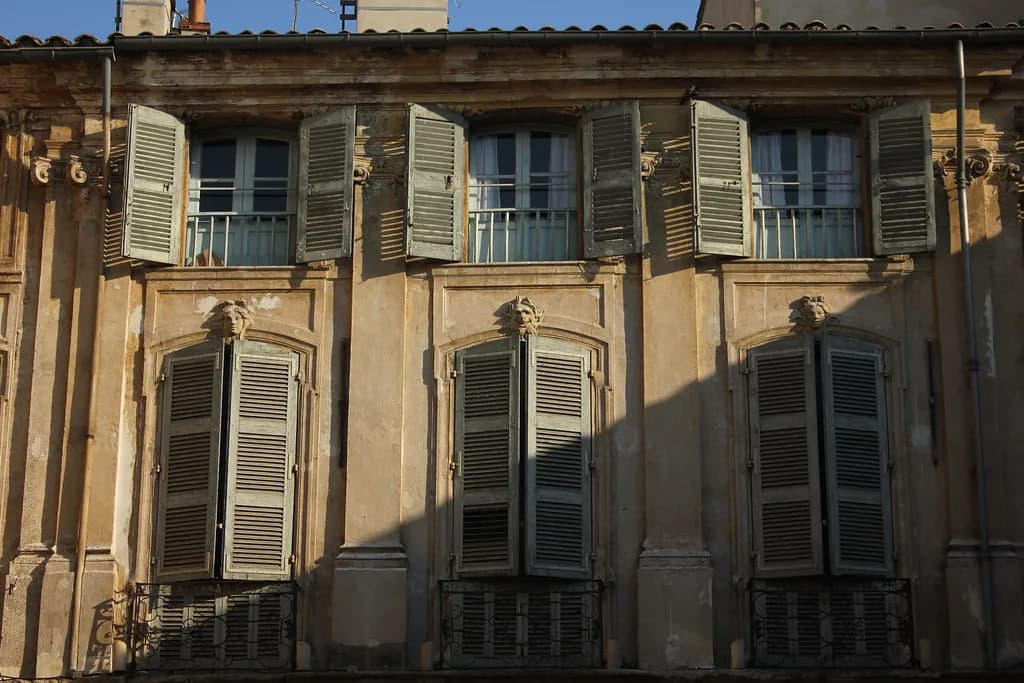
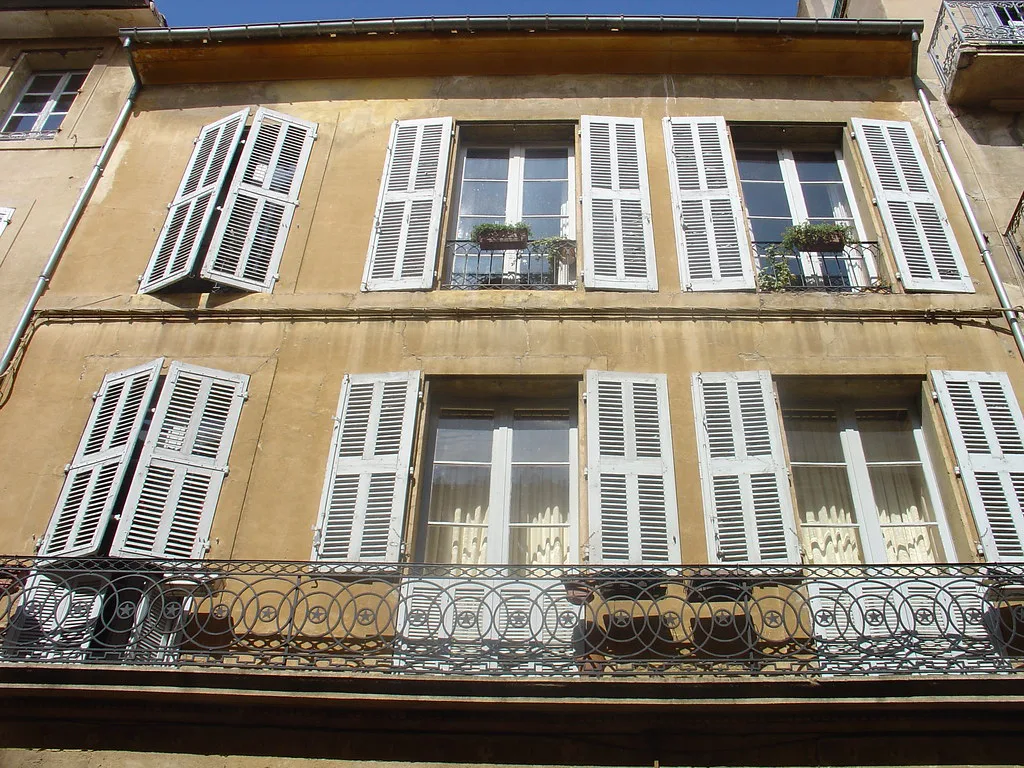
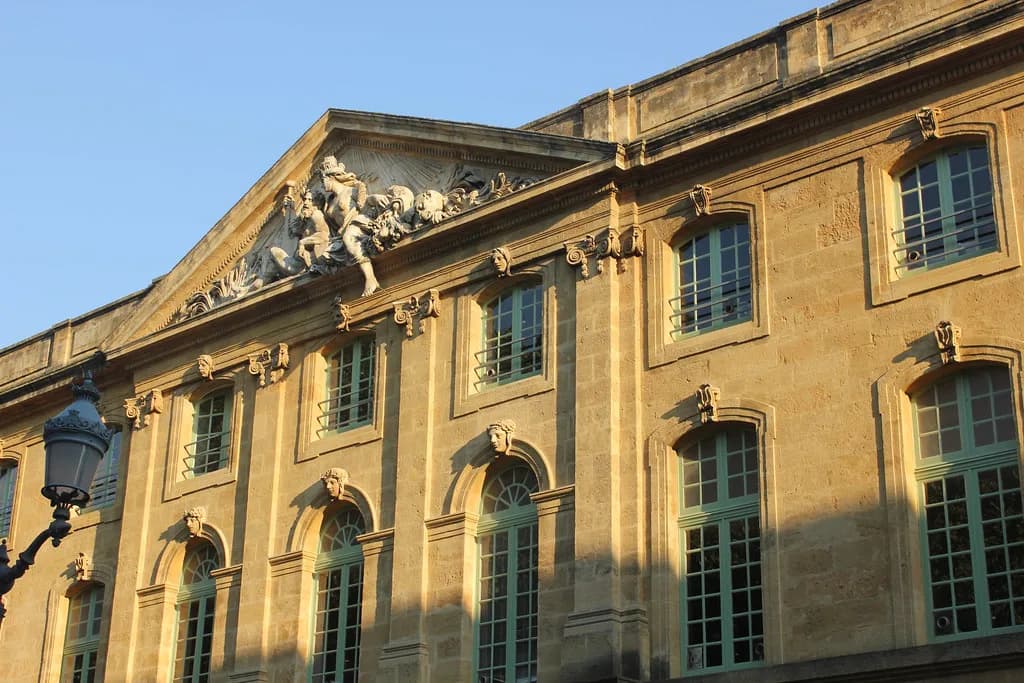
The upside of the season is that low winter light flatters the honey-colored facades and the fountains along the Cours Mirabeau, and you rarely have to share a viewpoint. Save the long day trips for the clearest days and keep a short indoor afternoon in reserve when the weather turns.
The Mistral
The mistral is the wind that defines a Provençal winter, and it can arrive from any direction at any time, bringing a cold that snaps at you even under blue sky. On a calm day the same street feels mild; when the wind funnels down the Cours Mirabeau, a fifteen-minute walk can feel like an hour. Locals plan around it by staying on the sunny side of the street and ducking into arcades and passages.
For visitors this means two things. First, treat wind as the deciding factor in any outdoor plan, including hikes around Sainte-Victoire and the Alpilles, and check forecasts in the days before you go. Second, keep an indoor alternative ready: Aix has enough museums, churches and covered markets to absorb a windy afternoon without wasted travel time.
What Is Open in Winter
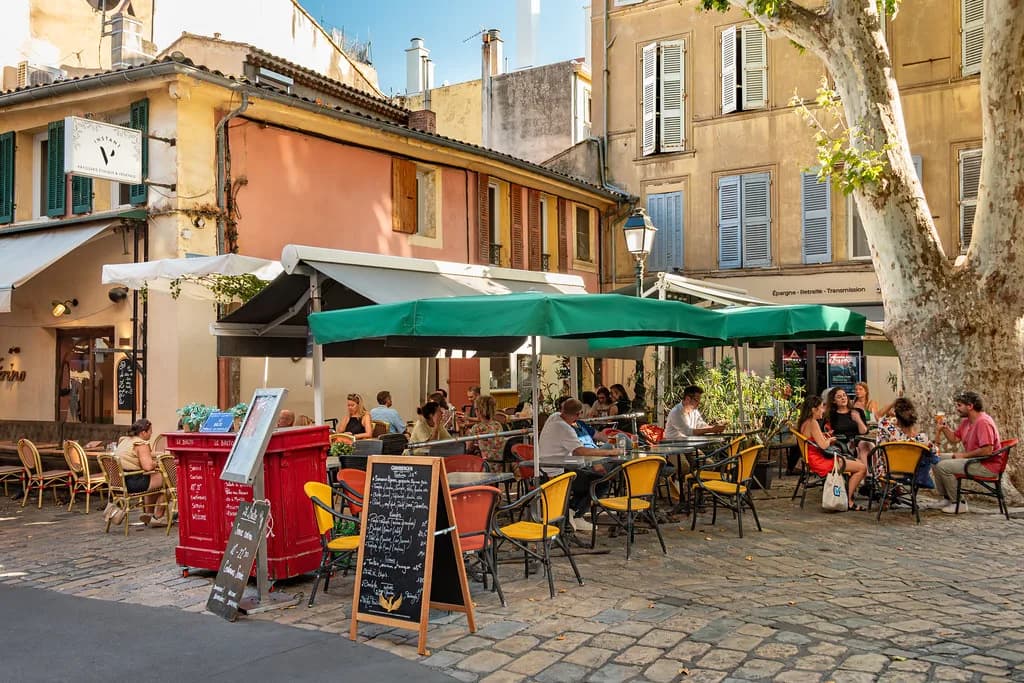
The weekly food, clothing and craft markets keep running through the winter, moving with the seasons in what they sell rather than closing down. Squares and promenades around the old town host at least one market on most days, and the food halls near Place Richelme stay part of daily life rather than becoming tourist spectacles. That continuity is the strongest argument for visiting Aix in the cold months.
Museums in and around Aix keep regular hours through the season and often stage temporary exhibitions that have nothing to do with Christmas, so a wet or windy day has genuine options beyond shopping. The tourist office also runs guided walks outside summer, though the French-language format is worth knowing about before you book; confirm the current schedule and languages directly with the Aix-en-Provence Tourist Office.
Expect reduced scale rather than closures: fewer tours, some seasonal businesses resting, and a generally calmer version of the city. Fountains, churches and the Cézanne sites remain part of the landscape, and the pleasure of the old town in winter is having the lanes largely to yourself.
Christmas in Aix-en-Provence
The festive season in Aix is long and officially scheduled, running from 13 November 2026 to 10 January 2027, with the city illuminated from 28 November 2026 to 3 January 2027. The switch-on on 28 November starts with a projection show on the Halle aux Grains facade at 5.25pm, followed by the lighting of the Christmas tree, the Cours Mirabeau and Les Allées. Evening projections in Provençal appear on walls across the center throughout the season.
Markets cluster around the Cours Mirabeau and the old squares, including the Christmas market and the santons fair, both running 13 November to 31 December 2026. Food-led windows follow: an international twin towns market 2 to 6 December, a gourmet winegrowers' market 10 to 13 December, a truffle market on 16 December and the 13 desserts and local produce market 17 to 24 December. An advent calendar projection show runs on the Halle aux Grains at 6pm, 7pm and 8pm from 1 to 24 December.
Nativity scenes are the local speciality, from the santon makers' scene on the Cours Mirabeau to displays at the Parc Jourdan and the Maison Fouque, where the table of the 13 desserts is kept all year. Christmas carousels run 8 November 2026 to 3 January 2027. For a wider view of the season across the country, see France in winter.
Provençal Traditions Worth Timing a Trip For
Aix's Christmas is inseparable from its Provençal rituals, and several are worth planning around. La Pegoulado, the celebration of lights, falls on 12 December 2026, followed by La Bravade Calendale on 13 December and the Veillée Calendale on 19 December, with a Christmas concert by the Tambourine Academy the same evening. The Calendal show opens earlier, on 21 November 2026.
The season stretches past New Year: the March of the Kings is scheduled for 10 January 2027, just after Epiphany on Wednesday 6 January, and La Pastorale Maurel for 17 January 2027. These are the dates that justify a January visit most convincingly, since the city is otherwise in its quietest phase. Check the tourist office listings closer to the time for venues and any changes.
New Year's Eve and Early January
New Year's Eve falls on a Thursday in 2026, with New Year's Day on Friday 1 January 2027, and the illuminations stay on until 3 January. That gives you a festive city for the first days of the year, then a rapid return to normal rhythms as the decorations come down. Dining arrangements on the holiday nights vary by venue, so book directly with restaurants rather than assuming anything.
The first week of January is a genuinely underrated window: still festive, far quieter than December, and cold enough that the cafés feel like a reward. Epiphany on Wednesday 6 January brings the king cakes and the March of the Kings a few days later, which makes early January feel like a continuation rather than an afterthought.
Things to Do in Winter
Build a cold-weather circuit rather than a top-ten list. Start on the Cours Mirabeau, walk into Vieil Aix for the daily food market and the cathedral, then cross to the Quartier Mazarin for its quieter streets and aristocratic facades, finishing with a museum or a long lunch. This route keeps you within a compact area so a sudden wind or shower costs you minutes, not a whole afternoon.
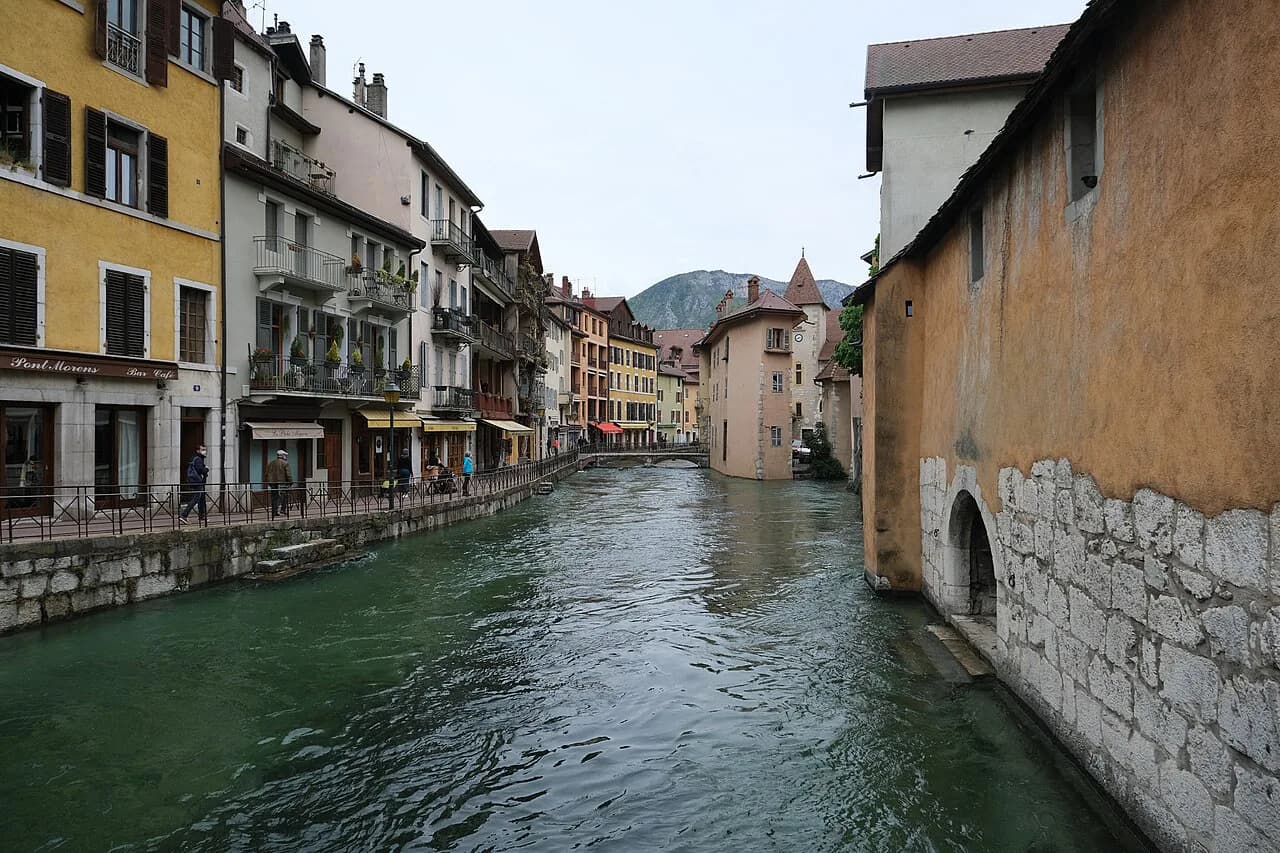
The city rewards slow travel in winter: fountains, doorways, small galleries and the rhythm of market stalls are the point, not the backdrop. If you want a longer walk, the paths toward Sainte-Victoire are open in principle but demand a check on conditions, since wind and wet ground can make them unsuitable. Elsewhere in France, Annecy in winter offers a very different alpine version of the season if you want to compare.
Food in Winter
Winter is arguably the best season to eat in Aix. Truffles appear in the markets and on menus, olive oil from the surrounding groves is at its freshest, and the 13 desserts tradition fills pastry counters through December. Market produce shifts to roots, citrus and greens, which changes what the daily food stalls look like compared with summer.
A practical winter eating plan: shop the morning market for picnic components, book one long lunch in a proper bistro, and keep an eye on the dedicated market windows in December, when the winegrowers' and truffle markets appear for just a few days. Because daytime is short, lunch is often the meal to linger over rather than dinner.
Day Trips That Work in Winter
Marseille is the obvious winter day trip: reachable by bus from the center of Aix, France's second city keeps its museums, shops and restaurants running through the season, so a cold day there still has plenty to fill. The coast is milder than the inland towns, though Cannes in winter is a different, quieter kind of seaside trip if you want to keep going along the coast.
Inland, Avignon, the Luberon and the Alpilles villages are all realistic day trips, though hill villages are colder and quieter in January and February, and some seasonal businesses rest. Hiking in the Alpilles and the Luberon works well in cool weather, with cross-country skiing and snowshoeing possible when snow lies on the ridges. Mont Ventoux demands serious preparation and a careful forecast check before any ascent.
Crowds, Prices and Mood
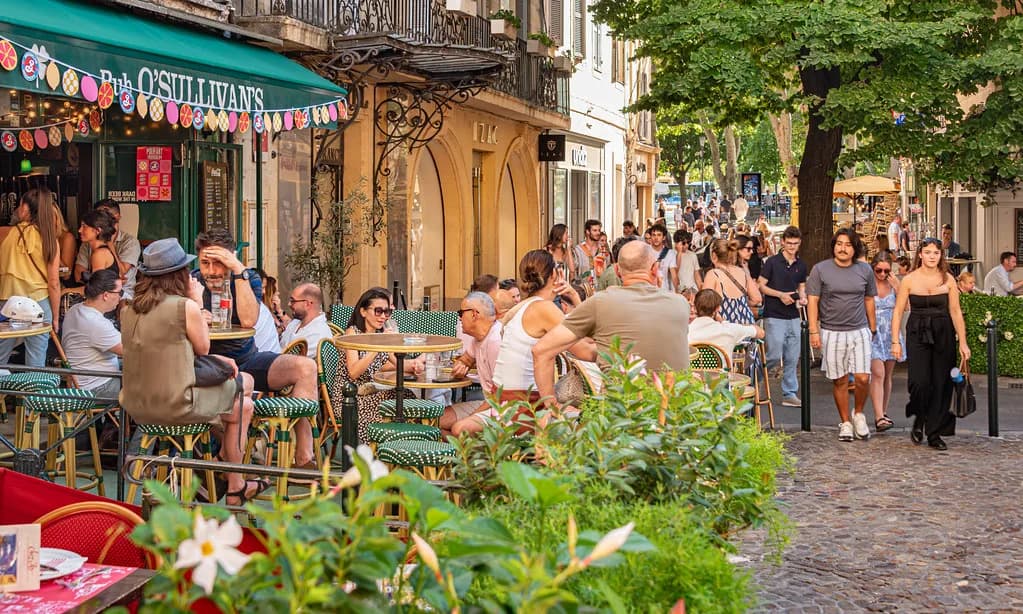
Outside the Christmas weeks, Aix in winter is dramatically calmer than in summer. Fewer tourists means less pressure on restaurants and museums, a more local street life, and the kind of welcome that comes when staff are not running a summer service. December is the exception, when the illuminations and markets draw visitors and the city feels busy in the evenings.
Price levels follow the same pattern in words rather than figures: December is the peak of the winter season, January and February are the quietest and most negotiable, and March starts to climb again as the light returns. For a full picture of the build-up to Christmas, the Aix-en-Provence in December plan covers the festive weeks in more detail.
Who Winter in Aix Suits
This is a season for travelers who like cities more than resorts: museum-goers, market shoppers, food travelers and anyone happy to build a day around lunch and a walk. Couples and solo travelers do well here, and the quiet weeks after New Year are ideal if you want Aix without an audience. Early November and March reward anyone who wants winter light without deep cold and can tolerate changeable weather.
Choose another month if you need reliable warmth, long evenings or a full calendar of outdoor activities. Families with small children should weigh the short days and wind, though the Christmas carousels and shows are a strong counterargument in December. For a gentler introduction to the season, the Aix-en-Provence in November notes cover the weeks before the lights go on.
Getting In and Around on Short Days
Aix is not a coastal city, so winter here is cooler and windier than the Marseille shoreline; plan your arrival with that in mind if you are coming from the airport or the coast. TGV services connect Aix with Paris and other French cities, and local buses link the center with Marseille, making a car unnecessary for a city break. Winter schedules change, so check the latest timetables from SNCF and the local bus networks before you travel.
Inside the city, everything worth seeing in a short winter day is walkable, which is the main reason Aix works well in the cold. Keep journeys between Vieil Aix, the Mazarin quarter and the Cours Mirabeau on foot and save vehicles for day trips.
Plan Your Winter Trip to Aix
Aix-en-Provence in winter is a trade: you give up guaranteed sunshine and long evenings, and you get a working Provençal city with its markets, museums and tables intact and its streets largely free of summer crowds. The seasons inside the season matter — festive and busy in December, quiet and local in January, bright and reviving in March.
Decide which of those you want before you book, then set your dates around the traditions that interest you, from the illuminations on 28 November 2026 to the March of the Kings on 10 January 2027. Pack for wind as much as for cold, and let the forecast decide whether the day belongs to the Alpilles or to a museum.
Explore more Aix-en-Provence winter guides
Frequently Asked Questions
Is Aix-en-Provence worth visiting in winter?
Yes, if you want a real provincial city rather than a resort. Markets keep running, museums stay open, cafés stay full, and the crowds of summer disappear outside the December festivities. The cost is short days and wind that makes a sunny afternoon feel much colder than the thermometer suggests.
What is the weather like in Aix-en-Provence in December?
December is cold and often bright, with the mistral making some days feel raw even under blue sky, followed by milder, still afternoons. The region has a mild winter reputation with relatively few rainy days, but treat any figures as typical conditions rather than a forecast and check a live forecast before you travel.
How cold does Aix-en-Provence get in January and February?
January and February are the coldest stretch and the quietest for visitors. Inland Aix is cooler than the coast, and the wind is the deciding factor in how cold a day feels, so a still sunny afternoon can be pleasant while a windy one is biting. Check a live forecast for your dates rather than relying on averages.
What is there to do in Aix-en-Provence in winter?
Walk the Cours Mirabeau, explore Vieil Aix and its daily food market, cross into the Quartier Mazarin, and spend afternoons in museums and churches. Food is a highlight, with truffles and olive oil in season, and Marseille makes an easy day trip by bus when the weather turns.
Does Aix-en-Provence have a Christmas market?
Yes. A Christmas market and a santons fair both run from 13 November to 31 December 2026, alongside food markets such as the truffle market on 16 December and the 13 desserts market from 17 to 24 December. The city is illuminated from 28 November 2026 to 3 January 2027.
Are markets and museums open in Aix-en-Provence in winter?
The weekly markets continue through the season, with produce shifting to what is in season, and the squares host at least one market on most days. Museums keep regular hours and often run temporary exhibitions. The tourist office publishes current guided tour schedules.
How does the mistral affect a winter visit?
The mistral is a cold wind that can arrive at any time and makes the same temperature feel far colder, especially in shaded streets. Plan outdoor time for the middle of the day, keep an indoor alternative ready, and check the forecast before any hike around Sainte-Victoire or the Alpilles.
What day trips can you do from Aix-en-Provence in winter?
Marseille is the easiest, reachable by bus from the center and fully open in winter. Avignon, the Luberon and the Alpilles villages are realistic too, though hill villages are colder and quieter, and Ventoux hikes need careful preparation and a forecast check.
Sources
Winter travel notes
Optional updates when we add or revise winter guides.
You might also like
Continue reading
More guides you'll find useful