Cascais in February: Decide Your Mild Winter Trip
Cascais in February brings typical highs near 15°C (59°F), rain and short daylight. See what stays open, what to do, and who this quiet month suits.
On this page
February in Cascais is a working Portuguese town with an Atlantic postcode, not a resort in low gear. The summer crowd has gone, the light is short, and the weather swings between soft sunny afternoons and wet, windy spells that push you indoors. It suits travelers who want mild air, coastal walks with a jacket and empty streets, and who are happy to let the forecast decide the day's plan.
The trade-off is real: this is the wettest, windiest stretch of the year on this coast, and the sea is cold enough that almost nobody swims. If your idea of Cascais is sunbathing and beach clubs, February will disappoint you, and the wider picture of the season is worth reading in the Cascais in winter guide before you commit.
What Cascais is like in February
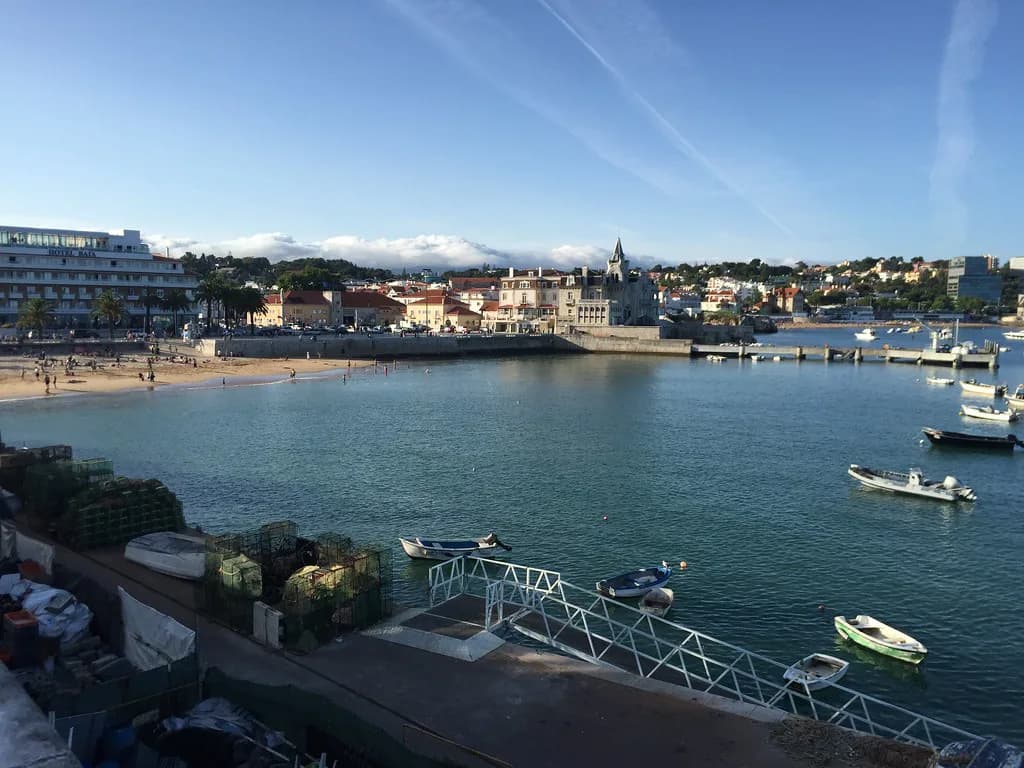
Cascais began as a fishing port and became the summer retreat of Portuguese royalty, which is why the old center mixes grand nineteenth-century villas with tiled fishermen's houses. In February that heritage is what you come for: the villa museums, the fort, the palm-lined promenade and the seafood restaurants, all without the queues.
It is also a month of two halves, weather-wise. A clear day can feel almost springlike by early afternoon, while a front off the Atlantic brings hours of rain and a wind that makes the exposed cliffs unpleasant. Build slack into your plans rather than booking a tight schedule, and keep one indoor option ready for each day outdoors.
February weather: typical highs and lows
Typical February days in Cascais run from a high near 15°C (59°F) to a low around 10°C (50°F), so a sweater and a waterproof shell cover most of the month. February is also the coolest month in the local annual pattern, with August highs of about 24°C (74°F) showing how modest the seasonal swing is on this coast.
Rain is a routine feature rather than an exception, with roughly a one-in-five chance of precipitation on a given day, and the wind averages around 17 mph on exposed ground. Daylight is still short: about 10.7 hours, with sunrise near 7:30 AM and sunset near 6:12 PM. Plan outdoor sights for the middle of the day and leave late afternoons for museums or a long lunch.
The month's numbers are long-term averages, not a forecast, and day-to-day variation is wide. Even a mild February can deliver a storm week with sideways rain, so treat the figures above as the shape of the month and keep the daily weather forecast in your plans.
The ocean stays cold through February, and the local advice is blunt: the sea only reaches about 21°C at the height of summer, so winter water is for wet-suited surfers only. Read February as a walking and looking month, not a swimming one.
Should you base in Cascais or Lisbon in February?
Cascais is a straightforward base in February, but it is not the obvious one for a first winter trip to the region. A local guide is candid that the November-to-February stretch can be wet and chilly and that it is better to be based in Lisbon at this time of year, then visit Cascais on a good day.
The counter-argument is atmosphere. Staying here buys you quiet evenings, a seafront walk at sunset and a small-town pace that central Lisbon cannot match, with the city close enough for a day trip. Choose Cascais if you want the coast and a slower rhythm; choose Lisbon if you want museums, restaurants and indoor options within walking distance on a rainy day.
Wherever you sleep, the link between them is the urban train from Cais do Sodré in Lisbon, which runs direct to Cascais. Treat the timetable as something you look up on the Comboios de Portugal site for your dates rather than memorizing from a guide.
What stays open: museums, parks, the promenade and the marina
Cascais does not shut down in winter. The Museu Condes de Castro Guimarães, a revivalist palace from 1900 with tiled rooms and a small chapel, and the pyramid-shaped Casa das Histórias Paula Rego both give you substantial indoor hours, and the museum's surrounding park stays open for walks.
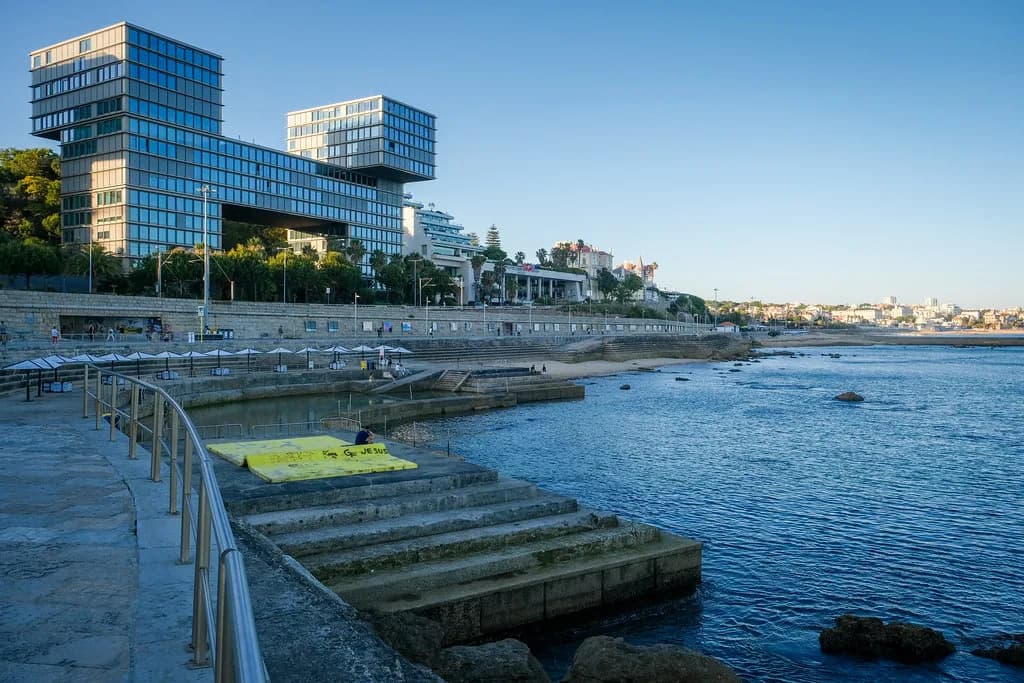
The marina, the Cidadela fort and the seafront promenade toward Estoril continue to work as places to walk, and the promenade's 2.5 km of seawall is the town's best free outing in any weather short of a gale.
Opening days and ticket prices change with the season, so check times with each museum before you build a day around it. What you can count on in February is the general rhythm: shorter visitor hours in some places, far fewer people inside them.
What February changes: the resort side of town
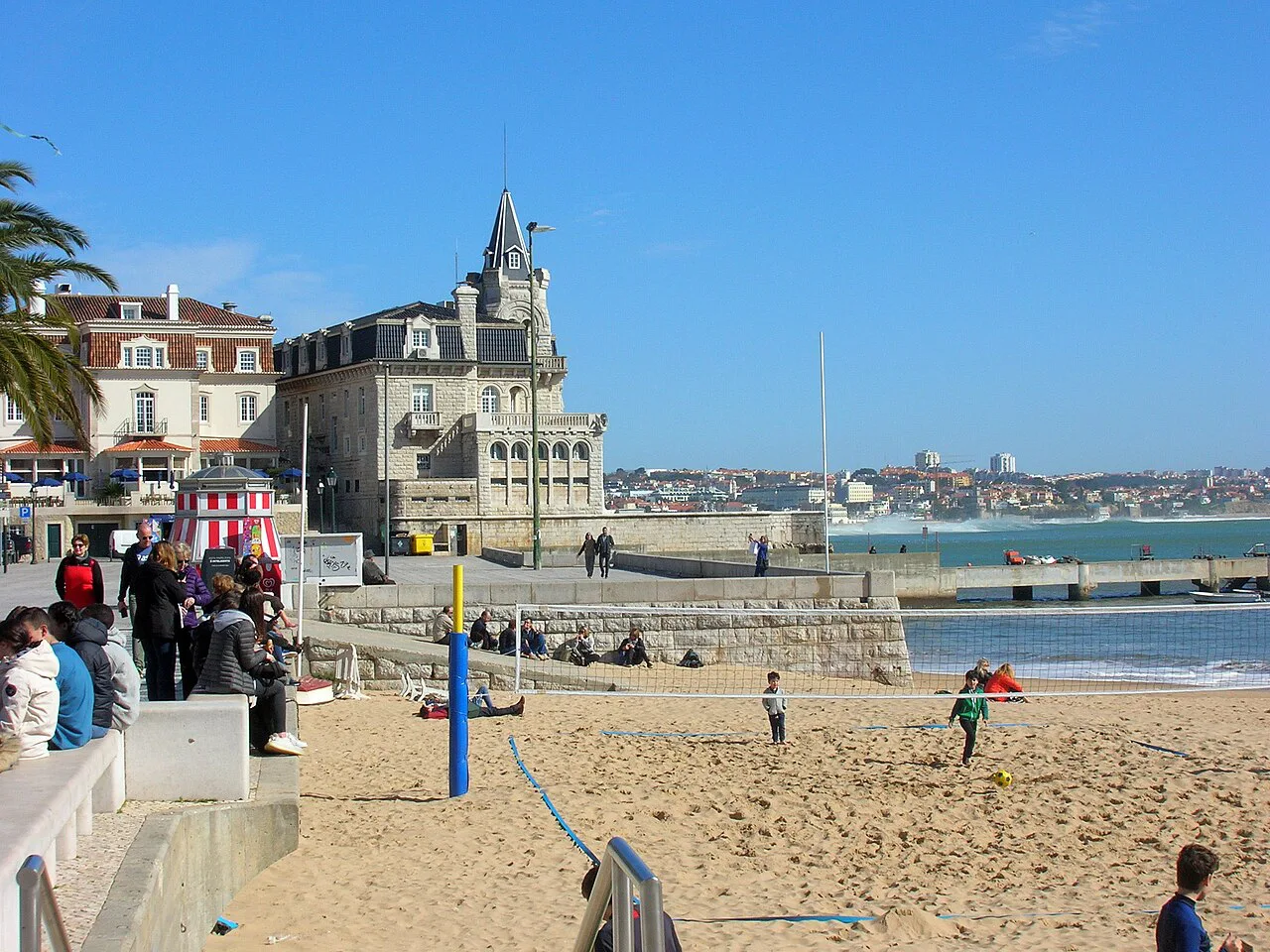
The town's summer machinery is dormant. Beach bars and seasonal concessions along the coast wind down, the sands empty, and the crowds that fill the historic center from Easter to October are simply absent, with the peak-season crush a July and August memory.
That leaves the year-round town: the fish restaurants, the market, the cafés around Largo Luís de Camões and the everyday life of a place that does not depend on visitors. It is a quieter, more local Cascais, and for many travelers that is the point.

What's on in February: Carnival and Valentine's Day
Carnival is the month's one fixed date to plan around. Carnival Tuesday falls on 9 February 2027, and Cascais marks the season with a Carnaval featuring parades and street performance; the town's program for that year is the place to look for the route and timing.
Valentine's Day on 14 February is a quiet date here by European standards, mostly a matter of restaurant tables rather than public events. Beyond that, February is thin on festivals, which is exactly why the streets are empty.
Things to do on a wet or windy day
When the Atlantic wins, build a half day around the villa museums and a long lunch. Start at the Museu Condes de Castro Guimarães and its park, move to the Casa das Histórias Paula Rego for modern art, and finish with seafood somewhere in the old center, where grilled fish and seafood stew are the local staples.
If the rain eases but the wind stays, keep to shelter: the marina, the covered streets of the center and the Cidadela complex let you stay outside without facing the full force of the coast. Save the cliffs for a better day.
Things to do when the sun comes out: Boca do Inferno, the coastal walk and Guincho
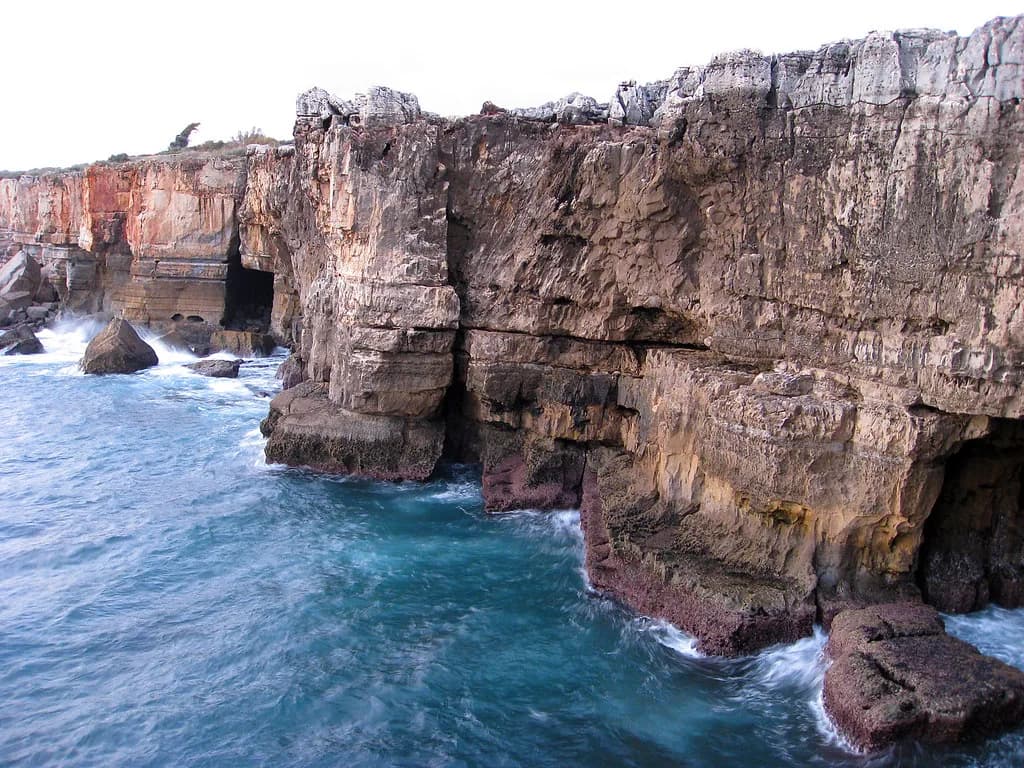
A clear, cold February day belongs to the coast. Boca do Inferno, the collapsed sea cave and arch west of town, is at its most dramatic when Atlantic swell drives waves through the rock, and it is free to visit and walkable from the center in roughly half an hour.
Stay back from the edge on wet rock and skip the platform when the swell is heavy; the point of the place in February is the power of the water, not a close-up. Pair it with the clifftop path and the Santa Marta lighthouse area for an easy half-day loop.
Praia do Guincho, north of town against the Sintra-Cascais natural park, is a walk and a view in February, not a swim: the water is cold, the currents strong and the wind constant, which is why it draws surfers rather than sunbathers. Getting there by bus from Cascais is the standard approach.
Day trips that work in winter: Lisbon, Sintra and Cabo da Roca
Lisbon is the obvious winter day trip and the one that works best in bad weather, with its museums, cafés and covered arcades. It is also the direction the local advice points for a winter base, so a Cascais stay can be split between coast and capital without much friction.
Sintra, up in the hills, is colder, wetter and often wrapped in mist in February, which can make its palaces atmospheric or simply invisible depending on the day. Go on a forecast clear morning and expect a very different climate from the coast.
Cabo da Roca, the westernmost point of mainland Europe, sits in the same wind-blasted, fog-prone landscape and is a short trip from Cascais. It is worth the trip for the cliff scenery, but treat it as a fair-weather outing and check conditions before heading up, as the Cabo da Roca guide explains.
If you are weighing other winter months on this coast, January and March sit on either side of February with slightly different trade-offs. Both are covered in the Cascais in January and Cascais in March guides, and the earlier Cascais in December piece covers the run-up to Christmas.
Crowds, prices and short days: the honest trade-offs
February is one of the quietest months in Cascais, which means space on the promenade, tables without booking and lower accommodation rates than the summer peak. It also means shorter days, closed seasonal venues and a real chance of losing a day to rain.
For context on how the rest of Portugal reads in the same month, from the Algarve to the Costa Vicentina, the Portugal in February overview is the place to start. It helps you judge whether a coastal base or a bigger city makes more sense for your dates.
If you want a warmer Atlantic island instead, Madeira in February trades Cascais's wind and rain for milder days and its own festival calendar. It is a different trip, but a useful comparison when February weather is the deciding factor.
Who February suits, and who should wait for spring
February suits walkers, museum-goers, surfers and anyone who prefers an empty coastal town to a full one. It also suits travelers using Cascais as a quiet base for Lisbon, provided they accept that some days will be spent indoors.
It does not suit travelers who want beach days, guaranteed sun, or a resort atmosphere with everything open. If those are the priorities, late spring or early autumn are the better bet, and February is the month to skip.
Plan Your February Trip
Treat February in Cascais as a weather-led trip: pick two or three fixed anchors, such as the villa museums and Boca do Inferno, and let the forecast fill the rest. Keep the train to Lisbon as a fallback and the promenade as a default.
If you are still deciding between months, the Cascais in November page covers the start of the quiet season and helps you place February in the wider winter picture.
Frequently Asked Questions
Is Cascais worth visiting in February?
Yes, if you want a quiet, mild coastal town and are happy to plan around rain and wind. The museums, promenade, marina and old center stay open, crowds are minimal, and Lisbon is an easy day trip. It is not a beach month, and short daylight limits long outdoor days.
What is the weather like in Cascais in February?
Expect typical highs near 15°C (59°F) and lows around 10°C (50°F), with a regular chance of rain and noticeable wind on exposed ground. Daylight runs about 10.7 hours, with sunrise around 7:30 AM and sunset near 6:12 PM. These are long-term averages, so check the daily forecast before you travel.
Should I stay in Cascais or Lisbon in February?
Cascais gives you a quiet coast, sea walks and small-town evenings, while Lisbon gives you more indoor options on wet days. A local guide suggests Lisbon is the better winter base, with Cascais as a day trip. Choose Cascais if atmosphere matters more than convenience.
Can you swim in Cascais in February?
Rarely. The ocean stays cold through winter, and even in high summer it only reaches about 21°C, so February water is for wet-suited surfers rather than casual swimming. The exposed Guincho beach is for watching and walking, not swimming, in winter conditions.
What is there to do in Cascais in February?
Visit the Museu Condes de Castro Guimarães and the Casa das Histórias Paula Rego, walk the promenade toward Estoril, and take a clear day for Boca do Inferno and the clifftop paths. Carnival, with Carnival Tuesday on 9 February 2027, is the month's main event.
Sources
Winter travel notes
Optional updates when we add or revise winter guides.
You might also like
Continue reading
More guides you'll find useful