Marseille in February: Weather, Crowds and What's Open
Marseille in February brings typical highs near 14°C, light crowds and the cheapest hotel rates of the year. Here is what the weather, sights and days are like.
On this page
February is Marseille in its off-season mood: mild by northern European standards, quiet along the quays and noticeably cheaper than the months either side of summer. You get the Vieux Port and Le Panier without competition for pavement space, and the city's big museums to retreat into when the weather turns. It suits walkers, museum-goers and travelers on a budget far more than anyone picturing swims and boat trips.
The catch is that February is not a warm month, whatever the Mediterranean label suggests, and the wind can make a bright afternoon feel raw on the waterfront. Plan on a mix of short outdoor stretches and long indoor ones, and judge the city by how it handles winter rather than by its summer reputation. A wider look at the season helps set expectations before booking.
What Marseille is like in February
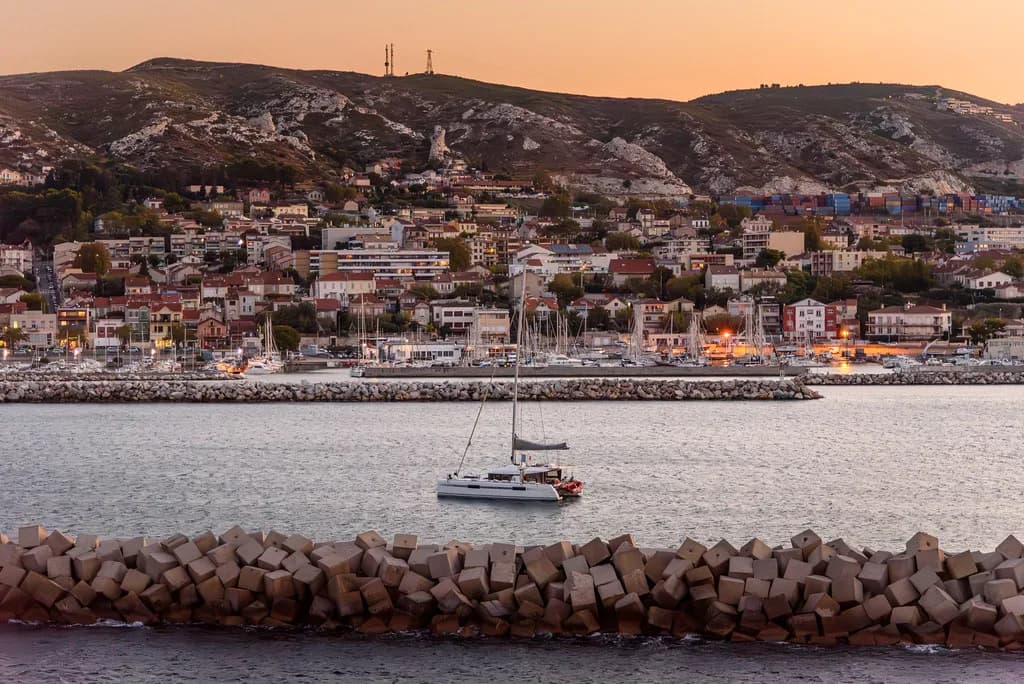
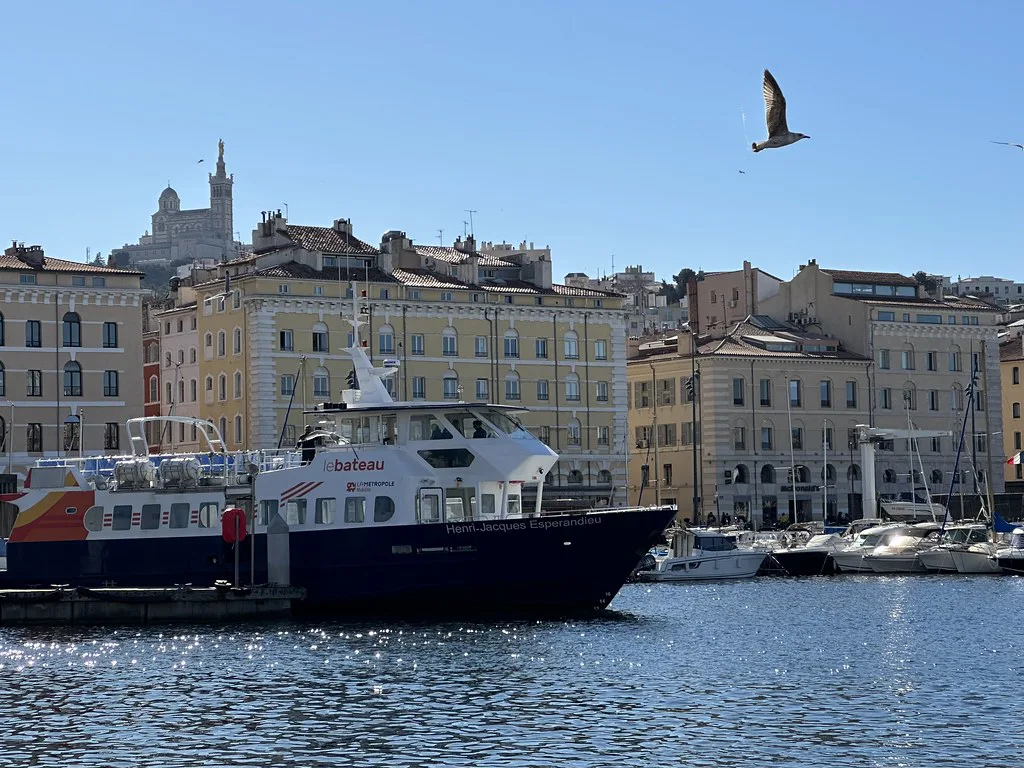
The city empties out between December and March, and February sits at the quiet end of that stretch. Locals go about their business around the Vieux Port, the ferries shuttle across the harbor, and the fish market on the Quai des Belges still sets up each morning with the morning's catch. It is a working city in winter rather than a resort, which is exactly why it works.
Days are short and the light is low, so the rhythm of a visit changes: you want to be outdoors around midday and indoors by mid-afternoon. That makes February a good month for a two- or three-night city break built around food, museums and neighborhood wandering rather than day-long excursions. Travelers who need guaranteed sunshine should look at the city in late spring instead.
February weather in Marseille
Typical February conditions in Marseille run to highs of around 14°C (56°F) and lows of around 6°C (43°F), with roughly six rain days across the month. Expect about six hours of sunshine a day on average, which is enough for a long lunch outside but not for a whole day in the open. Treat these as long-term averages that describe what February usually feels like, not a forecast for any given week.
The mistral matters more than the thermometer. This cold, dry wind funnels down the Rhône valley and is most common as winter turns toward spring, so a 14°C afternoon on the Corniche can feel several degrees cooler once it is blowing. Build flexibility into your days: keep a wind-exposed walk as an option for a calm morning and swap it for a museum when the gusts pick up. A windproof outer layer does more for comfort here than a heavy coat.
Rain arrives in bursts rather than as all-day drizzle, and the city's geography helps: the calanques and hills behind Marseille catch weather that the port sometimes escapes. Snow is rare at street level. If you are comparing the month with high summer, note that the gap is large — July averages sit in the high twenties — which is why February feels so empty.
Daylight and how short days shape a visit
February days are still short, and the sun stays low, so the practical window for outdoor sightseeing is roughly the middle of the day. Put the Corniche Kennedy stroll, the Palais Longchamp gardens or a walk up to Notre-Dame de la Garde in that slot, and save the old town's shaded lanes for the afternoon. Sunset comes early enough that you will want dinner plans that do not depend on being outside.
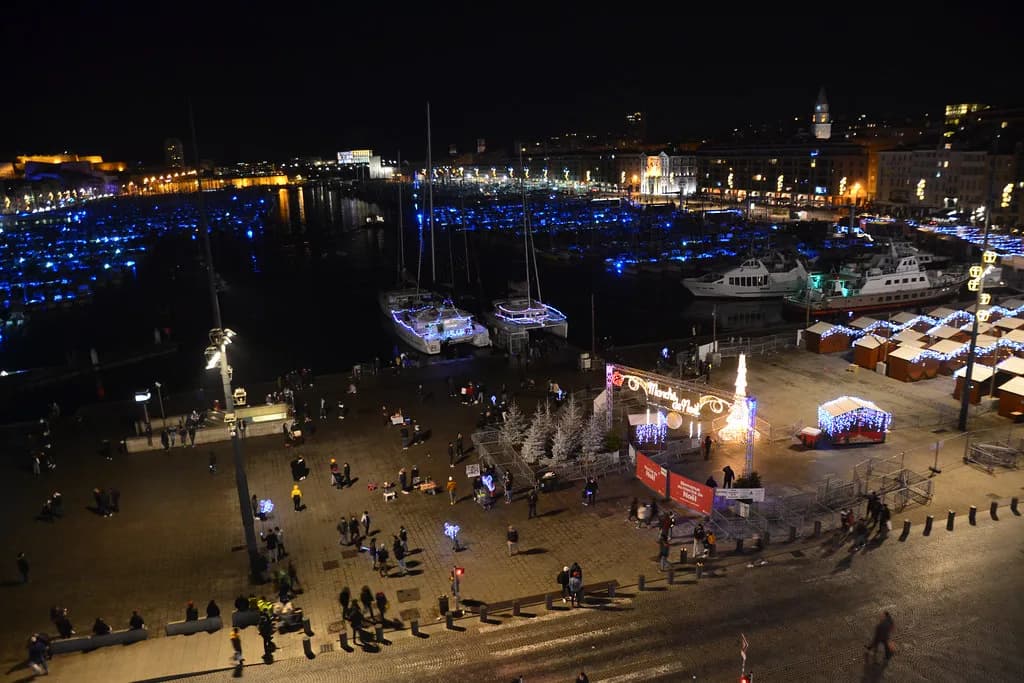
The upside is evening atmosphere in the city rather than on the water: bistros, bars around the Vieux Port and the lit-up quaysides carry the night. If your trip spans the end of the month, remember that European clocks go forward on 28 March 2027, which is beyond February but worth knowing if you are extending into March.
What is open in February
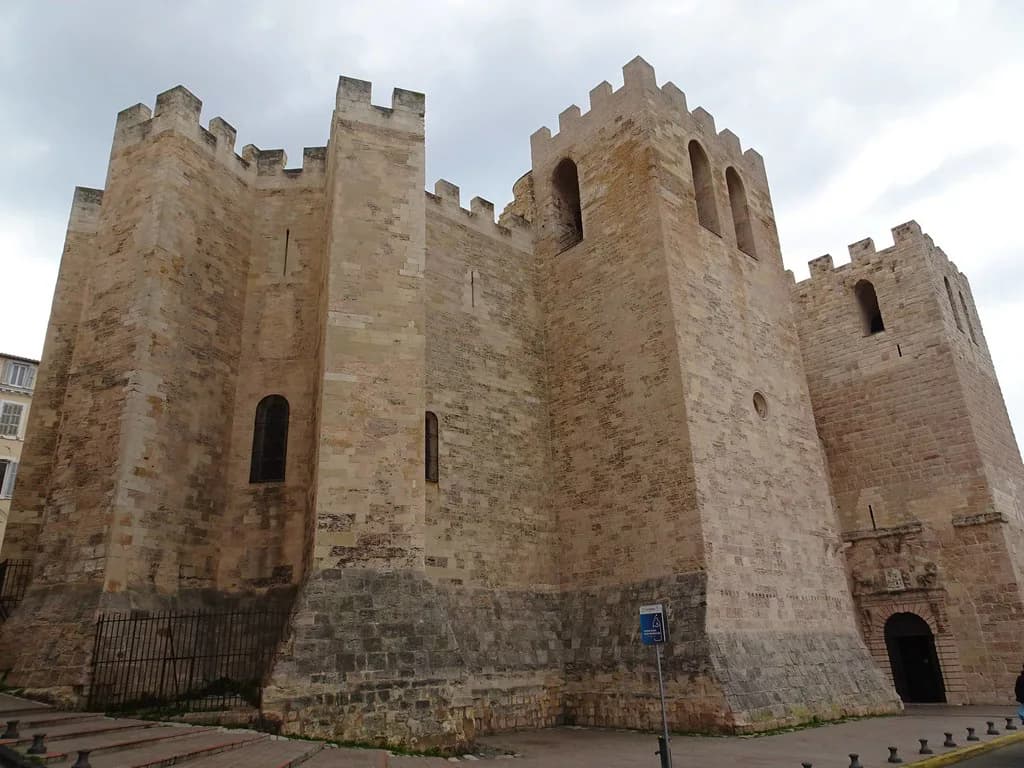
Marseille's core sights operate year-round and are the backbone of a February trip. MuCEM, at the entrance to the Vieux Port next to Fort Saint-Jean, holds the city's major exhibitions on Mediterranean civilizations, and the fort itself offers terraces with views over the harbor and the Cathédrale de la Major. Notre-Dame de la Garde on its hill, the Cathédrale de la Major near the Joliette, and the Palais Longchamp with its two museums all stay in the city's regular cultural circuit.
Opening hours shift by season at many of these sites, and the museums publish their own schedules, so confirm times for the specific dates you want before building a day around them. The same applies to temporary exhibitions, which change through the year. Because February is quiet, you rarely need timed entry, and you can often decide on the morning of your visit.
The Musée des Beaux-Arts and the Natural History Museum occupy the two wings of the Palais Longchamp, and between them they cover a wet or windy afternoon comfortably. Fort Saint-Jean's outdoor walkways are free to enter after security checks, which makes it a low-commitment stop if the weather turns mid-walk.
What closes or slows down
The seasonal side of Marseille is what February takes away. Boat services to the Frioul archipelago and Château d'If, and the Calanques boat trips that leave from the Vieux Port, run on reduced or weather-dependent schedules in winter. Check the current timetables and cancellation policies with the company running your crossing before you set out, since winter departures are not always daily.
Beach infrastructure along the Corniche Kennedy and the Plages du Prado is dormant: no lifeguards, no concessions, and water cold enough that swimming belongs to the indoor pool. The Corniche walk itself remains one of the city's best outings in winter, with views to the islands and the Vallon des Auffes tucked below the three-arched bridge.
Some smaller restaurants and cafés take winter breaks or cut their hours, particularly in the quieter parts of Le Panier and away from the port. The solution is simple: concentrate meals around the Vieux Port, Noailles and the streets near your base, and don't build an evening around a single address you have not confirmed.
Things to do in February
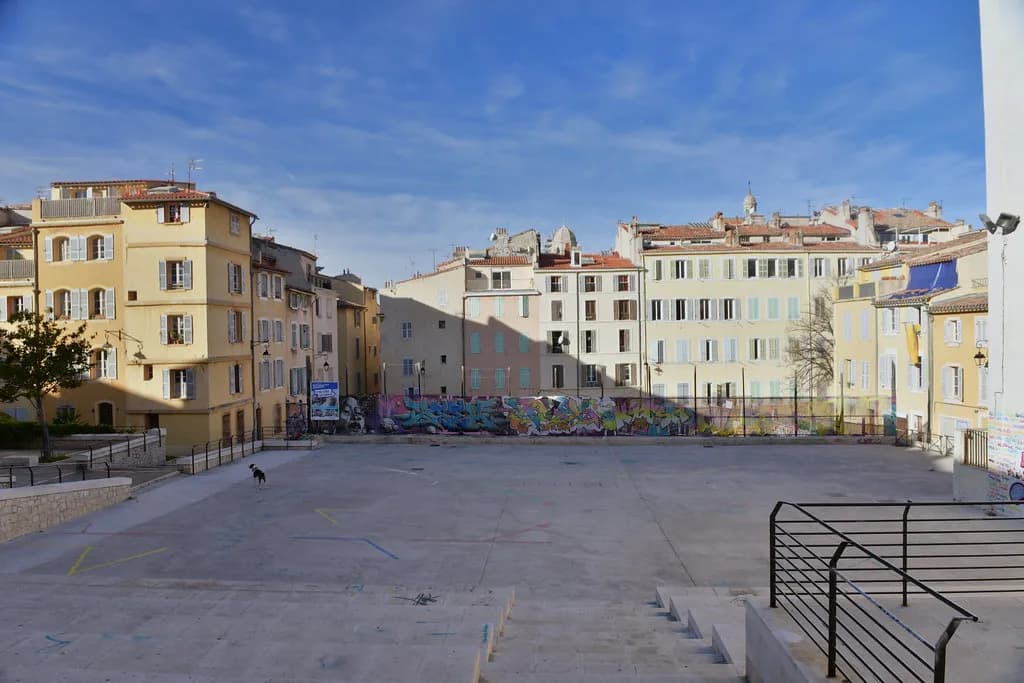
Start at the Vieux Port, where the Quai des Belges fish market sets the tone each morning and the quays give you a flat, sheltered walk when the wind is up. From there, cross into Le Panier, Marseille's oldest quarter, for steep lanes, small workshops and murals, with the Vieille Charité and Place des Pistoles as natural stopping points. This is the part of the city that rewards slow wandering most in low season.
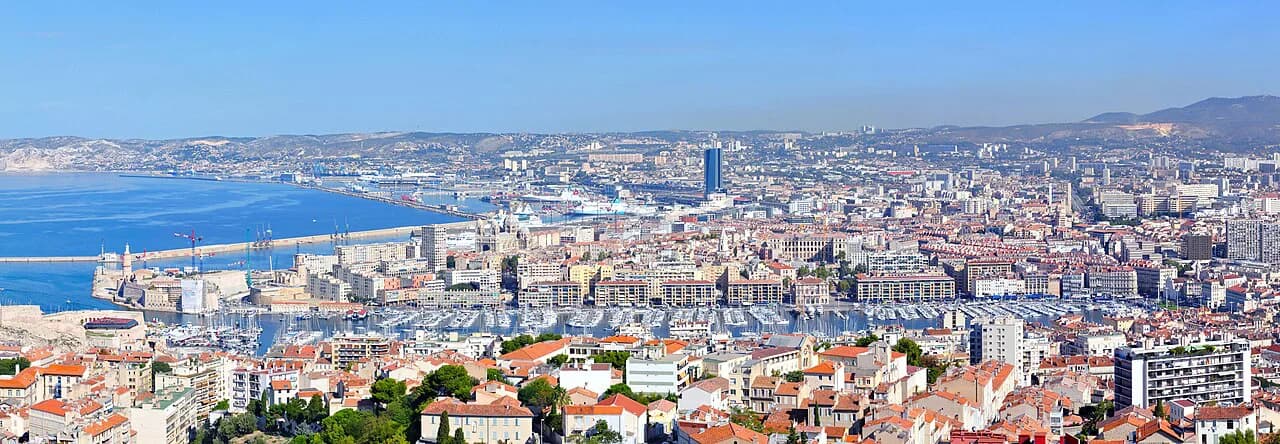
Climb or take the bus up to Notre-Dame de la Garde for the 360-degree view over the city, the Frioul islands and the ridges behind — on a clear February day it is the best free panorama in Marseille. Nearby, the Cathédrale de la Major, with its striped stonework and mosaics, is a short stop that pairs well with MuCEM and Fort Saint-Jean on the same afternoon.
For food, a guided walking tour covers the local repertoire — panisse, sardines, tapenade, pastis — in a few hours and doubles as an indoor-outdoor Plan B when the weather is mixed. Otherwise build a route around bouillabaisse at a traditional restaurant and a market lunch in Noailles. The city's winter food scene is one of its strongest arguments for visiting now rather than in July.
The Corniche Kennedy gives you a three-kilometer seaside promenade with the Vallon des Auffes and its fishing cottages below the road. In February you will have most of it to yourself, and the wind is the only real obstacle.
Museums and indoor options for a wet or windy day
MuCEM is the obvious anchor: the J4 building holds the large temporary exhibitions and the permanent Mediterranean collection, while the Fort Saint-Jean side adds open-air history and terraces when the rain pauses. Its restaurant has sea views, which makes it a sensible lunch stop rather than a dash back into the wind.
At the Palais Longchamp, the Musée des Beaux-Arts holds paintings, drawings and sculptures from the sixteenth to nineteenth centuries, with strong French, Italian and Spanish schools. It is the kind of collection you can see in ninety minutes without fatigue, leaving time for the gardens and the monumental fountain outside.
If the mistral is blowing hard, combine two nearby stops rather than crisscrossing the city: MuCEM, Fort Saint-Jean and the Cathédrale de la Major sit within a few minutes of each other around the Joliette and the port entrance. That cluster alone can absorb a windy day.
Carnival and the run-up to Lent
In 2027, Carnival Tuesday falls on 9 February and Ash Wednesday on 10 February, putting the end of the carnival season squarely inside the month. Marseille marks the period in its own way rather than with a single set-piece event, and any processions or neighborhood celebrations are organized locally with their own published plans for the year.
If Carnival timing matters to your trip, look for the city's own announcements close to the date rather than relying on a general calendar. The same applies to the winter sales period, which French authorities schedule annually and which typically falls in January and into February; the official dates are published in advance.

Day trips from Marseille that work in February
Aix-en-Provence is the easiest day out: frequent trains from Marseille's Saint-Charles station reach the city in well under an hour, and its compact center of squares, fountains and the Cours Mirabeau suits a cold-weather stroll with cafés to duck into. It is a city day, not a countryside day, which matters in February.
Cassis works too, with the train running along the coast, but the calanques themselves are best approached on foot from the land side in winter — boat trips are limited and paths can be closed after rain or for fire risk in other seasons. Check local trail conditions before setting out.
For a bigger contrast, a fast train to Paris puts the Louvre Museum and the capital's indoor sights within a long day or an overnight, though February in Paris is colder than Marseille. Closer to home, the hill towns of Provence reward a car, but winter timetables on regional buses thin out, so rail is the safer bet.
Crowds, prices and who should pick another month
February sits among the cheapest months of Marseille's year, with demand at its lowest and hotel rates well below the summer peak. The gap is dramatic: the winter months are a fraction of July's prices, and midweek arrivals get the best of it. You will feel the difference in restaurant availability as much as in room rates.
That value comes with trade-offs: short days, a real chance of wind, some closed seasonal operators and a city that is pleasant rather than festive. February suits walkers, museum-goers, food travelers and anyone who wants Marseille to themselves. It does not suit travelers set on beaches, island boat trips or long outdoor days.
If you are weighing the month against its neighbors, December brings Christmas markets and lights and January is even quieter, while March starts to lengthen the days. Each has a different balance of atmosphere and price, and the difference between them is mostly about light and events rather than temperature.
Getting around and a practical rhythm
Marseille's metro, trams and buses cover the center well, and the RTM network connects the station, the Vieux Port and the museum cluster without a car. Buy tickets on the app or tap a contactless card on board; a car is a liability in the center and useful only for Provençal day trips.
A sensible February rhythm is one outdoor block in the middle of the day and one indoor block either side, with lunch as the hinge. Group sights by neighborhood — port and Le Panier one day, Joliette and MuCEM the next, the Corniche and Palais Longchamp on a third — and you will spend far less time crossing the city in the cold.
Plan Your February Trip
February is the month to see Marseille as a functioning Mediterranean city rather than a summer destination: mild enough for long walks, cheap enough for a spontaneous booking, and quiet enough that the Vieux Port belongs to the people who live there. Go for the museums, the food and the harbor, and treat the weather as part of the experience.
Book flexible dates and confirm the few things that matter — museum hours, any boat service you are counting on, and the day's trail or ferry conditions — then let the wind decide the order of your days. If you want a livelier version of the same city, shift your dates a few weeks later.
Explore more Marseille winter guides
Frequently Asked Questions
Is Marseille cold in February?
It is mild rather than warm. Typical February highs sit around 14°C (56°F) and lows around 6°C (43°F), with roughly six rain days in the month. The mistral wind is the real variable: on a windy day the waterfront feels much colder than the thermometer suggests, so a windproof layer matters more than a heavy coat.
Is Marseille warmer than Paris in February?
Marseille is consistently milder than Paris in winter, with sunnier, drier days on average and a Mediterranean climate that keeps daytime temperatures higher. Paris in February is colder and greyer, so if you want a city break that allows time outdoors, Marseille is the better bet.
What is there to do in Marseille in February?
The Vieux Port and its morning fish market, the lanes of Le Panier, the Corniche Kennedy walk, Notre-Dame de la Garde and the Cathédrale de la Major all work well in winter. For wet or windy days, MuCEM, Fort Saint-Jean and the museums at the Palais Longchamp are the reliable indoor options.
Does it rain a lot in Marseille in February?
Not heavily. February averages around six rain days, and rain tends to arrive in showers rather than settle in for the day. The bigger weather risk is the mistral, which can make an otherwise bright day feel raw along the exposed waterfront.
Are the Calanques and Frioul boats running in February?
Boat services to the Frioul archipelago, Château d'If and the Calanques run on reduced, weather-dependent schedules in winter, and some trips do not operate at all. Keep a land-based alternative ready in case sailings are cancelled; check current timetables and cancellation policies before relying on a boat trip.
When is Carnival in Marseille in 2027?
Carnival Tuesday falls on 9 February 2027, with Ash Wednesday on 10 February, so the end of the carnival season lands inside the month. Any specific processions or events in Marseille are organized locally and announced by the city; look for those announcements closer to the date.
Is February a good time to visit Marseille?
It is a good time if you want low prices, thin crowds and a working city rather than a beach resort. It is a poor fit if you want swimming, island boat trips or long outdoor days. Walkers, museum-goers and food travelers tend to get the most out of it.
How many days do you need in Marseille in February?
Two to three nights cover the Vieux Port, Le Panier, MuCEM and the Corbusier rooftop of Notre-Dame de la Garde at a comfortable pace. Add a day for the Corniche and Palais Longchamp, and another if you want Aix-en-Provence or Cassis as a day trip.
Sources
Winter travel notes
Optional updates when we add or revise winter guides.
You might also like
Continue reading
More guides you'll find useful