Marseille in Winter: Decide Your November–March Trip
Marseille in winter brings mild Mediterranean days, a chilly mistral and a quieter Old Port. See monthly temperatures, what stays open and who it suits.
On this page
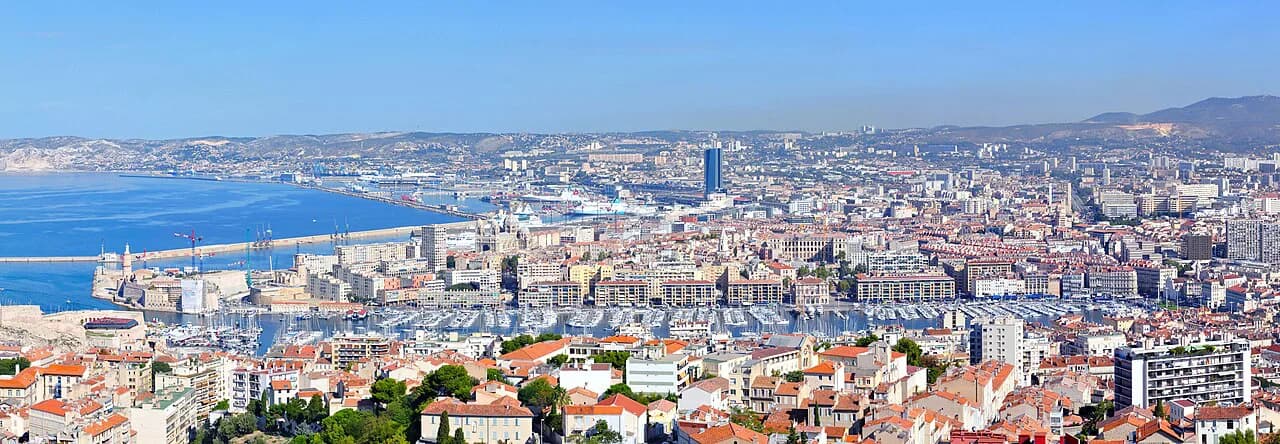
Marseille in winter is a Mediterranean city running at half speed: the ferries and beach clubs go quiet, but the fish market on the Quai des Belges still opens every morning and the basilica on the hill still draws its visitors. Typical daytime highs stay in the low teens Celsius, which is mild by northern European standards without ever being warm enough for swimming. It suits travelers who want a real working port city, long museum afternoons and brisk coastal walks more than those chasing sunshine and long evenings.
The season's real constraints are wind and light rather than snow. The mistral funnels cold air down the Rhône valley, short December and January afternoons compress outdoor plans, and the sea stays cold. Plan the trip around a few indoor anchors — MuCEM, the Palais Longchamp museums, the basilica — and use the clear, dry days for the Corniche and the hills.
What Marseille Is Like in Winter (and Who It Suits)
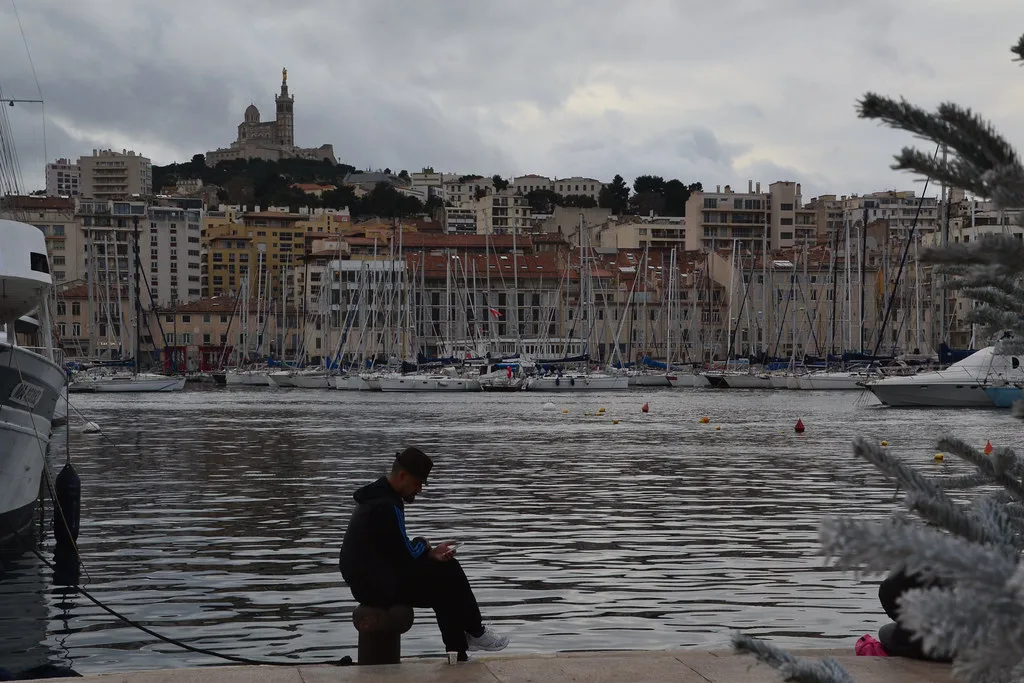
Marseille sits on the Mediterranean in Provence, protected enough that winter is rarely harsh but exposed enough that wind defines the day. When the mistral blows, the same temperature feels considerably colder along the waterfront and on the exposed heights around Notre-Dame de la Garde. When it drops, afternoons can be bright and genuinely pleasant for sitting outside with a coffee.
The city suits travelers who like urban life, food and museums, and who accept that daylight ends early in December and January. It suits people who want to see a port city without summer's crowds and are content to walk rather than swim. It does not suit anyone expecting warm sea, beach days, long café evenings or guaranteed sun; for that, look at late spring or September.
Weather in November
November is the transition month, and typically the mildest of the winter arc: expect average highs around 16 °C (60 °F) and lows near 8 °C (47 °F). The autumn crowds have gone and hotel and restaurant capacity is easier to navigate, while afternoons still hold enough light for the Corniche and the Old Port.
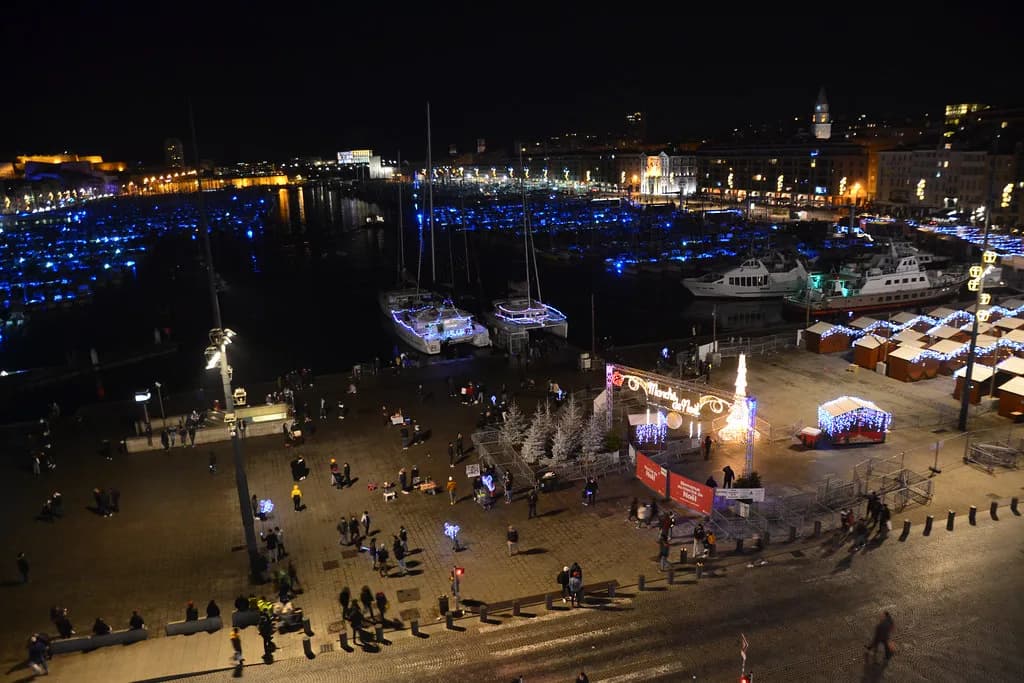
The santon fair on Place Charles de Gaulle and the Village de Noël on the Vieux-Port usually begin in mid-November, so late in the month the city shifts into its holiday mode. Rain is possible in any winter month; build one indoor plan per day so a wet morning does not empty your schedule.
Weather in December
December cools further, with typical highs near 13 °C (56 °F) and lows around 6 °C (44 °F). Days are at their shortest, so treat the morning as the productive window: outdoor sights first, museums after dark. Christmas Day 2026 falls on a Friday, and New Year's Day 2027 falls on a Friday, which makes that week a natural hinge in the trip.
The Old Port stays the city's living room through December, with the fish market on the Quai des Belges in the mornings and the illuminated quays in the evenings. The Quai de la Fraternité Christmas village typically runs from the third Saturday of November into early January, so Christmas week usually falls inside its dates. Check the market's current calendar with the city before you build an evening around it.
Weather in January: the Coldest Month
January is typically the coldest month, with average highs around 12 °C (54 °F) and lows near 5 °C (42 °F). Snowfall is unusual in the city, but it is not impossible, and the mistral can make a bright 12 °C afternoon feel raw on the waterfront. Epiphany falls on Wednesday 6 January 2027, a date when Provençal bakeries traditionally sell their own version of the kings' cake.
This is the quietest stretch of the season, which is both the appeal and the trade-off: shorter queues at MuCEM and Notre-Dame de la Garde, and some smaller restaurants taking their annual break. Use the cold weeks for the indoor circuit and save the Calanques and Corniche walks for a still, sunny day.
Weather in February
February edges back up, with typical highs near 14 °C (56 °F) and lows around 6 °C (44 °F). Afternoons lengthen noticeably, and the light on the limestone around the Vieux-Port becomes one of the season's pleasures. Carnival Tuesday falls on 9 February 2027, so the early part of the month brings a festive mood to Provence, though Marseille's own observances vary by neighborhood and organiser.
Late February is when the city starts to feel like itself again, with more terraces occupied and more boats moving in the harbour. It is a good compromise month for travelers who want lower prices and thinner crowds but a less severe version of January's cold.
Weather in March
March returns to November's mildness, with average highs around 16 °C (62 °F) and lows near 8 °C (46 °F). It is also a month of transition: some days feel like spring, others like winter. Clocks in Europe go forward on 28 March 2027, which suddenly stretches the usable afternoon.
Easter Sunday falls on 28 March 2027, making Holy Week 21–28 March 2027 a busier period than the rest of the month. Book the rooms and restaurant tables you care about well ahead, because this week coincides with the start of the Easter break across France.
Rain, Wind and Daylight
Marseille's winter is not notably wet by French standards, but any month can bring a run of grey, rainy days between bright ones. The mistral is the more distinctive feature: a cold, dry, gusty wind that clears the sky and lowers the felt temperature, especially on the Corniche and at the basilica.
Daylight matters most in December and January, when the sun sets early and outdoor sightseeing needs to happen before mid-afternoon. The open, uncrowded Calanques are at their best in the low winter light, but only when the wind is not up and the paths are dry.
What Closes and What Stays Open in Winter
The city's core sights keep running: MuCEM, Fort Saint-Jean, the Cathédrale de la Major, Notre-Dame de la Garde and the Palais Longchamp museums are built for year-round use. What goes quiet are the summer-facing businesses — beach concessions, boat trips and some seasonal restaurants — and the rhythm slows in Le Panier and around the Vieux-Port.
The Colorbüs hop-on hop-off buses, with two circuits and multilingual commentary, are an efficient way to get an overview when the weather is dry and you have limited time. Confirm current routes and stopping times with the operator, as winter service differs from summer.
Boat trips to the Frioul archipelago and the Calanques run on reduced winter schedules and depend on sea conditions. If a boat trip is central to your plans, pick up the sailings from the ferry operators at the Vieux-Port quays and build the rest of the day around the forecast rather than a summer timetable, since crossings are cancelled in rough weather.
Christmas in Marseille: Santons, the Market and Christmas Eve
Marseille's Christmas tradition is the santon fair, when figurine makers set up on Place Charles de Gaulle from about mid-November through New Year's Eve. Demonstrations of santon making usually happen on some afternoons during the fair, and the market preserves a craft that dates back centuries. It is a distinctly Provençal way to mark the holiday, and it remains the city's signature December sight.
Alongside it, the illuminated chalets on the Quai de la Fraternité offer food, gifts and a walk through the festive port. For Christmas Eve, December 24 is the big family meal in Provence, with the long, multi-course gros souper; many restaurants offer special menus, and booking ahead is essential. Check individual restaurant pages for current availability and hours.
Things to Do in Winter: Old Port and Le Panier
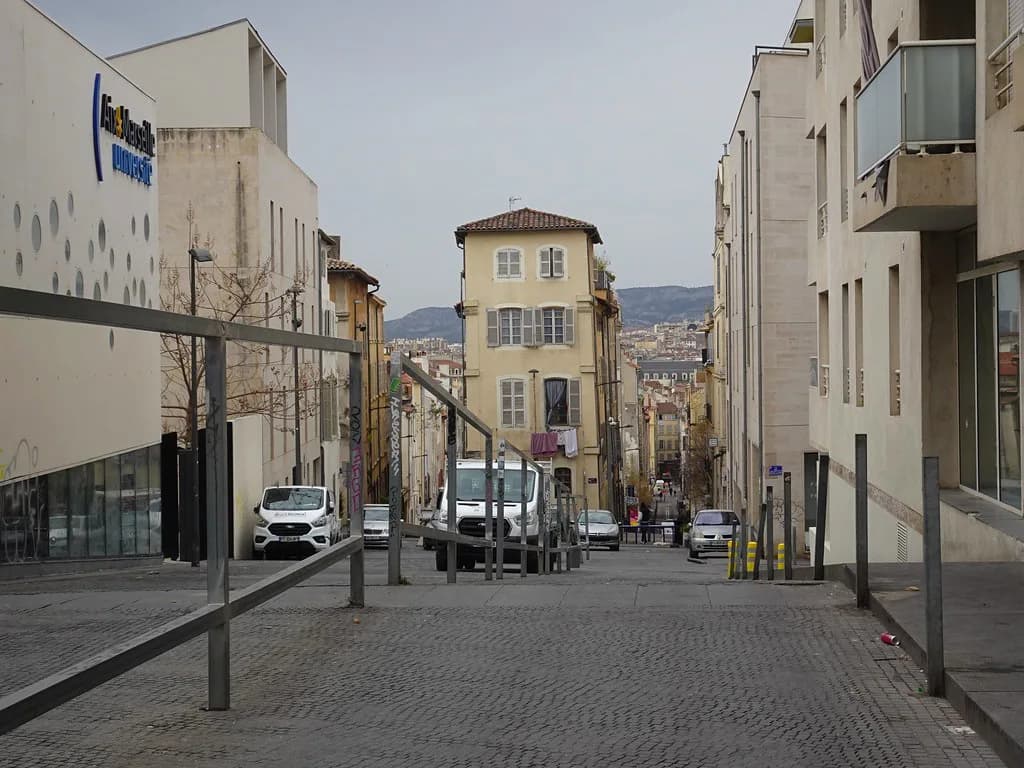
The Vieux-Port is the natural starting point: the morning fish market on the Quai des Belges, the boats, and the surrounding cafés make it easy to spend a morning in the open air without committing to a long walk. From there, cross into Le Panier, the old town's tangle of steep lanes and stairways, which rewards wandering at a slow pace.
Le Panier holds small bistros, craft shops and the Vieille Charité, a Baroque complex housing museums and exhibitions — a good indoor stop when it rains. The Petit Train offers a way up the slopes for anyone who would rather skip the stairs.
A walking food tour is a practical winter choice, because it combines eating, local history and warmth in short bursts. Look for tours covering tapenade, panisse, sardines and pastis in the Old Port area, and check current itineraries and prices before you book.
Museums and Indoor Sights: MuCEM, Fort Saint-Jean and Palais Longchamp
MuCEM, at the entrance to the Old Port, is the best bad-weather anchor in the city: a large museum of Mediterranean civilizations with permanent and temporary exhibitions and a rooftop with sea views. Next door, Fort Saint-Jean's ramparts and terraces are free to access after a security check, making them a low-cost stop on a clear, cold day.
At Palais Longchamp, the monumental water palace houses the Musée des Beaux-Arts in one wing and the Natural History Museum in the other, both set in gardens. It is a sensible half-day when the weather turns, combining art with architecture and a park walk between showers.
The Cathédrale de la Major, near the Old Port, is another of the city's free indoor stops: a vast Roman-Byzantine building with striped stonework and mosaics. It pairs well with MuCEM and the fort in a single J4 afternoon.
Notre-Dame de la Garde and City Views on Clear Days
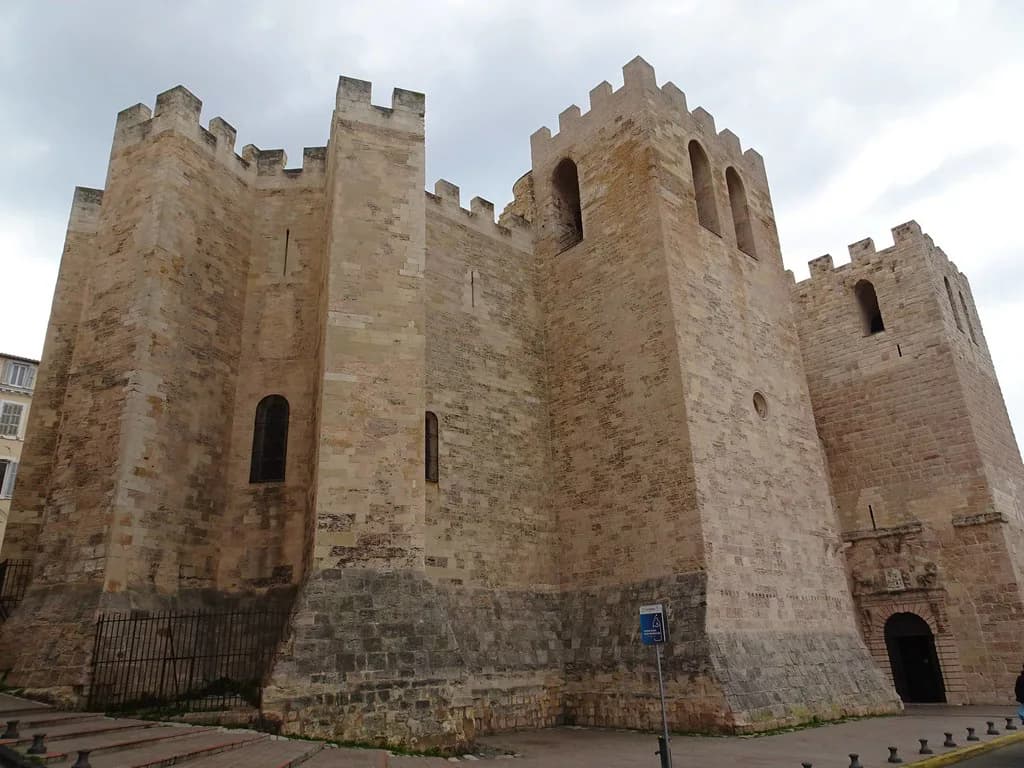
Basilique Notre-Dame de la Garde, the golden Virgin watching over the city, sits on the highest hill and gives a 360-degree view over the port, the islands and the mountains behind. It is free to enter and open year-round, and the interior's mosaics make it worth visiting even in bad weather.
Save the climb or the funicular ride for a day when the mistral has cleared the air; the view is the point, and a grey day wastes it. Once at the top, the basilica provides shelter and a place to warm up before descending.
The Calanques and the Corniche in the Off-Season
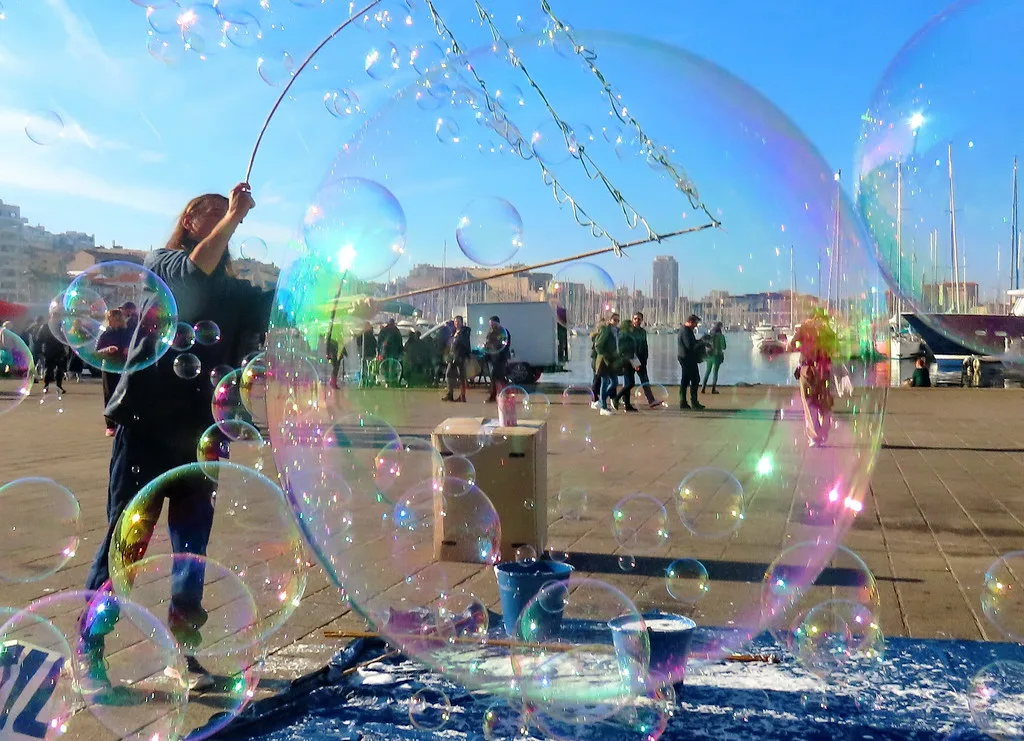
The Corniche Kennedy, a three-kilometre panoramic boulevard, is a fine winter walk: fewer people, dramatic light, and the sea doing its thing below. It connects the city's beaches and the Vallon des Auffes, and the winter crowds are a fraction of summer's.
The Calanques are a cold-season playground for hikers, with far fewer visitors than in summer and comfortable walking temperatures when the sun is out. The winter light there is a draw in itself, but check conditions and closures before setting out, since access can vary with wind and fire risk rules.
Swimming is off the table for most people in winter; the beaches are for walking and looking, not for lying on. Consider an indoor pool if you want to swim, and leave the beach towels behind.
Food and Drink in Winter: Bouillabaisse and Market Mornings
Bouillabaisse, Marseille's signature fish stew, is served in two courses — soup first, then the fish — and it is at its most appealing in cold weather. Restaurants such as Chez Michel, near the Plage des Catalans, are known for it; reserve ahead, and expect to confirm the day's catch and pricing directly with the restaurant.
Mornings at the Quai des Belges fish market show what the boats brought in, and the surrounding cafés offer a warm place to start the day. Local specialties also include panisse, tapenade and pastis, best explored on a market or food tour.
Day Trips That Work in Winter
Aix-en-Provence is a straightforward winter day trip, with its Cours Mirabeau, fountains and markets still active even when the plane trees are bare. Trains and buses make the trip easy, and the city's compact center suits a cold day.
For a longer trip, Annecy in winter offers lake views and alpine air, though it is better treated as its own destination than a day trip from Marseille. Within the region, Avignon and Arles are also manageable winter excursions by train.
Crowds, Prices and the Trade-Offs
Winter is Marseille's low season, and the trade-off is clear: fewer crowds, easier restaurant bookings and lower accommodation prices, in exchange for short daylight, possible rain and cold wind. Christmas and New Year weeks break that pattern, with higher demand and higher prices, so book ahead for those periods.
The best-value window is usually mid-January to early March, outside the holidays and before Holy Week. Travelers wanting warmth, swimming and long café evenings should avoid December and January; those wanting a quiet city and easier access to the museums will find winter rewarding.
Who Should Visit Marseille in Winter, and When to Come
Marseille in winter rewards the traveler who wants a real Mediterranean port city without summer's crowds: mild days, museums, the santon fair and the morning fish market. January is the coldest and quietest; March is the mildest, but Holy Week 21–28 March 2027 is busy. Choose mid-January to early March for the best balance of price and access.
Explore more Marseille winter guides
Frequently Asked Questions
What is the coldest month in Marseille?
January is typically the coldest month, with average highs around 12 °C (54 °F) and lows near 5 °C (42 °F). Snowfall is unusual in the city but not impossible, and the mistral can make the day feel colder than the temperature suggests.
Is Marseille worth visiting in winter?
Yes, for travelers who want a quieter Mediterranean city with museums, food and the santon fair, and who accept short daylight and cold wind. It is not the season for swimming, beach days or guaranteed sunshine.
What is the weather like in Marseille in December?
December typically brings highs near 13 °C (56 °F) and lows around 6 °C (44 °F), with short days and possible rain. The mistral can make afternoons feel raw along the waterfront.
Does it snow in Marseille?
Snowfall in Marseille is unusual, but it can occasionally occur. Winter is dominated by rain and wind rather than snow, and the city rarely sees sustained cold.
How many days do I need in Marseille in winter?
Three full days cover the Old Port, MuCEM and Fort Saint-Jean, Notre-Dame de la Garde and a walk through Le Panier. Add a day for a museum afternoon at Palais Longchamp or a day trip to Aix-en-Provence.
Sources
Winter travel notes
Optional updates when we add or revise winter guides.
You might also like
Continue reading
More guides you'll find useful