Amalfi in December: Winter Weather, Openings and What to Do
Amalfi in December brings mild, wet days, short daylight and a coast that mostly shuts for the season. Here is what stays open and who should go.
On this page
December on the Amalfi Coast is a coastal landscape in hibernation: mild air, wet grey skies, shuttered seasonal businesses and streets you can walk without a crowd. It suits travelers who want the cliffs, the churches and the archaeology without the summer logistics, and who are content to build their days around rain rather than around boats.
It is a poor match for anyone expecting long lunches on terraces, beach clubs or easy hop-on ferries between the villages. The season narrows what a single day can hold, so the practical task in December is picking the right base and putting the wet-weather plan first. The wider picture of the coast in the colder months sits in the Amalfi in winter overview.
Weather in December
December is cool rather than cold, and wet rather than bright. The coast's January averages give a fair picture of the season's shape: a daytime high of roughly 15°C (59°F) and a night low near 10°C (50°F), with cloud or rain on a large share of days and around nine hours of daylight. The sea stays near 15°C (59°F), which rules the water out for most travelers.
Compare that with the summer picture and the trade is obvious: highs in the 80s Fahrenheit, packed towns and peak rates. December lands at the opposite end, with the mildest weather in Italy's south still failing to deliver reliable sunshine. Historical climate data for the coast puts winter highs in the mid-50s Fahrenheit, and October and November are the wet months, with November the rainiest at an average of six inches.
Treat every figure as a long-term average, not a forecast: a December week can serve three luminous days followed by a soaking one. Daylight is the constraint people underestimate, because the sun sets early enough that an ambitious two-town day collapses into one town and a long lunch. Plan one anchor sight per day and leave the rest optional.
Rain and the SS163 Coastal Road
Heavy rain on this coast is not just an inconvenience for walkers. The SS163 Amalfitana, the two-lane road that threads the towns together, is exposed to landslides and blockages after sustained downpours, and closures can last hours or, in bad cases, days. That makes the bus-and-drive plan fragile in a way the summer visitor never experiences.
Build slack into any day that depends on the road: keep a wet-weather alternative on the same side of the coast rather than across it. If you are based in Sorrento, favor Naples and Pompeii on a stormy day over a cross-peninsula run to Ravello. Local bus operators and the road authority publish disruptions as they happen, so a morning look at their channels is worth more than a fixed itinerary.
What Is Open in December
The season turns on a specific hinge. Through the Christmas and New Year holidays some businesses operate for the festive period, and after the holidays many close for the season, reopening around Easter. Positano empties hardest, while Amalfi, the largest of the coast towns, and Sorrento keep more shops and restaurants functioning through the winter.
In practice that means your base decides your December. Sorrento is the liveliest winter town on this stretch and gives you the Circumvesuviana train line to Pompeii, Herculaneum and Naples; Amalfi keeps enough open to be comfortable for a night or two. Choosing Positano for a week in December risks long evenings with little open around you.
Book flexible rates and confirm directly with the property you are considering, since individual hotels and restaurants set their own winter dates and a town-level rule does not describe every kitchen. Winter ferry service and its coastal route closures are the other thing to plan around.
Ferries and Getting Around
Winter ferry service is the single most consequential transport fact for December. Regular sailings continue on the Capri–Sorrento–Naples triangle, while the routes that link Positano and Amalfi along the coast do not operate in winter. Anyone imagining a boat-hopping December day between the villages needs a different plan.
That pushes you onto the road: SITA buses along the SS163, the Circumvesuviana railway on the Sorrento peninsula, and the Naples–Sorrento connection by train or transfer. The train is the reliable winter spine because it is unaffected by coastal road closures, which is a strong argument for basing yourself near a station.
Schedules shift with the season, so treat a summer timetable as fiction. Ferry operators publish winter timetables before the season and adjust for weather, and a sailing can be cancelled on the day for swell. Keep one road-based fallback for any boat you book.
Christmas and New Year on the Coast
Check the calendar for your own dates, since school holidays and the days around Christmas and New Year stack up as long weekends. That window is when the coast is at its most animated in winter: some hotels and restaurants open specifically for the festive period, and Neapolitan families return to the cities.
Expect the liveliest atmosphere inland and in the towns rather than on the cliffs. Naples and Sorrento carry the season with presepi (nativity scenes), lights and church services, while the coast villages stay quiet. A short Christmas-market stop fits naturally into a Naples day, but it is not the reason to come.
After Epiphany on 6 January, the festive opening closes and the coast settles into its deepest quiet. If your dates fall in the first week of January, you catch the tail of the holiday; later in the month you get the shutdown, which the Positano.com guide to the coast in January describes town by town.
Things to Do in Wet Weather
The strongest December days are archaeological and urban rather than coastal. Pompeii and Herculaneum are far more pleasant in cool, quiet conditions than under the summer sun, and the museums of Naples absorb a rainy afternoon without difficulty. This is the season to give the Roman sites real time.
Mount Vesuvius is a different calculation: the summit path is exposed to wind, cloud and ice, and the crater rim can vanish into weather. Go on a clear, calm morning or not at all, and never schedule it as the fixed point of a short trip. Herculaneum, down at sea level and under cover for much of its length, is the safer bet on a doubtful day.
Indoor food experiences fill the gaps well: a cooking class, a cellar visit, a long lunch of the kind the coast does best in winter. Sorrento's shops hold winter sales in this period, which gives a wet afternoon a purpose.
Amalfi Town and Ravello in December
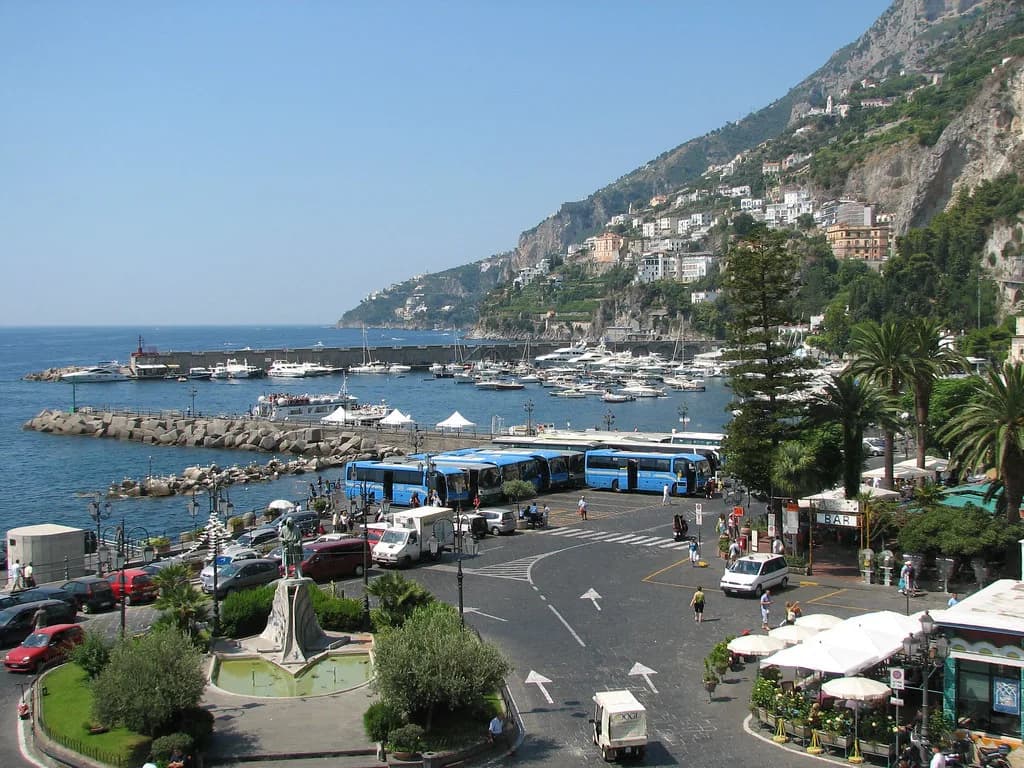
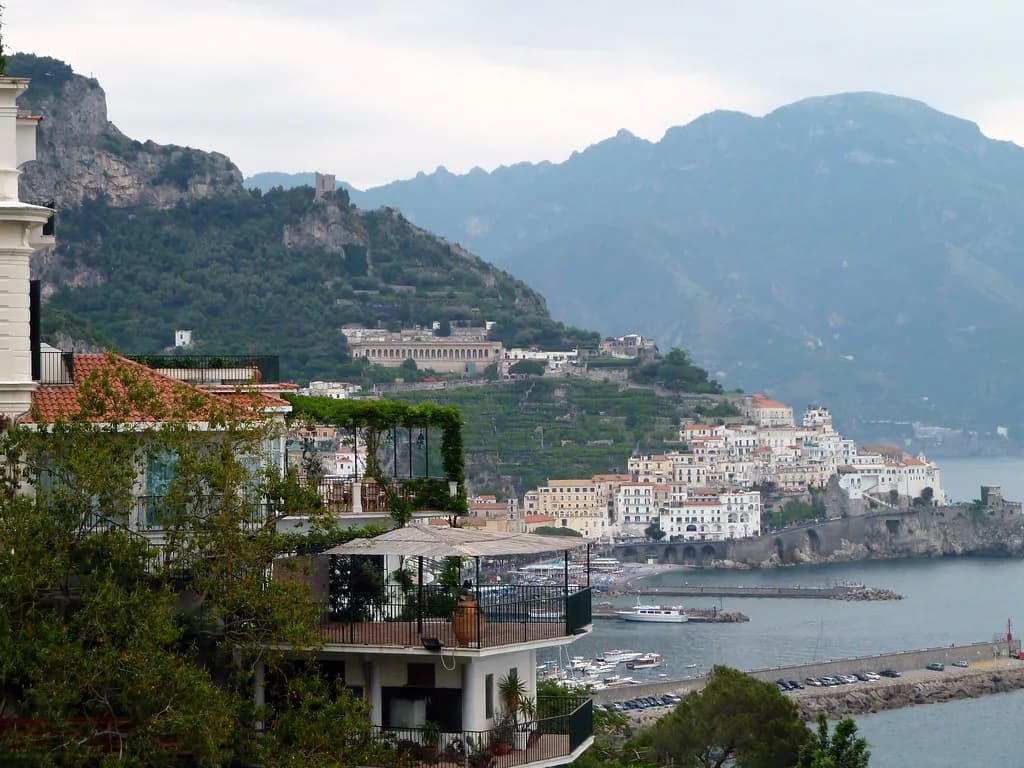
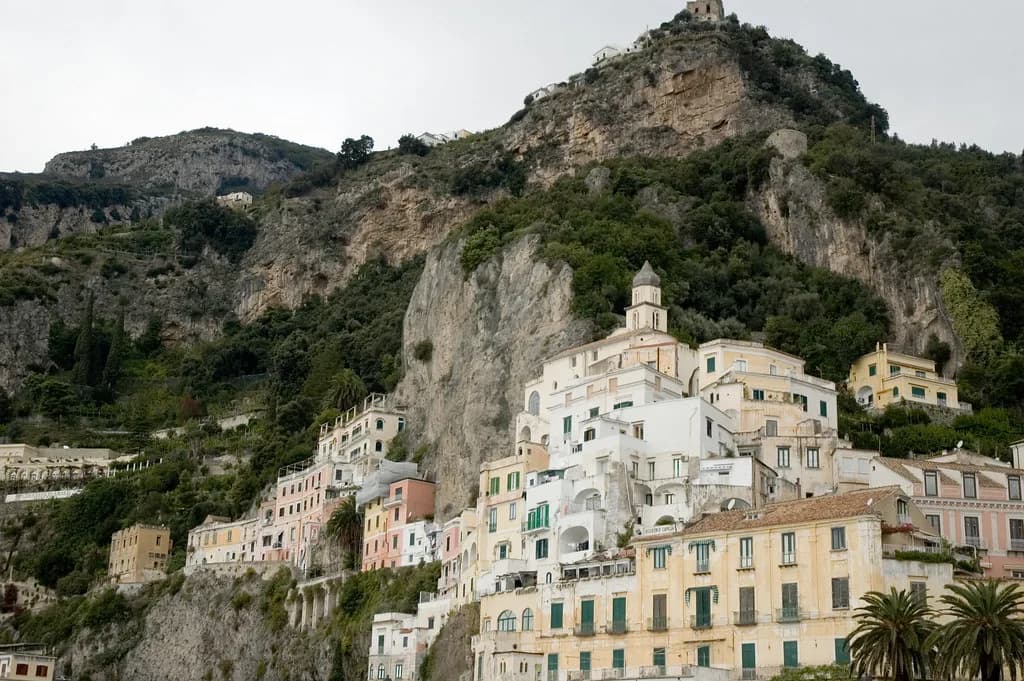
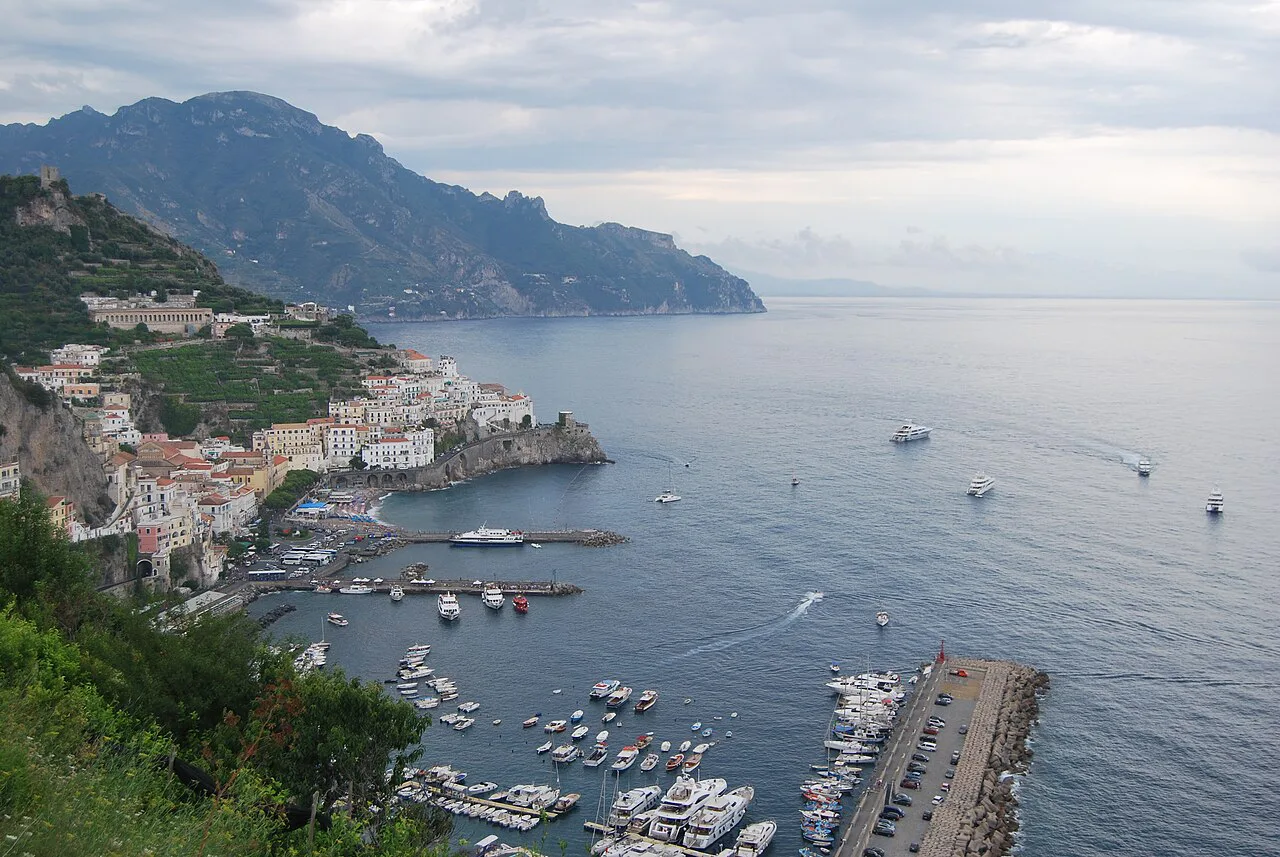
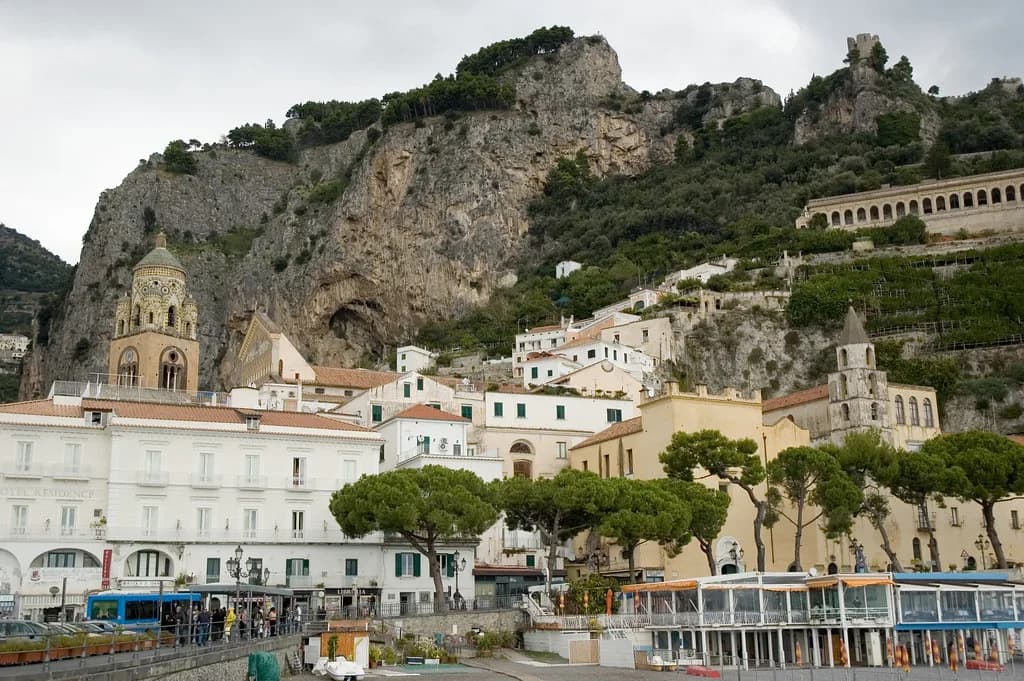
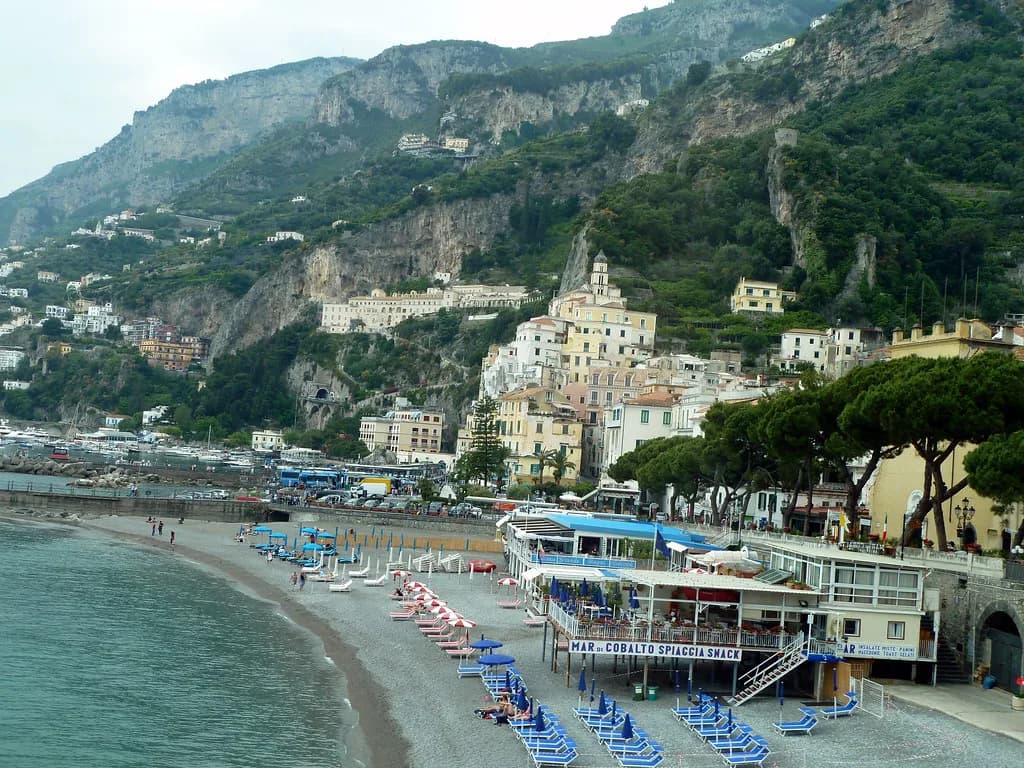
Amalfi town in winter is a working small town rather than a resort. The Arab-Norman Amalfi Cathedral and its cloister are the anchor, the paper museums give you an indoor hour, and the seafront and pier are worth a walk for the empty view back at the cliffs.
Ravello sits high above and is colder and mistier than the shore, with its two famous villas gardens at their quietest. The reward is viewpoint after viewpoint in near solitude; the cost is that a wet, windy day up there is bleak and the terraces lose their point. Pick Ravello on a bright, still morning, not a squally one.
Walking is the real pleasure of the season, whether a stretch of the coastal path between villages or the stairs and alleys above Amalfi. Check path conditions with the local tourist office, since rain can close or slick the trails. Snow is rare at sea level but does dust the high ridges, which is the cue to stay low.
Day Trips That Work in December
Naples is the most rewarding winter day trip: a dense historic center, world-class archaeology, pizza, and enough indoor choice to survive any weather. Sorrento works as a half-day of shops, churches and sea views. Both are reachable by rail, which matters when the coast road is misbehaving.
Capri in winter has a wild, empty beauty, with far fewer visitors and a stark landscape. Expect a reduced day: some shops and seasonal businesses close, and the boats are weather-dependent, so a calm, clear day is the only day worth committing to.
Pompeii and Herculaneum are day trips rather than afternoons, and pairing either with Vesuvius is possible only on a settled day. Sorrento's winter sales and its trattorias make a useful filler between the big sites, and the Circumvesuviana links the lot.
Crowds, Prices and the Trade-offs
The advantages are real. Room rates sit at their lowest of the year, queues disappear, and public transport is uncrowded, so Pompeii and the coast towns can be seen at a pace summer never allows. Some travelers find the empty cliffside hotels a better value than a peak-season splurge.
The costs are equally real: many cafes and restaurants close for the season, daylight is short, rain is frequent, and the coastal road can fail. You will eat in fewer places than you planned and see some towns at their least alive. The trade is between atmosphere and access.
Watch the calendar for a quieter version of the same trip: the Amalfi in March window brings longer days, reopening businesses and better walking, while February holds Carnival on 9 February 2027 and still-short days. If you are weighing a different southern destination for the same off-season decision, Italy in December covers how the rest of the country handles the month. August and July are the months to avoid for heat and crowds; October and November appeal if you want warmth with rain.
Who December Suits
December rewards travelers who treat the Amalfi Coast as a base for archaeology and city days rather than as a beach or boat destination. If you want Pompeii without heat, Naples museums, a quiet cathedral town and low rates, and you can accept wet days and early darkness, this is a genuinely good month.
It suits slow travelers, off-season walkers and anyone pairing the coast with Naples. It does not suit first-timers chasing the postcard summer image, honeymooners expecting terraces and sunsets, or families who need a pool and a beach. For that version of the coast, aim for late spring, when restaurants reopen and the boats start again.
Plan Your December Trip
Decide your base first: Sorrento for winter life and rail access, Amalfi for a functioning coast town, Positano only for a couple of quiet nights. Build the itinerary around one anchor sight a day, put Pompeii or Herculaneum on the wettest day and the coast on the clearest, and keep a road-closure fallback ready.
Then fix the transport facts: no ferry along the coast, trains to the archaeological sites, and weather-dependent boats to Capri. Book flexible accommodation and confirm winter opening directly with the hotel or restaurant, since each sets its own dates. Done that way, December on this coast is quiet, cheap and strange in the best sense.
Explore more Amalfi winter guides
Frequently Asked Questions
Is December a good time to visit the Amalfi Coast?
It depends on what you want. December delivers mild but wet weather, short daylight, low room rates and empty streets, and it is excellent for Pompeii, Herculaneum, Vesuvius on a clear day and the museums of Naples. It disappoints anyone expecting beach clubs, terrace lunches and easy ferries. If you want the coast itself in full working order, spring is the better choice.
What is the weather like in Amalfi in December?
Typical conditions are a daytime high near 15°C (59°F), a night low around 10°C (50°F), frequent cloud and rain, sea temperature near 15°C (59°F) and about nine hours of daylight. Treat these as long-term averages: a given week can be bright and dry or consistently wet.
Are restaurants and hotels open on the Amalfi Coast in December?
Some operate through the Christmas and New Year holidays, and many then close for the season until around Easter. Positano shuts down most heavily, while Amalfi and Sorrento keep more places running. Individual businesses set their own winter dates, so check the specific hotel or restaurant's dates before booking around it.
Can you take a ferry between Amalfi and Positano in December?
No. The routes linking Positano and Amalfi do not run in winter. Regular sailings continue on the Capri, Sorrento and Naples triangle, and those crossings depend on sea conditions. Plan on buses, trains and transfers for the coastal towns.
Is it warm enough to swim in Amalfi in December?
For most people, no. The sea sits around 15°C (59°F), which is cold enough to be uncomfortable and unsafe without proper gear and experience. Treat December as a walking, sightseeing and eating month rather than a swimming one.
How many hours of daylight are there in Amalfi in December?
Around nine hours on average, with early sunsets. That limits a day to one main sight plus a meal and a short walk, so plan fewer stops than you would in summer and keep an indoor option for the late afternoon.
What should you do on a rainy day?
Head for the archaeology and the cities: Pompeii and Herculaneum, the museums of Naples, or a cooking class and long lunch on the coast. Avoid committing to Vesuvius or a high viewpoint in poor weather, and skip any plan that depends on the SS163 road when heavy rain has been falling.
Sources
Winter travel notes
Optional updates when we add or revise winter guides.
You might also like
Continue reading
More guides you'll find useful