Bologna in Winter: What November to March Is Really Like
Bologna in winter brings cold, damp days, short daylight and quieter piazzas. See typical temperatures, what stays open and who the season suits.
On this page
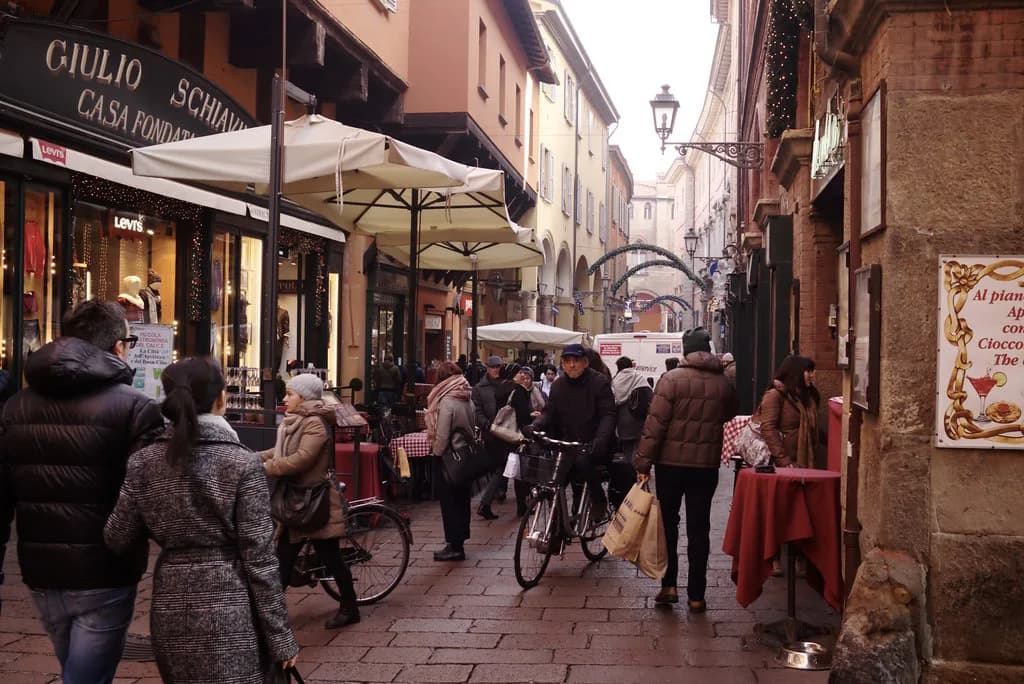
Bologna in winter is a working Italian city under grey skies: cold mornings, damp air, fog on some days and a historic center that empties of tourists after the Christmas period. Days are short and rain is a real planning factor, so the trip works best for people who like museums, food shops, wine bars and long walks under cover rather than long daylight hours outdoors.
The season has two distinct halves. December brings holiday lights, fuller restaurants and higher room rates around the festive weeks, while January and February are notably quieter and cheaper apart from Carnival. March slowly lengthens the days and softens the cold, but rain stays common. The city suits couples and food-focused travelers; it is a poor fit for anyone chasing winter sunshine or a mountain holiday.
Bologna in Winter: What the Season Feels Like
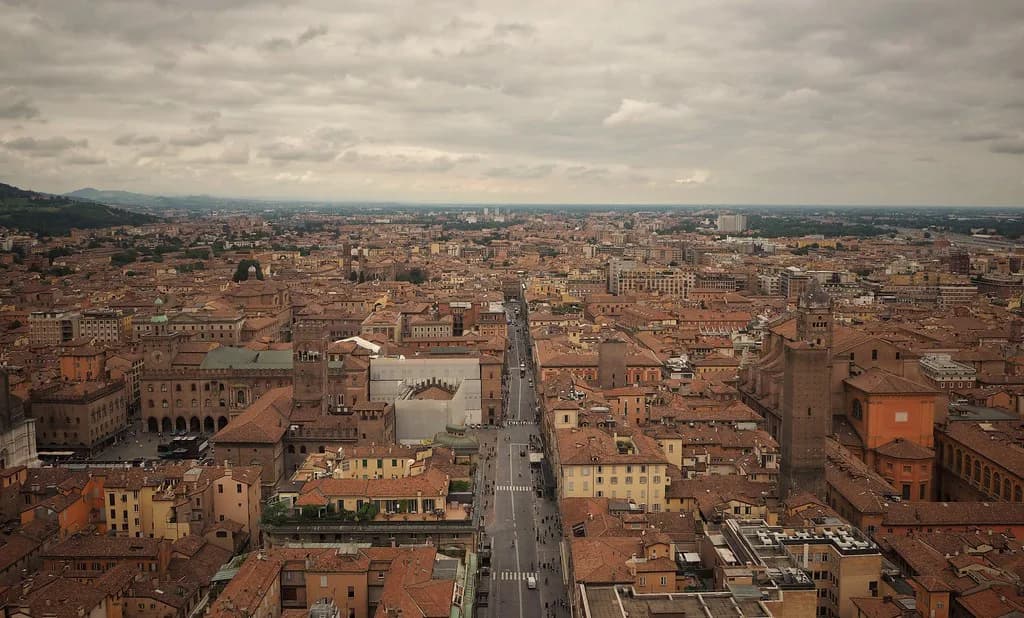
Bologna sits in the Po Valley of Emilia-Romagna, and the valley's winter climate is continental: cold air settles in, humidity is high and fog can linger for days. The cold feels damper than the thermometer suggests, especially in the evening, and the historic center's stone buildings hold the chill. Sunshine is limited in December and January, so plan the daylight hours around whatever outdoor time matters most to you.
Temperatures vary considerably across the season, so the practical approach is to treat November and March as mild-ish and December through February as genuinely cold. Long-term averages for the city are published by Italian meteorological services and by climate databases, and they are the right figures to plan around rather than any single forecast. Travelers who have visited Bologna in December report that snow is possible but not guaranteed, and that the porticoed streets protect you from both rain and cold.
Weather in December, January and February
December is the coldest of the pre-holiday months in spirit rather than the calendar: lights go up, the Christmas market fills Piazza Maggiore and the days are at their shortest around the solstice. Expect cold mornings, frequent cloud and a real chance of rain or drizzle; snow is possible in cold snaps but uncommon in the plain. Evening temperatures drop fast after sunset, so plan indoor stops between outdoor walks.
In January the city settles into its quietest stretch, with cold, damp weather and occasional fog. This is the month for museums, long lunches and enoteca evenings rather than sightseeing marathons, and the rewards are shorter queues and easier restaurant tables. For a day-by-day look at what the month feels like, see the guide to Bologna in January, which covers the cold and the indoor options together.
February stays cold but the atmosphere changes: Carnival arrives, and in 2027 Carnival Tuesday falls on 9 February with Ash Wednesday on 10 February. Expect costumes, special menus and busier evenings in the week before Lent, followed by a noticeably calmer city once Carnival ends. Piazza Maggiore and the streets around it are the natural focus for the celebrations, and a February visit can combine the quiet season with a genuine local festival.
Weather in November and March
November is the wettest-feeling month of the winter run-up in Bologna, with grey skies, rain and the first genuinely cold evenings. It is also one of the cheapest and quietest times to see the city, and the food season is excellent: truffles, chestnuts and new olive oil appear on menus. Pack for rain and expect to use the porticoes constantly.
March is a transition month. The clocks go forward on 28 March 2027, evenings lengthen noticeably and the first mild days arrive, but cold snaps and rain remain common and the weather is genuinely unpredictable. Early March still feels like winter; late March can feel like spring. Holy Week falls 21–28 March 2027 and Easter Sunday is 28 March, which brings extra visitors and higher prices around the holiday.
Bologna's Porticoes in Winter
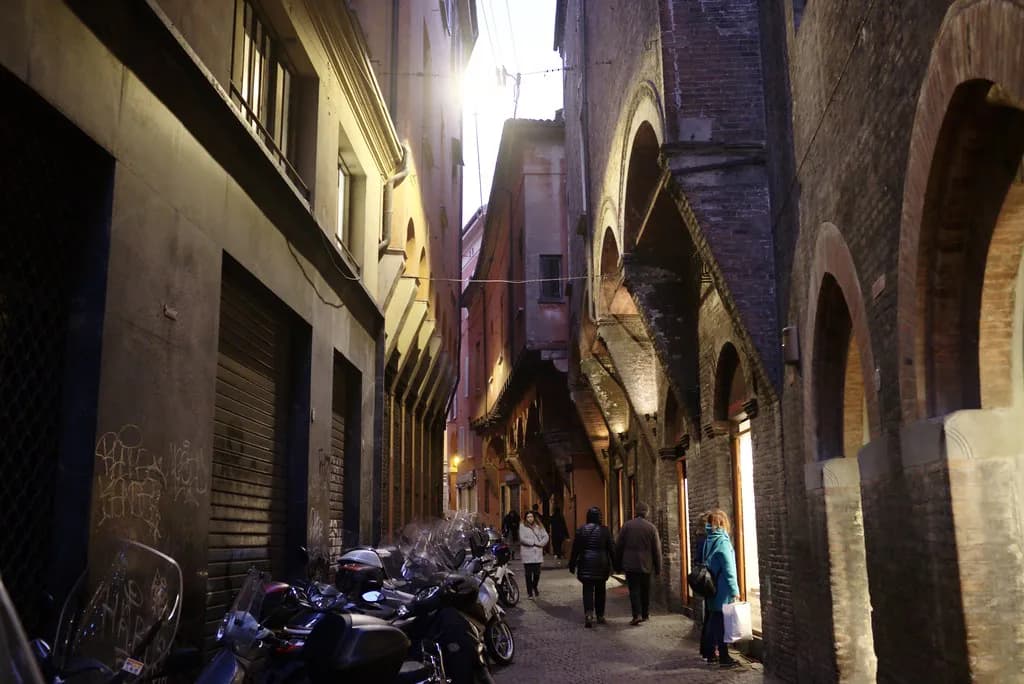
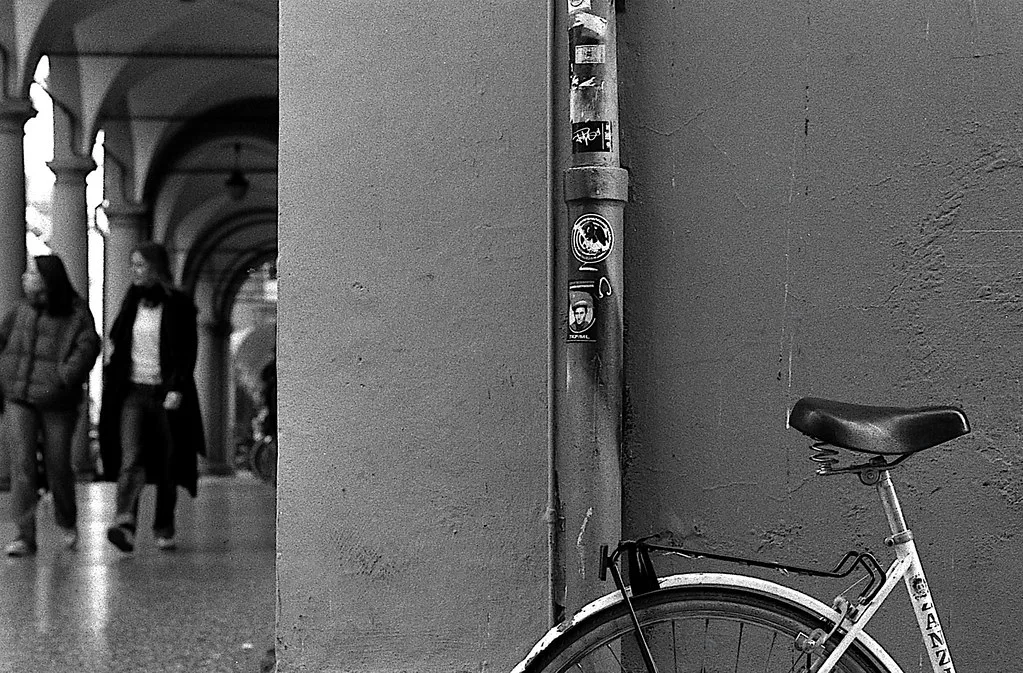
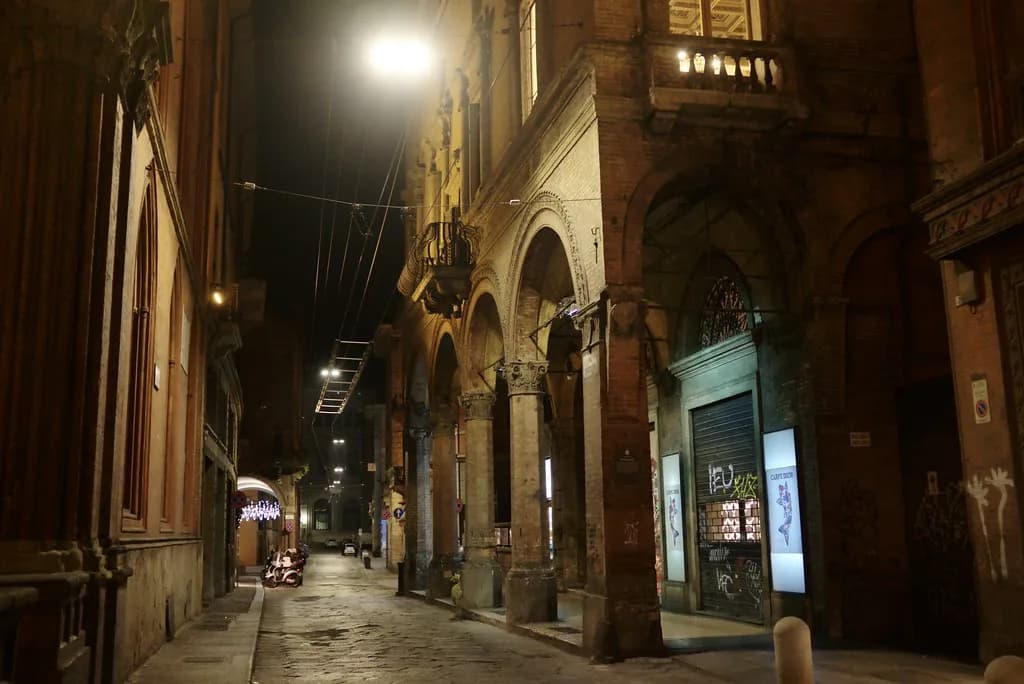
Bologna's UNESCO-listed porticoes are the single best reason the city works in cold, wet weather. Tens of kilometres of covered walkways run through the historic center and out toward San Luca, so you can cross much of the city without ever being fully exposed to rain. Locals use them year-round; in winter they turn a miserable day into a walkable one.
The classic uphill route is the portico leading to the Sanctuary of San Luca on the hill southwest of the center, a long climb under cover that rewards you with views over the city when the air is clear. In winter, check the light before setting out: the walk takes a couple of hours at an easy pace and you want to finish before dusk. On foggy days, treat the climb as exercise rather than a viewpoint.
Things to Do in Bologna in Winter
Build your days around indoor anchors: the city's archaeology and architecture museums, the churches of the historic center, and the food shops between Piazza Nettuno and Le due torri where grazing replaces a formal lunch. The City Museum's architecture exhibits get consistent praise from visitors who used them as a rainy-day stop. Walking tours of the hidden canals also work in winter, since the point is exploration rather than views.
The Basilica of San Petronio on Piazza Maggiore and Bologna Cathedral are both free or inexpensive stops that fill an hour of cold weather, and the university quarter's streets give you a sense of the city's everyday life away from the tourist core. Because the center is compact, you can string together three or four indoor stops in a single short daylight window without rushing.
For a change of pace, head to FICO Eataly World on the city's edge, an indoor food park that suits a cold or wet afternoon. It is a commercial attraction rather than a market, so go with that expectation and use it as an indoor activity rather than a substitute for the historic center. In March, once the days lengthen, outdoor time becomes realistic again and the city starts to open up.
Museums and Churches That Suit Cold Days
Bologna's museum scene is modest in scale but strong on quality, and that suits winter: you can see a major collection in two hours and be back out before the cold bites. The Museo Civico Archeologico holds one of Italy's best Etruscan collections and sits right by Piazza Maggiore, so it pairs easily with a church visit and a coffee. Many smaller museums keep reduced winter hours, so check the specific venue's website before you build a day around it.
Churches are the free, flexible option: San Petronio, San Domenico and the complex of Santo Stefano are all in the center and can be visited in short bursts when you need to warm up. Santo Stefano in particular is worth an unhurried hour. Remember that Italian churches enforce dress codes even in winter, and midday closures are common, so a mid-morning or mid-afternoon visit is safest.
Food and Wine in Winter
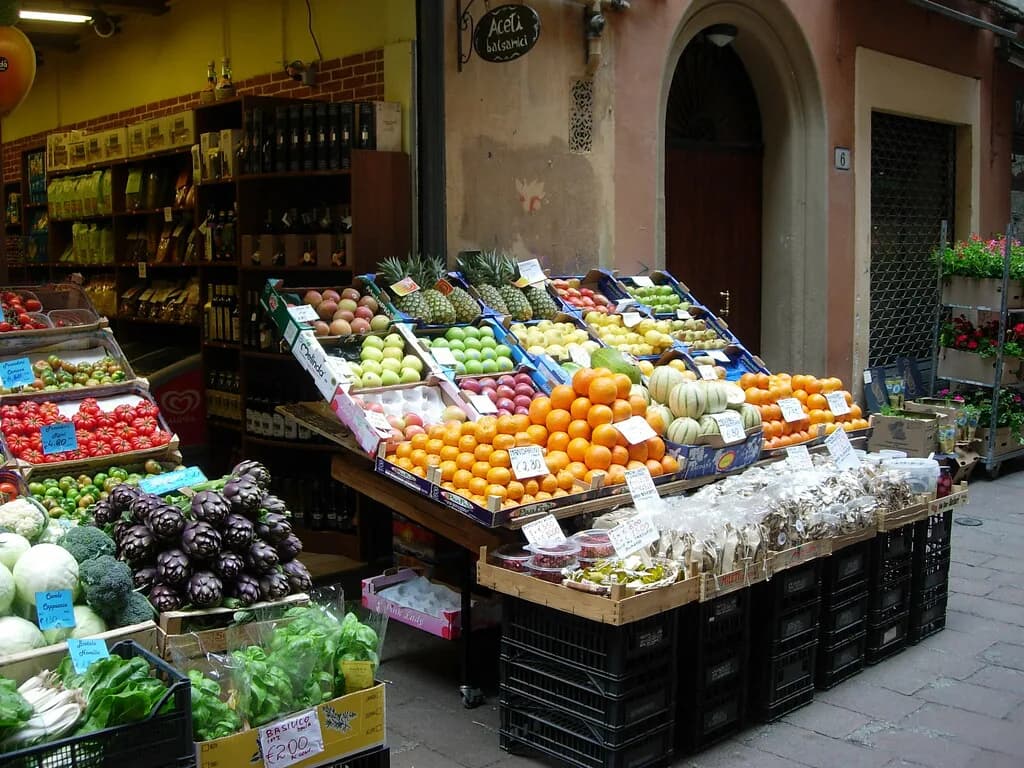
Winter is arguably Bologna's best food season. The city's trattorias serve tortellini in broth, tagliatelle al ragù and rich braised meats, and the enoteca culture means you can drink well by the glass without committing to a full meal. Visitors consistently rate the wine-by-the-glass scene around the University District, and food-shop grazing between Piazza Nettuno and Le due torri is often more satisfying than a formal restaurant lunch.
Restaurant reservations are worth making for weekend evenings in December and during Carnival, when locals fill the best tables. Winter is also a good time for day trips to balsamic vinegar producers and wineries in the surrounding countryside, since tastings are indoors and the season is quiet. Book tastings ahead: small producers work by appointment and often have limited winter hours.
Christmas and New Year in Bologna
Christmas in Bologna centers on Piazza Maggiore, where the seasonal market and lights fill the square through December. Christmas Day 2026 is a Friday and New Year's Day 2027 is a Friday, which makes for a long festive weekend and heavier demand for restaurant tables and accommodation. Beyond the market, the city's holiday calendar includes smaller community events and church concerts that are worth seeking out for a more local feel.
New Year's Eve in Bologna is a piazza affair with fireworks and crowds, followed by a quiet New Year's Day when many restaurants close. Book New Year's Eve dinner well ahead if you want a specific table, and expect some shops and museums to keep holiday hours through Epiphany on 6 January 2027, a Wednesday. For a fuller picture of the December program, the Bologna in December guide covers the seasonal highlights.
Day Trips That Work in Winter
Bologna Centrale is one of Italy's best-connected stations, and winter day trips by train are easy and reliable: Florence, Modena, Parma, Ravenna and Milan are all reachable in roughly an hour or less by high-speed or regional service. Winter is a good time for these trips because the queues at major sights are shorter, but check museum hours since some reduce them in the low season.
Florence makes the most obvious day out, with direct fast trains and a compact historic center that works in cold weather. Modena and Parma are smaller and quieter, better for food and architecture than for big museums, and Ravenna's mosaics are entirely indoors, which makes it an excellent wet-weather choice. Buy tickets in advance on Trenitalia's site for the best fares.
For a wider view of how the season plays out across the country, the Italy in winter guide sets out which regions reward a cold-weather visit. Bologna sits well as a base because the rail network lets you choose a city day when the weather turns.
What Closes or Slows Down in Winter
The historic center stays open year-round, but expect reduced hours at smaller museums, some churches closing at midday and fewer guided tours in January and February. Restaurants in the center largely stay open, though individual closures for holidays in late December and August-adjacent breaks vary by owner. Check the venue's own website rather than relying on aggregator listings, which often lag behind.
Outside the city, wineries and countryside producers often work by appointment only in winter, and some agriturismi close for the season. That is not a reason to skip the day trip, but it does mean planning tastings and rural visits in advance rather than turning up. The upside is that you get more attention and a calmer experience than in summer.
Crowds, Prices and Short Days
December is Bologna's busiest winter month, with holiday visitors pushing up hotel rates and filling restaurants around the festive period. January and February are much quieter and cheaper apart from the Carnival week in early February, when the city fills again. March picks up as the weather improves and Holy Week approaches.
The real constraint in winter is daylight. Around the solstice, sunset comes in the late afternoon, so a museum visit and a walk need to fit into a short window. That argues for planning one substantial outdoor activity per day and keeping the rest indoors, rather than trying to cover the whole city on foot in fading light.
Who Should Visit Bologna in Winter
Bologna in winter suits food and wine travelers who want long lunches, enoteca evenings and a city that feels lived-in rather than crowded. It suits museum-goers, couples and anyone who values quiet streets over beach weather. The porticoes make it unusually forgiving for a cold-weather city break, and the rail connections make it a strong base for day trips.
It is also a good choice for travelers who want a genuine Italian city in the low season without the intensity of Rome or Venice. The pace is slower, prices are lower outside December, and the food is arguably at its best. If you want a winter city break with real character and don't mind the cold, Bologna delivers.
Who Should Pick Another Month
Skip Bologna in winter if you want sunshine, warm evenings or long daylight hours for sightseeing. Sun-seekers should look at southern Italy or the Amalfi coast in winter instead, though even there the season is cool and quiet.
Skip it too if your main goal is mountains and skiing: Bologna is a city break, not a ski base, though the Dolomites are reachable by train for a longer trip. And if you want guaranteed snow, plan around the question of does it snow in Bologna and choose a destination where snowfall is reliable.
Travelers who want a coastal winter should consider Liguria instead, where Genoa in winter offers a milder maritime climate and a dense historic center to explore on foot. Bologna rewards a specific kind of traveler: one who likes food, wine, architecture and a city that keeps working through the cold months.
Getting Around Bologna in Winter
Bologna is a walking city, and the porticoes let you cross much of the center under cover. The historic core is compact enough that you rarely need public transport, though buses serve the station and the outer neighborhoods. Wear shoes with grip: wet portico floors and cobblestones are slippery.
If you arrive by car, note that the center has a restricted traffic zone and parking is limited, so most visitors are better off arriving by train. From Bologna Centrale it is a short walk or bus ride into the center. Taxis and ride-hailing are available but scarce at peak times, especially on weekend evenings in December.
Plan Your Winter Trip to Bologna
Bologna in winter is a cold, damp, frequently grey city that rewards travelers who plan around the weather rather than fighting it. Build your days around the porticoes, museums, churches and food shops, keep one outdoor activity for the brightest hours, and let the enoteca evenings do the rest.
Choose December for atmosphere and lights, January for quiet and value, February for Carnival, and March for lengthening days and the run into spring. Whichever you pick, book restaurant tables for holiday periods and check museum hours before you go, because winter schedules in Bologna are shorter than summer ones.
Explore more Bologna winter guides
Frequently Asked Questions
Is Bologna worth visiting in winter?
Yes, if you want food, wine, museums and quiet streets rather than sunshine. The porticoes keep the historic center walkable in rain and cold, and January and February are notably quieter and cheaper than summer. December is busier and more festive, while March brings longer days.
How cold is Bologna in January?
January is Bologna's coldest stretch, with cold, damp days and occasional fog in the Po Valley. Published long-term climate averages give the typical highs and lows; check those figures rather than relying on a single forecast, and expect evening temperatures to drop quickly after sunset.
Does it snow in Bologna?
Snow is possible in Bologna in winter but not guaranteed. Cold snaps can bring snow to the city, though the plain around Bologna sees less than the surrounding hills. The historic center copes well with snow, and the porticoes stay usable. Plan for cold and rain as more likely than snow.
What is there to do in Bologna in winter?
Focus on the porticoes for covered walks, the city's museums and churches for cold days, the food shops between Piazza Nettuno and Le due torri, and the enoteca scene for evenings. Day trips to Florence, Modena, Parma and Ravenna work well by train, and in February Carnival adds a local festival.
What is Christmas like in Bologna?
Christmas centers on Piazza Maggiore, where the seasonal market and lights fill the square through December. Christmas Day 2026 is a Friday and New Year's Day 2027 is a Friday, so expect festive weekends to be busy. Book restaurant tables ahead and expect some closures around Epiphany on 6 January.
Are restaurants open in Bologna in winter?
Most restaurants in the historic center stay open through winter, though individual owners take holidays in late December. Reservations are worth making for December weekends and Carnival. Smaller countryside producers and wineries often work by appointment only, so plan tastings in advance.
How many hours of daylight does Bologna get in winter?
Daylight is shortest around the December solstice, when the sun sets in the late afternoon, and lengthens steadily through January and February. The clocks go forward on 28 March 2027, which makes evenings noticeably lighter from late March onward. Plan outdoor walks for the middle of the day.
Is Bologna a good base for winter day trips?
Yes. Bologna Centrale has fast connections to Florence, Modena, Parma, Ravenna and Milan, all reachable in roughly an hour or less. Winter means shorter queues at major sights, though some museums reduce hours in the low season, so check opening times before you set out.
Sources
Winter travel notes
Optional updates when we add or revise winter guides.
You might also like
Continue reading
More guides you'll find useful