Bologna in December: What to See, Eat and Expect
Bologna in December brings cold, damp days near 8–10°C, early sunsets and low-season queues. Plan around the holidays, the portico lights and tortellini in brodo.
On this page
December turns Bologna inward. The city's long porticoes become the practical way to cross town when the fog sits low, restaurant windows steam up by mid-afternoon, and the tourist pressure that fills the centre in spring thins out on ordinary weekdays. It is a month for people who would rather eat well and wander under arcades than chase long daylight hours outdoors.
The trade-offs are real: highs typically sit around 8–10°C (46–50°F), the damp cold bites harder than the number suggests, and the light is gone by about 4:45 pm. Add the public holidays on 8, 25 and 26 December and you get a month where planning around specific days matters more than in November or January, the pattern set out in the wider Bologna in winter guide.
Why December Suits Bologna
December is low season for tourism, so outside the holiday weekends you will find shorter queues at places like the Archiginnasio or the Basilica di Santo Stefano. The city gets busier from the Immacolata long weekend on 8 December, when locals start their Christmas shopping and the centre fills with people rather than tour groups.
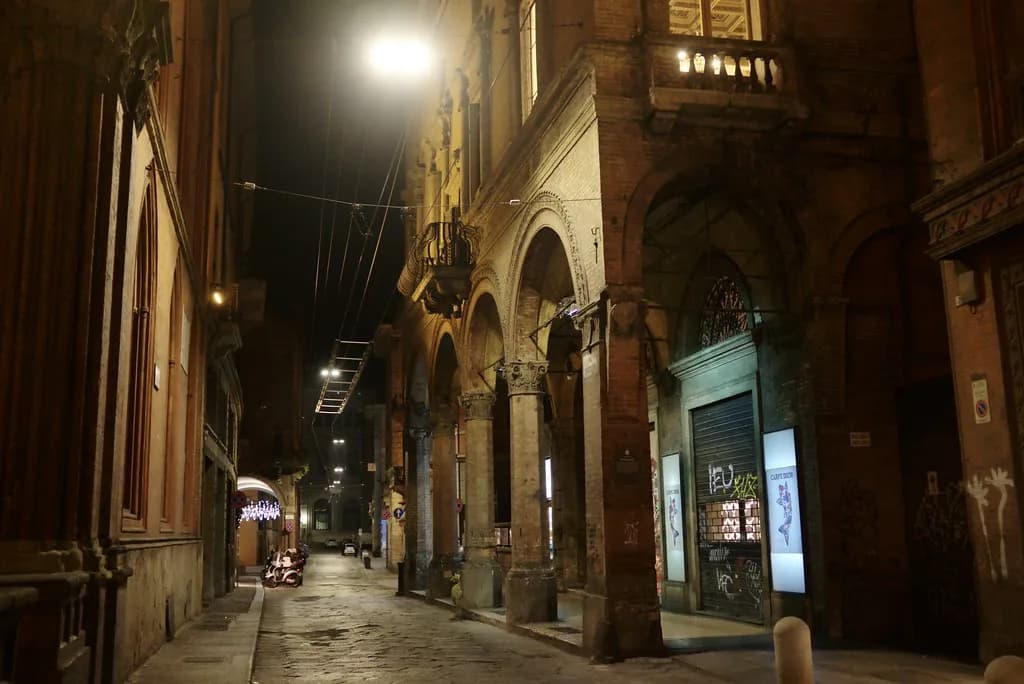
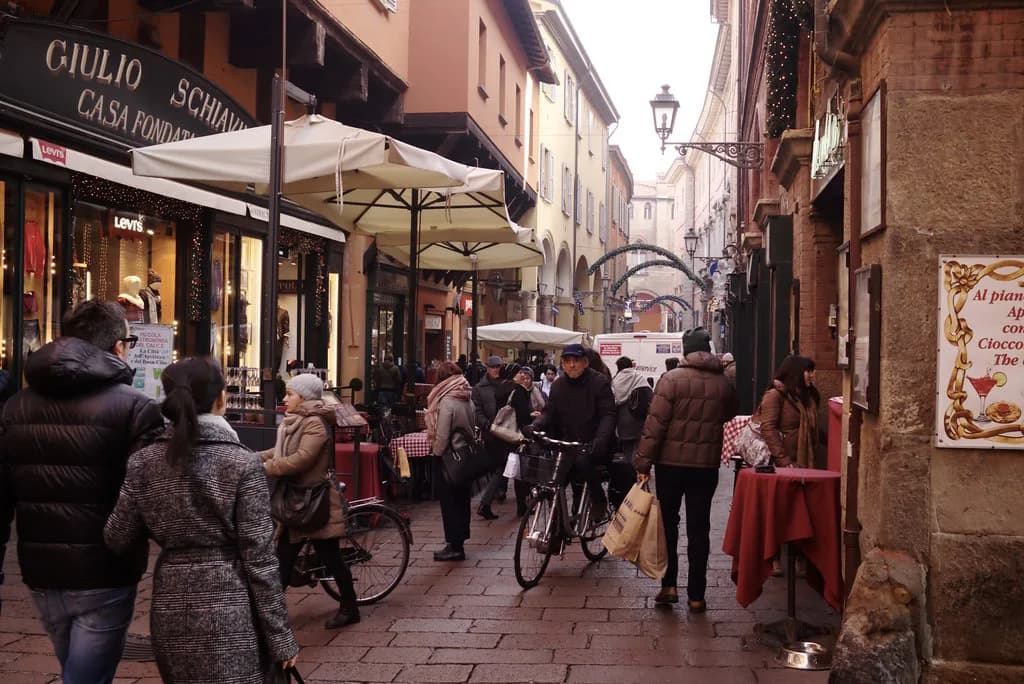
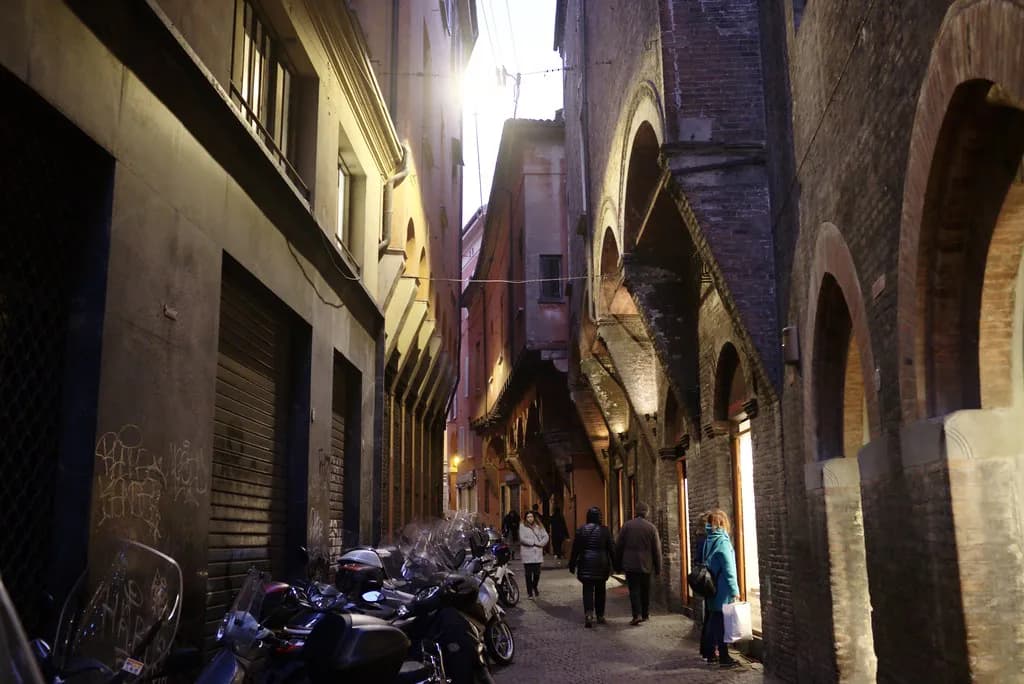
The porticoes are the reason a cold, wet month works here at all. Bologna's covered walkways let you move between Piazza Maggiore, the Quadrilatero food streets and the Two Towers without committing to a soaking, and they are at their best after dark when the lights come on. That shelter is what makes a December day feel manageable rather than grim.
Weather in December
Typical December conditions in Bologna are cold and humid, with average daytime highs around 8–10°C (46–50°F) and night temperatures dropping close to freezing. Clear, sunny days are common, but so is fog, especially in the morning and evening, and the damp makes it feel colder than the thermometer says.
The sun sets around 4:45 pm, which compresses any outdoor plan into a short window. Build the day around a late-morning walk and an indoor afternoon, then treat the dark hours as the good part: lights, aperitivo and a long dinner. Snow is occasional and rarely settles for long, so December is a rain-and-fog month rather than a white one.
Figures for the month are long-term averages, not a forecast, so a given week can run milder or sharper. If you are weighing December against the depths of the season, the cold peaks later and February patterns differ noticeably from what you get before Christmas.
Daylight and How to Plan Around It
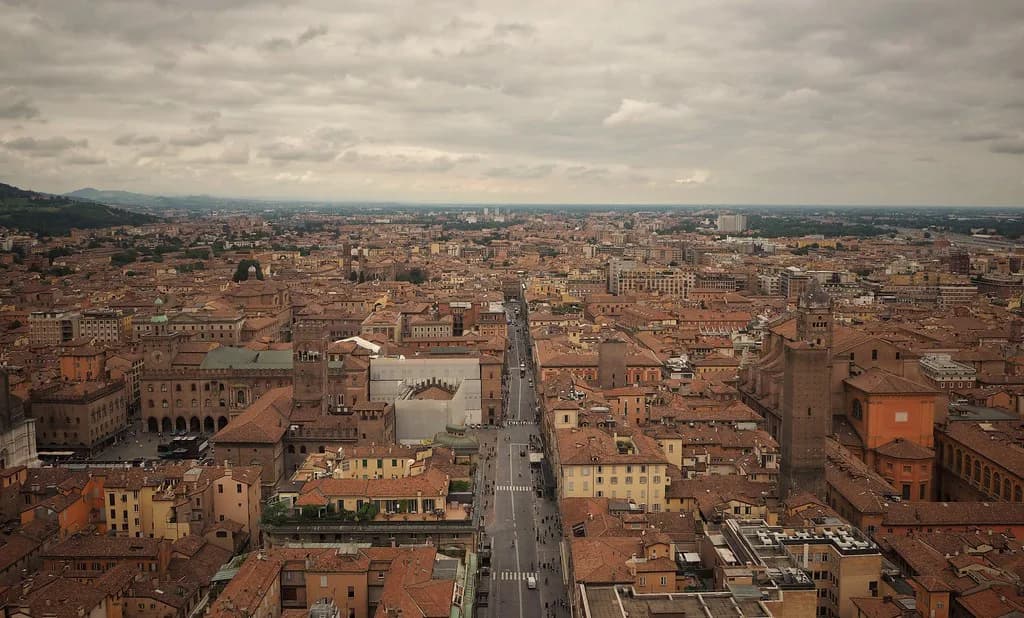
Short days change the shape of sightseeing more than the temperature does. Anything that depends on natural light — a climb up the Torre dell'Orologio for the red rooftops, a walk along the Portico di San Luca — belongs in the morning or the early afternoon, not after a long lunch.
San Luca is a serious walk up the hill under the world's longest portico, and in December the arcade can be wet and slick underfoot, with the reward of the view arriving before the light fades. Keep it as a half-day rather than an afterthought, and have a museum or a café as a fallback if the fog closes in.
The upside of early darkness is that the city's illuminated face arrives in the late afternoon rather than at night. Plan your walking route so the lights on Via D'Azeglio and Via Indipendenza fall at the end of the day, when you are heading back toward the centre for dinner.
What December Changes
Three dates matter most: 8 December (Immacolata), 25 December and 26 December (Santo Stefano) are public holidays, and many shops, markets and businesses close or keep short hours. Museums follow their own holiday schedules, so a museum day should be pinned to a specific venue's calendar rather than assumed.
On ordinary December weekends, most shops in the centre open on Sundays too, and hours lengthen along the main shopping streets such as Via Indipendenza, Via Ugo Bassi and Via Rizzoli. Buses run a holiday timetable on public holidays, so check the day's service with TPER, the local transport company, before you set out.
If you want to eat out on 24, 25, 26 or 31 December, book well ahead. The trattorias that open on those days usually serve a set holiday menu and fill with local families, so a walk-in on Christmas Eve is a gamble rather than a plan.
Christmas Lights and the Tree
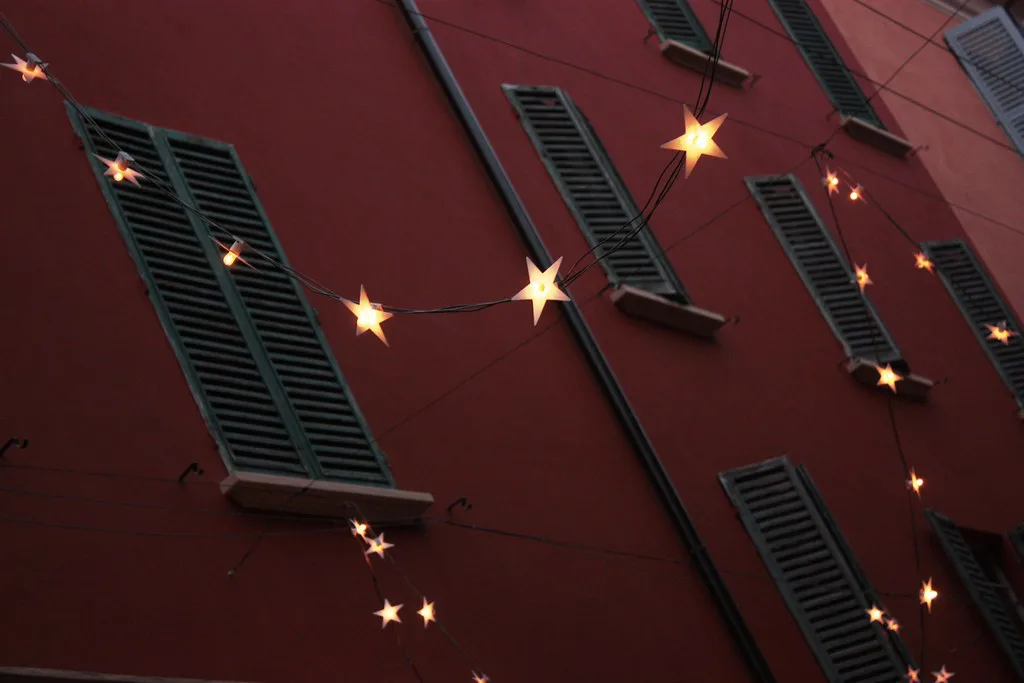
The lights are best seen on foot after dark, under the porticoes. Via D'Azeglio is known for its artist-designed illuminations, which in recent years have carried song lyrics and, in 2025, a peace theme with lines from John Lennon and children's drawings; Via Indipendenza got its own artist lights once the tram works finished.
Walk on to Piazza del Nettuno for the large Christmas tree beside the Fountain of Neptune, a white fir brought down from the Apennines. Look toward the Asinelli Tower too, which in recent years has been lit in colour on all four sides for the holidays. The themes usually switch on between late November and the Immacolata weekend.
For an evening that mixes lights with performance, the Bologna theatres programme carries opera, ballet and Christmas concerts, and the city's Festivamente schedule of holiday events and guided visits usually appears in late November. Both are worth checking for the exact dates of your stay.
Christmas Markets in Brief
Bologna has no single big market village; it has a handful of small ones within walking distance of each other. The historic Fiera di Santa Lucia fills the long portico of Santa Maria dei Servi on Strada Maggiore from 6 November to 27 December, and the markets at Piazza XX Settembre and Via Altabella run from 19–20 November to 6 January.
What Is Open in Winter
The core sightseeing circuit stays open through December. The Archiginnasio's anatomical theatre, the complex of Santo Stefano, the Museo Civico Archeologico, MAMbo and MAST all give you indoor hours, and the major museums tend to mount their biggest exhibitions over the winter rather than in summer.
The porticoes themselves never close, and they carry the city's daily life through the cold months: markets, errands and conversations happening under cover while the weather does what it likes outside. That is the version of Bologna a December visit gives you, and it is the reason a museum-and-portico traveller will be happy here.
Things to Do
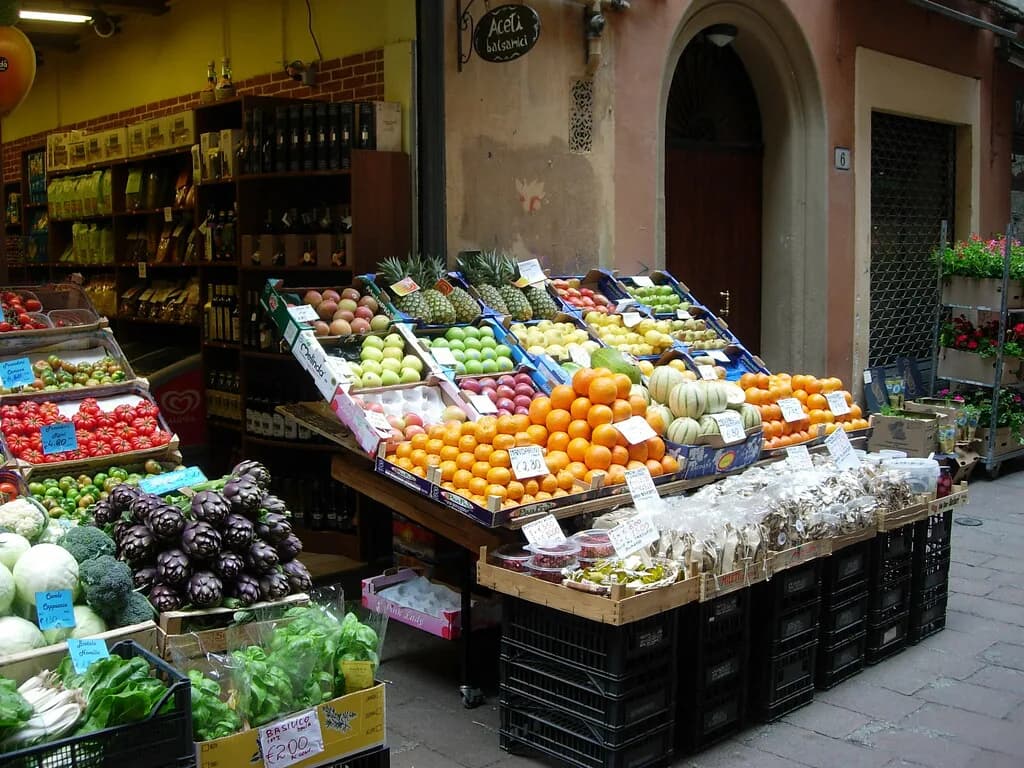
Start with the food. December is the month when tortellini in brodo belongs on every table, and the markets around the Quadrilatero — Mercato di Mezzo among them — are where the city shops for cheese, cured meat and pasta. An aperitivo in the same streets at around 6 pm is a local habit, not a tourist ritual.
For interiors, the Archiginnasio's wooden anatomical theatre and frescoed halls reward an hour, and Santo Stefano's cluster of churches gives you a quiet, cold-stone counterpoint to the busy shopping streets. Add the Torre dell'Orologio terrace for the rooftop view if the morning is clear.
If the weather turns, the city's music and theatre venues absorb an afternoon or evening comfortably. Winter is also when a slower itinerary pays off: rather than ticking off sights, plan two anchors a day and let the porticoes fill the space between them.
Food in December
Tortellini in brodo is the centrepiece of Christmas lunch in Bologna, and December is when it tastes most inevitable. The broth comes from bollito misto, a mixed boiled meat platter served as the second course with salsa verde, so the two dishes are really one long meal.
For sweets, look for certosino, the dense dark Christmas cake made with honey, almonds, candied fruit, chocolate and spices, along with pinza and the torrone and croccante sold at the Santa Lucia stalls. Panettone is everywhere too, though it belongs to all of Italy rather than to Bologna.
Restaurants to keep in mind include the osterias around Piazza Santo Stefano and the trattorias near the Two Towers, where the menu changes with the season and queues form at prime lunch. Book for the holiday dates and eat earlier or later on ordinary days to avoid the crush.
Christmas Eve, Christmas Day and Santo Stefano
Christmas Day 2026 falls on Friday 25 December, with Santo Stefano on Saturday 26 December, so the two quietest days land back to back. Many shops, markets and businesses close or run reduced hours, and restaurants that do open tend to serve a set holiday menu that fills up weeks in advance.
Treat 24, 25 and 26 December as days to plan deliberately: one booked meal, one indoor sight, and no expectation of shopping. The same applies on 1 and 6 January, and Epiphany on Wednesday 6 January 2027 brings another holiday and the Fiera dell'Epifania stalls between Via Indipendenza, Via Rizzoli and Via Ugo Bassi.
New Year's Eve and the Start of January
New Year's Eve in Bologna centres on Piazza Maggiore and the traditional burning of the Vecchione at midnight, a local celebration that draws a crowd without the scale of the bigger Italian cities. Book dinner before the square fills, and expect a cold, lively night under the porticoes.
The first days of January keep the holiday mood: the Epiphany market runs 2–6 January, and the Christmas markets at Piazza XX Settembre and Via Altabella close on 6 January. After that the city settles into the quieter, colder rhythm of midwinter.
Day Trips by Train in December
Bologna Centrale puts several worthwhile cities within a comfortable day return. Modena brings balsamic producers and a compact historic centre; Parma gives you cheese, ham and a Duomo; Ravenna's mosaics are an entirely indoor pleasure, which makes it the best of the three on a wet December day.
Keep day trips to one per stay and check the train you intend to take, since holiday timetables apply on public holidays. In December the appeal of a day trip is largely about arriving somewhere with a single strong indoor anchor and a good lunch, then being back under the porticoes by evening.
Crowds, Prices and the Trade-offs
December splits into two different cities. Before the Immacolata weekend and after the Christmas rush, Bologna feels generously empty and low-season rates apply in much of the city. Around 8 December and the days either side of Christmas and New Year it is busy with locals shopping, and the nicest restaurants are harder to book.
The real costs of a December visit are not financial but practical: short daylight, damp cold that seeps into a long afternoon, fog that can wipe out a view, and three days when much of the centre closes. If those are acceptable, the rewards are easier queues, food at its best and a city that feels lived-in rather than performed.
Who December Suits
December rewards food-first travellers, museum-goers and anyone who enjoys a city under lights with space to walk. It suits people who are happy to start early, retreat indoors after lunch and treat dinner as the main event. The porticoes make it workable even when the weather is poor.
It is a poor fit for anyone who wants long outdoor days, hill walks or the sense of a city showing off. If daylight and milder conditions matter more than Christmas atmosphere, later in the season is a better bet — January is colder and emptier, while March stretches the days out again. If you are weighing a different Italian city against Bologna for the same month, Amalfi in December offers the contrasting coastal version of a winter trip.
Plan Your December Visit
Build a December trip around three things: one booked holiday meal if you are there over 24–26 December, an indoor sight for each afternoon, and an evening route through the illuminated porticoes. Keep the morning for anything that needs daylight, whether that is the Torre dell'Orologio terrace or the walk to San Luca.
Aim for three full days if you want the markets, the museums and a day trip, or two if you are content with the centre and a long lunch. Either way, the dates around 8 December and the Christmas holidays set the tempo, so decide those first and let the rest of the itinerary fill in around them.
Explore more Bologna winter guides
Frequently Asked Questions
Is Bologna worth visiting in December?
Yes, if you want food, museums and evening lights rather than long outdoor days. December is low season outside the holiday weekends, so queues at the Archiginnasio and Santo Stefano are shorter, and the porticoes keep the city walkable in cold, damp weather. The trade-off is early darkness, fog and three public holidays when much of the centre closes.
What is the weather like in Bologna in December?
Typical conditions are cold and humid, with average daytime highs around 8–10°C (46–50°F) and nights close to freezing. Clear days occur, but fog is common in the morning and evening, and the damp makes it feel colder. The sun sets around 4:45 pm. These are long-term averages rather than a forecast for any given week.
When are the Christmas markets in Bologna?
The Fiera di Santa Lucia runs from 6 November to 27 December under the portico of Santa Maria dei Servi on Strada Maggiore. The markets at Piazza XX Settembre and Via Altabella open in late November and stay until 6 January, and the Epiphany fair fills the streets between Via Indipendenza, Via Rizzoli and Via Ugo Bassi from 2 to 6 January.
What is open in Bologna on Christmas Day?
Many shops, markets and businesses close or keep reduced hours on 25 and 26 December, and museums follow their own holiday schedules. Some restaurants open with a set holiday menu, but they fill with local families, so reserve well ahead if you plan to eat out. Christmas Day 2026 falls on a Friday, with Santo Stefano the following day.
What do people eat in Bologna at Christmas?
Tortellini in brodo is the centrepiece of Christmas lunch, usually followed by bollito misto with salsa verde. For dessert, look for certosino, Bologna's dense spiced cake with honey, almonds, candied fruit and chocolate, along with pinza, torrone and panettone.
How many days do you need in Bologna in December?
Two full days cover the historic centre, the markets and a long lunch, while three days let you add a museum afternoon and a day trip by train to Modena, Parma or Ravenna. Keep one anchor per half-day, since the light fades around 4:45 pm and the evenings are best spent under the lights.
Sources
Winter travel notes
Optional updates when we add or revise winter guides.
You might also like
Continue reading
More guides you'll find useful