Does It Snow in Bologna? Winter Snowfall, Month by Month
Snow falls in Bologna in most winters, usually between December and February, and the porticoes keep the old town walkable when it does.
On this page
Bologna in winter is cold, damp and frequently grey, and snow is the exception rather than the rule. That rarity is exactly why a white Bologna is memorable: the city's brick arcades and towers under fresh snow draw photographers out within hours. If snow is the main reason for your trip, plan around the odds rather than against them.
The short answer is yes, it does snow in Bologna, but not every week and not in every winter month. Long-term climate records show a semi-continental regime in the Po Valley, with cold, humid winters and a real chance of snow during cold spells. The sections below break that down by month, by mechanism and by what actually happens on the ground when flakes start falling on the plain.
How Often Does It Snow in Bologna?
Snow generally falls at least once every year in Bologna, according to long-term climate data for the city. In a typical winter you can expect one or a handful of snow events rather than a settled snowpack lasting weeks. Some years bring only a dusting that melts by afternoon; others bring a proper covering.
Snow rarely settles deeply in the historic centre. The heaviest snowfalls in Bologna have historically produced depths of around 25 to 30 centimetres, with exceptional events far beyond that, such as the 75 centimetres recorded in January 1985 and 95 centimetres in February 2012. Treat those figures as historical records, not as what a normal winter delivers: February 2012 is still remembered locally as the benchmark storm.
The plain around Bologna is not a reliable snow destination the way the Alps are, and the city's winter weather is dominated by overcast skies and drizzle rather than snow. If your trip only works with guaranteed snow, the Apennines above the city are the better bet for a day out.
Which Months Bring Snow
Snow risk in Bologna is highest between December and February, when daytime highs average 7.7 °C (45.9 °F) in December, 7.2 °C (45 °F) in January and 9.9 °C (49.8 °F) in February, with night lows hovering around freezing or just above. January is the coldest month overall, with an average low of -0.2 °C (31.6 °F). Those averages are long-term normals, not a forecast for any given week.
Bologna in December carries the shortest days and the most Christmas lights, so a snowfall in the run-up to the holidays is the postcard version most visitors imagine. Statistically, though, December is only marginally colder than February. December averages 50 mm of precipitation over six days, and those six wet days are as likely to be rain as snow.
Bologna in February often produces the city's most memorable snow, partly because colder air lingers and partly because the days are already lengthening. By the second half of the month, temperatures tend to rise and daytime highs can exceed 10 to 12 °C (50 to 54 °F), which quickly turns any snow to slush. February is also the month when Carnival falls, with Carnival Tuesday on 9 February 2027.
By March the snow window is closing fast. March averages 4.3 °C (39.7 °F) at night and 15.2 °C (59.4 °F) by day, so snow in the city is unusual, though a late cold snap is not unheard of. If you are chasing snow late in the season, head into the hills rather than betting on the plain.
How Cold Does Bologna Get in Winter?
Bologna's winters are cold, humid and dull rather than savagely cold. December, January and February average between about 3.5 °C and 5.3 °C (38 to 41 °F) overall, with frequent overcast days and weak, veiled sunshine. Average humidity sits around 80 percent in midwinter, which makes the cold feel damp and penetrating.
The snow-making ingredient is not the average but the extremes. During the most intense cold spells, nighttime lows can drop below -10 °C (14 °F), and on the coldest January nights temperatures typically fall to around -5 °C (23 °F). Those are the nights when cold air is in place and a passing weather system can deliver snow rather than rain.
Daylight is limited: the day lasts about 8 hours 55 minutes on average in December, 9 hours 20 minutes in January and 10 hours 30 minutes in February. Sunshine hours are low, around 2.5 hours a day in December and January and 3.5 in February, so plan indoor stops between short outdoor walks rather than the other way around.
Why It Snows Here: Cold Air, the Adriatic and the Apennines
Bologna's snow arrives through a specific mechanism rather than generic winter cold. Cold air pushes in from Eastern Europe as the Bora wind, picks up moisture over the Adriatic Sea, and is then forced to rise when it meets the Apennines south of the city. The result can be heavy, wet snow across the plain.
The city sits in the south-eastern Po Valley, about 70 kilometres (45 miles) from the Adriatic, and that geography explains both the humidity and the snow pattern. Fog, once frequent, has become rarer in recent decades and now tends to appear only when high pressure dominates. Wind is generally weak, which is why the cold feels static rather than bracing.
For practical purposes, this means snow forecasts for Bologna are worth watching a few days out, because the difference between a rainy grey day and a snowy one is usually a small shift in wind direction and temperature.
What a Snowy Day Looks Like in Bologna
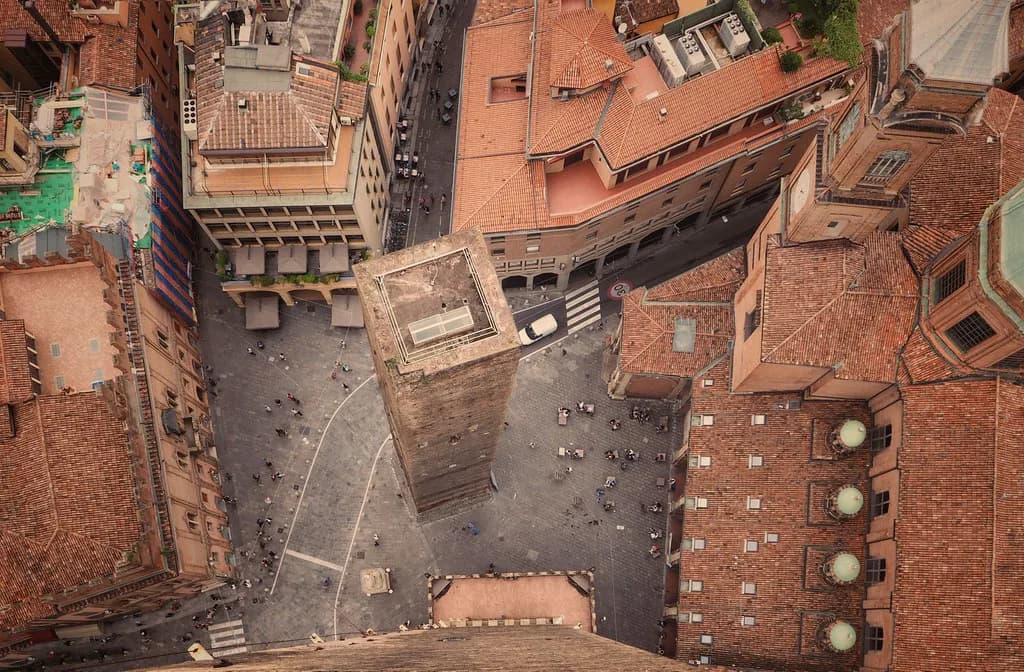
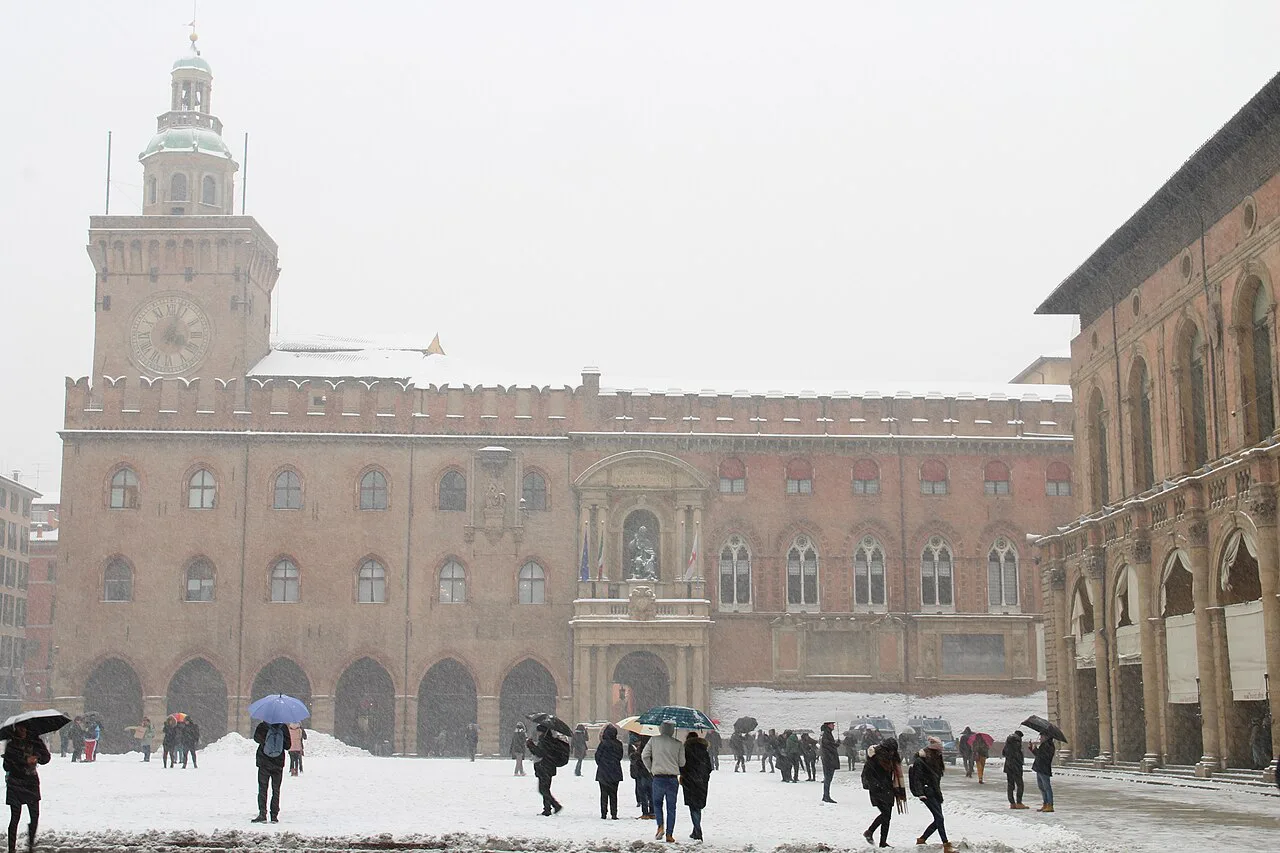
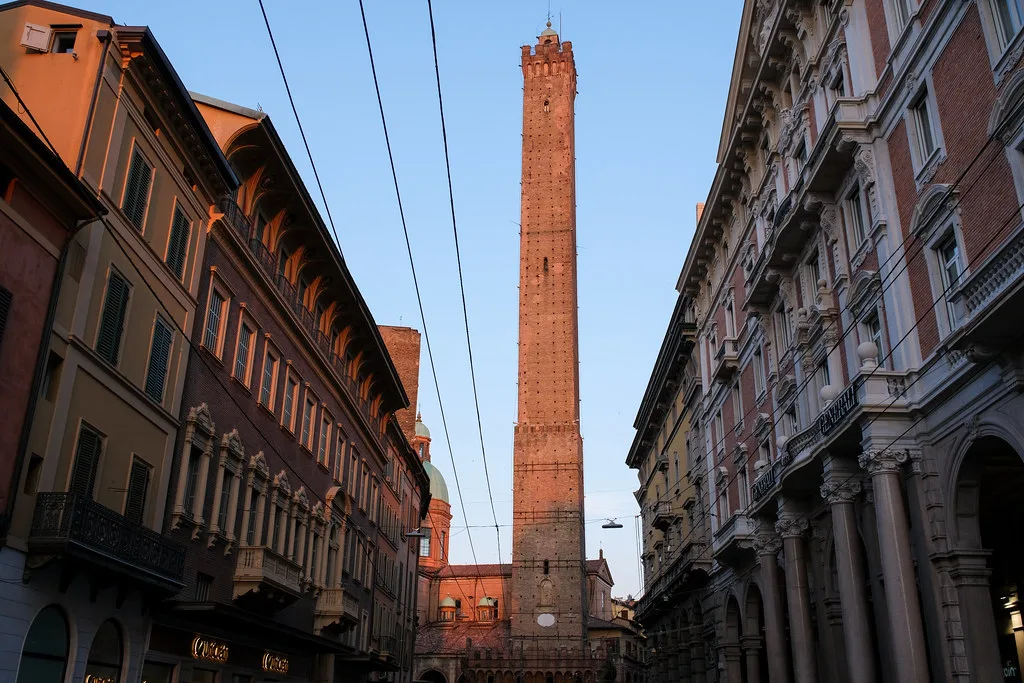
A snowy Bologna is a short-lived spectacle, and locals treat it as one. The city's brick towers, Piazza Maggiore and the long arcades turn photogenic within hours of a heavy fall, and photographers head for the Two Towers and the porticoes. The snow usually turns to slush in the centre within a day or two as traffic and pedestrians do their work.
Temperatures stay cold enough that snow does not instantly vanish, but the practical window for a white cityscape is narrow. Snow historically reaches the city during cold spells, and in a heavy event the covering can be substantial before it clears. Plan your photography or walk for the morning after a snowfall, not the afternoon.
The Porticoes Advantage
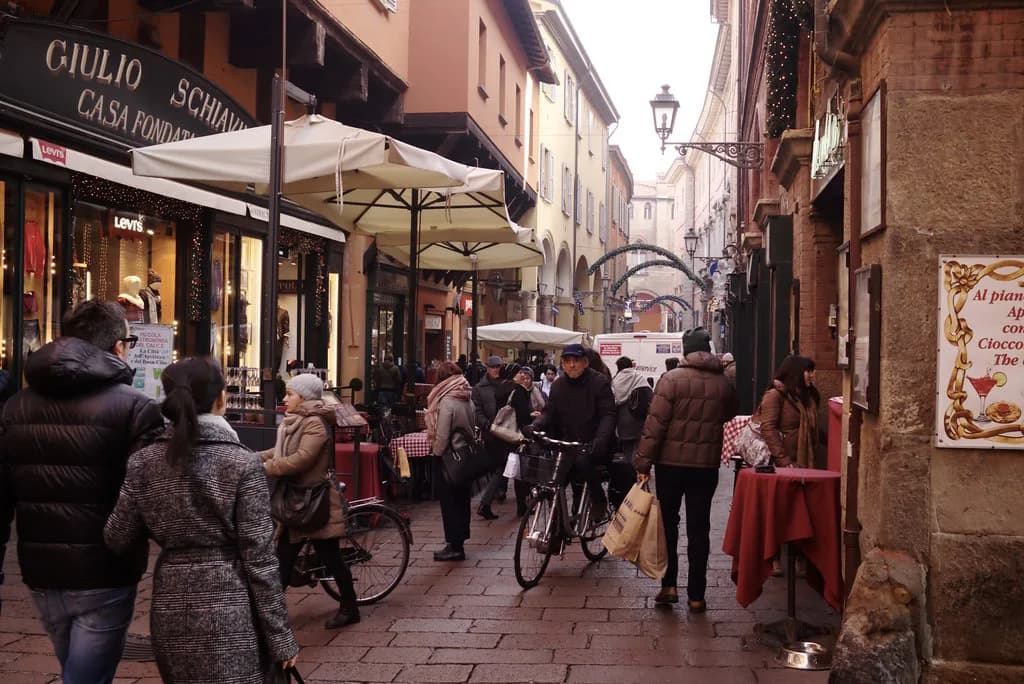
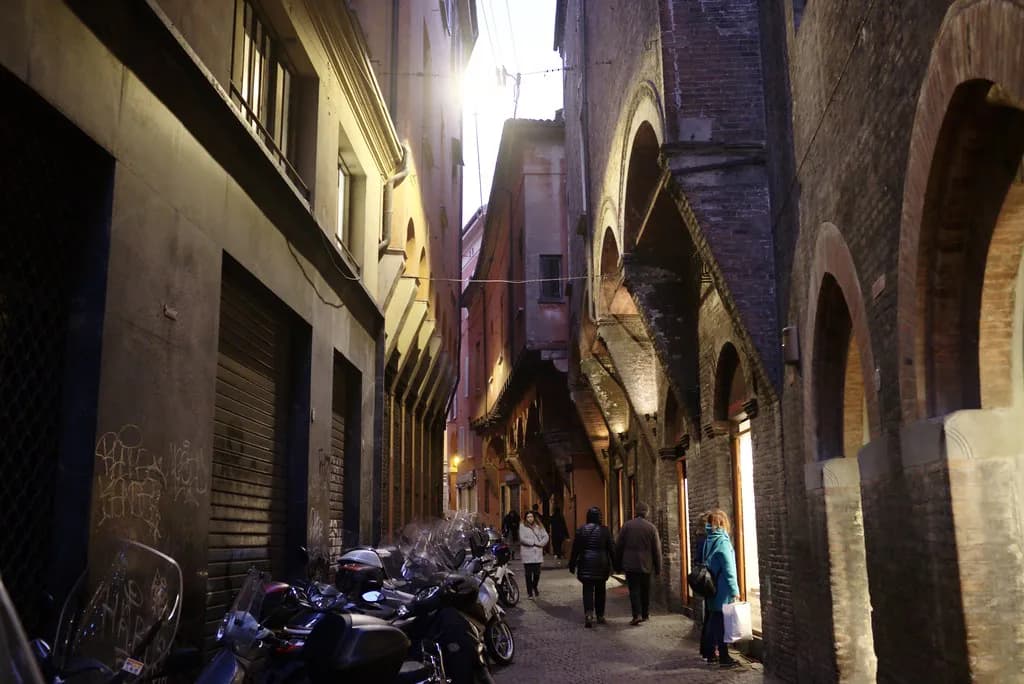
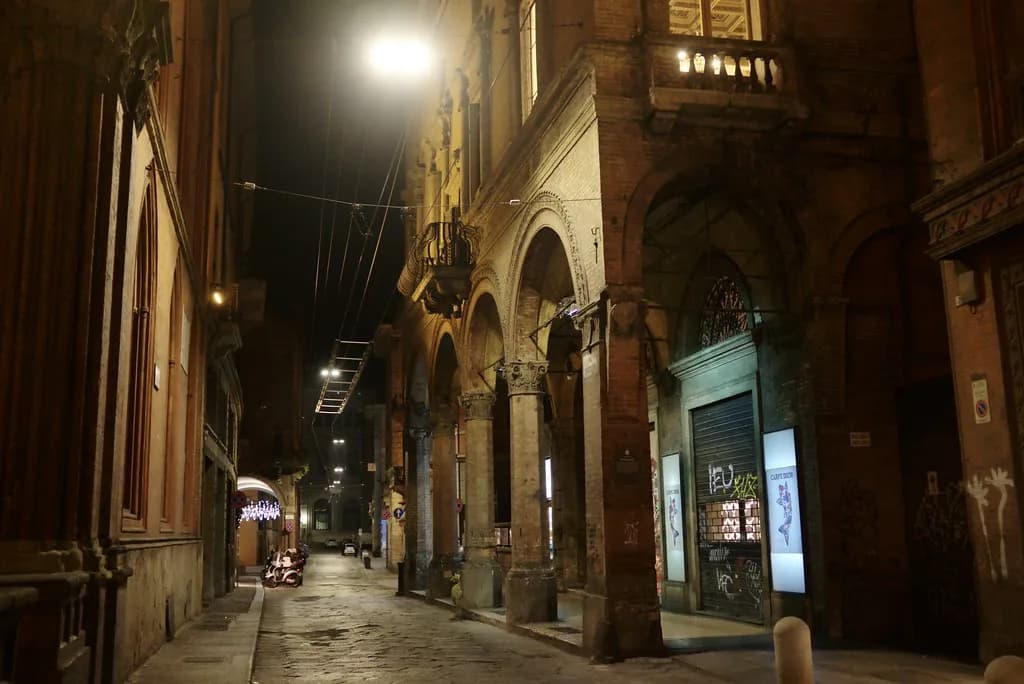
Bologna's real advantage in winter weather is not the snow but the shelter. The city's historic centre is lined with porticoes, the covered walkways that let you cross much of the old town without stepping into rain, sleet or snow. In practice this makes the centre usable even on days when the forecast looks bleak.
The UNESCO-listed porticoes have protected walkers since the twelfth century and remain the city's defining piece of winter infrastructure. The Portico di San Luca, a long uphill arcade leading toward the sanctuary, draws walkers year-round, but on icy or snowy days the climb is a serious undertaking rather than a casual stroll. Keep your ambitions for it for a dry, clear day.
The Portico dei Servi and the arcades around Santo Stefano are the practical spine for a snowy wander: shops, cafes and churches line the route, so you can duck inside whenever the cold wins. That makes the porticoes not just a postcard feature but the reason a snowy day in Bologna stays walkable.
Rain, Fog and Grey Skies: The More Common Winter Weather
Most winter days in Bologna are not snowy at all. December brings 50 mm of rain over six days, January 35 mm over six days and February 45 mm over six days, so expect wet days but not constant downpours. Overcast skies are the default setting from December into February.
Fog now appears mainly in periods of high pressure and is less common than in the past, but a grey, misty morning is still a normal part of the season. Sunshine, when it comes, is often weak and filtered. Build your days around indoor anchors such as museums, food markets or a long lunch, so a grey forecast does not wreck the plan.
If you want a more detailed month-by-month read on what the city is like when you visit, the Bologna in winter guide covers the season as a whole, and Bologna in January gives a closer look at the coldest weeks.
Snow in the Apennines Above the City
The Apennine hills south of Bologna see snow far more reliably than the plain. Cold air forced up against the mountains is exactly the mechanism that produces the city's snow, and higher ground catches it sooner and keeps it longer. A day trip into the hills from Bologna is a realistic way to see snow even when the city centre is wet and grey.
On the city side, snow falls on the plain at least once in a typical winter but rarely settles for long. If snow is your priority, treat the hills as the target and the city as the bonus. Check elevations and road conditions before setting out in winter, because the difference between a snowy hill town and a rainy plain can be a few hundred metres.
Things to Do When It Snows or Rains
When snow or rain keeps you indoors, Bologna's museums and food culture carry the day. The Biblioteca Archiginnasio houses the Anatomical Theatre and the Stabat Mater hall, and it sits a couple of minutes from the Church of San Petronio. Entry details and any closures are published by the Biblioteca Archiginnasio itself.
The city's food markets are another sensible winter stop. Mercato di Mezzo in the Quadrilatero serves quick lunches under cover, with bakeries, cheese counters and bars sharing a communal space. Local specialties such as tortellini in brodo, and zampone and cotechino around the holidays, are the warming dishes to look for.
An evening at the opera or a concert works well on a cold night, and the city has a long musical tradition. Performances have been staged across multiple venues while the Teatro Comunale has been under renovation, so check the specific programme and current venue details before you book.
For a shorter, weather-proof stroll, the arcades around Piazza Maggiore and the Quadrilatero keep you dry while still feeling like a proper day out. Pair a covered walk with a coffee or a hot chocolate and the greyest afternoon still works.
Snow at Christmas and New Year
A white Christmas in Bologna is possible but not something to count on. Christmas falls at the colder end of the month, when the odds of snow are at their best, but the long-term averages still put daytime highs above freezing. If a festive city break is your aim, Christmas in Bologna is about lights, food and the porticoes far more than about snow.
For New Year's Eve in Bologna, the same applies: expect cold, damp evenings rather than guaranteed snow. A snowy December and a snowy late December are different things, and the city's historical snowfall records cluster around January and February as much as December.
Getting Around in Snow and Rain
Bologna is a compact city for walking, and the porticoes make the centre manageable when the weather turns. The bigger winter consideration is ice on the cobblestones of the historic centre, so allow more time than you would in dry conditions. For a slower, more detailed read on the season's logistics, the Bologna in February guide covers the late-winter weeks.
For longer trips, Bologna sits on the main rail line between Florence and Venice, which makes rail the sensible way to move in winter weather. Snow rarely paralyses the city itself, but it can slow regional services in the hills.
Who a Snowy Bologna Trip Suits
Bologna in winter suits travelers who want a real Italian city at its quietest and least expensive, who like food, arcades, museums and long lunches, and who can enjoy a grey day without needing sunshine. It also suits people who will treat snow as a bonus rather than the point of the trip.
It does not suit anyone booking specifically for a guaranteed white cityscape. The snow is real but rare and short-lived, and the city's wet, dull winter days are far more common. If snow is the goal, choose a mountain destination or plan a hill day trip, and read up on does it snow in Italy to see how Bologna's odds compare with other regions.
Plan Your Snow-Watch Wisely
Book Bologna for the city, the food and the arcades, and treat snow as a possible bonus between December and February. If you get a snowfall, head out early to the porticoes and Piazza Maggiore before the streets turn wet and grey. If you get rain instead, the Anatomical Theatre and Mercato di Mezzo will fill the day comfortably.
Snow-seekers should build a flexible hill day into the itinerary and watch forecasts a few days ahead, since the Apennines catch snow far more reliably than the plain. Everyone else can simply pack for damp cold, choose a week that suits their interests, and let the weather decide the rest.
Explore more Bologna winter guides
Frequently Asked Questions
Does it snow in Bologna, Italy?
Yes. Snow generally falls at least once every year in Bologna, according to long-term climate records. The city sits in the Po Valley, where cold air from Eastern Europe occasionally picks up moisture over the Adriatic and produces snow, so heavy falls are possible but far from guaranteed in any given week.
Does it snow in Bologna in December?
Snow is possible in December, but it is not the most likely outcome. December averages a high of 7.7 °C (45.9 °F) and a low of 0.8 °C (33.4 °F), with around 50 mm of precipitation over about six days, most of which falls as rain. A white Christmas is possible but not something to plan around.
How often does it snow in Bologna?
Long-term climate data indicates snow falls at least once in a typical year, though not usually as a long-lasting covering. Most snow events are short and clear within a day or two in the city centre, while heavier historical storms have produced depths of 25 to 30 centimetres or more.
How cold is Bologna in winter?
It is cold and damp rather than extreme. January averages about 7.2 °C (45 °F) by day and -0.2 °C (31.6 °F) at night, while December averages 7.7 °C (45.9 °F) by day and 0.8 °C (33.4 °F) at night. Humidity stays high, so the cold feels raw, and the coldest nights can drop to around -5 °C (23 °F) or below during cold spells.
Is there snow in Bologna at Christmas?
Christmas falls in the colder part of the month, so snow is possible, but the average daytime temperature is well above freezing, making rain more likely than a settled covering. If snow matters to your trip, aim for the Apennine hills above the city rather than betting on the plain.
Where can I find snow near Bologna?
The Apennines south of Bologna see snow far more reliably than the city. The same cold eastern air that sometimes brings snow to the plain is forced up against the mountains, where it falls sooner and stays longer, making a hill day trip the most dependable way to see snow on a winter visit.
Sources
Winter travel notes
Optional updates when we add or revise winter guides.
You might also like
Continue reading
More guides you'll find useful