New Year's Eve in Greece: Athens, Thessaloniki & Traditions
Plan New Year's Eve in Greece with Athens and Thessaloniki celebrations, midnight rituals, typical winter weather and the Epiphany that ends the season.
On this page
Greece at the turn of the year is a domestic holiday, not a tourist one. Families gather around a table, cities fill their central squares, and the big public moments happen on foot in Athens and Thessaloniki rather than at a coastal resort. It suits travelers who want a real European capital at low season, with short daylight and cool evenings traded for empty ruins and easy restaurant tables.
The season runs well past 1 January. Christmas Day 2026 falls on a Friday and New Year's Day 2027 on a Friday, so the fortnight around them is a long holiday for Greeks, while Epiphany on Wednesday 6 January 2027 closes the festive period. Plan your dates around those fixed points rather than around a single night.
Why New Year's Eve in Greece Feels Different
This is a city festival, not a resort one. The center of gravity is the historic core of Athens and the waterfront squares of Thessaloniki, where locals walk out after dinner rather than pay into a venue. The midnight rituals are family customs performed in homes and on streets, so visitors watch and join in rather than buy a ticket.
That also means the holiday is quieter than northern European capitals in one respect and warmer in another. Athens in late December usually sits in a mild band, with daytime figures around 8°C to 15°C (46°F to 59°F) according to one seasonal guide, which is cool enough for a coat but comfortable for standing in a square at midnight.
If you are weighing the whole season rather than one night, the broader picture of closures, light and crowds is worth reading before you book flights. The country's winter rhythm rewards flexible plans and a city base.
Weather at the End of December
Treat December as cool and changeable rather than cold. Expect crisp mornings, rain at times and evenings that drop sharply once the sun is gone, with coastal Crete milder than Athens and Thessaloniki noticeably chillier inland. Daylight is short, so build sightseeing into the morning and leave the afternoons for indoor stops.
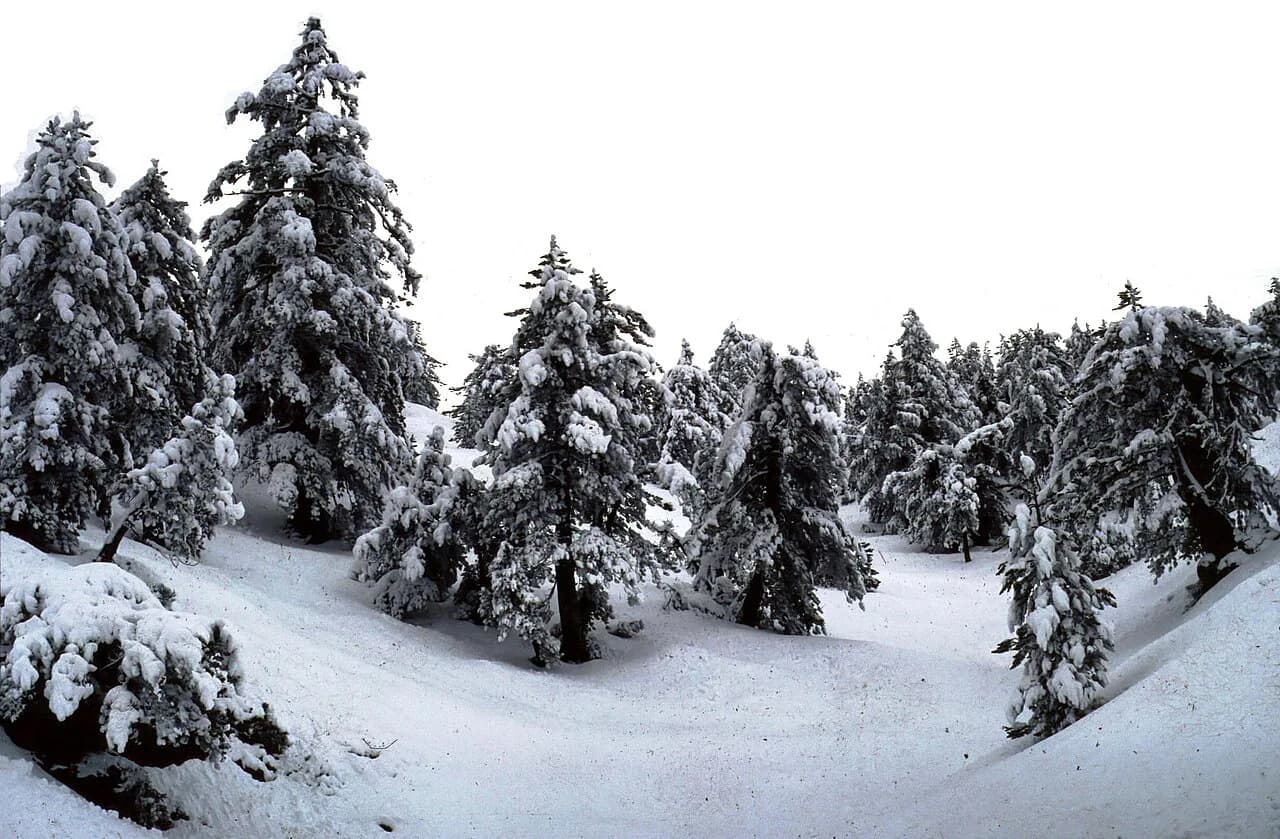
Snow is a genuine possibility in the north and on higher ground, while Athens rarely sees it. The pattern by region and month is worth understanding before you commit to a mountain village or a northern city.
For a fuller month-by-month climate picture, including rainfall and sunshine, the December page sets out typical conditions rather than a forecast. Use it to decide how many indoor days to plan.
Athens on 31 December
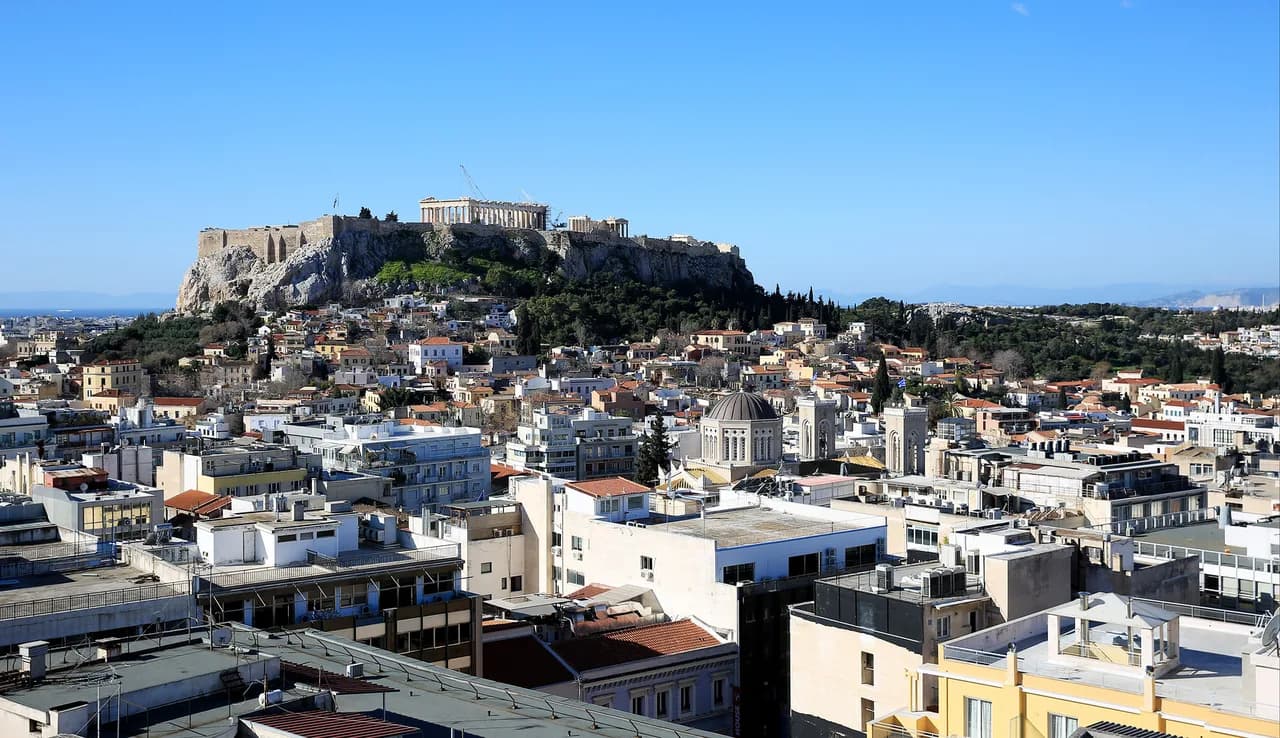
Syntagma Square is the city's public stage on New Year's Eve. Crowds gather through the evening with music and lights, families arrive early, and the surrounding streets of Plaka and the pedestrian center fill with people moving between cafes and viewpoints. Some Athens hotels run their own gala dinners with rooftop views of the Acropolis, and those require reservations booked directly with the property.
The smarter plan is to treat the square as one stop rather than the whole night. Watch the last sunset from Philopappou Hill or Lycabettus, eat early in Plaka or Thissio, then walk down to the crowd with time to spare. Expect bag checks and slow movement in the packed blocks around the square.
Book dinner well ahead if you want a table with a view. Central restaurants take reservations for 31 December weeks in advance, and the best-positioned rooms near the Acropolis go first.
The Midnight Moments
Midnight in a Greek home is a small ceremony. A pomegranate is smashed on the doorstep for luck, an onion is hung for prosperity, and the Vasilopita, a sweet new-year cake with a hidden coin, is cut and shared. In Thessaloniki's Ladadika district and in Athens neighborhoods such as Plaka you may see families performing these rituals in the street.
Children sing kalandas, the traditional carols, door to door in the days around the holiday, collecting coins or sweets. It is not staged for tourists, so watch from a respectful distance and keep your camera low. Public fireworks light up the center of Athens at midnight on 1 January.
Stay central if you plan to be out at midnight, since the walk back is part of the night. Hotels between Syntagma and Omonia put the square, Plaka and the museum district within easy reach.
New Year's Day in Athens
The first of January is slow. Brunch replaces lunch, the National Garden and the pedestrian street below the Acropolis fill with walkers, and museums open later than usual if at all. Use the morning for a gentle walk to Philopappou or Lycabettus and save the city's ancient sites for the following day.
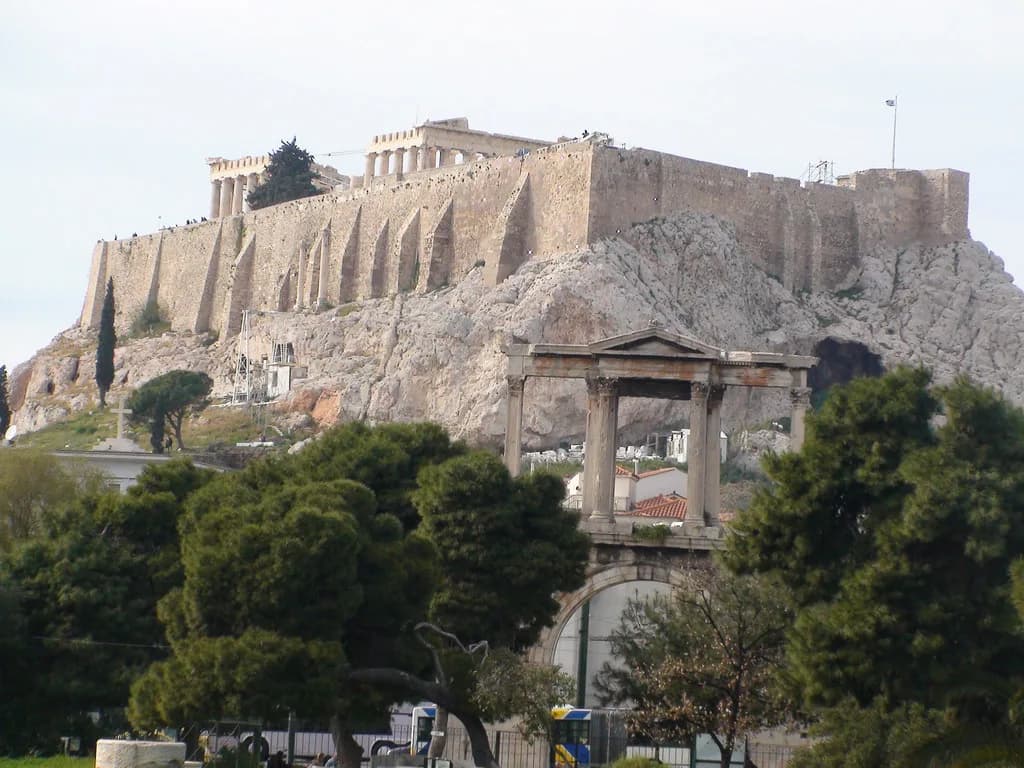
An Athens winter break is also a chance to see the Acropolis without summer crowds, and the museum collections hold up well on a wet afternoon. The January picture of light, opening patterns and crowds helps you set expectations for the days after the holiday.
Thessaloniki: Aristotelous Square and Ladadika
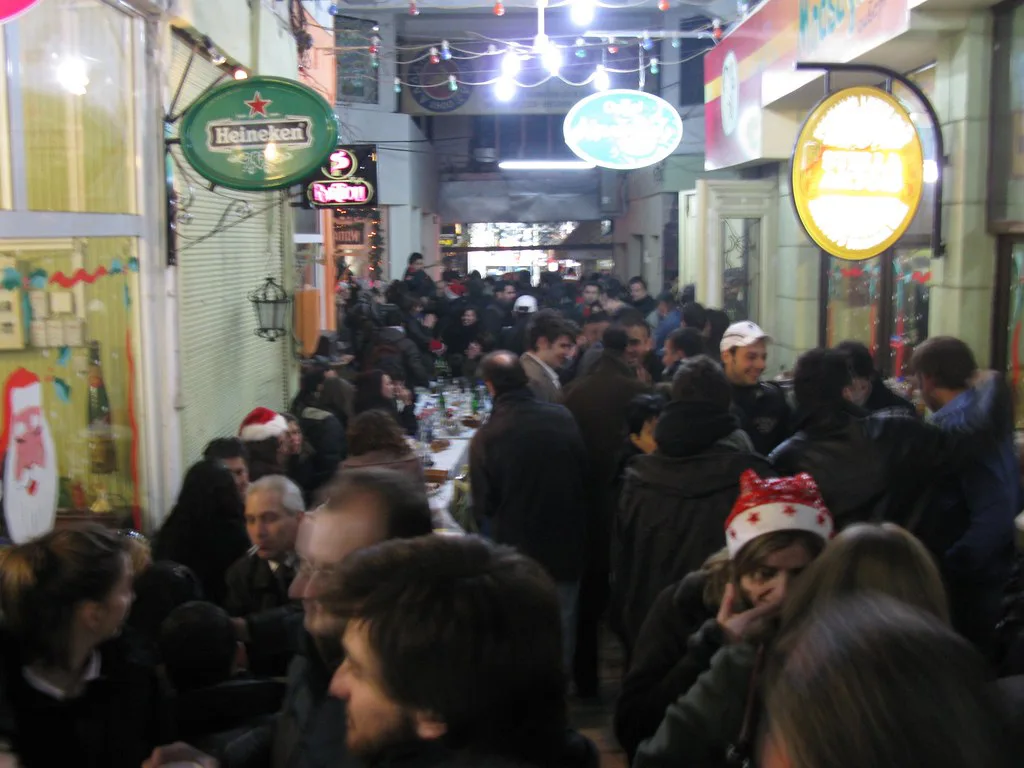
Greece's second city does New Year differently. Aristotelous Square, open to the sea, hosts the main gathering, while the old taverna quarter of Ladadika fills with tables that run late. The mood is more neighborhood and less spectacle than Athens, which suits travelers who prefer food and company to a stage.
Thessaloniki's Christmas market on Aristotelous Square has traditionally run through late December. Because organisers set their own dates each season, treat early-season market plans as flexible and look for the municipality's own announcement before booking travel around it.
The northern city is colder than Athens at this time of year, and snow is more plausible. Pack accordingly and treat the evening as a long dinner rather than a long outdoor vigil.
Crete and the Islands in Deep Winter
Heraklion and Chania are real cities that function through the winter, with tavernas, museums and local life intact. Smaller islands are a different matter: many hotels, restaurants and seasonal boats wind down after the summer, so a New Year stay on a small island means fewer services and a different kind of trip.
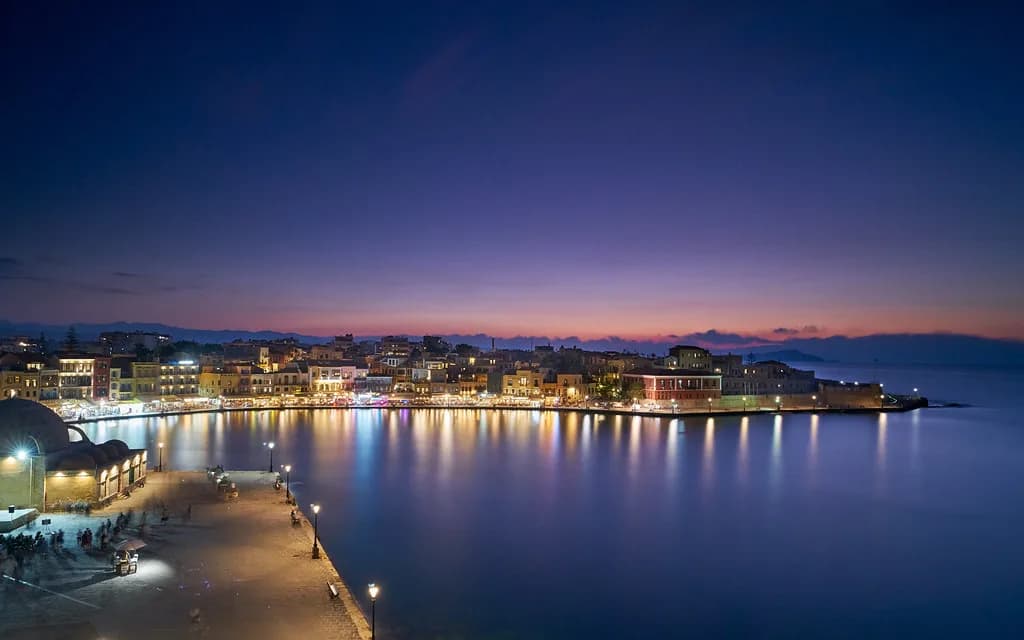
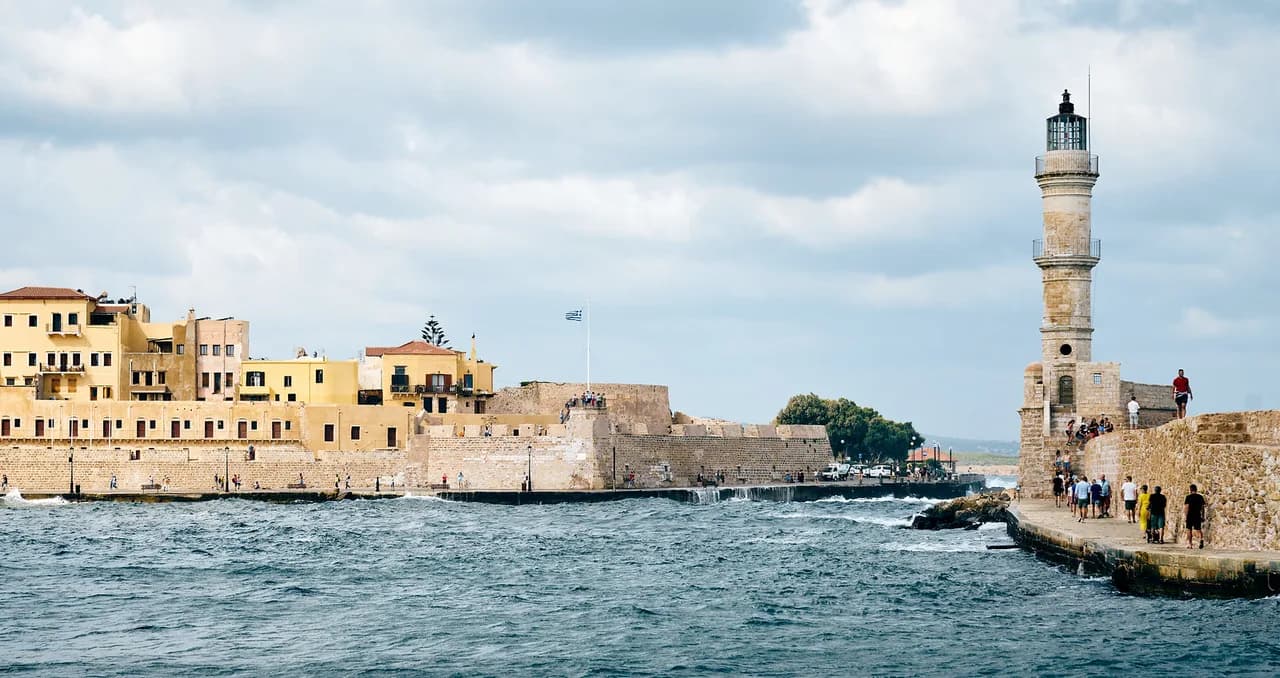
If you want an island feel with reliable flights and city amenities, Crete is the safer bet. Chania's Venetian harbor and Heraklion's archaeological museum are winter-friendly stops, and the larger towns keep their food scene going.
For ferry routes and schedules, check the winter timetable of the specific ferry company sailing your crossing rather than assuming summer frequency.
Vasilopita and the Food Side of New Year
Holiday food here is home cooking as much as restaurant cooking. Expect pork dishes, honey cookies such as melomakarona, and Vasilopita on the table from New Year's Day onward. Bakeries sell the cake well into January, and many families buy one rather than bake it.
Restaurants in Athens and Thessaloniki serve special menus on 31 December, often with a fixed price and a booking required. Reserve at least a couple of weeks ahead and confirm the menu when you book, since details vary by venue.
Epiphany on 6 January 2027
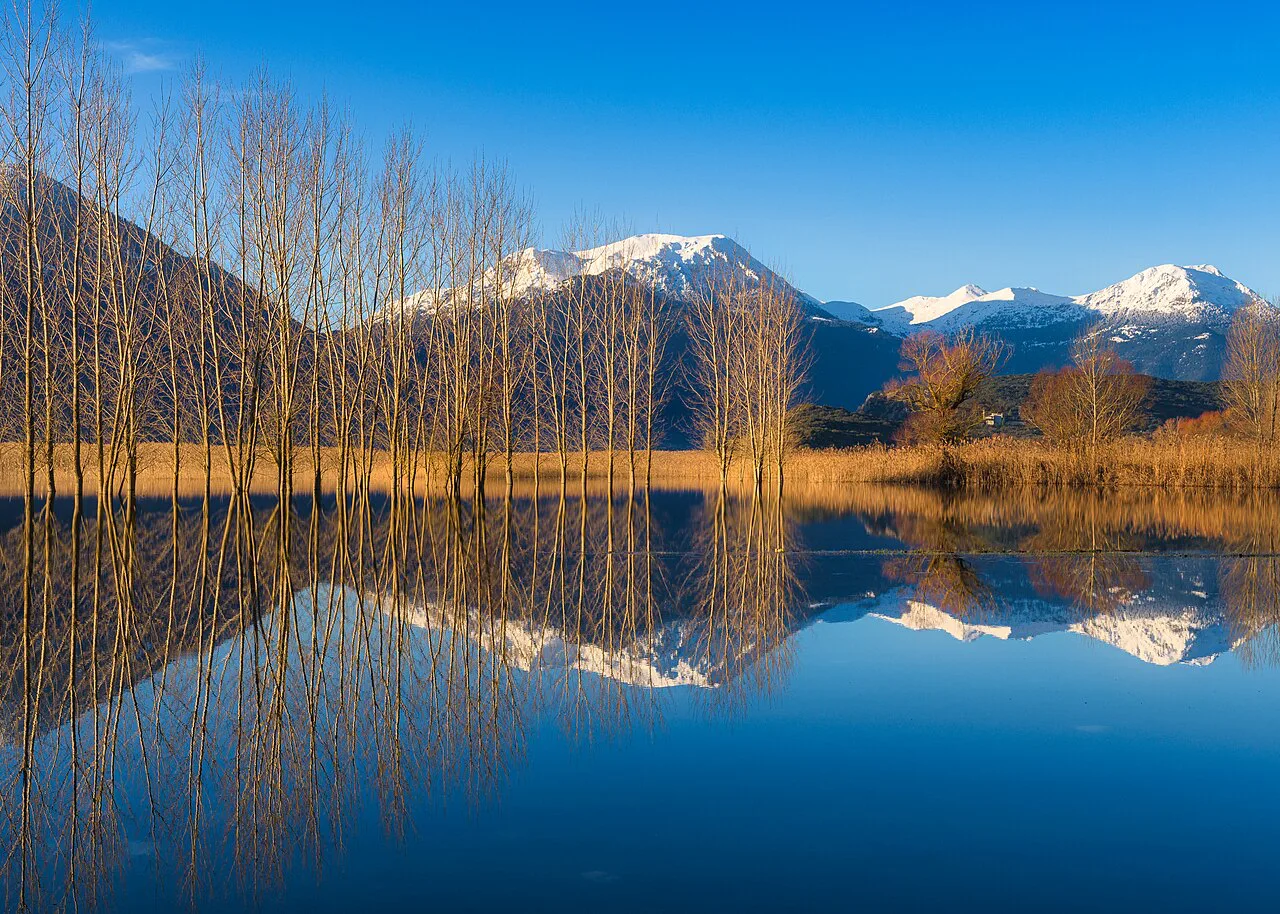
Epiphany, on Wednesday 6 January 2027, is the real end of the Greek holiday season. The Blessing of the Waters is the central event: a cross is thrown into the sea or a harbor and young men dive after it, watched by crowds on the waterfront. Piraeus, near Athens, is the classic place to see it.
If you can stretch your trip by a week, staying through Epiphany gives the visit a satisfying shape. Keep the final days loose, since the exact timing of the ceremony depends on local organisers.
Getting Around and Getting There
Athens is easy on foot in the center, and the metro reaches Syntagma, Monastiraki and the Acropolis area. On New Year's Eve, expect taxis and ride-hailing to be hard to find after midnight, so plan to walk home or stay near the square. Thessaloniki is compact and walkable along the waterfront and into Ladadika.
Air connections to Athens and Thessaloniki from other European cities are frequent in winter, though fewer than in summer. Ferries to the islands run on reduced winter schedules, so allow a buffer day on either side of a crossing.
Crowds, Prices and Short Days
New Year's Eve is the busiest night of the Greek winter, and hotels in Athens and Thessaloniki raise rates and fill up for 31 December. The rest of the holiday period is calm by European capital standards, so you can combine one crowded night with quiet days at the ruins and in the museums.
Short days are the real trade-off. Sunset comes early, so a morning start matters more than in summer. Travelers who want beaches, island hopping and long evenings outdoors should pick a different season; those who want cities, food and empty archaeological sites will find Greece at its most comfortable.
To plan a warmer, quieter version of the same trip, or to see the season after the holidays, compare the February and March conditions before booking.
Plan Your Greek New Year
Pick a city, not a country. Athens gives you the big public square, the fireworks and the museums, while Thessaloniki offers the square-and-taverna night with colder weather and a more local feel. Both reward a booking made in autumn.
Build your dates around the calendar: 31 December, New Year's Day on a Friday, then Epiphany on 6 January. That week-long arc is what makes a Greek New Year more than a single evening out.
Explore more Greece winter guides
Frequently Asked Questions
What happens in Athens on New Year's Eve?
Crowds gather in Syntagma Square for music and lights through the evening, and fireworks mark midnight at the start of 1 January. Families often walk through Plaka and the pedestrian center first, then head to the square. Some hotels host their own gala dinners with rooftop views, and those require advance reservations made directly with the property.
What are the Greek New Year traditions?
A pomegranate is smashed at midnight for luck, an onion is hung for prosperity, and families cut the Vasilopita, a sweet cake with a hidden coin. Children sing kalandas carols door to door around the holiday. These are family customs rather than public performances, though you may see them in neighborhoods and squares.
Is New Year's Eve a good time to visit the Greek islands?
Crete is the most practical island choice, since Heraklion and Chania function as year-round cities with flights and restaurants. Smaller islands wind down in winter, with fewer hotels, restaurants and ferry crossings. Check the ferry operator's timetable for your specific route before planning an island stay.
What is the weather like in Greece at New Year?
Expect cool, changeable conditions rather than cold. Typical daytime figures in Athens at this time of year sit somewhere between 8°C and 15°C (46°F and 59°F). Thessaloniki is colder and snow is more plausible in the north, while Crete stays milder. Treat these as averages, not a forecast.
What happens on Epiphany in Greece?
Epiphany falls on Wednesday 6 January 2027 and marks the end of the festive season. A cross is thrown into the water and young men dive for it, watched by crowds on the waterfront. Piraeus is the classic place to see it, though other port towns hold their own ceremonies.
Do I need to book restaurants for New Year's Eve in Athens?
Yes, if you want a specific table or a view of the Acropolis. Central restaurants take bookings for 31 December weeks ahead and often serve a fixed menu. Reserve directly with the restaurant and confirm the menu and timing at the time of booking.
Sources
Winter travel notes
Optional updates when we add or revise winter guides.
You might also like
Continue reading
More guides you'll find useful