Christmas in Greece: Traditions & Holiday Guide
Christmas in Greece means carols on Christmas Eve, a feast on 25 December and gifts on New Year's Day. Here is what the holiday is like and where to spend it.
On this page
Late December in Greece is quiet, cool and often bright, with short days and streets that fill in the evening rather than at midday. The holiday here is a family season rather than a tourist spectacle, and it suits travelers who want food, church services and town squares over theme-park Christmas. If you are weighing the season against the rest of the winter, our Greece in winter overview sets out what each month feels like.
When Christmas Happens and How Long It Lasts
Greek Orthodox Christmas falls on 25 December, not 7 January, so the main celebration is on the same day as in Western Europe. The season does not end there: celebrations run through Epiphany on 6 January, which in 2027 falls on a Wednesday. That gives you a holiday window of roughly two weeks, and the days between Christmas and Epiphany are part of the festivities rather than a wind-down.
Weather in December and Early January
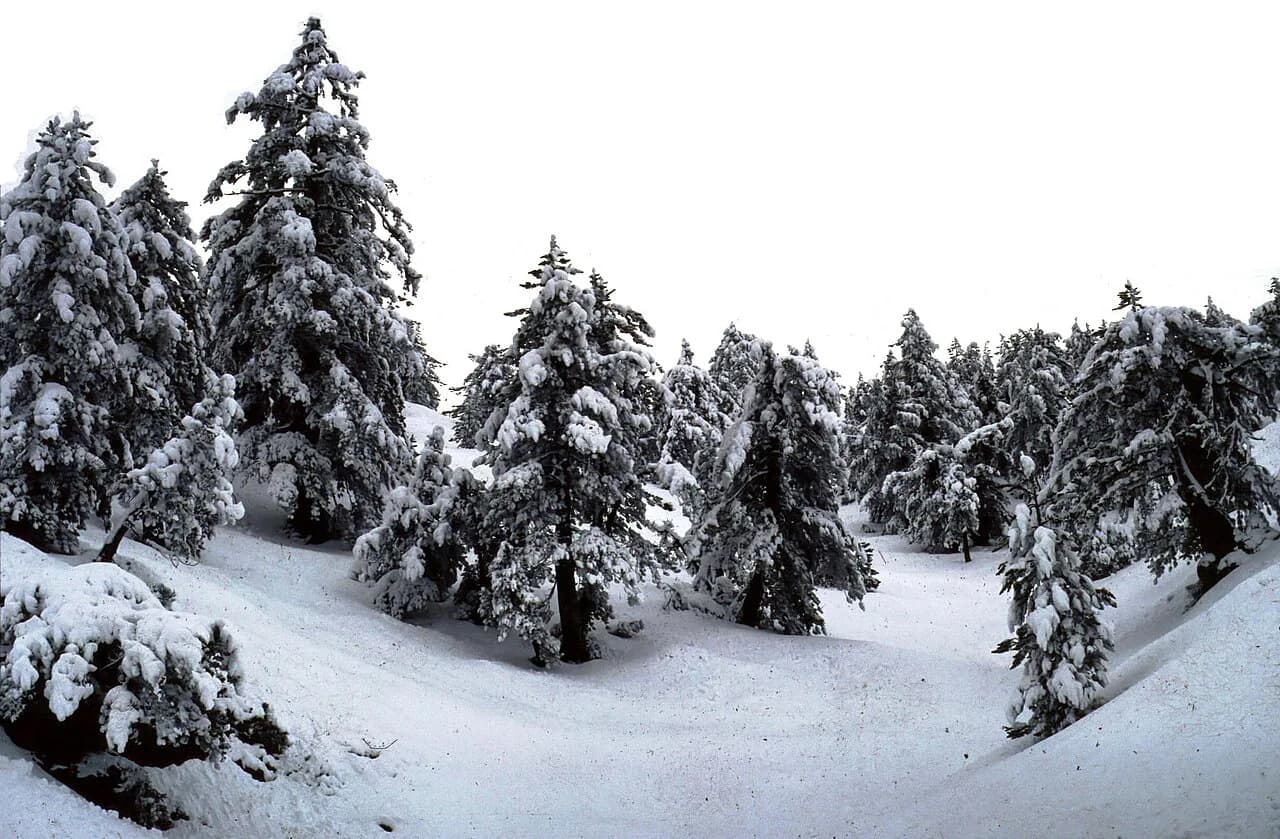
Expect typical winter conditions rather than a forecast: Athens and the lowland south are mild by day and chilly after dark, the northern interior and mountain villages are genuinely cold, and rain comes in spells rather than all day. Daylight is short, with sunset before evening and a long dark stretch after it, so plan sightseeing for the morning. Coastal water is cold enough that swimming is for the hardy. For a month-by-month breakdown of temperatures, rain and snow risk, see Greece in December and our guide to whether it snows in Greece.
Christmas Eve: Kalanda and the Evening Before the Feast
On Christmas Eve, children go from door to house singing the kalanda, the Greek carols, often accompanied by a small metal triangle, and householders reward them with sweets or coins. In villages the singing is still a door-to-door affair; in Athens it moves to squares and shopping streets. Many families fast through Advent, so Christmas Eve itself is often a light meal before the feast the next day.
Christmas Day: Church, the Table and Christopsomo
Christmas morning begins with liturgy at a Greek Orthodox church, after which families sit down to the main meal of the season. The table usually carries roast turkey or pork and a loaf of christopsomo, a sweet Christ bread whose crust is decorated with symbols. If you are in a city, book a table well ahead, because Greeks eat at home or at a booked restaurant rather than grazing.
The Food of a Greek Christmas
The two sweets that define the season are melomakarona, honey-soaked cookies with orange and cinnamon, and kourabiedes, buttery almond shortbread under a drift of powdered sugar. Bakeries across the country sell both from mid-December, and they make the easiest edible souvenir. Regional versions exist too: diples, thin folded dough fried and drenched in honey, are associated with the Peloponnese and are traditionally served around New Year. On Crete, the local take is xerotigana.
New Year's Eve and St. Basil's Day: Gifts, Vasilopita and the Coin
In Greece, gifts arrive on 1 January from Agios Vasilis (Saint Basil), not on Christmas Day, so New Year's Eve is the big family night. The centrepiece is vasilopita, a sweet cake or bread baked with a coin hidden inside; the person who finds it is said to have luck for the year. If you are traveling with children, plan your present shopping for the days before 1 January rather than before 25 December.
Epiphany on 6 January and the Blessing of the Waters
The season closes on Epiphany, when priests bless the waters and, in port towns, throw a cross into the sea for swimmers to retrieve. It is one of the most photogenic days of the Greek winter and a good reason to be near the coast on 6 January. In 2027 the date falls midweek, so pair it with a coastal base rather than a rushed day trip.
The Twelve Days and the Kallikantzaroi
Between Christmas and Epiphany, Greek folklore fills the house with kallikantzaroi, mischievous goblins said to slip down chimneys and sour the milk during the twelve days. The traditional defence was a burning hearth and a basil-and-cross ritual at the door. You will not see goblins, but the stories explain why the season is treated as a continuous twelve-day stretch rather than a single day.
Where to Spend Christmas in Greece
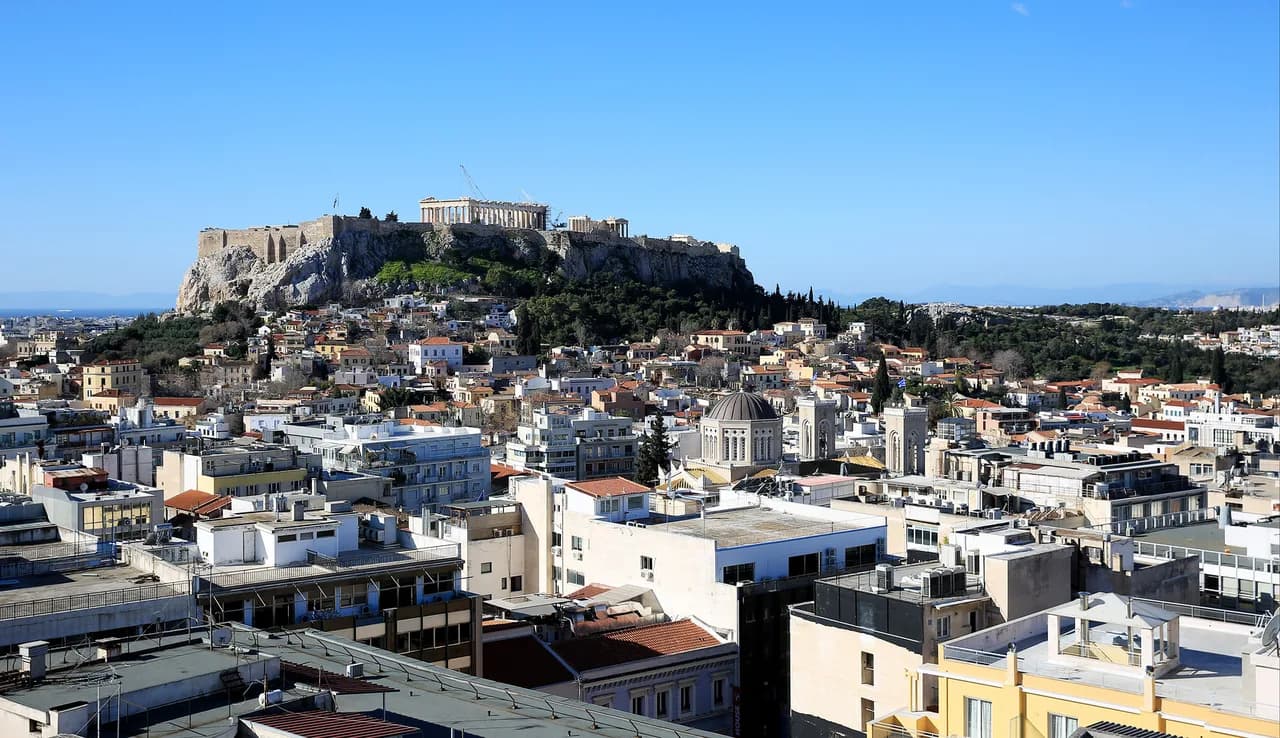
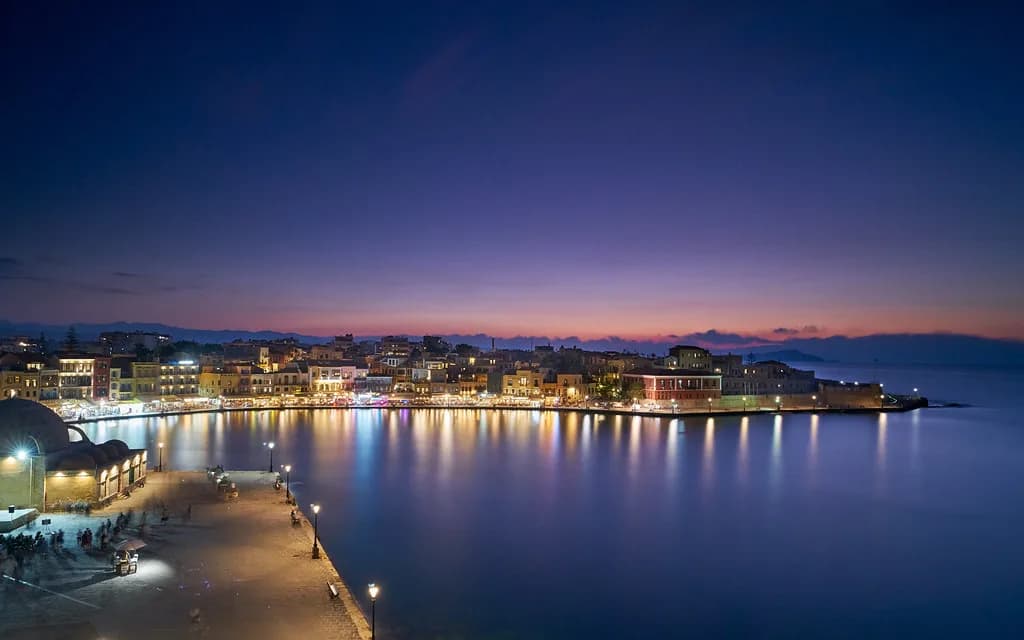
Athens is the easiest base: decorated squares, concerts and a full restaurant scene, with the Acropolis Museum and city sights open through the holidays. Families with children tend to head for Trikala and its Elf Mill, or Drama and its Dreamland park, while the Zagori villages and Kalavrita draw people who want stone villages, cold air and mountain scenery. If you want sea rather than mountains, a Christmas in Crete or a Christmas in Rhodes gives you island towns that stay inhabited through the winter.
Christmas Markets and Decorated Squares, in Brief
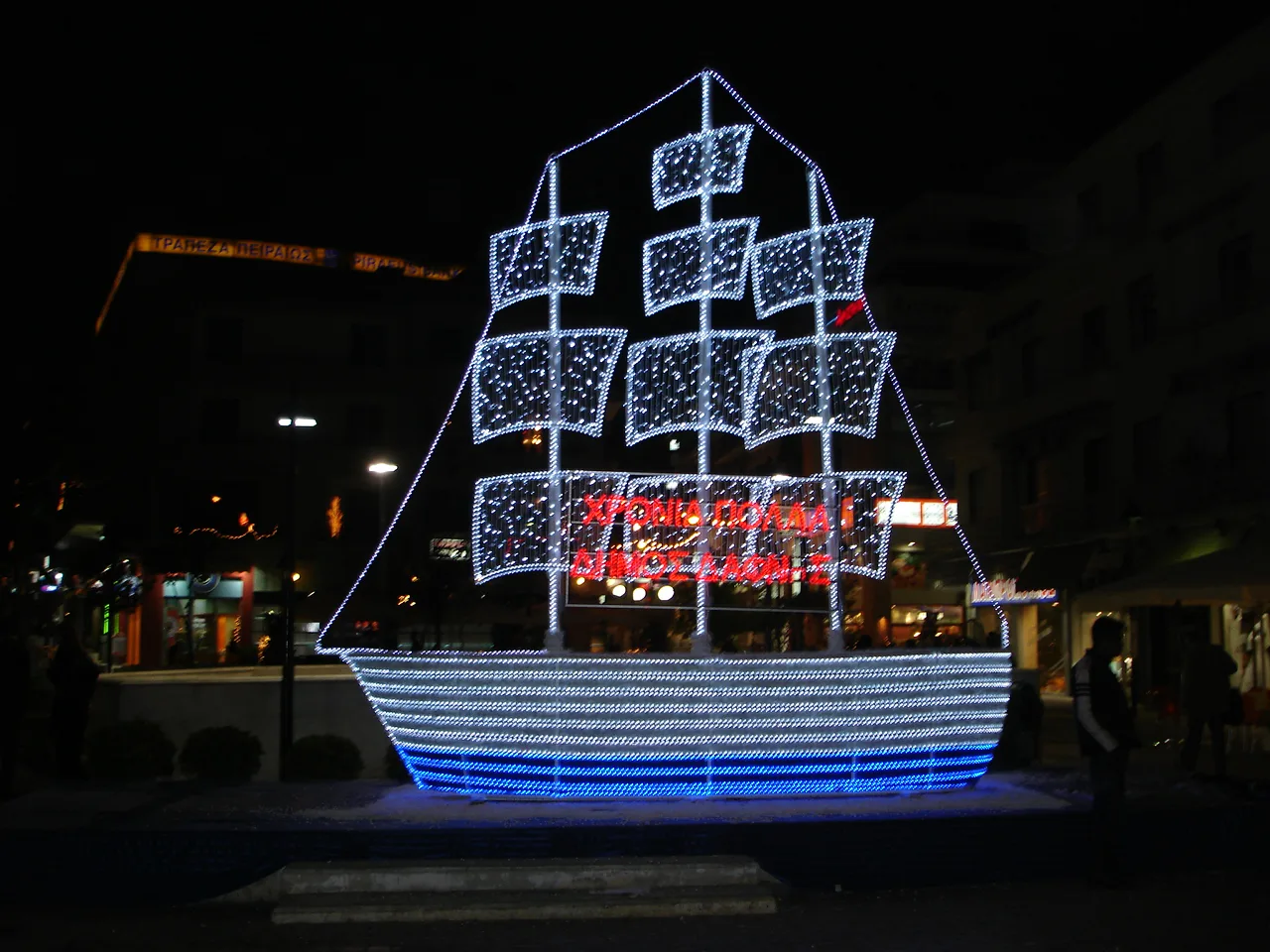
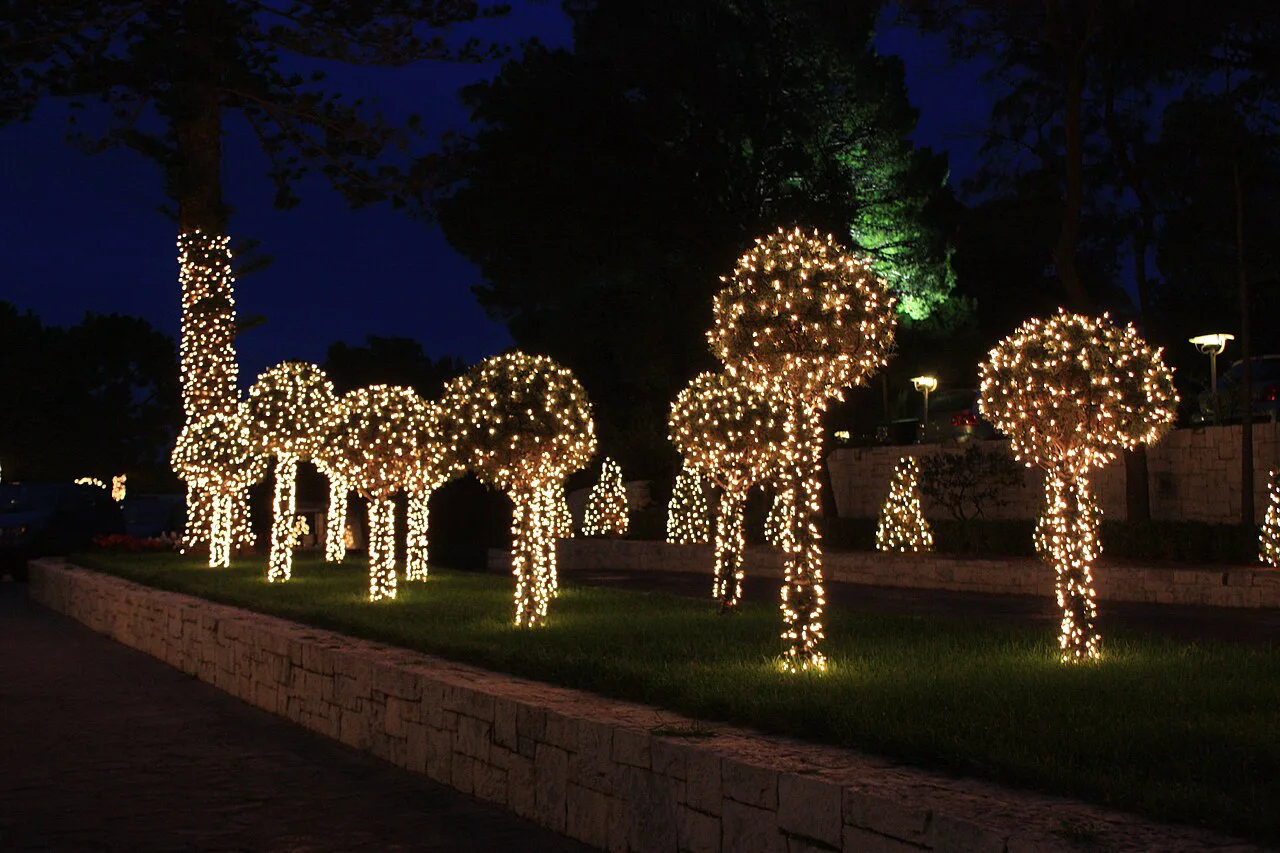
Greek Christmas markets are smaller and later-starting than their German counterparts, usually appearing in city squares in mid-December with food stalls, lights and a stage. Syntagma Square in Athens is the focal point, and Greek towns also decorate boats as well as trees. Treat the market as an evening add-on rather than the reason for the trip.
What Is Open over the Holidays
Museums, restaurants and shops in Athens and Thessaloniki largely keep working hours through the season, with reduced hours on 25 December, 1 January and 6 January. Island and mountain towns slow down sharply, and ferries run on reduced winter timetables that are worth booking early. Check the venue website, and the ferry company's own site for sailings, for the specific days you plan to travel.
Things to Do Between the Holidays
The stretch between 27 December and 5 January is when Greek cities are at their most sociable: concerts, theatre, late cafés and family visits. Use the mornings for archaeological sites and museums, which are quiet, and the evenings for food. A food tour or a long lunch is a better use of a short winter day than a multi-stop sightseeing marathon. If you want a quieter version of the same trip, Greece in February shows how the country settles after the holidays.
Day Trips That Work in Winter
Winter day trips from Athens work best when they combine one site with one meal: Sounion for the temple at sunset, Delphi for the sanctuary and museum, or a Saronic island such as Aegina for a short ferry hop. Mountain day trips from Athens to Kalavrita and the Vouraikos gorge are feasible in winter but depend on road conditions, so build in flexibility. Ferries to the closer islands run year-round, though on reduced schedules.
Trade-offs: Crowds, Prices and Short Days
Christmas in Greece is not a peak tourist season, so hotels and restaurants are cheaper and calmer than in summer; the trade-off is that some coastal businesses close, daylight ends early and rain can wipe out a day. Book the holiday nights themselves early, because Greeks travel home and city restaurants fill. If crowds are your concern, the week after Epiphany is the quietest stretch of the whole winter.
Who Should Come for Christmas and Who Should Choose Another Month
This trip suits travelers who want food, family atmosphere, church ritual and city life, and who are happy to dress warmly and eat late. It is a poor fit for anyone expecting beach weather, guaranteed sun or resort nightlife. If you want warmer days and longer light, aim for Greece in March instead, when the season turns.
Celebrating Christmas in Greece with a Dog
Christmas in Greece is often a busy, sociable time, and if you are travelling with a dog the calendar still matters as much as it does for everyone else. Christmas Day falls on 25 December, gifts are exchanged on St. Basil's Day on 1 January, and the celebrations end on Epiphany on 6 January. The twelve-day period from Christmas to Epiphany is the one the old stories attach to the Kallikantzaroi, the goblins or spirits said to appear only then, slipping into houses through the chimney to extinguish fires, ride astride people's backs, braid horses' tails and sour the milk. In the villages this was countered by keeping the hearth burning day and night throughout the twelve days, and by the daily ritual in which a family member, usually the mother, dipped a cross and a sprig of basil into holy water and sprinkled each room of the house. None of this involves the dog, but it explains why so many homes are full of people, smoke and coming and going over a short stretch of days.
The treat season is the other thing to plan around. Melomakarona are made with olive oil, honey, flour and spices such as cinnamon and cloves, while kourabiedes are buttery shortbread cookies dusted with powdered sugar and made with almonds, with the oriental origin requiring sheep and goat butter. Vasilopita, the special cake or sweet bread, is prepared on New Year's Day to celebrate St. Basil's Day, and diples, the thin dough folded into shapes, fried in hot oil, doused in honey and sprinkled with cinnamon and chopped nuts, are usually served on New Year's Eve. Raisins, nuts, honey and rich butter appear in most of these, and the main Christmas meal is a roasted turkey stuffed with minced meat, pine cone seeds, raisins and a variety of spices, served with rice, roasted or mashed potatoes and roasted vegetables. If your dog is used to sitting under the table, the twelve days are when the table is at its most generous and least suitable for a sharing bowl.
The season's public life is loud as well as sweet. Carol singing is another Christmas tradition in Greece, and on Christmas Eve many kids go from door to door singing the Greek Christmas Carols, 'kalanda' in Greek, wishing Merry Christmas to people, who usually reward them with sweets or money; in the villages the songs are often accompanied by small metal triangles and little clay drums. Streets and squares are brimming with decorations and sparkling lights, Christmas markets pop up across the city, storefronts compete for the most extravagant decoration award, and Christmas trees and boats are decorated, the wooden boats especially on the Greek islands. A dog walking through this on Christmas Eve meets bells, drums, triangles and crowds at once, so choose your hours and your route with that in mind.
For a change of scene, the destinations the season is known for are worth knowing even with a dog in tow: Athens, where the Christmas events introduce you to the festive spirit; Trikala, one of the best family destinations thanks to the 'Elf Mill' theme park; Zagorozhoria, a picturesque village group with traditional charm and breathtaking landscapes; Kalavrita, a village ideal for winter day trips from Athens; and Drama, another amazing destination for families, where you can visit the 'Dreamland' theme park. None of these is described as a dog attraction, and the theme parks are the kind of place where a dog waits outside while the family goes in. The simpler plan fits the season better: a long walk in the short daylight, a quiet corner during the kalanda and the market crowds, and a household that knows the difference between a kourabiedes and a dog biscuit.
Getting Around over the Holidays
Athens is easy on foot and by metro, but intercity buses and ferries thin out on 25 December, 1 January and 6 January, so avoid moving between bases on those days. Book ferries and long-distance buses before you arrive, and keep one buffer day at the end of the trip for weather delays. The full Greece in winter guide covers connections for the rest of the season.
Explore more Greece winter guides
Frequently Asked Questions
What are the main Christmas traditions in Greece?
Carol singing on Christmas Eve, a church service and family feast on 25 December, gifts from Agios Vasilis on 1 January, and the Blessing of the Waters on Epiphany. Decorating boats as well as trees is common, especially on the islands.
What do Greeks eat at Christmas?
Roast turkey or pork with christopsomo bread on Christmas Day, and melomakarona and kourabiedes throughout December. Vasilopita, a cake with a hidden coin, is served on New Year's Day.
When does Christmas end in Greece?
The season runs through Epiphany on 6 January, which closes the twelve days that begin on Christmas. Many towns hold their Blessing of the Waters ceremony on that day.
Is Christmas a good time to visit Greece?
Yes, if you want quiet cities, good food and lower prices rather than beach weather. Expect cool, sometimes wet days, short daylight and some closures on the islands.
Do Greeks open presents on Christmas Day?
No, gifts are exchanged on 1 January, St. Basil's Day. Families with children plan their shopping around New Year's Eve rather than Christmas Eve.
What happens on Epiphany in Greece?
Priests bless the waters and, in port towns, throw a cross into the sea for swimmers to recover. It is a public holiday and the formal end of the Christmas season.
Sources
Winter travel notes
Optional updates when we add or revise winter guides.
You might also like
Continue reading
More guides you'll find useful