Pisa in January: Weather, Quiet Sights & What to Expect
Pisa in January means cool, damp days, short daylight and quiet piazzas. Plan around typical temperatures, indoor sights and easy winter day trips.
On this page
January is the month when Pisa stops performing. The marble of the Piazza dei Miracoli stands against pewter skies, the queues thin to almost nothing, and the city settles into the rhythm of its university and its residents rather than its visitors.
The trade-off is real: days are short, rain comes and goes, and some seasonal businesses run on reduced schedules. What you get in return is a walkable Tuscan city where the headline sight is approachable, the churches are quiet, and a long lunch makes sense. This guide covers typical January conditions, which sights suit wet afternoons, and how to use the short daylight well.
Pisa in January at a glance: who the month suits
January suits travelers who care more about architecture, museums and food than sunshine. You can walk the historic center at your own pace, spend an hour in front of a fresco without being nudged along, and book the tower climb without the summer scramble.
It suits couples and solo travelers on city breaks, students of Romanesque art, and anyone using Pisa as a base for low-season Tuscany. If your idea of Italy is outdoor café terraces and long golden evenings, wait for spring.
The month also rewards flexibility. Because demand is low, you can decide on the day whether to head to the coast, take the train to Lucca, or stay put and follow the rain around the covered sights.
January weather in Pisa: typical highs, lows and rain
Pisa sits on the alluvial plain of the Arno, about 10 km from the Ligurian Sea, and January is its cool, damp core. Long-term climate normals for the city give average highs near 11 °C (52 °F) and lows near 2 °C (36 °F), with roughly nine to ten days of rain across the month; treat these as typical conditions, not a forecast.
The pattern matters more than the numbers. Rain tends to arrive in spells rather than all-day soakings, mornings often start misty over the Arno, and a bright afternoon can follow a grey one. Build in one indoor anchor per day so a wet morning does not derail the plan.
Snow is rare in the city and rarely settles, but the air is cold enough that the marble of the Duomo and the tower reads sharper and more detailed than in summer glare. That contrast is exactly what photographers come for in January.
Daylight and short afternoons in Pisa in January
January is the darkest month of the Pisa year. Days run from roughly 8 a.m. to 5 p.m., with the sun setting a little after 5 p.m. at the start of the month and near 5:30 p.m. by the end. That gives you about nine hours of usable daylight, and the middle of the day is your best window.
The practical rule is to visit outdoor sights between late morning and mid-afternoon. Put the Piazza dei Miracoli, the tower climb and the city walls early, then shift indoors as the light fades and the air cools.
By the end of January the light stretches noticeably, and a late-afternoon walk along the Arno becomes pleasant rather than rushed. If you want longer evenings, February is a better bet than the first week of January.
Piazza dei Miracoli without the crowds
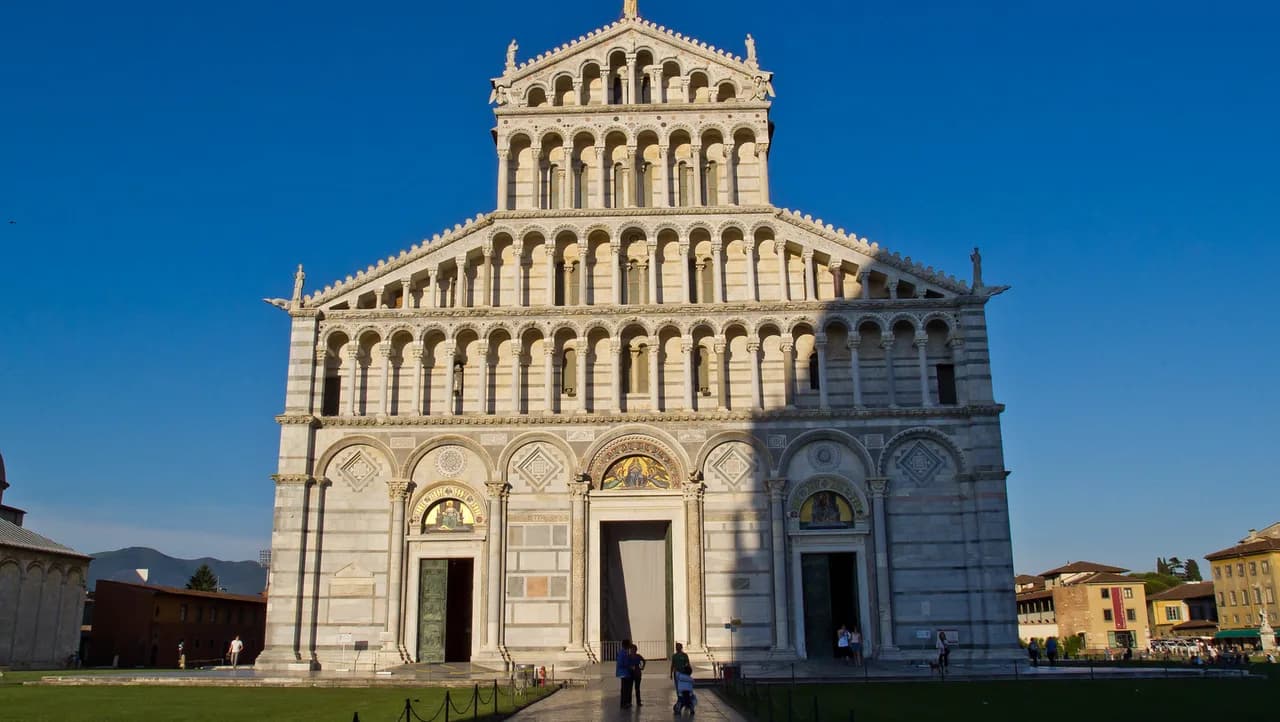
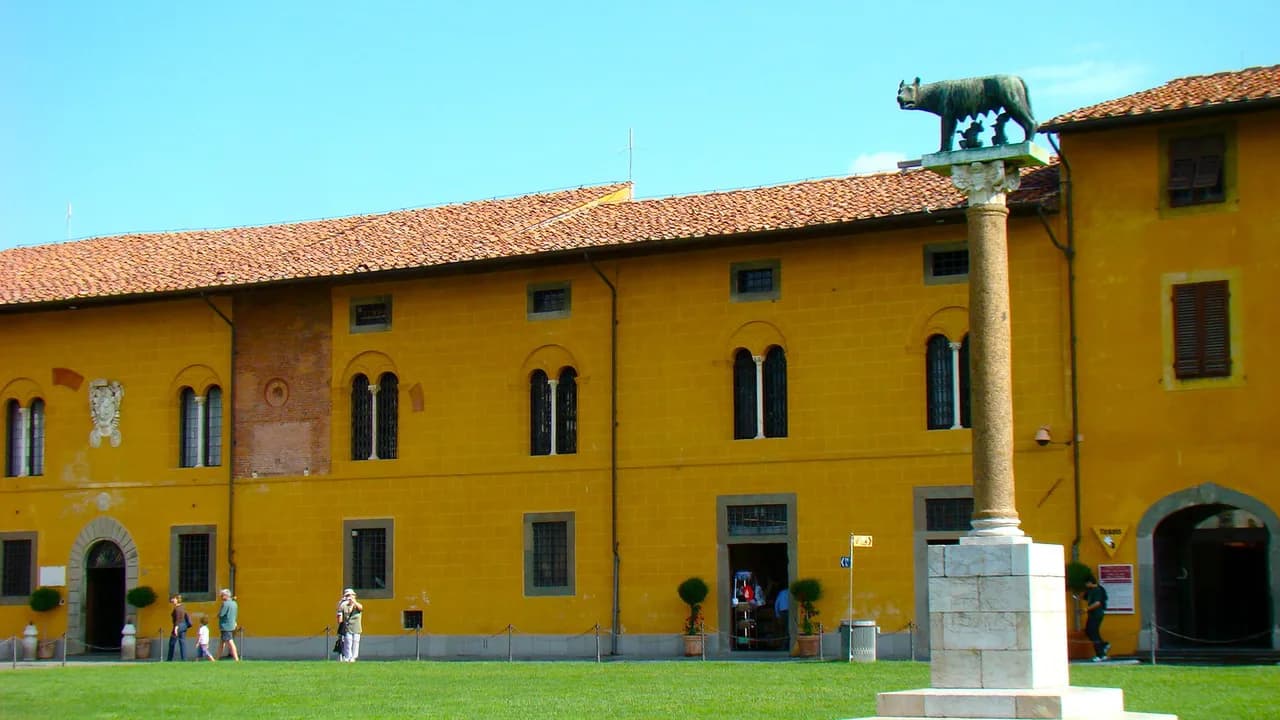
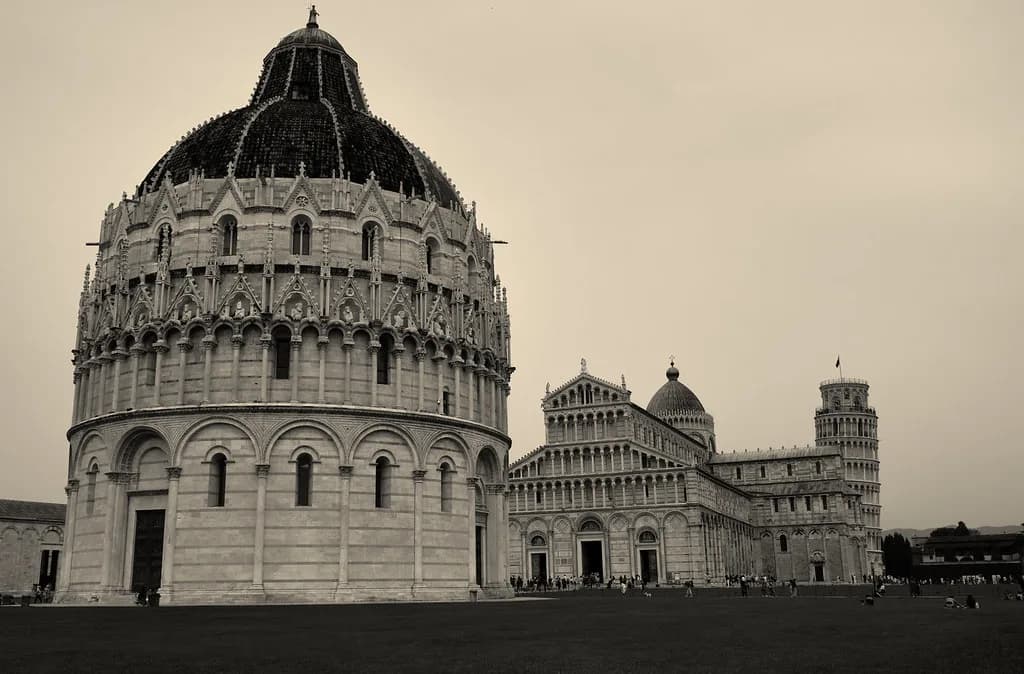
The Square of Miracles holds the Cathedral, the Baptistery, the Camposanto and the Leaning Tower, and in January you can walk the whole ensemble in under an hour without jostling. The UNESCO-listed complex is a working religious site, so quiet mornings feel closer to its original purpose.
Start through the Porta Santa Maria archway, which frames the tower and gives you the classic view before you step onto the lawn. In mist or low cloud, the effect is more dramatic than in summer light.
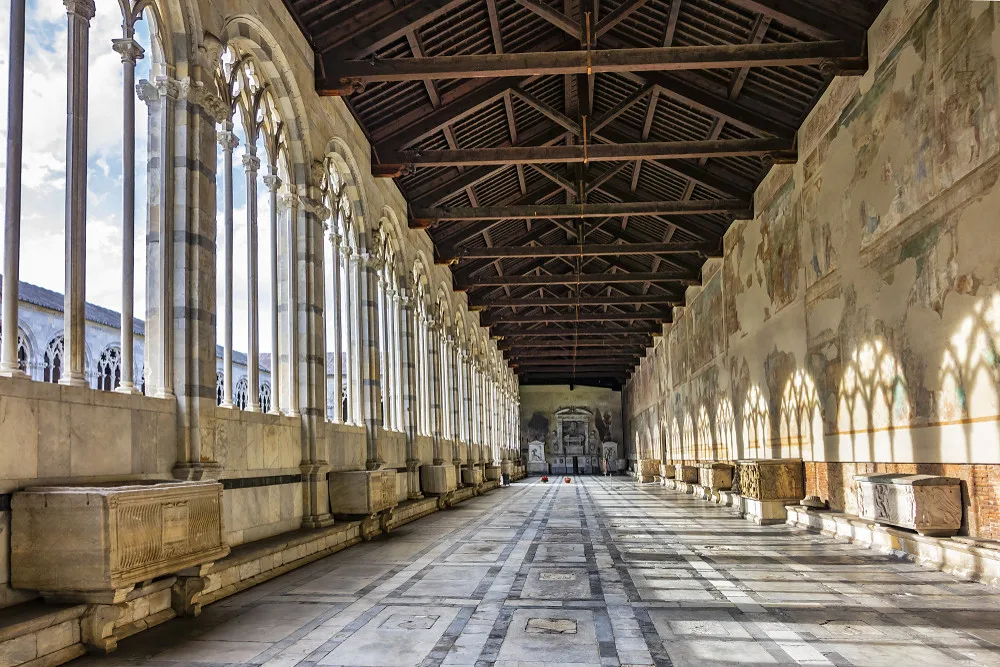
The Campo Santo's covered cloisters are the best shelter on the square, lined with sarcophagi and fresco fragments. They are also its most contemplative corner, and a good place to wait out a shower while you study the inscriptions.
Climbing the tower and visiting the Duomo, Baptistery and Camposanto
The Leaning Tower's 251-step spiral staircase is exposed to the wind at the top, but in January the climb is faster and less claustrophobic than in peak season. Children under eight cannot climb, and under-18s need adult supervision, so check the rules and book a timed slot through the Opera della Primaziale Pisana, the body that manages the monuments.
The Cathedral of Santa Maria Assunta, founded in 1064 and consecrated in 1118, is free to enter but requires a ticket for the tower and other monuments; check the current booking system before you travel. Its striped marble exterior and Giovanni Pisano's pulpit reward an unhurried visit, and the interior is warm enough to linger.
The Baptistery's double dome produces extraordinary echoes, and staff sometimes demonstrate them for small groups. Just beside it, the Camposanto and the Sinopie Museum together give you a full picture of the square's medieval fresco cycle.
Indoor Pisa: Palazzo Blu, the Sinopie Museum and the botanical greenhouses
Palazzo Blu on the Arno is the city's most reliable indoor stop, with rotating exhibitions in a restored noble palace. Its riverside setting makes it a natural marker on a wet-weather loop between the bridge and the tower.
The Sinopie Museum holds the preliminary sketches lifted from the Camposanto frescoes after wartime damage, and it pairs naturally with a visit to the cemetery itself. For anyone interested in how medieval frescoes were made, this is the quiet highlight of the square.
The Orto Botanico, founded in 1544 and among Europe's oldest university botanical gardens, keeps heated greenhouses that feel tropical in January. Outside, bare branches show the garden's structure in a way that summer foliage hides.
Walking the city walls and the Arno lungarni in January
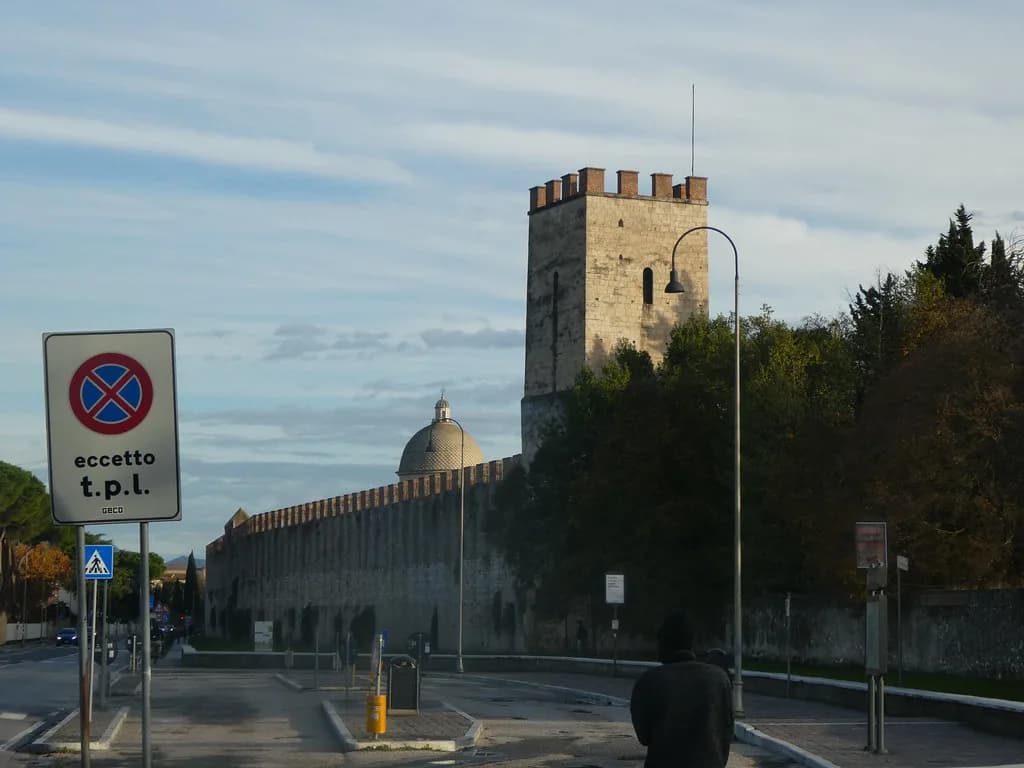
The Mura di Pisa, built from 1154 onward, are walkable from four access points, and the circuit gives the best panorama of the tower, the cathedral and the surrounding countryside. Tickets can be bought online or at the entrance, and the views are worth a cold, clear afternoon.
Along the river, the lungarni lead past Santa Maria della Spina, a small Gothic church that appears to float on the water, and over the Ponte di Mezzo for views up- and downstream. This is a 30–45 minute walk at a comfortable pace, ideal when the light is fading.
January's low sun and mist make the riverside more photogenic than its summer self, but stone benches are cold and the wind can cut through. Plan the walk for midday, then retreat to a café on Corso Italia.
Piazza dei Cavalieri, Borgo Stretto and everyday Pisa
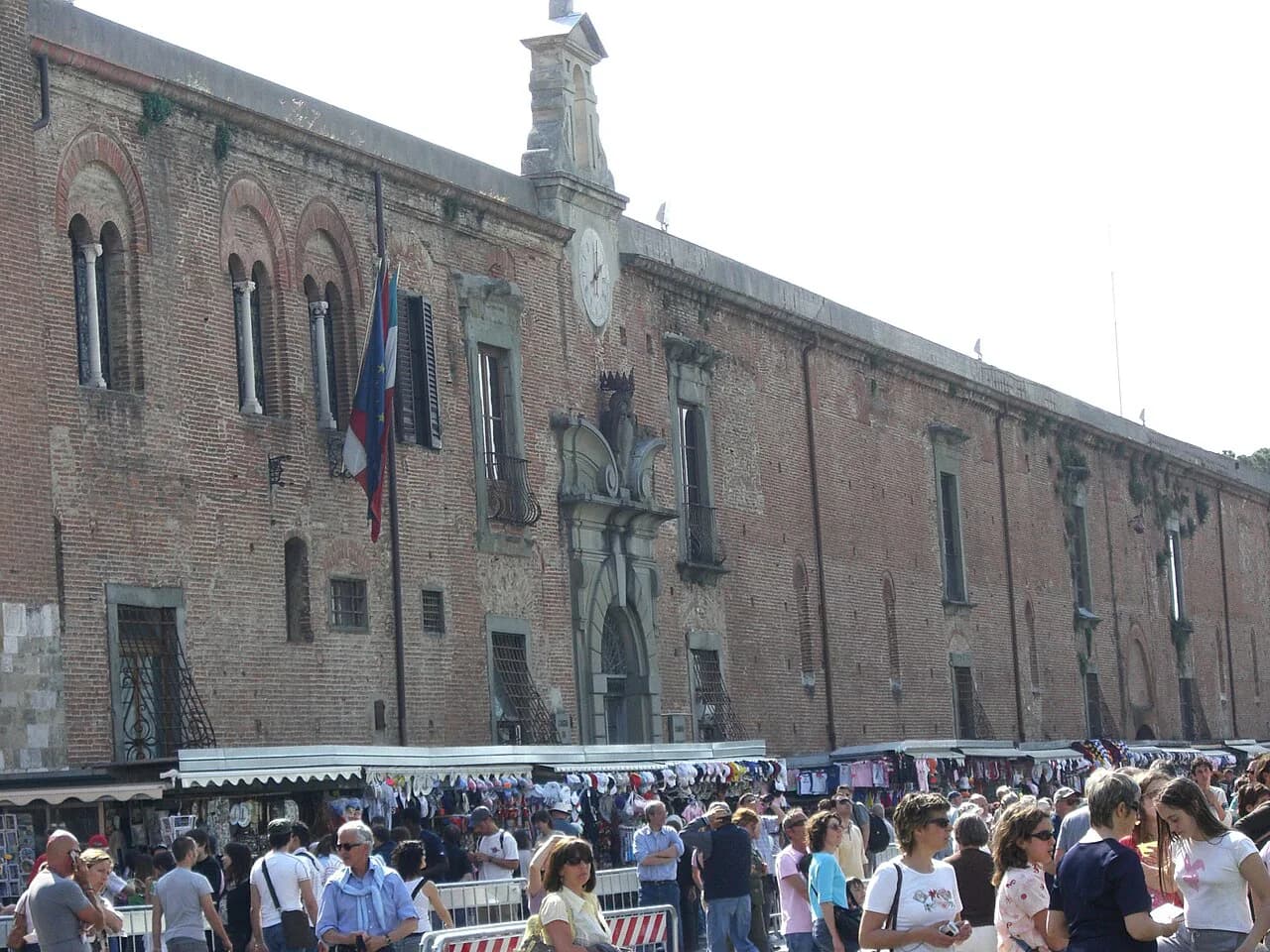
Piazza dei Cavalieri, once the political heart of the medieval republic and later the seat of the Knights of St Stephen, is dominated by the sgraffito facade of the Palazzo della Carovana, now the Scuola Normale Superiore. Students cross it all day, and the square feels alive rather than staged.
Borgo Stretto, the arcaded street running from the Ponte di Mezzo, is where locals shop, and the covered walkways make it usable in drizzle. Stop for espresso or a pastry, then browse bookshops and food shops rather than souvenir stalls.
The Keith Haring mural, Tuttomondo, on the church of Sant'Antonio Abate, is one of the artist's last public works and easy to see in full in January without crowds blocking the view.
Epiphany and the tail of the Christmas season
Epiphany falls on 6 January 2027, and since Christmas Day 2026 and New Year's Day 2027 both fall on a Friday, the first week of January still carries some festive momentum. Expect lights and market stalls to wind down after the 6th rather than at New Year, and the university term resumes shortly after.
If you want the full Christmas market experience, plan for December rather than January, as the main market typically sets up in Piazza Vittorio Emanuele II and neighborhood squares in the run-up to the holiday.
Food in January: hearty Tuscan dishes and where locals eat
January is the season for ribollita, a thick bread-and-bean soup, and pappa al pomodoro, alongside wild boar ragù and chickpea dishes. These are the plates Pisans actually order when the weather turns, and trattorias around Piazza delle Vettovaglie and Piazza Cairoli serve them without fuss.
For a quick lunch, try a panino with finocchiona or a slice of cecina, the chickpea flatbread, from a bakery on Corso Italia. In the evening, an aperitivo around Piazza Cairoli is a low-cost way to eat well and watch the city at its most local.
Restaurant reservations are rarely needed in January outside the Epiphany weekend, which means you can walk into places that would be booked out in summer. Ask for the daily menu rather than the tourist one.
Day trips that work in winter: Lucca, Livorno and San Rossore
Lucca is the easiest day trip, about 20 km from Pisa and reachable by frequent train, with its intact Renaissance walls walkable even in winter. The town is compact and its churches and towers fill a short day nicely.
Livorno, roughly 27 km away, is a working port city with the Terrazza Mascagni promenade and the Fortezza Vecchia, both good for a brisk winter walk. The coast is not for swimming in January, but the seafood is excellent.
Closer to home, the San Rossore estate is a 4,800-hectare park of pine forest and wetland reachable by bus or a short train ride, with flat paths that suit a crisp winter morning. Florence is about an hour and a half by rail if you want a bigger city for the day.
Getting around Pisa in January
Pisa Centrale is the main rail hub, with direct trains to Florence, Lucca, Livorno and Rome. From the station it is about a 25-minute walk to the Piazza dei Miracoli, or a short local bus ride from the stop in front of the station.
The Pisa Mover automated shuttle links the airport to the railway station and runs daily from early morning until around midnight. If you drive, the historic center is a restricted traffic zone, so park outside the walls and walk or take the bus in.
Crowds, prices and the trade-offs of a January visit
The main trade-off is weather: rain is common, daylight is short, and some seasonal businesses run reduced hours. In exchange, you get empty piazzas, easy tower tickets, available restaurant tables and a city that feels lived in.
January is not the cheapest month everywhere, but accommodation and flights are typically well below spring and summer levels, and you will rarely queue for anything. Compare total trip costs rather than headline rates, since low-season savings often come from midweek travel.
Expect some restaurants to close for a week or two after Epiphany, and look up exhibition dates for Palazzo Blu and monument tickets with the Opera della Primaziale before building a day around them.
Who should pick another month instead
Travelers who want warm terraces, long evenings and reliable sunshine should choose late spring or early autumn. If you want a white Christmas atmosphere, December is the better month, while February brings slightly longer days and the first hints of Carnival.
If your ideal Italy is southern sun, consider Sicily, where January is milder and Valley of the Temples visits are comfortable. For a broader look at the country at this time of year, our guide to Italy in January covers where to go and what to expect. Pisa in January rewards those who accept the cold as part of the experience.
Plan Your January Trip to Pisa
Book your tower slot in advance, plan one indoor anchor per day, and keep the middle of the day for outdoor sights. January in Pisa rewards travelers who prefer quiet streets and genuine local life to perfect weather.
Travel in the first week if you want a last taste of the festive season, or the second half for lower prices and fewer closures. Either way, pack for rain and cold and leave room for an unplanned espresso.
Explore more Pisa winter guides
Frequently Asked Questions
What is the weather like in Pisa in January?
January is Pisa's cool, damp core, with typical highs near 11 °C (52 °F) and lows near 2 °C (36 °F). Rain often comes in spells rather than all-day downpours, and snow in the city is rare and rarely settles.
Is Pisa worth visiting in January?
Yes, if you value quiet streets, short queues and a real working city over sunshine. The tower, Duomo and Camposanto are all approachable, but expect some rain and short daylight hours.
What is there to do in Pisa in January?
Visit the Piazza dei Miracoli, climb the tower, see the Camposanto and Sinopie Museum, browse Palazzo Blu and its exhibitions, walk the city walls and the Arno lungarni, and eat ribollita in the trattorias around Piazza delle Vettovaglie.
Does it snow in Pisa in January?
Snow is rare in the city and rarely settles. Typical January conditions are cool and damp, with misty mornings and occasional rain.
Are Pisa's attractions open in January?
The main monuments, including the Cathedral, Baptistery, Camposanto and tower, generally operate in January, but some seasonal businesses and restaurants run reduced hours. Check current hours and tickets with the Opera della Primaziale Pisana before you travel.
Is January a good time to climb the Leaning Tower of Pisa?
Yes. January is one of the easiest months to get a timed slot, and the climb is less crowded. Children under eight cannot climb, and under-18s need adult supervision. Book through the official monument office in advance.
What day trips can you take from Pisa in winter?
Lucca is the easiest by train, about 20 km away, followed by Livorno for the coast and the Terrazza Mascagni. San Rossore offers flat walking in a 4,800-hectare park, and Florence is about an hour and a half by rail.
How many hours of daylight does Pisa get in January?
Roughly nine hours, with sunrise around 8 a.m. and sunset a little after 5 p.m. at the start of the month, stretching to about 5:30 p.m. by the end. Aim for the middle of the day for outdoor sights.
Sources
Winter travel notes
Optional updates when we add or revise winter guides.
You might also like
Continue reading
More guides you'll find useful