Pisa in March: Weather, Crowds, and What to Do
Pisa in March means mild, showery days, quiet crowds at the Piazza dei Miracoli, and long daylight for climbing the tower and visiting the museums.
On this page
Pisa in March sits between the damp stillness of deep winter and the first busy warmth of spring. Days can be bright enough for a long walk along the Arno, then turn showery by mid-afternoon, so the city rewards travellers who plan a few indoor anchors and stay flexible. It suits people who want the Piazza dei Miracoli without summer queues and do not need beach weather to enjoy Tuscany.
The trade-off is real: you will likely carry an umbrella, some days will be grey, and the seaside towns nearby will still feel closed-in and breezy. In exchange you get thinner crowds, easier wandering in Borgo Stretto and along the lungarno, and a manageable city that fits comfortably into two full days. If you need guaranteed sunshine, choose a later month.
Weather in March
March is a transitional month in Pisa, with the typical day moving from a cold morning toward a mild, often breezy afternoon. Long-term climate averages used by travel planners put the coldest month, February, at roughly 10°C (50°F) highs and 4°C (40°F) lows, so March sits a step above that rather than being genuinely warm. Treat any single forecast as a guide only and pack for a range of conditions rather than one season.
Rain is the defining variable. Expect several wet days across the month and plan sightseeing so that a museum or a long lunch can absorb a downpour without ruining the day. Average figures for Pisa show a modest monthly rainfall amount, but the showers tend to arrive in short bursts, which is why the city works well for short visits even in a changeable month.
If you are weighing which month to book, February is colder and quieter while April warms up and gets busier. March is the compromise: mild enough for walking, not yet crowded, and still cheap enough to feel like a value trip. Compare the colder weeks in the February guide if you want the Piazza dei Miracoli almost to yourself. To weigh the same shoulder-season trade-offs elsewhere in Italy, it helps to read about Italy in March before you commit.
Daylight and the Clock Change
By March the days in Pisa have stretched well out, with evening light lasting long enough to walk the walls or cross the Arno after a museum closes. European clocks go forward on the last Sunday of March, which pushes sunset about an hour later and makes late-March evenings noticeably more usable. If your trip falls in the second half of the month, plan outdoor sightseeing for the late afternoon when the light is best.
Early March still carries a wintry feel in the mornings, so start indoors with a church or gallery and save the outdoor set pieces for the afternoon. By the end of the month you can reasonably plan a late walk along the river without needing to rush. This gradual shift is one of the best reasons to aim for late March over early March.
What Changes in March
The biggest practical difference from summer is the crowd level at the Piazza dei Miracoli. In high season the square can feel like a queue with a monument attached; in March you can usually see the tower, cathedral and baptistery without heavy congestion, which makes the UNESCO-listed ensemble far more enjoyable. The trade-off is changeable weather: a sudden shower can clear the square in minutes.
The Arno riverside and Borgo Stretto are at their most pleasant in the shoulder season. Locals still use the shopping street and the cafes around Piazza Cairoli, so the city feels lived-in rather than staged for tourists. Allow time to wander without a fixed plan, because a rainy morning is best spent ducking into arcades and stopping for coffee.
Outside the city, the coast between Viareggio and Livorno is still quiet in March, with beach life mostly dormant but the promenades walkable on clear days. The Tenuta di San Rossore park is accessible and green, and makes a good half-day escape when you want nature rather than marble. Check park access and any guided-tour arrangements before you go.
Piazza dei Miracoli in March
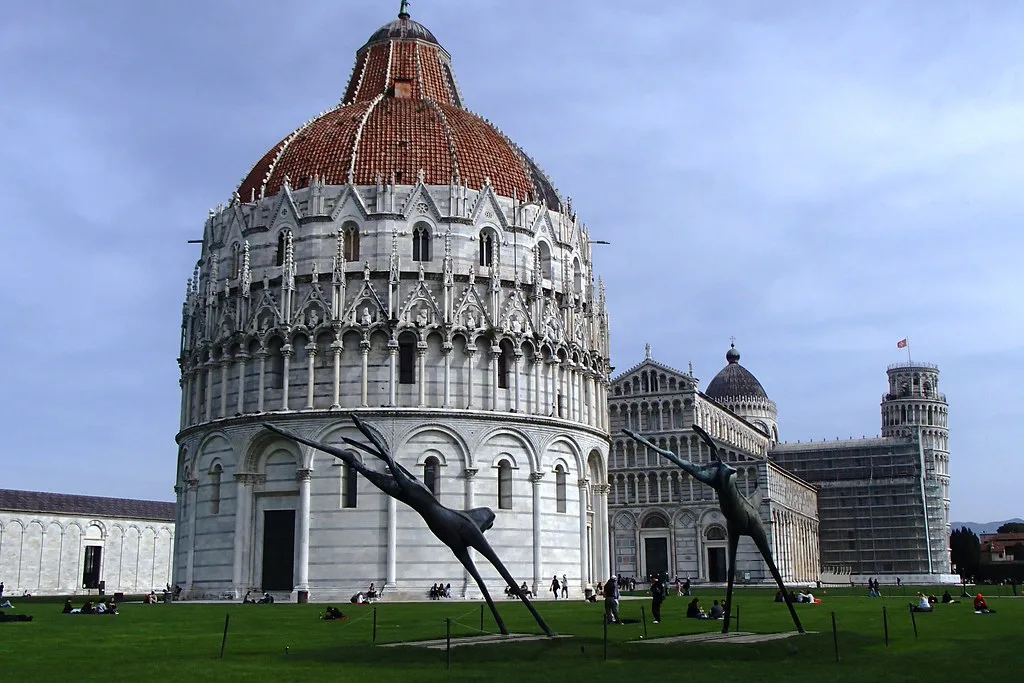
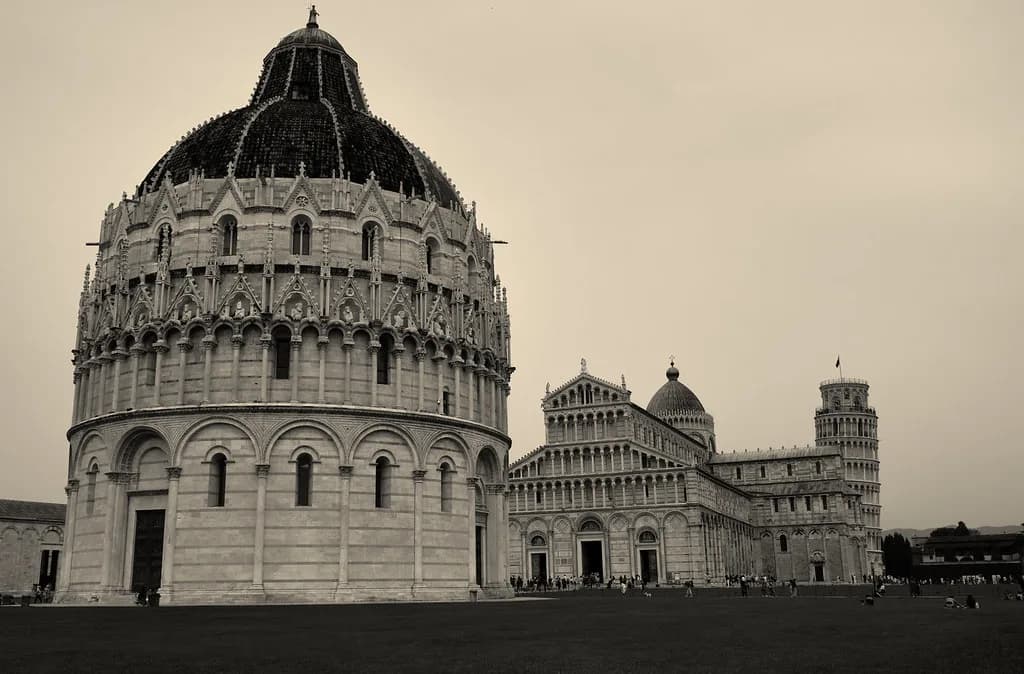
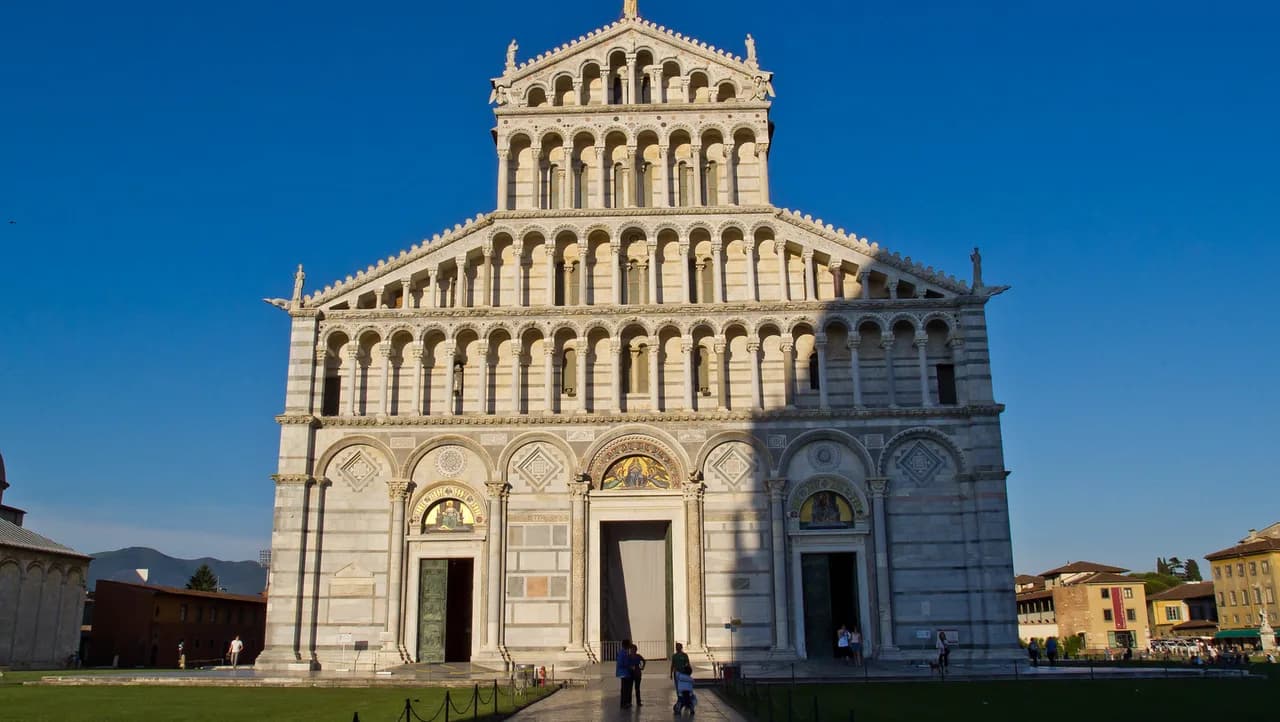
The square holds four medieval masterpieces in one place: the Cathedral of Santa Maria Assunta, the Baptistery of San Giovanni, the Camposanto Monumentale and the famous leaning tower. The tower climb runs to 251 steps, with restrictions for children under eight and adult supervision required for those under eighteen. These rules are worth knowing before you queue with a family.
The Baptistery is the largest in Italy, with a double dome that produces remarkable acoustics demonstrated by staff at regular intervals. Inside the cathedral, look for the black-and-white striped marble and the so-called Devil's Nails on the north side. The Camposanto, a cloistered cemetery founded in the thirteenth century, shelters frescoes including the Triumph of Death, and is often quieter than the rest of the square.
Booking arrangements and any seasonal restriction on tower numbers change from year to year, so confirm directly with the Opera della Primaziale Pisana before you build your day around a climb. Allow half a day for the square and the monuments together, and combine it with the Sinopie Museum, which displays the preparatory sketches for the Camposanto frescoes.
Museums and Indoor Sights
Palazzo Blu, on the lungarno, hosts rotating exhibitions alongside its permanent collection and is a reliable wet-afternoon stop. Its blue facade is easy to spot from the river, and the displays range from Renaissance works to modern art. Check what is on before you travel, since the temporary exhibition is the main draw.
Piazza dei Cavalieri is Pisa's second great square, once the seat of the Knights of Saint Stephen and now home to the Scuola Normale Superiore. Look for the statue of Cosimo I de' Medici and the Palazzo della Carovana. From there you can walk to the Keith Haring mural Tuttomondo, one of the city's most photographed modern works.
On the Arno, the small Gothic church of Santa Maria della Spina is a short stop that rewards a closer look at its ornate facade. Pair it with a riverside walk toward the Ponte di Mezzo for sunset. This is the kind of low-key sightseeing that suits March, when you want to keep moving between showers.
Walking Pisa
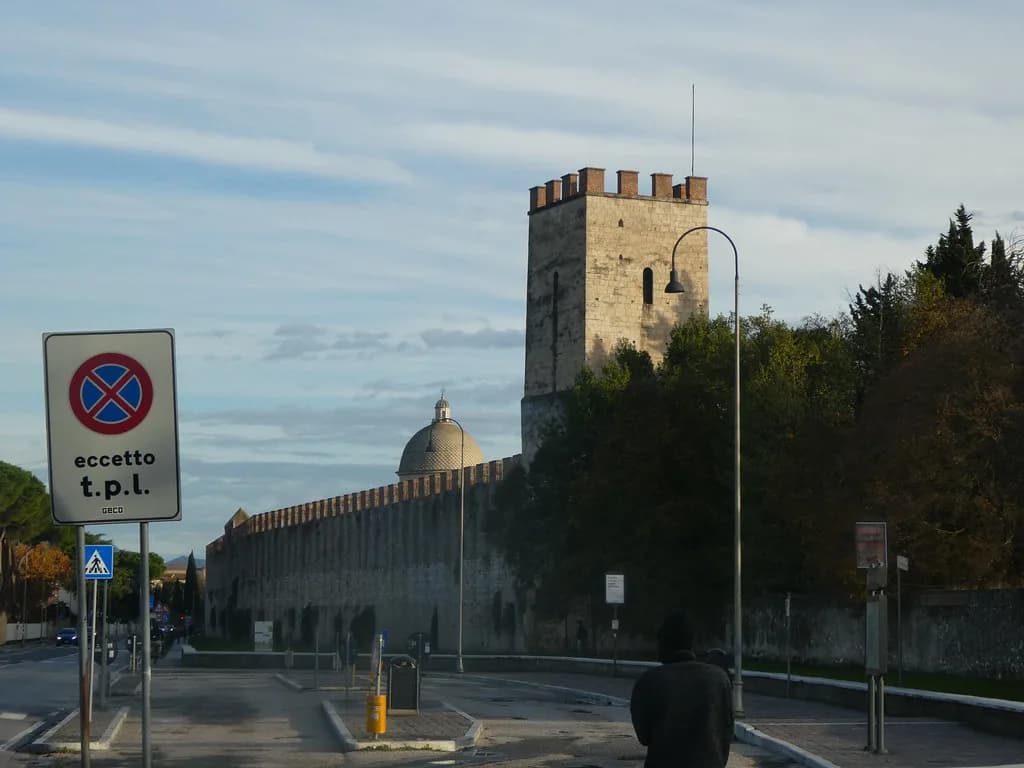
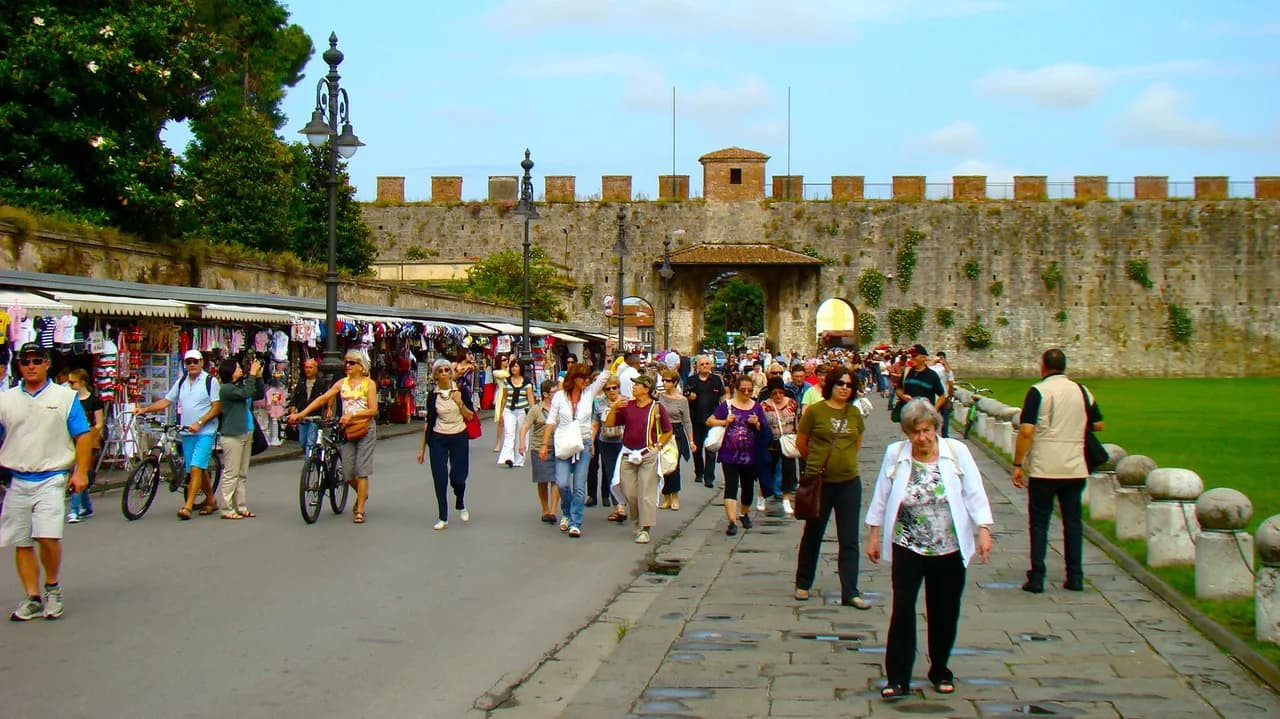
The medieval walls of Pisa, built from the twelfth century onward, offer the best elevated views of the city and countryside. There are four access points, at Torre Santa Maria, Torre Piezometrica, Torre di Legno and Piazza delle Gondole, and a free app supports the walk. Confirm access and ticket arrangements at the entrance before setting out.
A good March route starts on the walls, drops into Borgo Stretto for a coffee, crosses the Ponte di Mezzo and follows the lungarno past Santa Maria della Spina. The distances are short and flat, so the city is easy on foot even in cool weather. Keep an eye on the sky and use the riverside arcades if a shower blows through.
Eating in March
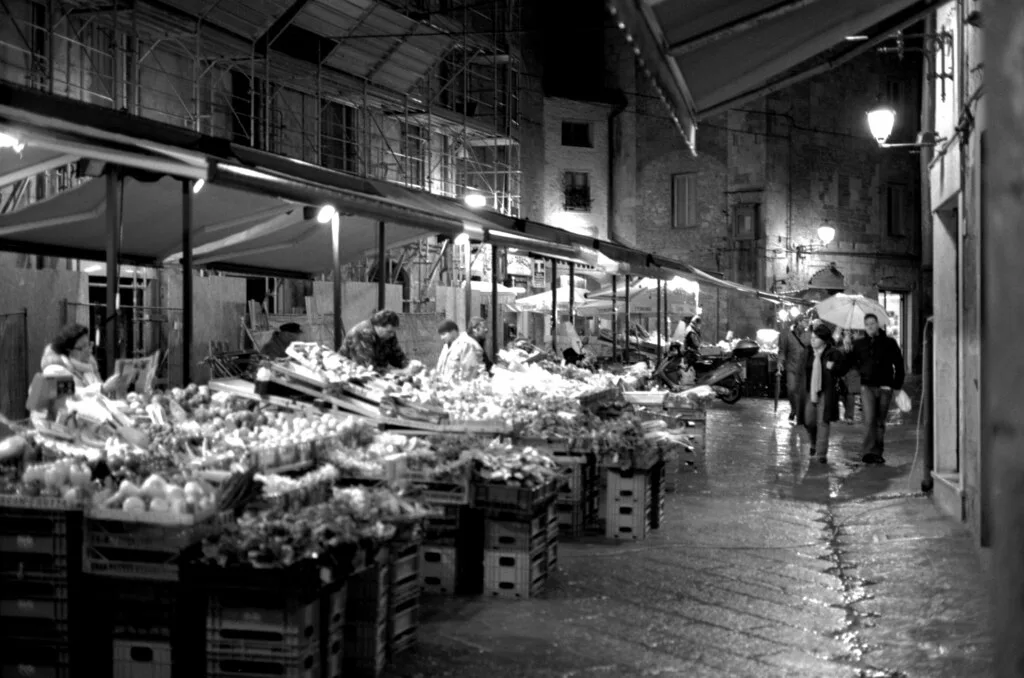
Pisa's eating scene is built around aperitivo and trattorias rather than fine dining. Piazza Cairoli and Piazza Vettovaglie are the spots for an early evening drink, while the streets around Borgo Stretto hide small restaurants and gelaterie. In March you can usually walk in without a reservation, though booking ahead for dinner on a weekend is still sensible.
Tuscan cooking suits the season: ribollita, pappa al pomodoro and hearty pasta dishes are more appealing in cool weather than in summer heat. Use a rainy afternoon to linger over a long lunch rather than rushing between sights. That slower rhythm is part of the case for visiting in March.
Day Trips That Work in March
Lucca is about twenty kilometres from Pisa and easy by train, with its intact Renaissance walls and compact historic centre making a fine half-day trip. Livorno, around twenty-seven kilometres away, is a working port city with the Terrazza Mascagni and a lively market scene. Viareggio, roughly twenty-three kilometres off, is quiet in March but still worth a stroll along the promenade.
These short hops matter in a changeable month: if the weather turns, you can abandon a coastal plan and be back in Pisa quickly. Florence is further, at about 109 kilometres, and better saved for a full day with an early start. The Tenuta di San Rossore, reachable by bus from the city, gives you a nearest-to-home option for a dry morning.
Getting Around
The Pisa Mover automated shuttle links the airport with Pisa Centrale railway station, with an intermediate stop beside the park-and-ride car parks. From the station it is about a twenty-five-minute walk to the main sights, or a short bus ride to the Piazza dei Miracoli. The shuttle runs daily from early morning until around midnight, so late arrivals are workable.
If you drive, Pisa operates a ZTL restricted zone in the centre, so park outside the walls and walk or take public transport in. Paid and free parking areas exist around the edge of the city. This is especially worth planning in March, when rain makes a long walk from a distant car park less appealing.
Who Pisa in March Suits
March suits travellers who want the monuments without the summer crush, are happy to carry a rain jacket, and value a slower pace over guaranteed sunshine. It is a good month for couples, museum-goers and anyone combining Pisa with Lucca or the coast on a short trip. Two full days is enough to see the city properly.
It suits less well if you are chasing beach weather, need reliable outdoor photography light, or want the long, warm evenings of late spring. Those travellers should look at May or September instead. If you are set on a winter visit but want the quietest possible version, the January guide covers the coldest and calmest weeks.
Plan Your March Trip
Build your Pisa itinerary around a half-day at the Piazza dei Miracoli, a museum afternoon at Palazzo Blu or the Sinopie Museum, and a walking loop that takes in the walls, Borgo Stretto and the Arno. Keep one day flexible for Lucca or the coast, and check tower and monument arrangements with the Opera della Primaziale before you travel. Late March is the sweet spot, with longer evenings after the clocks go forward on the last Sunday of the month.
If your dates are still open, compare March with the colder months in the wider winter guide to see how the trade-offs shift. Book transport and the tower climb early for a late-March weekend, and leave the rest of the trip loose enough to follow the weather.
Explore more Pisa winter guides
Frequently Asked Questions
Is March a good time to visit Pisa?
Yes, if you want the Piazza dei Miracoli without summer crowds and are comfortable with changeable, often showery weather. Days are mild and daylight is generous by late March, which suits walking and day trips to Lucca or the coast. It is not a beach month, and some days will be grey.
How rainy is Pisa in March?
March is a changeable month with several wet days spread across it, though showers often pass quickly rather than settling in for the day. Plan indoor backups such as Palazzo Blu or the Sinopie Museum, and keep outdoor sightseeing flexible around the forecast.
Can you climb the Leaning Tower of Pisa in March?
The tower climb is a year-round attraction, with 251 steps and age rules: children under eight cannot climb, and under-eighteens need adult supervision. Numbers can be limited, so confirm booking arrangements with the Opera della Primaziale Pisana before relying on a specific slot.
What is there to do in Pisa besides the tower?
The Cathedral, Baptistery and Camposanto on the same square, the medieval walls, Palazzo Blu, Piazza dei Cavalieri, the Keith Haring mural Tuttomondo, and the riverside church of Santa Maria della Spina. The city is compact enough to cover most of these in two days on foot.
Is Pisa worth a day trip in March?
It works well as a day trip from Florence or Lucca, since the station is close to the centre and the main sights cluster together. A single day covers the Piazza dei Miracoli and a walk along the Arno, though two days lets you add a museum and a slower meal.
How many days do you need in Pisa?
Two full days is a comfortable amount: one for the Piazza dei Miracoli and its monuments, and one for the walls, museums and riverside walk. Add a third day if you want a day trip to Lucca or the coast without rushing.
Sources
Winter travel notes
Optional updates when we add or revise winter guides.
You might also like
Continue reading
More guides you'll find useful