Does It Snow in Crete? Where, When and How Often
Yes, Crete gets snow every winter, but almost always on the high mountains above the coast. Here is where snow falls, when, and what the coast is like.
On this page
Crete in winter behaves like two islands stacked on top of each other. Up on the massifs you get real alpine conditions with snow lying for months, while down at sea level you get mild, changeable Mediterranean weather where a jacket matters more than boots. Which Crete you meet depends almost entirely on how high you plan to go.
That split suits travelers who want quiet towns, empty archaeological sites and the sight of a snow-capped ridge behind a coastal taverna. It frustrates anyone hoping for a guaranteed white landscape at their hotel, because settled snow at the coast is the exception rather than the rule. This guide lays out where and when snow appears so you can pick your window and your base.
Does It Snow in Crete? The Short Answer
Yes, snow falls in Crete every winter, but it falls almost exclusively on the high ground. The Cretan mountains above roughly 2,000 m, crowned by Psiloritis at 2,456 m, receive snow each season, and in a good year it starts as early as November. Coastal Heraklion, Chania and Rethymno see rain far more often than snow, and when flakes do reach the shore they rarely settle for long.
If your reason for visiting is snow itself, plan around the mountains and treat the coast as your base, not your destination. If your reason is sunshine and low-season calm, the coast delivers that reliably while the peaks simply supply the backdrop. Winter here rewards flexibility: a cold snap can dust the high villages overnight and melt again just as quickly.
Where the Snow Falls: Psiloritis and the Lefka Ori
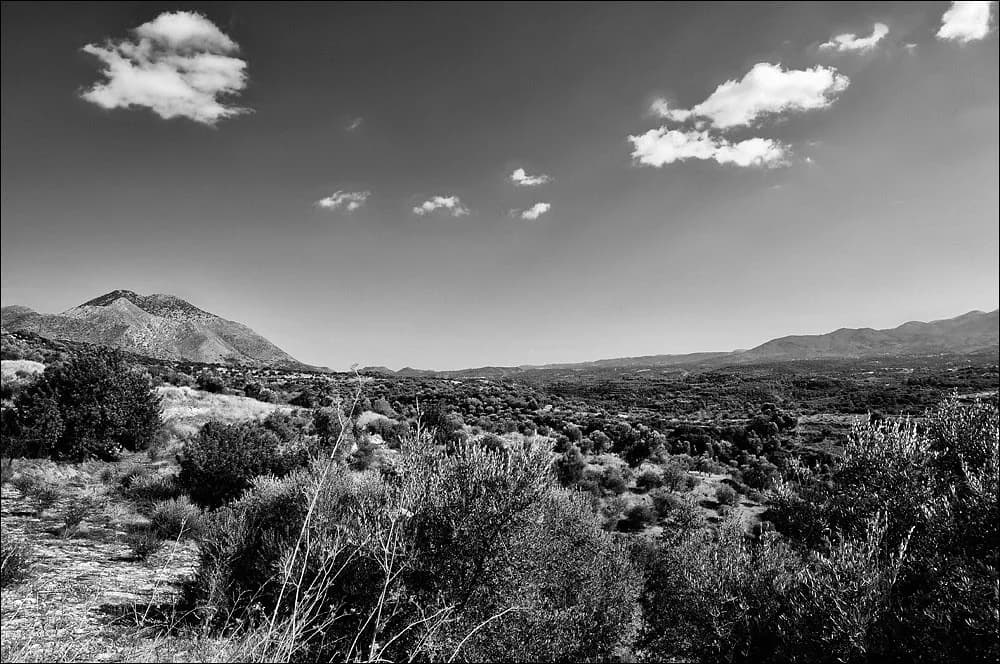
The snow story centers on two ranges. Psiloritis, also called Mount Ida, sits in the center of the island and carries the highest summit in Crete at 2,456 m. The Lefka Ori, or White Mountains, occupy the west and hold more than 30 peaks above 2,000 m, including Pachnes at 2,453 m. Both are limestone country of high plateaus and long ridgelines, and both hold snow well into spring despite the island's southern latitude.
A simple rule helps when planning: the higher and further inland you go, the more snow you find. The Omalos plateau below the White Mountains and the upland approaches to Psiloritis are the places where a winter walk turns genuinely wintry. Lower slopes and the Messara plain rarely hold snow for more than a day.
For a wider regional picture, the guide to does it snow in Greece compares Crete with the mainland and the northern islands, which is useful if you are choosing between destinations rather than deciding on Crete alone. The pattern is consistent: Crete's snow is a function of altitude, not latitude.
When Snow Falls: November First Snow to a Spring Snowpack
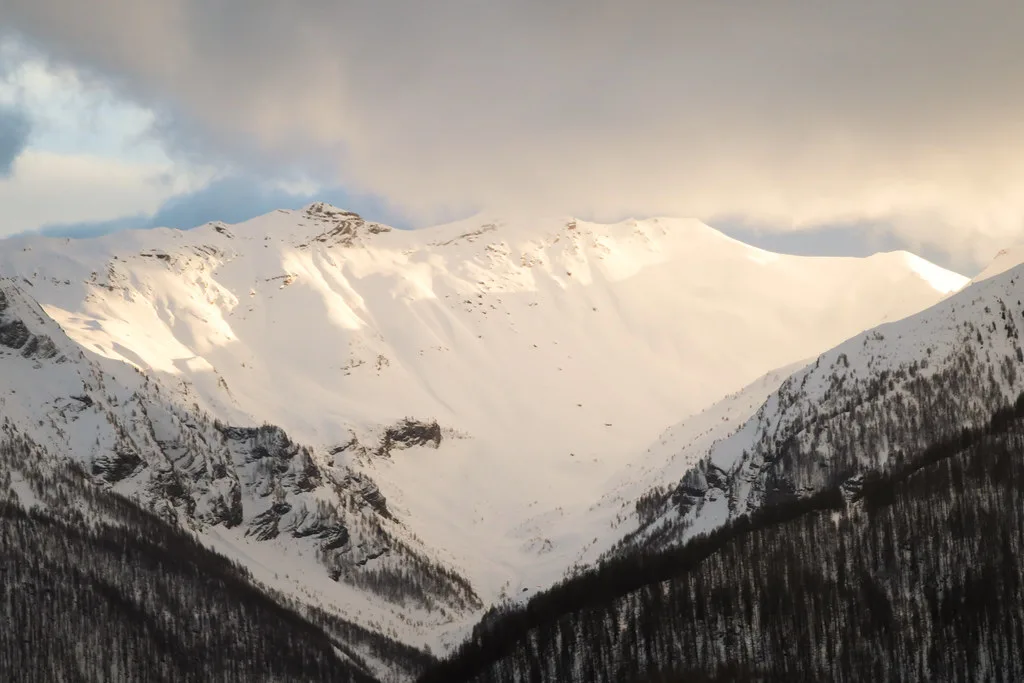
The first snow typically arrives on the highest peaks in November, with Psiloritis usually leading the way. From there the snow line drops through December and January, and the deepest cover builds in February and March. Guided ski touring on the island runs roughly January to April, with the best snowpack usually falling in the middle of that window. High mountain snow can persist into the early summer months, which is why the peaks stay white in photographs taken from the coast in spring.
Timing your trip is a trade-off between scenery and access. A February or early March visit gives you the fullest mountains and the best chance of seeing snow up close, but it also brings the shortest days and the wettest, most unpredictable weather. November and December offer first dustings and mild coastal afternoons, though the high ground may be bare between early storms.
If you want a month-by-month read on conditions and what is happening in the towns, the guide to Lasithi Plateau and the eastern highlands fills in a quieter corner of the island. For a later window with longer days and melting snow, look at Crete in March. The snow does not vanish suddenly; it retreats upward week by week.
What the Coast Is Like in Winter
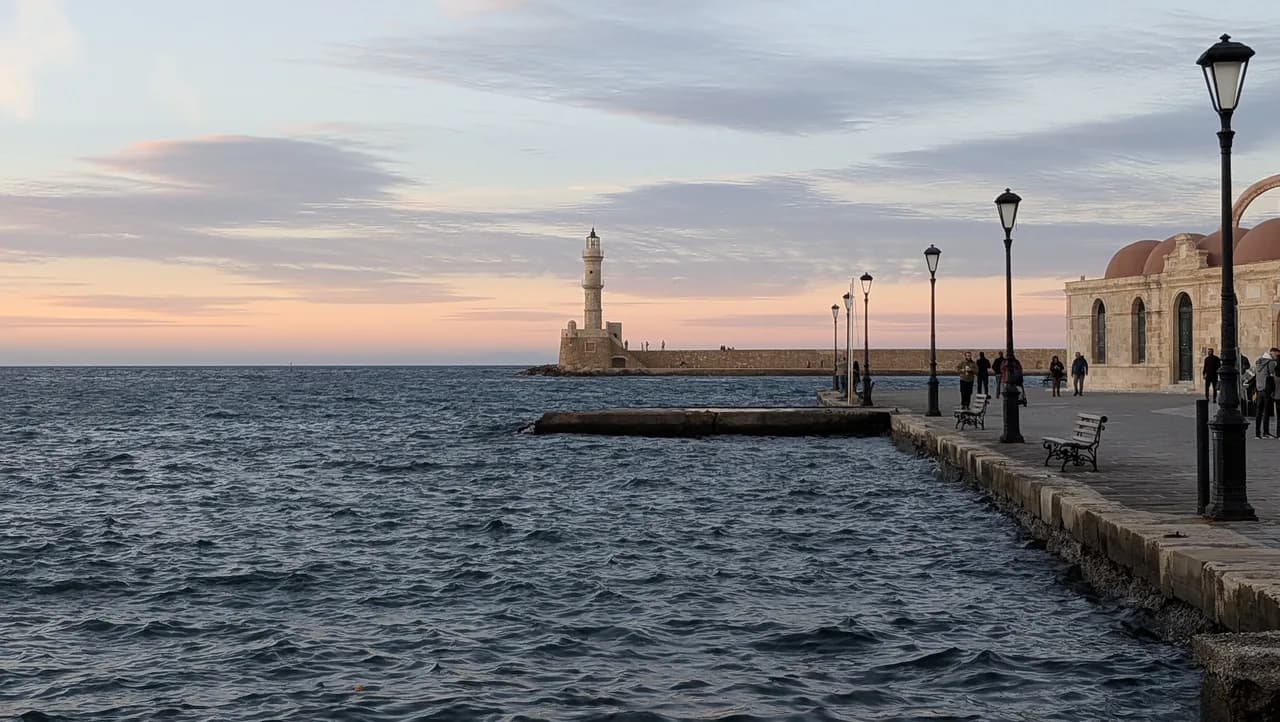
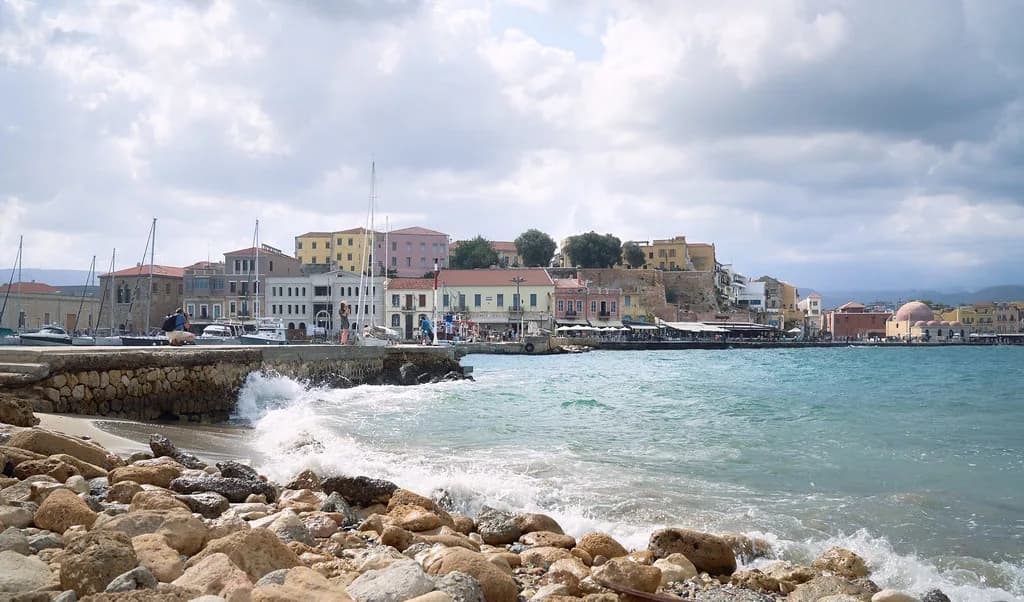
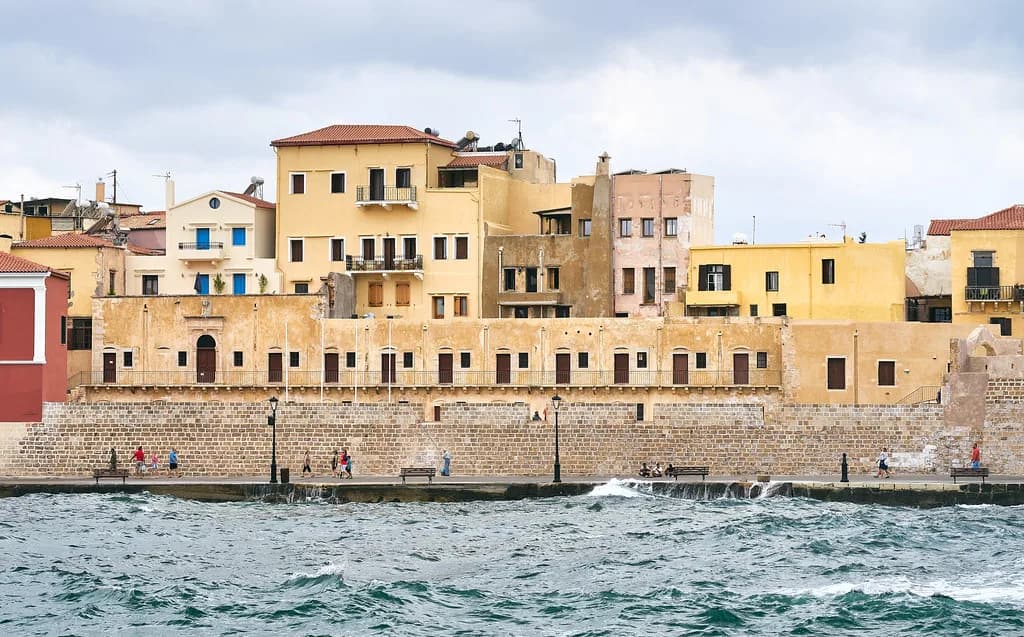
At sea level, winter means mild air, rain in spells and long quiet evenings rather than snow. Heraklion, Chania and Rethymno stay walkable through the season, and the sea keeps the coast several degrees warmer than the interior, which is precisely why snow does not settle there. Daylight is short: expect darkness by late afternoon in December and January, so plan sightseeing for the morning.
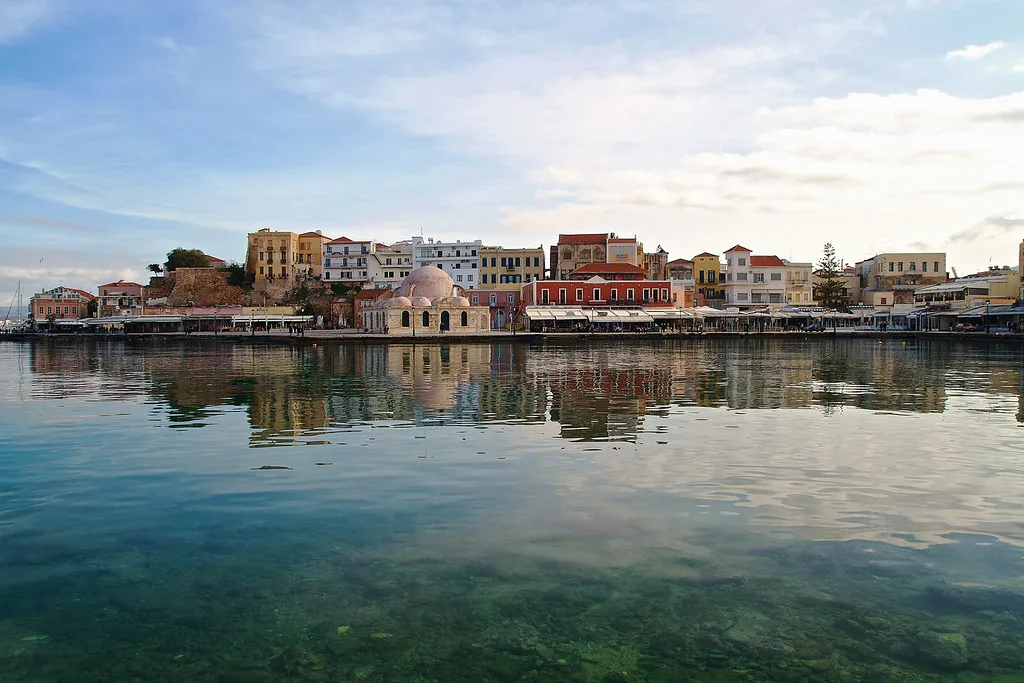
The coastal experience has real compensations. The old harbor at Chania and the Venetian lanes of Rethymno are far quieter than in summer, and the Heraklion Archaeological Museum gives you a full day of world-class Minoan material whatever the sky is doing. Winter is also when you can see snow on the massifs from the shoreline, an effect that is easy to photograph and easy to underestimate until you are standing there.
Rain, not cold, is the main coastal variable. Build in indoor options for at least part of each day, keep a mountain day as a bonus rather than the centerpiece, and the coast will treat you well.
Seeing Snow From the Beach
One of Crete's odd pleasures is standing on a winter beach with a snow-covered ridge filling the sky behind you. In clear post-storm weather the White Mountains read as a white wall above the west coast, and Psiloritis does the same over the center of the island. You do not need to climb anything to get the payoff; a coastal walk or a drive along the north shore is enough.
Treat this as a weather-dependent bonus. Clear days after a cold front give the sharpest views, while haze and low cloud can hide the peaks entirely for days. If the mountain view matters to you, staying flexible on which coast you base yourself on any given day is worth more than any fixed itinerary.
Snow Walking and Ski Touring in the Mountains
Above the snow line, Crete becomes a backcountry destination rather than a resort one. Ski touring programs run from January to April and typically start in Heraklion, then move between the Psiloritis range and the White Mountains over several days of skinning and descending. The terrain is limestone with steep couloirs, wind-exposed ridges and rocky drop-ins, and the snow varies from powder high up to corn and crust lower down.
The demands are serious: you need good fitness, the ability to skin uphill at a steady pace for hours, and confident off-piste skiing with a pack. Conditions shift fast under the influence of the sea, so route-finding and avalanche awareness are part of the package. This is not a place to try ski touring for the first time.
Snow walking is the more accessible option. Hiking through snow-covered olive groves on the lower mountain flanks is beautiful and needs no technical skill, but it does require proper winter gear, a check on conditions before you set out, and a realistic turnaround time given the short daylight. Go with a guide if you do not know the terrain.
Winter in the Towns: Heraklion, Chania and Rethymno
Winter thins the crowds without shutting the cities down. Heraklion keeps its archaeological museum and city life running, Chania's old town and harbor stay open for strolling and eating, and Rethymno's Venetian quarter is at its most peaceful. Some seasonal businesses on the coast close or reduce hours, particularly in resort areas, so a town base is more practical than a beach strip.
Use the towns as a touring hub. From Chania you can reach the White Mountains and the Omalos plateau; from Heraklion you can head toward Psiloritis and the archaeological sites of the center. If you are weighing an earlier or later trip, Crete in January describes the town experience in detail, and Crete in November covers the transition before the season settles.
For a broader planning reference on how the island handles the colder months, the Crete in winter overview ties together weather, transport and what is open, including Agios Nikolaos on the eastern shore.
Christmas, New Year and Epiphany
The holiday season is a quiet, family-centered time in Crete rather than a market-driven spectacle. Christmas Day 2026 falls on a Friday and New Year's Day 2027 also falls on a Friday, which makes for long holiday weekends when Greeks travel to family homes. Epiphany on 6 January 2027, a Wednesday, is marked in port towns with blessing-of-the-waters ceremonies, a tradition worth catching if your trip spans early January.
Expect some restaurants and seasonal businesses to close around the holidays and smaller places to run reduced hours. Book what you can in advance and treat the coast as a place to slow down. For a fuller picture of the period, the Christmas in Crete guide covers traditions and timing.
Who Should Visit Crete in Winter
Crete in winter suits travelers who value empty sites, mild walking weather and mountain scenery over beach time, and who are happy to build plans around the weather. It suits photographers, hikers with winter experience and anyone wanting a quiet Mediterranean base for a week or two. It also suits budget-conscious travelers, since the coast is firmly low season and lodging rates ease accordingly.
It does not suit anyone expecting reliable sunbathing, guaranteed snow at their hotel, or full resort services. If you want warmth and swimming, come in late spring or autumn; if you want snow underfoot without effort, the Alps are a better fit. If you want both snow and sea in one trip, target February or early March and accept that the two experiences will rarely happen on the same day.
Plan Your Visit
The honest answer to whether it snows in Crete is that it does, reliably, but up high. Match your travel month to what you actually want: January and February for the deepest mountain snow and the quietest towns, March for longer days and spring skiing, November and December for first dustings and mild coastal afternoons. Then choose a town base and keep your mountain days flexible.
Ask a local mountain operator about conditions and road access before heading for the high ground, and treat any snow forecast as weather rather than a promise. Crete rewards the traveler who plans for two islands in one: a mild, occasionally wet coast and a genuinely alpine interior that sits white above it all winter.
Explore more Crete winter guides
Frequently Asked Questions
Does it snow in Crete?
Yes, snow falls every winter on the high mountains, with Psiloritis and the White Mountains receiving the most. At sea level snow is rare and rarely settles, so coastal towns see rain far more often than snow.
Can you ski in Crete?
Ski touring is possible in the Psiloritis range and the White Mountains, with guided programs running roughly January to April and the best snowpack usually in February and March. There is no resort-style skiing, and the terrain demands strong off-piste skills and fitness.
Does it snow in Chania?
Snow in Chania itself is uncommon and usually melts quickly, because the sea keeps the coast mild. The nearby White Mountains, however, carry snow for months and are clearly visible from the city in clear winter weather.
When is the best time to see snow in Crete?
February and early March usually give the deepest and most reliable mountain snow, with the first dustings often arriving in November. Spring snow persists high up into the warmer months, but access depends on conditions.
How cold does it get in Crete in winter?
The coast stays mild through winter, while the mountains above 2,000 m are genuinely cold and snow-covered. Pack for wet, changeable weather at sea level and proper winter conditions if you plan to go high.
Is winter a good time to visit Crete?
It is excellent for quiet towns, empty archaeological sites and mountain scenery, and it is low season on the coast. It is not the right choice if you want reliable beach weather or guaranteed snow at your hotel.
Sources
Winter travel notes
Optional updates when we add or revise winter guides.
You might also like
Continue reading
More guides you'll find useful